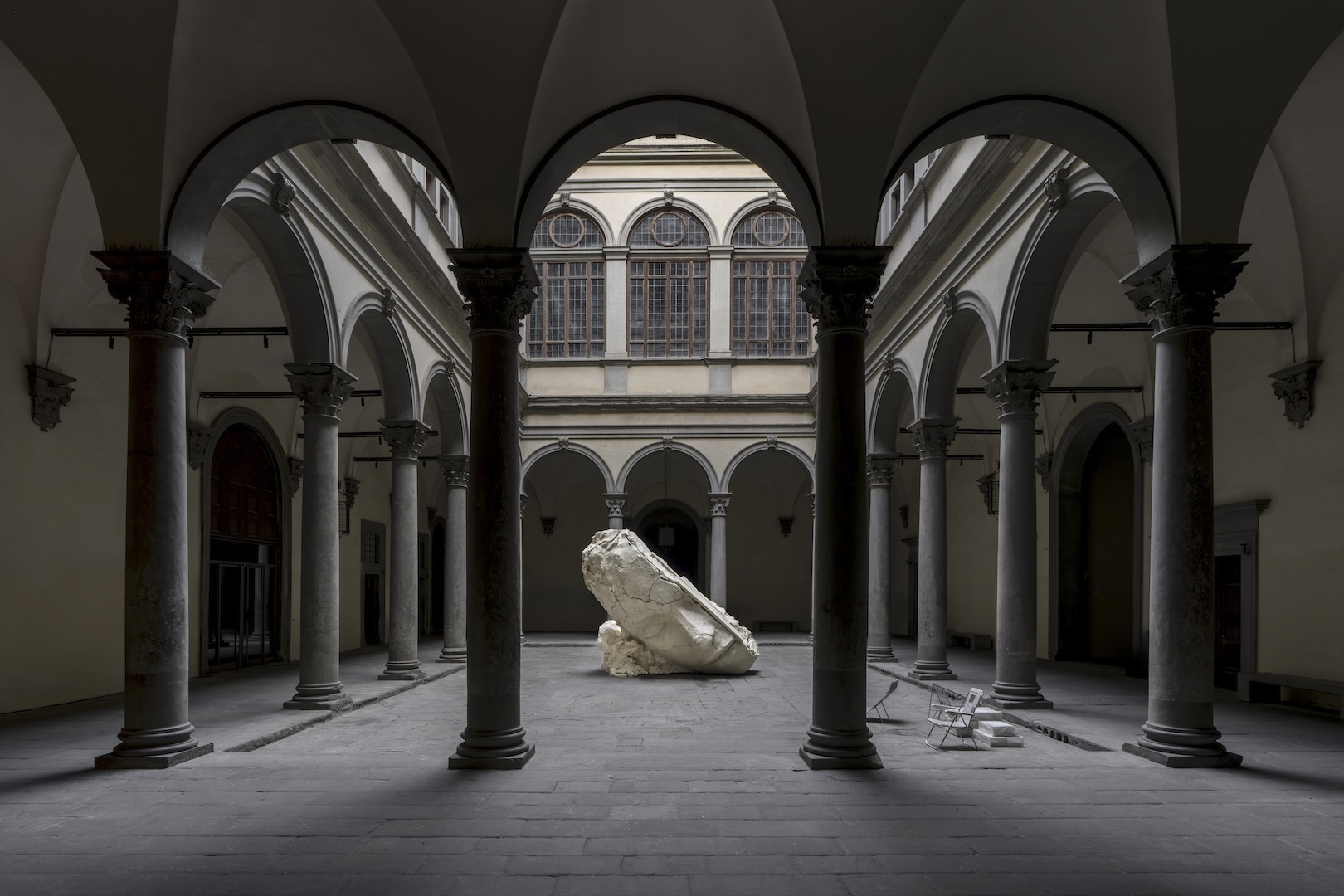
By Rebecca Ceccatelli. Cover image by Ela Bialkowska, OKNO Studio.
There is something deeply seductive about things that are incomplete. Yet why do we instinctively consider the intact artwork more authentic, more complete, more worthy of our attention than what remains of it? There is a long-standing prejudice in the way we look at art, dictated by the idea of wholeness as a fundamental condition of the artwork’s existence. The whole is the ideal, while the fragment appears to be evidence of a loss. And yet, throughout the history of art, the incomplete has repeatedly revealed a power of its own. Detached from the body, a detail suddenly demands to be seen on its own terms. This is where Broken. Il potere del frammento at Palazzo Strozzi takes its cue: from questioning the privilege we instinctively assign to completeness. Rather than asking us to mourn what is missing, the exhibition invites us to look differently at what remains. Fragmentation is not treated simply as the aftermath of damage, but as a condition capable of producing new meanings. The break, in this sense, is not only an ending. It can be the moment in which another work begins. With this shift in perspective, Broken asks us to enter the exhibition not in search of what has been lost, but to discover what the fragment has made possible.
The Art of the Fragment: Inside the Opening Rooms of Broken
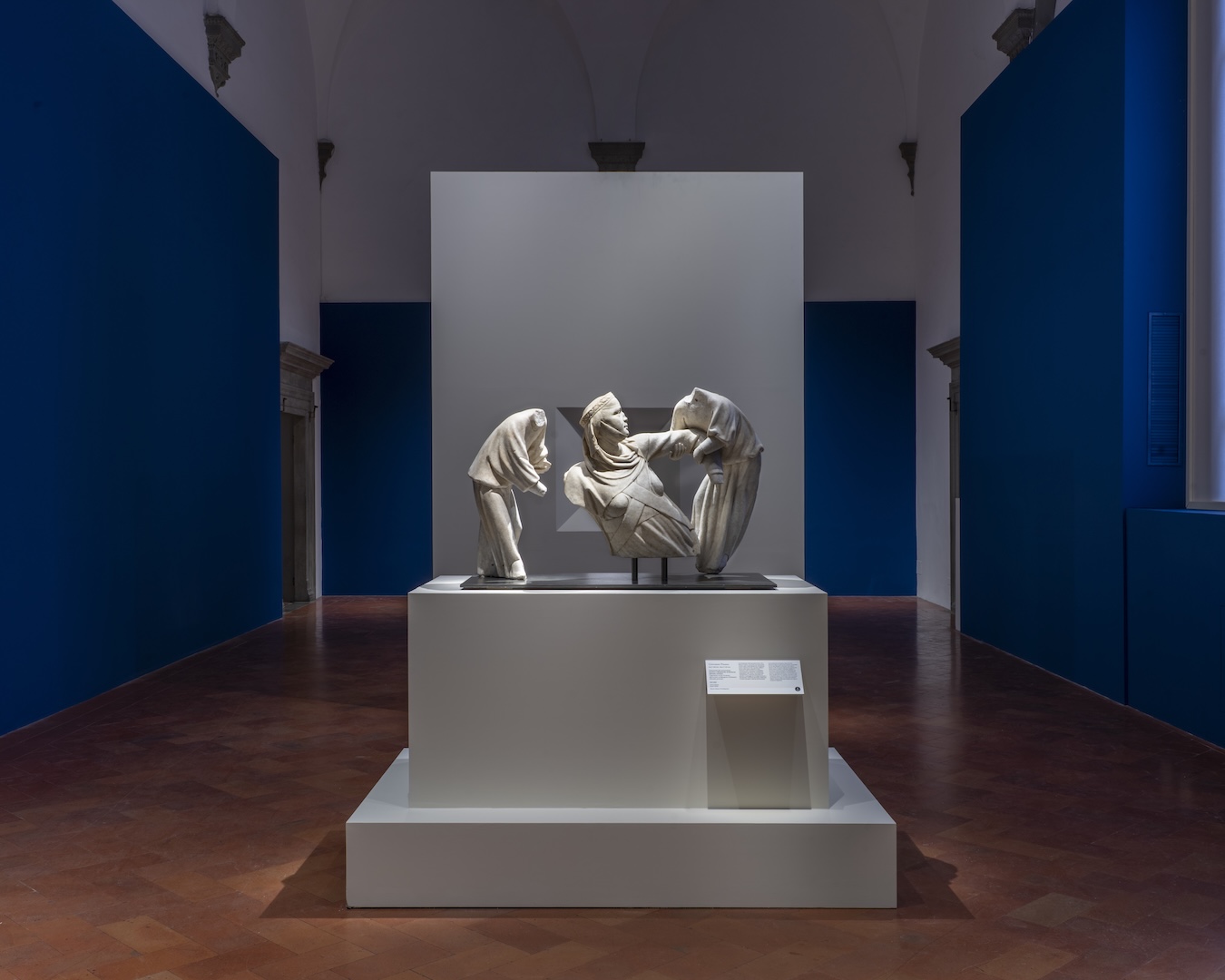
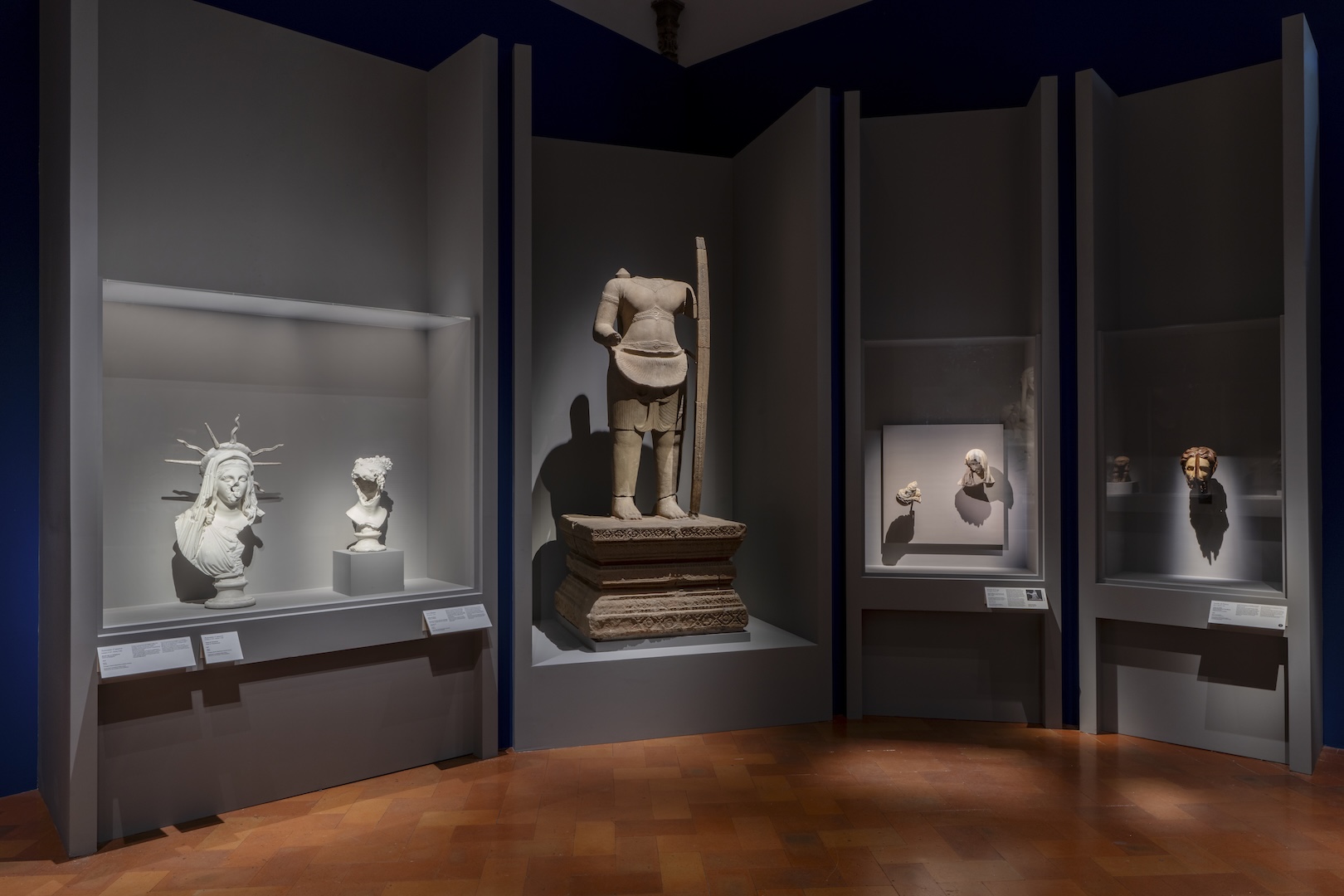
As we enter the first rooms of the new display at Palazzo Strozzi, this shift becomes instantly tangible. Fragments from different cultures and distant moments in history are presented in museum-like vitrines, almost stripped of the bodies and monuments they once belonged to. A fragment of Giovanni Pisano’s funerary monument to Margaret of Brabant sits alongside the head of the Cham Bodhisattva Avalokiteshvara and the tiny limestone Nose and Lips of Akhenaten. Their original contexts could hardly be more different, yet once isolated, they begin to speak a similar visual language: that of the part suddenly made complete in itself. The Akhenaten fragment, used as the exhibition’s lead image, is perhaps the most telling. Barely a few centimetres in size, the nose and lips almost disappear inside the display case, and yet they exert an extraordinary pull on the room. There is something almost paradoxical in their scale: the smaller the fragment, the more insistently the eye is drawn towards it. Deprived of the face to which they belonged, these few carved features cease to function as mere details. What survives is not enough to reconstruct the original image — and perhaps that is precisely why the eye lingers, looking with a kind of hunger.
Art After Time: Erosion, Decay and the Fragment
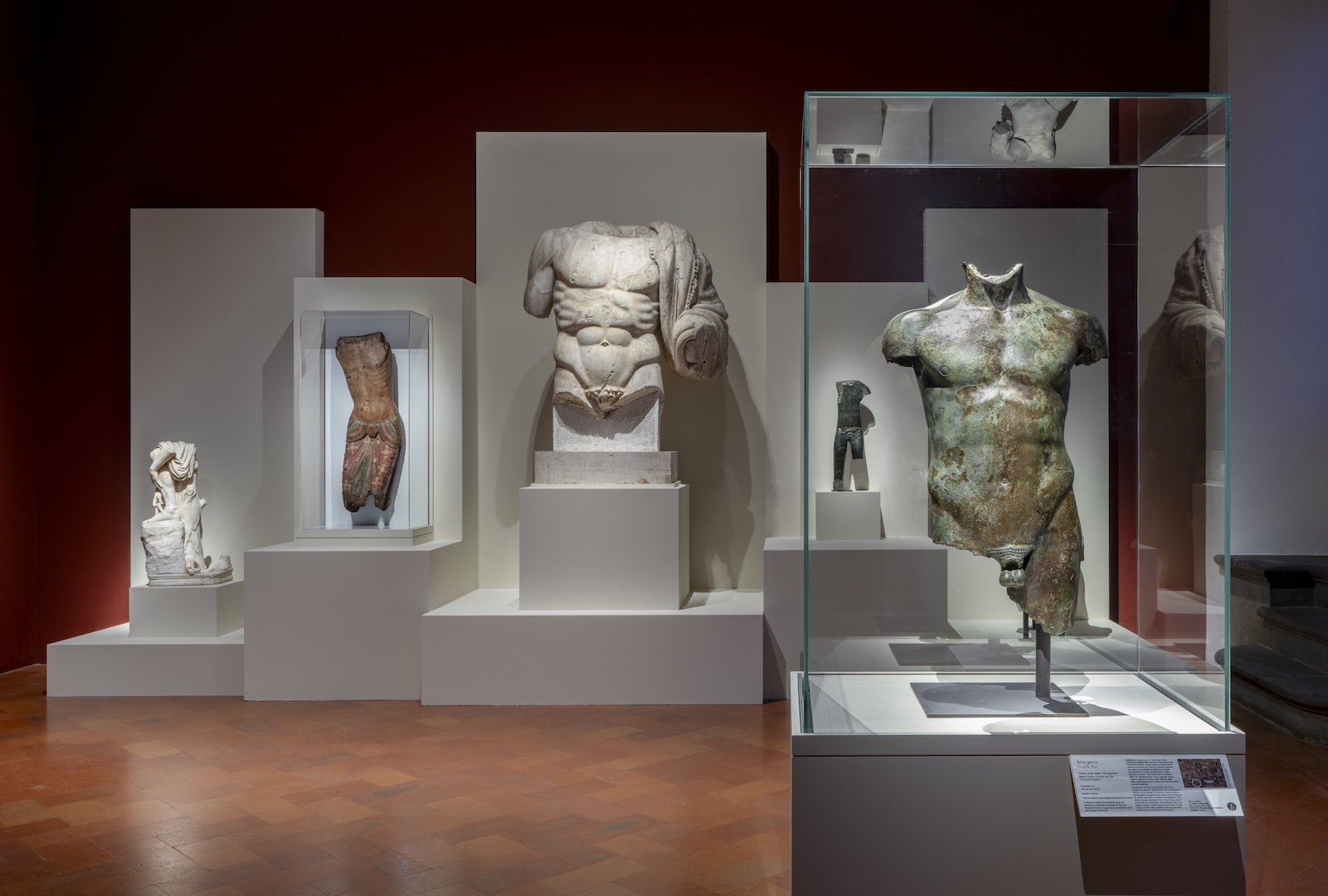
As we move deeper into what could almost be called a cemetery of art, we begin to encounter the many ways in which an artwork can become a fragment. The most inevitable of them is also the quietest: time. Centuries of exposure, erosion, burial, water and decay slowly wear away at the surface of an artwork, taking pieces of its original form with them while leaving behind the marks of everything it has endured. The fragment becomes a surface on which history has left its fingerprints. The Crouching Boy from the Antikythera wreck makes this almost tangible. After two thousand years underwater, the parts of the bronze exposed to marine organisms have been deeply pitted, while those protected by the seabed have survived in a remarkably different condition. Elsewhere, the traces of the 1966 flood remain visible on Christ Carrying the Cross in Florence, despite its restoration. Water, like time, has left its own handwriting on the works. They carry their afterlife on their surfaces. But time is only one of the forces capable of dismantling an artwork. If time works like a slow hand, wearing an image down grain by grain, destruction arrives with a different kind of gesture: sudden, deliberate, and aimed at the image itself.
Breaking the Image: Iconoclasm, Violence and the Fragment
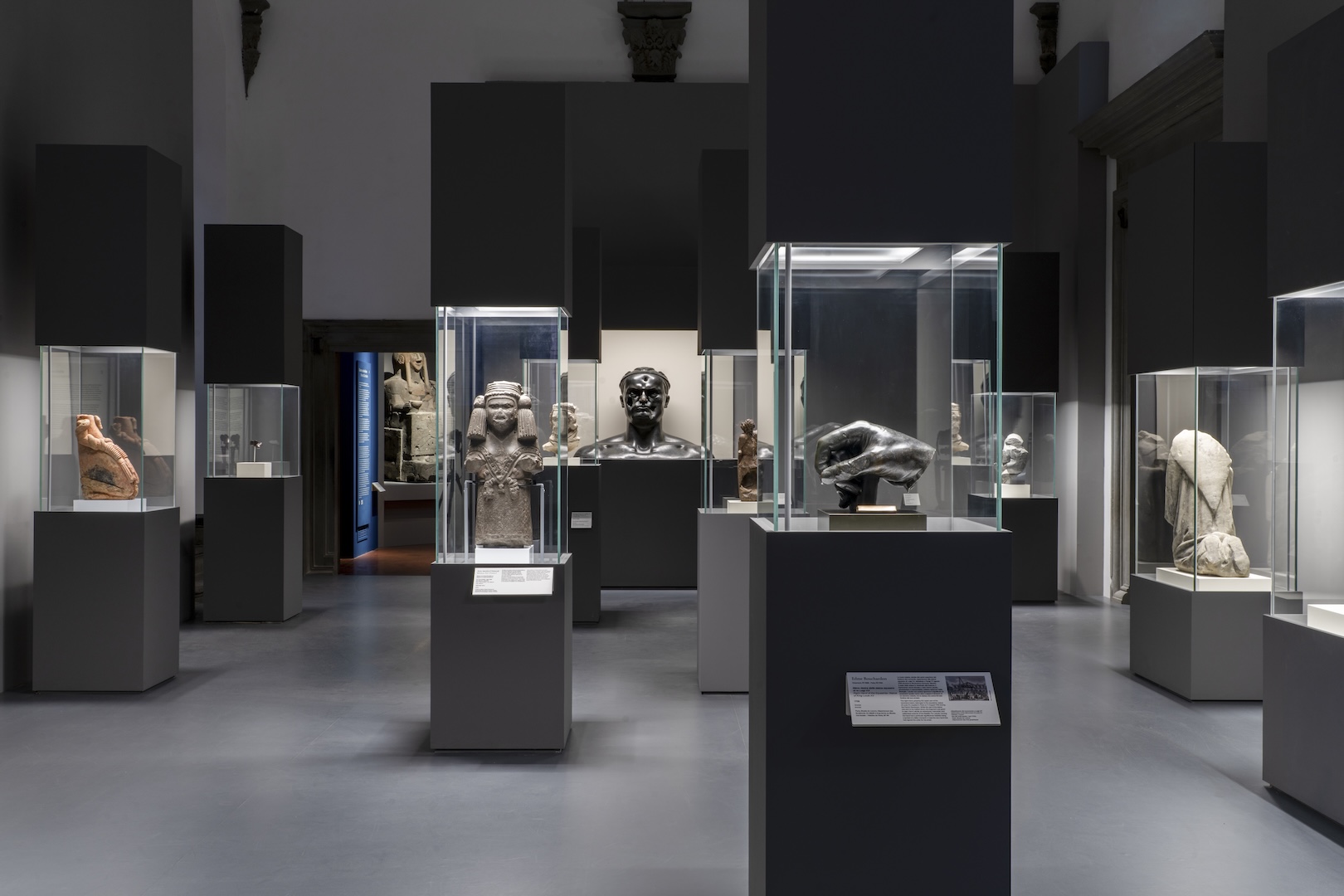
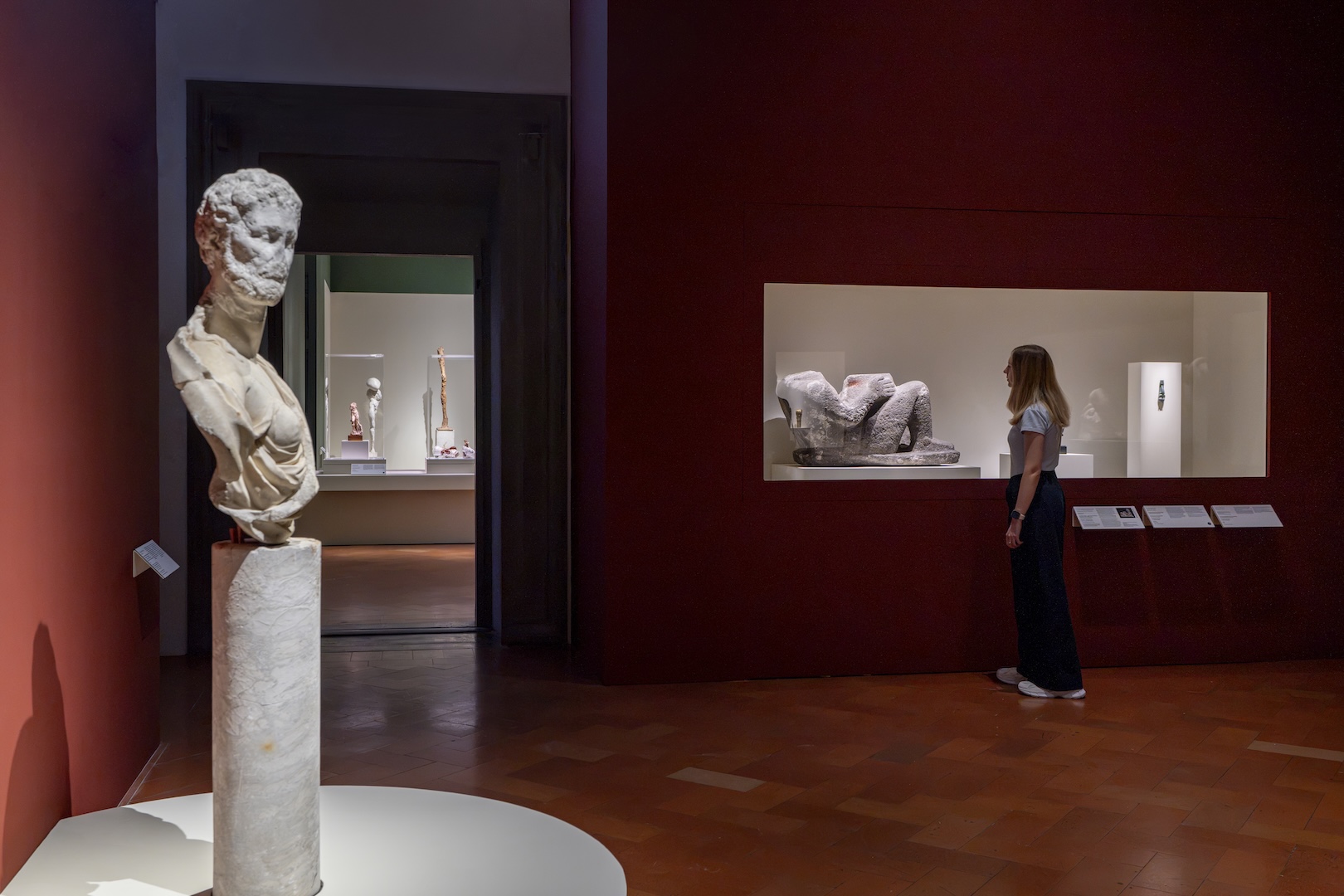
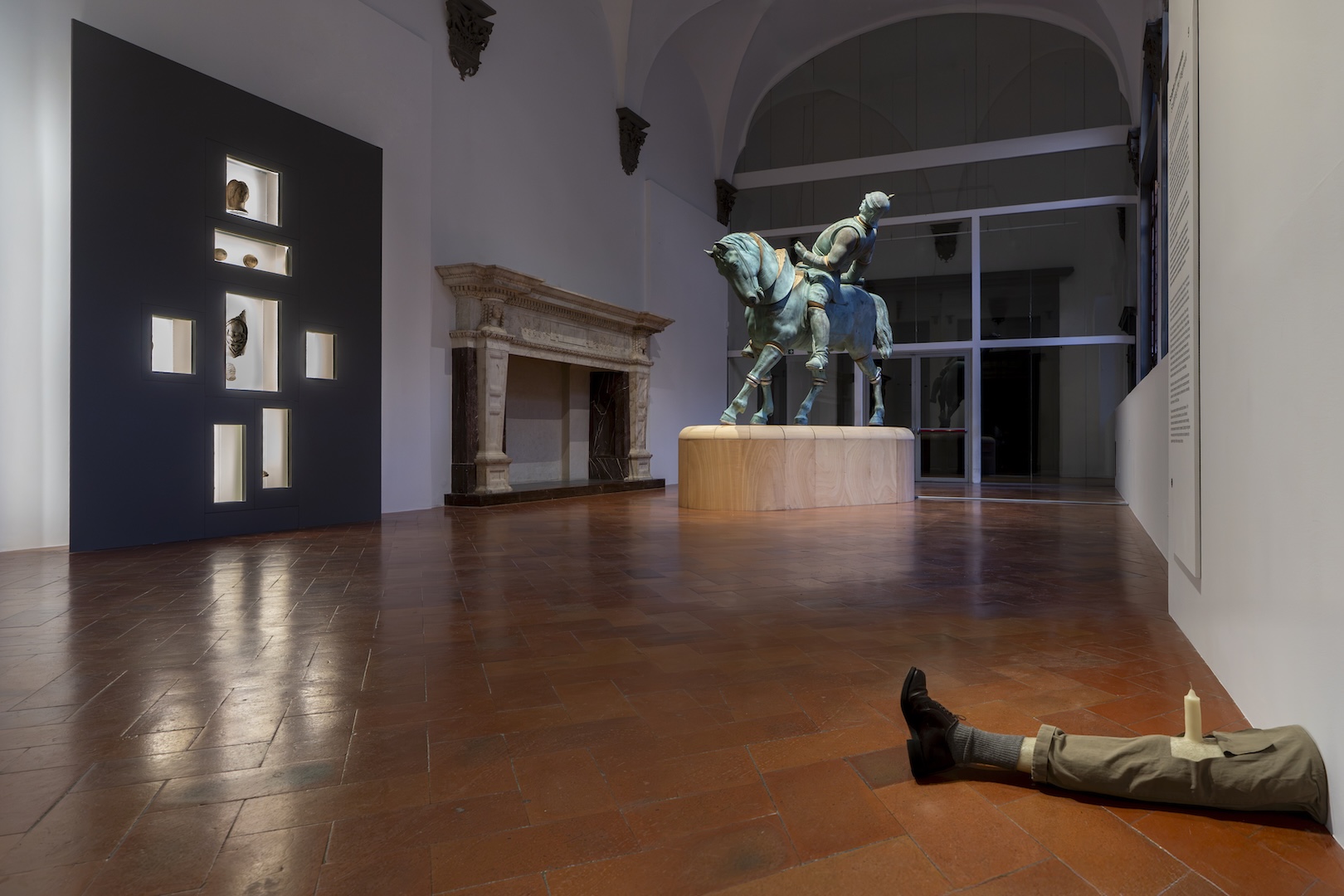
What does it mean to destroy an image? At this point, the fragment takes on a darker life. It is no longer simply the result of time, accident or decay, but the consequence of an act intended to erase — a face mutilated, a monument dismantled, a figure deprived of its body. Iconoclasm, political revolution and the destruction of symbols have long understood the image as something endowed with power: to break it is, in some sense, to try to break what it represents. And yet destruction rarely has the last word. The battered face of the Roman Bust of Germanicus, the isolated left foot of Louis XIV’s monumental equestrian statue, destroyed during the French Revolution, and Adolfo Wildt’s Dux, its bronze surface still marked by bullet holes, are no longer simply damaged objects. Their wounds have become part of what they are. The act of destruction, rather than erasing the image completely, has left behind its own evidence. Each fragment therefore carries two histories at once: that of the figure it once completed, and that of the violence that sought to silence it. There is, again, something almost paradoxical — a kind of historical contrappasso — in this survival. Those who broke images intended to control what would be remembered; instead, the blow meant to silence the image can become the very mark through which it speaks. What was meant to disappear resurfaces in another form, stripped of its former wholeness but charged with a new kind of presence.
Beyond Wholeness: The Fragment as an Artistic Language
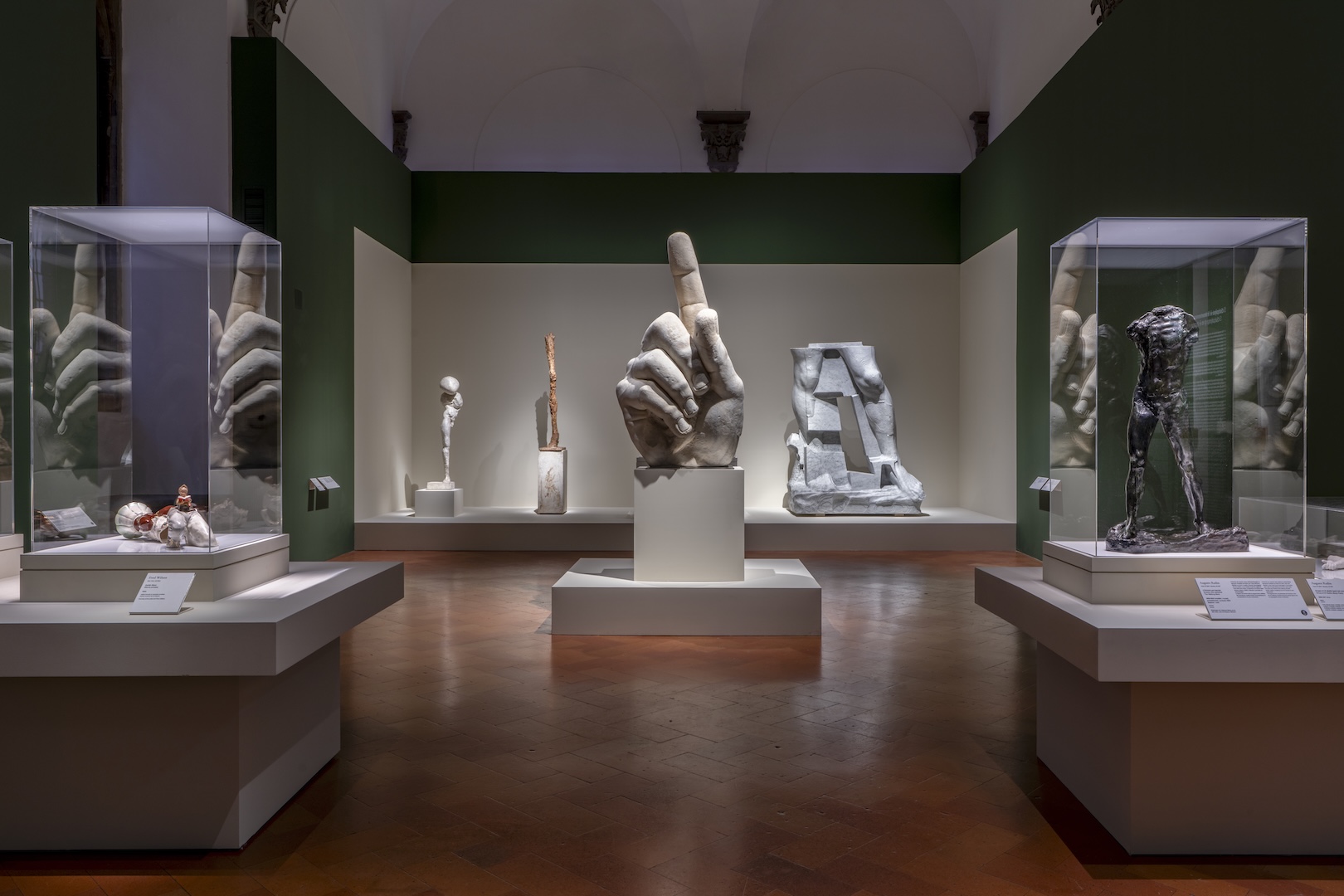
However, amid destruction, intentional erasure and the ceaseless work of time, the rooms begin to be punctuated by another kind of fragment: one that is not the aftermath of a broken whole, but a condition of the work itself. Fragmentation is no longer something that happens to the artwork. It becomes part of its visual language — sometimes through incompleteness, sometimes through isolation, and sometimes by deliberately disrupting the expectation of a unified body. Long before contemporary artists embraced brokenness as a language in its own right, Michelangelo had already found something powerful in what remained unresolved. His fascination with the non finito turned incompleteness into a quality of the work itself. In his Bozzetto di nudo femminile, the figure seems to emerge from the stone without ever entirely freeing itself from it, suspended between presence and absence. What is missing is not simply lost; it becomes part of the image, leaving the viewer to imagine what the stone withholds. Later, as in the example of Auguste Rodin, and particularly L’Homme qui marche, this freedom becomes even more radical. A body no longer needs to be whole in order to convey movement, tension or desire. A torso, a hand, a pair of legs can be sufficient. The isolated part does not necessarily ask to be completed; it can hold its own tension. Louise Bourgeois takes this possibility into more intimate territory, using fragments of the body to speak about memory, vulnerability and grief. But even Robert Gober pushes it further still. In his isolated leg (Untitled, 1991), the body becomes a single, charged presence: vulnerable, exposed and severed from any possibility of reconstruction. Set against the context of the AIDS crisis, the missing body is not an absence to be resolved, but part of what gives the work its emotional force.
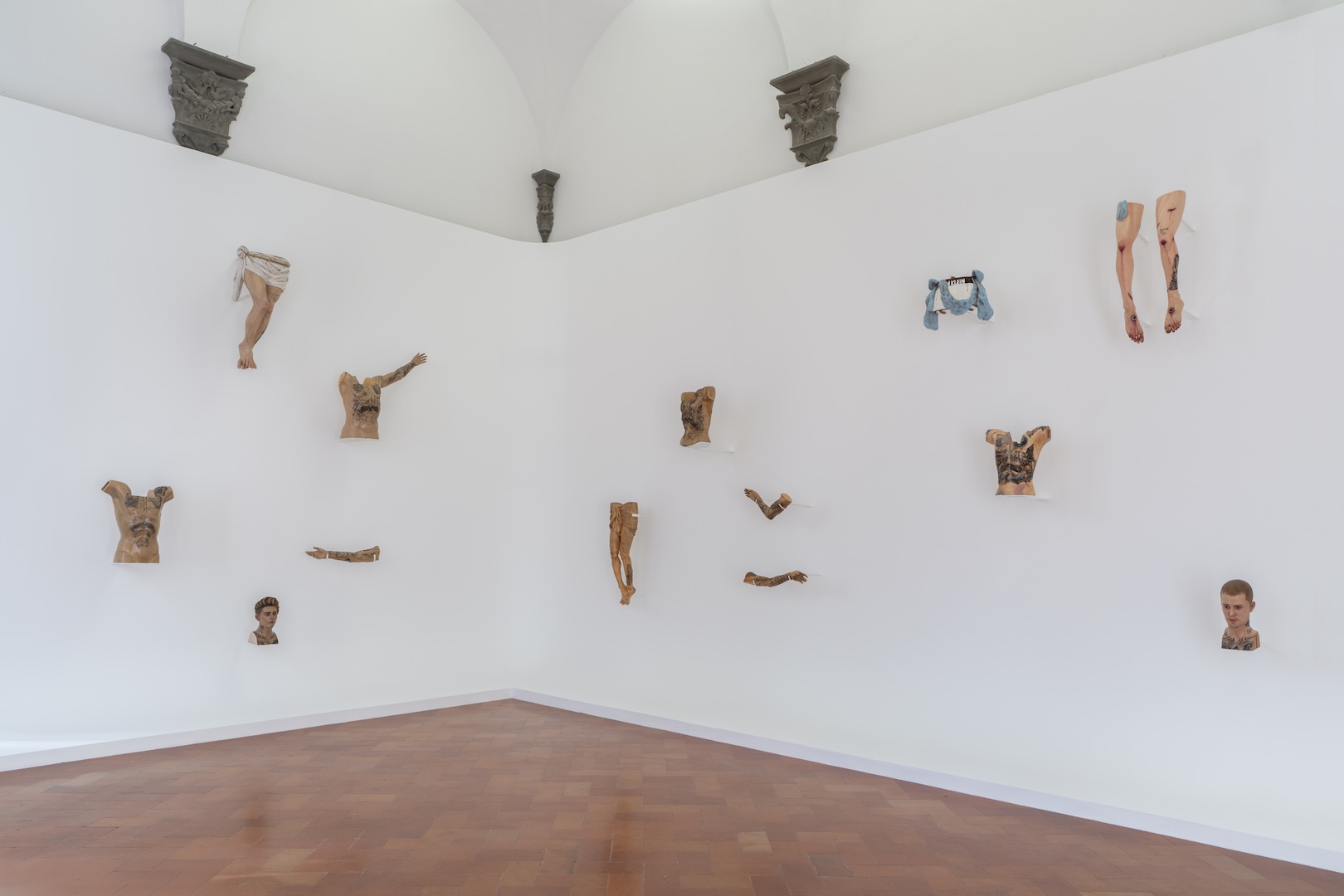
Justin Bieber in Pieces: Paul Pfeiffer and the Contemporary Interpretation
In the final room, the question becomes more radical still: what if an artwork does not need to imagine itself as whole in the first place?
Paul Pfeiffer’s Incarnator series offers one of the exhibition’s clearest answers. Here, the fragment is not what remains after a body has been broken apart; it is the very condition through which the body is conceived. Heads, hands, feet and limbs are produced as separate elements and brought together into figures that resist the seamlessness we normally associate with the human body. In the works representing Justin Bieber, Pfeiffer turns a contemporary celebrity — one of today’s manufactured icons and myths — into a body assembled from parts. Rather than presenting a single, unified portrait, he disperses the image across its components, making separation itself part of the sculpture.
The effect is almost that of a contemporary relic. The body of a celebrity, normally encountered as a seamless image circulating through screens, photographs and mass media, becomes tactile, discontinuous and strangely vulnerable. The gaps between its parts are no longer something to overlook. They become the place where the work happens.
Perhaps this is where Broken ultimately arrives: not at the recovery of the whole, but at the possibility of abandoning it as the measure by which we judge an artwork. The fragment does not always ask to be repaired, completed or explained. Sometimes it asks simply to be seen — on its own terms, in its brokenness, and in everything that brokenness makes possible.


