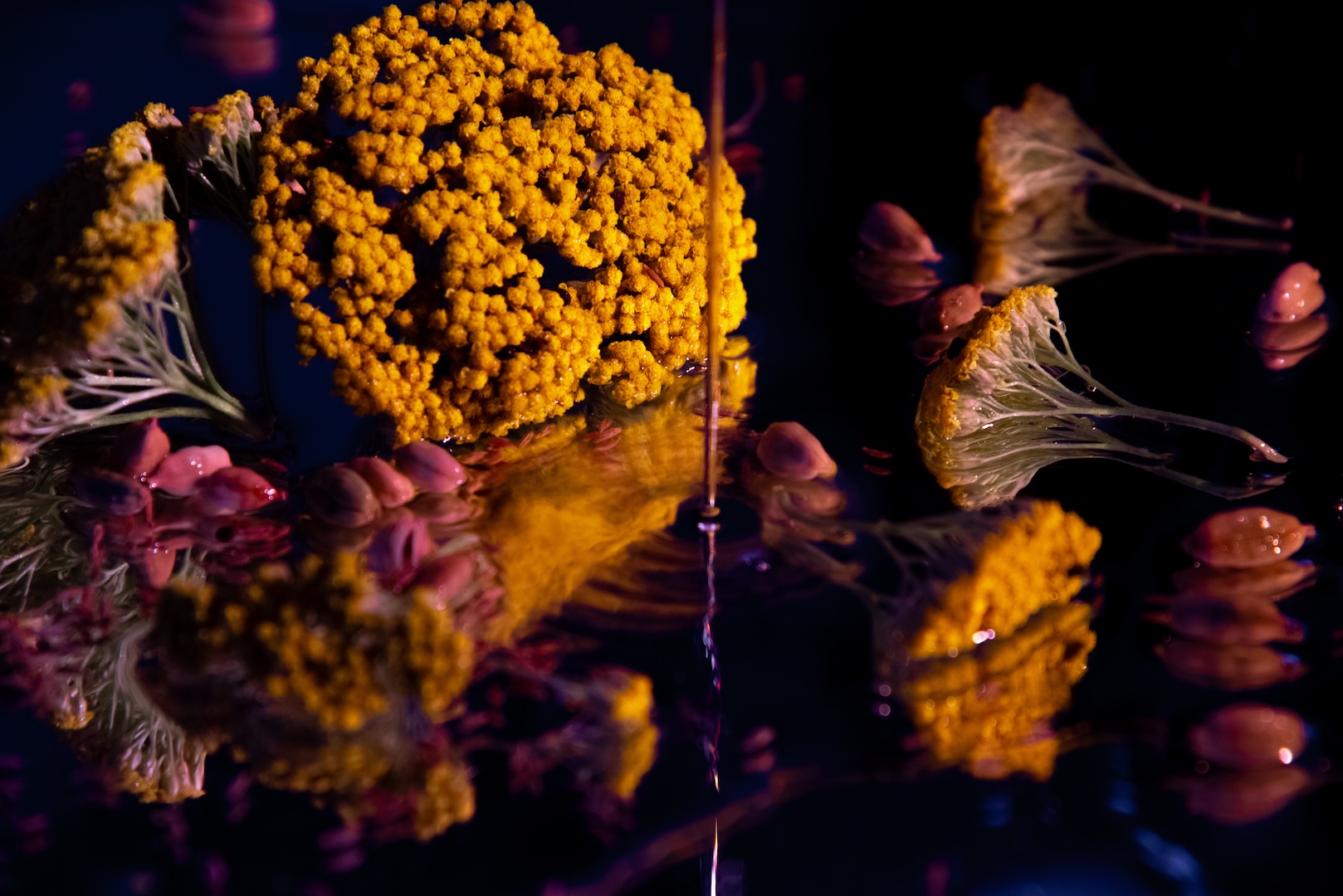
By Camilla Sarra. Cover image by Martina Lucchesi.
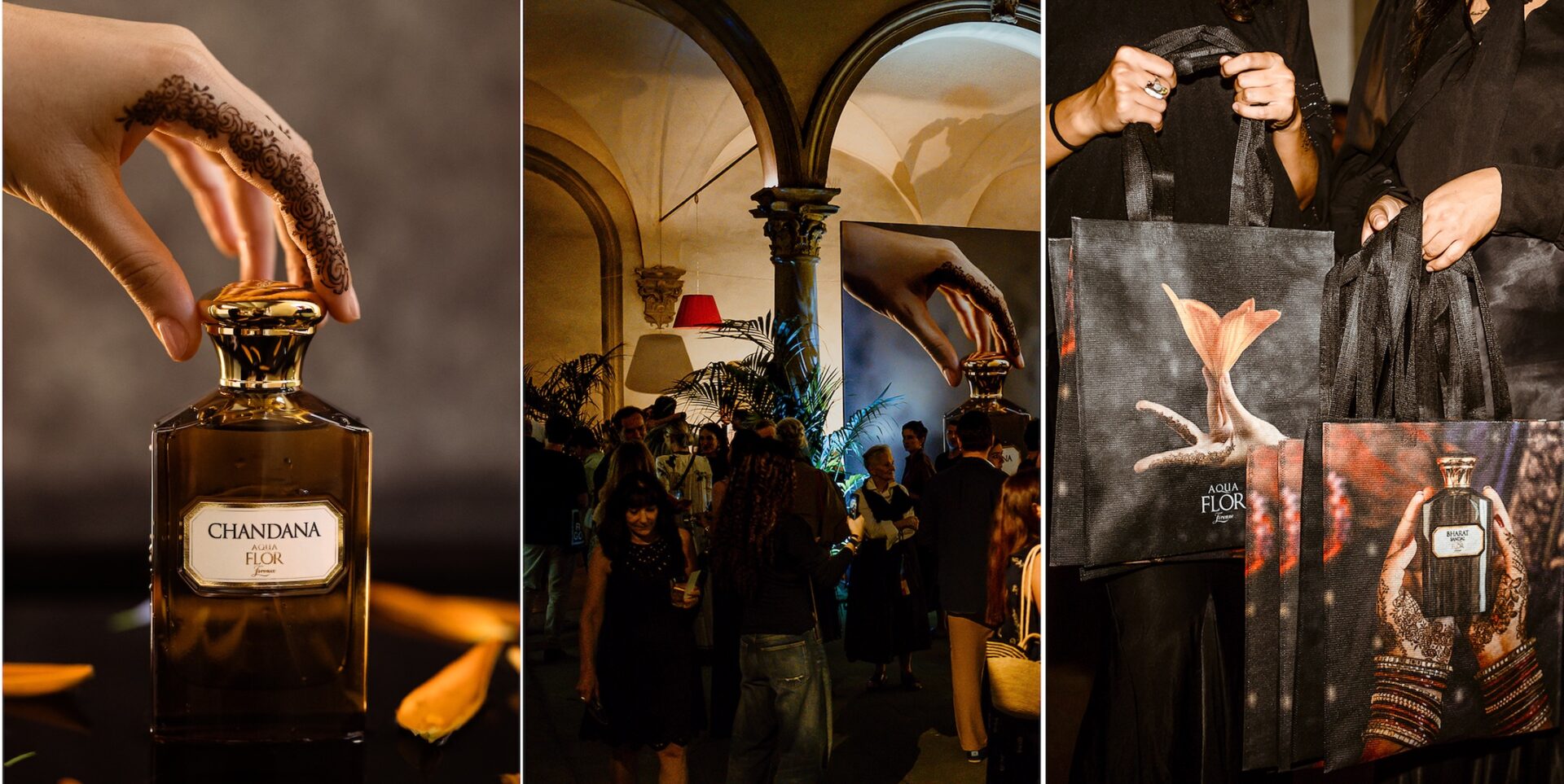
What happens when a perfume launch becomes something you can actually move through? During Pitti Fragranze 2026, Aquaflor explored that idea with Accord of Bharat: A Symphony of Fragrances and Sound from India, presented on September 11 inside its historic Florence headquarters at Borgo Santa Croce 18, as a collateral event to the fair. Created in collaboration with Istituto Marangoni Firenze, the project introduced Bharat Sandal and Chandana, two new fragrances inspired by India and by the role scented materials play within its culture. Moving from room to room, the experience became an intimate and remarkably powerful journey, completely immersive, with each space drawing visitors further into a different atmosphere. Students from the school’s Art, Fragrance and Fashion Business courses contributed to an installation where perfume unfolded alongside sound and imagery, allowing the two compositions to become stages of the same sensory narrative. The journey opened with the warmth of everyday rituals and hospitality, then slowly shifted towards a quieter dimension connected with contemplation.
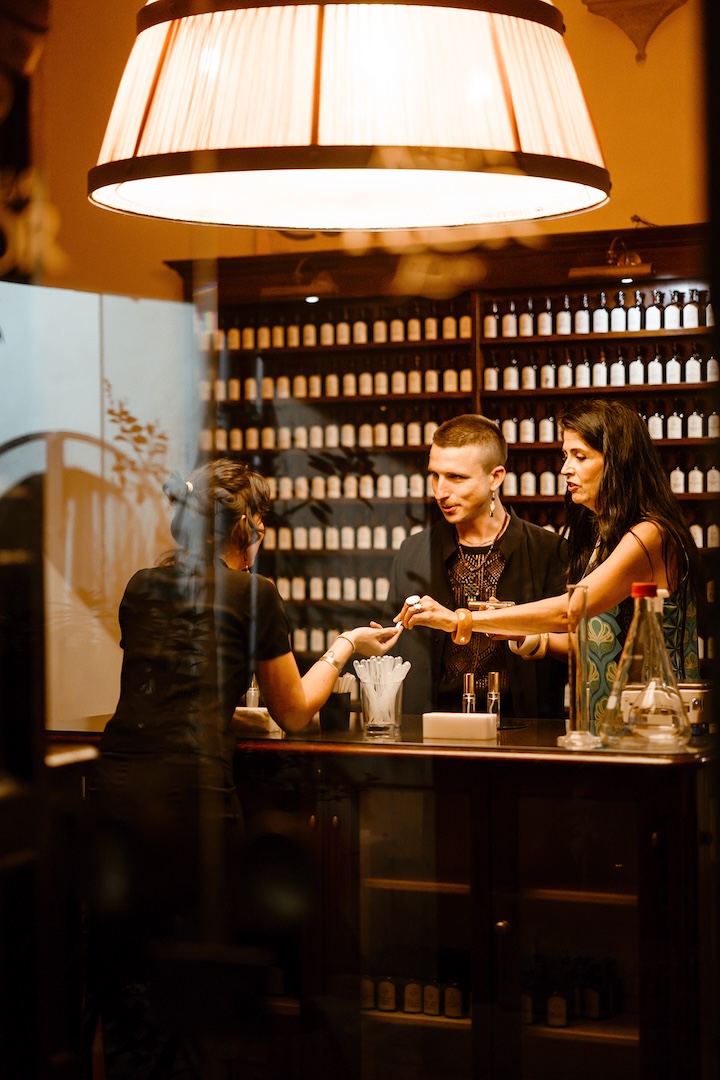
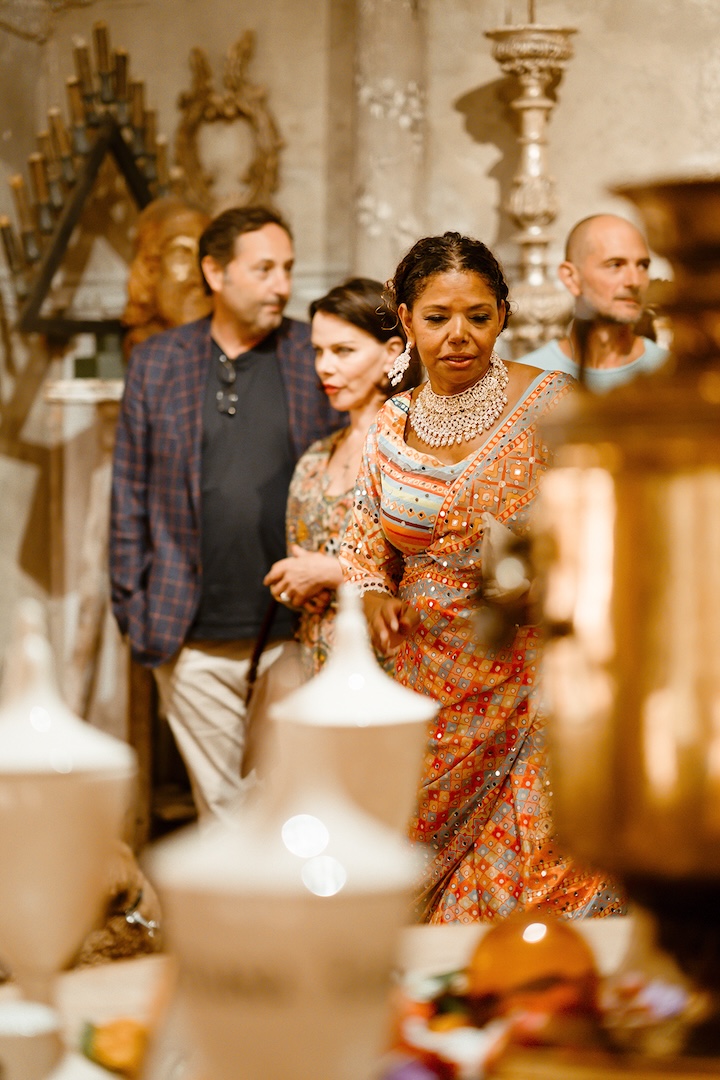
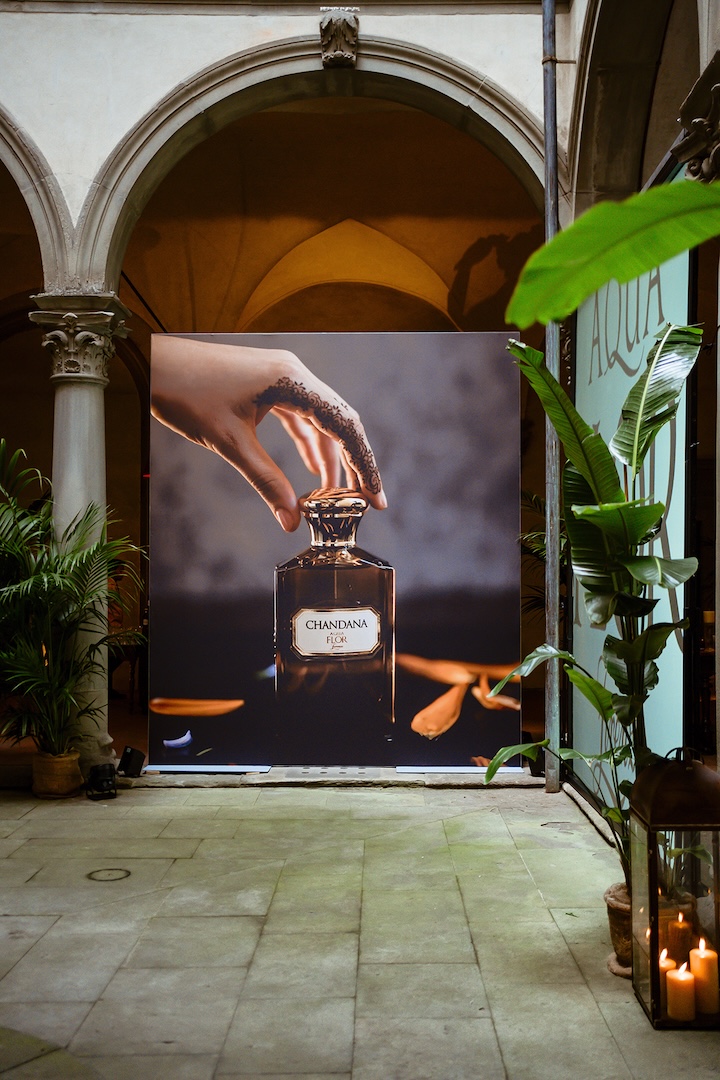
At the centre of the project were the materials themselves. Assam tea, sandalwood, davana and champaca became the vocabulary through which Aquaflor approached India, using ingredients already charged with cultural associations. Aquaflor’s work is rooted in research into raw materials and craftsmanship, and here that approach became something visitors could experience physically: Bharat Sandal and Chandana were placed within a sequence of spaces where sound and visual elements continually changed the way the fragrances were perceived.
Bharat Sandal begins with the ritual of welcome
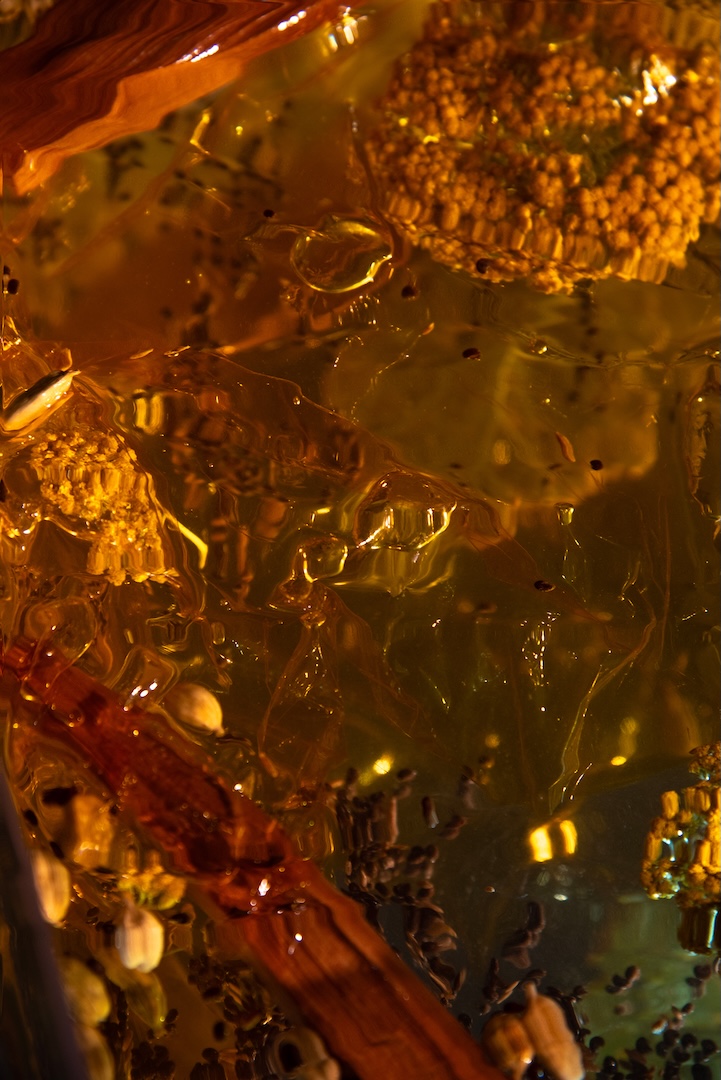
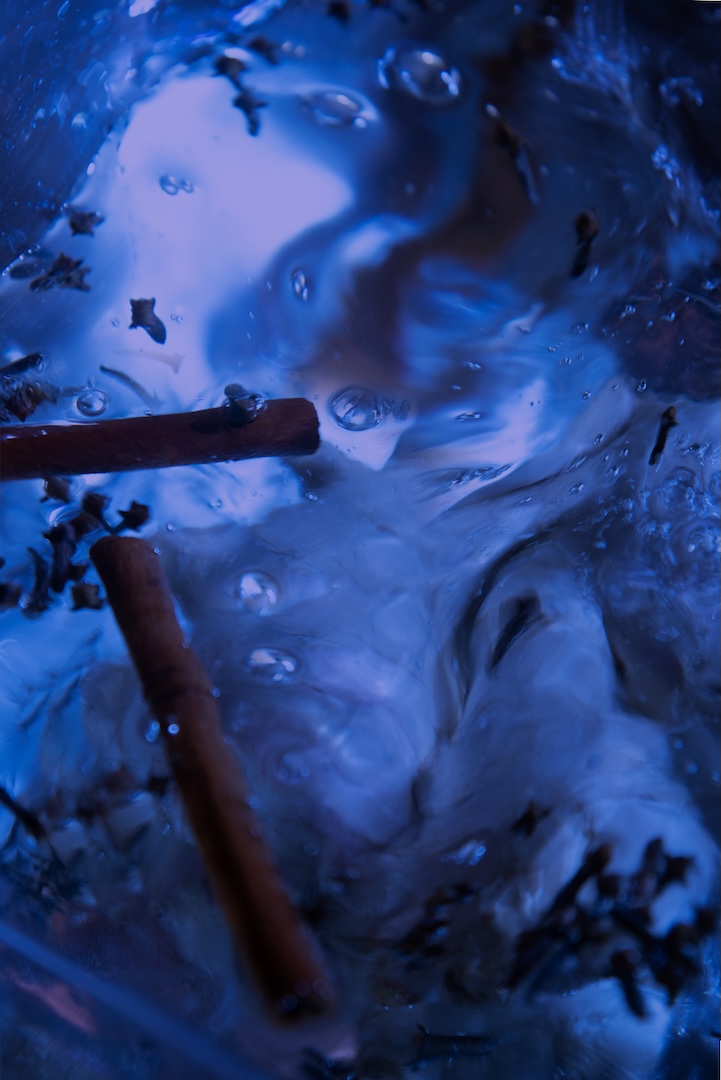
The first side of the journey is Bharat Sandal, a fragrance built around hospitality and shared rituals. Assam black tea opens the composition with a deep, enveloping quality before a dense sequence of spices begins to emerge: cardamom, cinnamon, ginger, saffron, cloves and black pepper form the heart, while cedar and sandalwood create a softer woody base. Tea immediately establishes the mood, evoking a gesture associated with welcome and time spent together, while the spices give the composition movement before the woods gradually slow everything down
Within Accord of Bharat, Bharat Sandal represents the more outward-facing part of the experience. Its story is built around encounter, with the fragrance moving through notes that feel warm and expansive before settling into something deeper. Aquaflor describes it as a scent connected to the meeting of people, cultures and materials, and this is exactly how it functions in the installation: as an opening towards a social, lived-in India shaped by the gestures of everyday life.
Chandana: Sandalwood, Davana and a More Introspective India
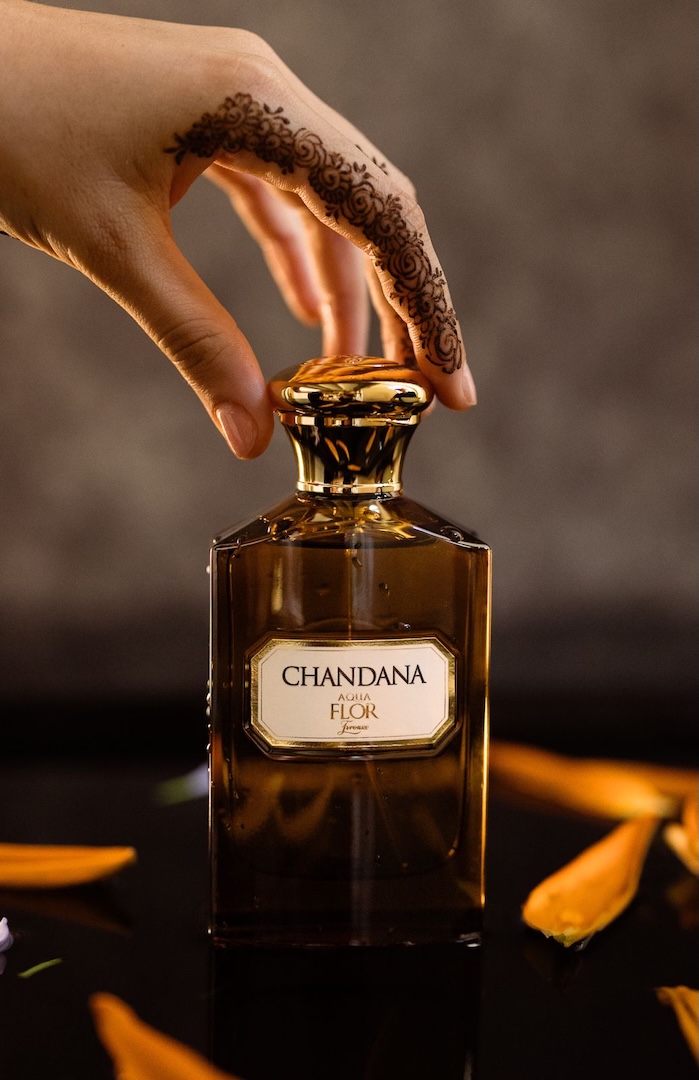
Then the atmosphere begins to shift. Chandana opens with davana, bringing aromatic and herbal nuances with a slightly fruity edge, before champaca and Gurjum balsam emerge at the heart. Sandalwood and amber form the base, giving the fragrance a warmer, softer finish. Aquaflor describes Chandana as a composition that reveals itself gradually, linked to serenity and a sense of presence.
After the warmth of Bharat Sandal, Chandana creates a very different kind of space. The pace becomes slower and the visitor is drawn towards a more introspective atmosphere, with the fragrance moving away from the convivial energy of the first room and into something quieter. That transition gives the project much of its strength because the two perfumes are experienced as complementary parts of the same journey, each approaching India through a different emotional register.
How Indian Raw Materials Become Cultural Memory in Fragrance
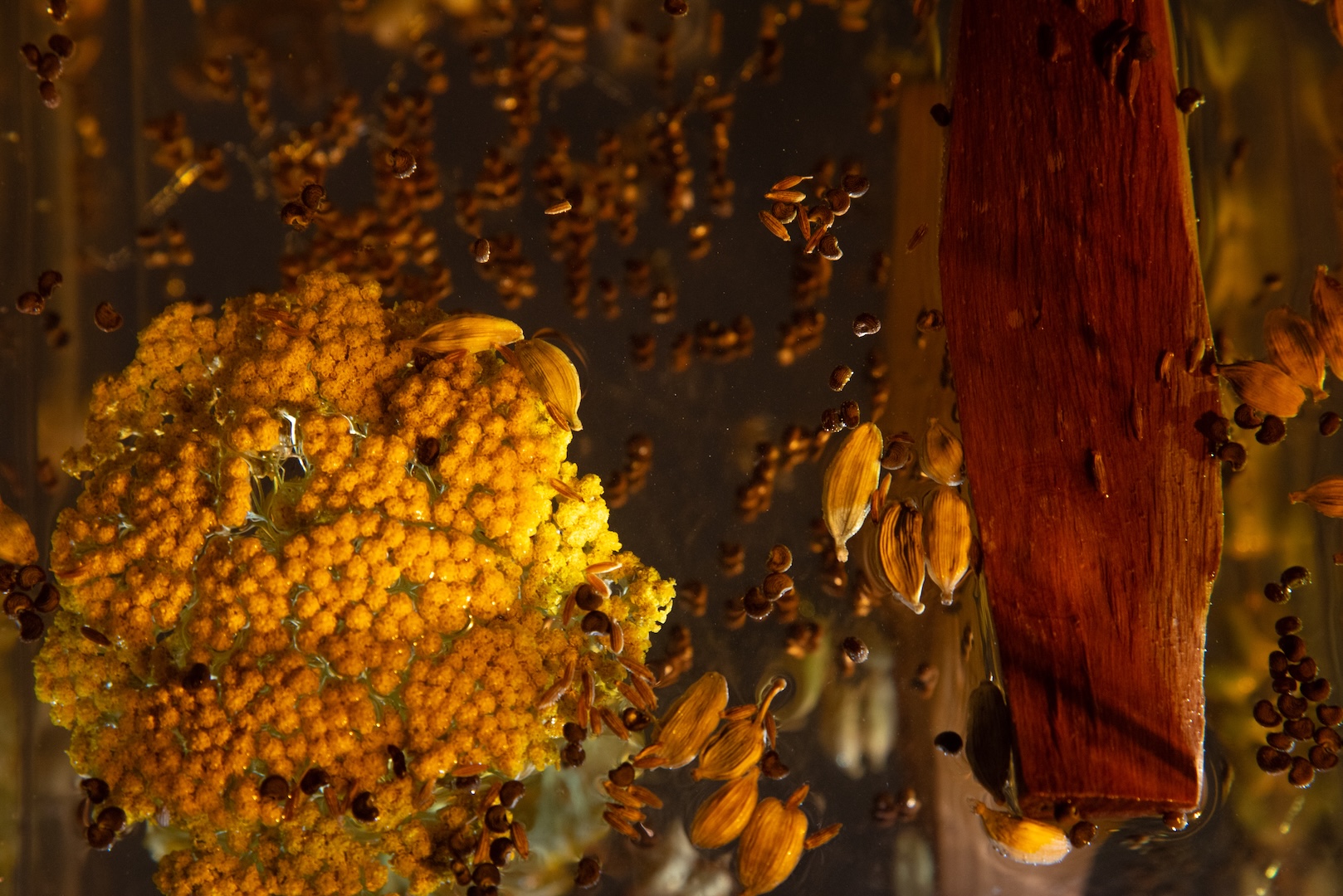
One of the most interesting ideas behind Accord of Bharat is the way raw materials are treated as carriers of memory. Tea, sandalwood, spices and flowers arrive with their own histories and meanings, and Aquaflor uses them as the starting point for a contemporary interpretation of India. In the project’s press material, these ingredients are described as witnesses to a millenary culture while remaining living matter in the hands of the perfumer.
That idea gives the project depth. Sandalwood is more than a base note, and Assam tea becomes more than an opening accord: each material helps establish a cultural atmosphere before the visitor has even begun to analyse the perfume technically. The fragrance therefore works through association, allowing memories and references to emerge through smell. Aquaflor’s stated intention was to approach India through its materials and through the emotions they can generate, with Bharat Sandal centred on encounter and Chandana moving towards silence and contemplation.
How Istituto Marangoni Firenze Students Shaped the Fragrance Experience
The collaboration with Istituto Marangoni Firenze added another layer to the project. Students from the Art, Fragrance and Fashion Business courses were involved in developing the multisensory installation, bringing their different areas of study into a single experience. The two perfumes could therefore be discovered within a wider environment shaped by sound and imagery, giving visitors several ways to enter the narrative.
For the students, the project also became an opportunity to explore fragrance as a creative medium capable of shaping the perception of a space. Scent could interact with the visual language around it, while sound altered the rhythm of the experience from room to room. That exchange between disciplines made Accord of Bharat particularly interesting within the context of Pitti Fragranze, where perfume increasingly crosses into the territories of installation and cultural storytelling.
Inside the Accord of Bharat Multisensory Installation
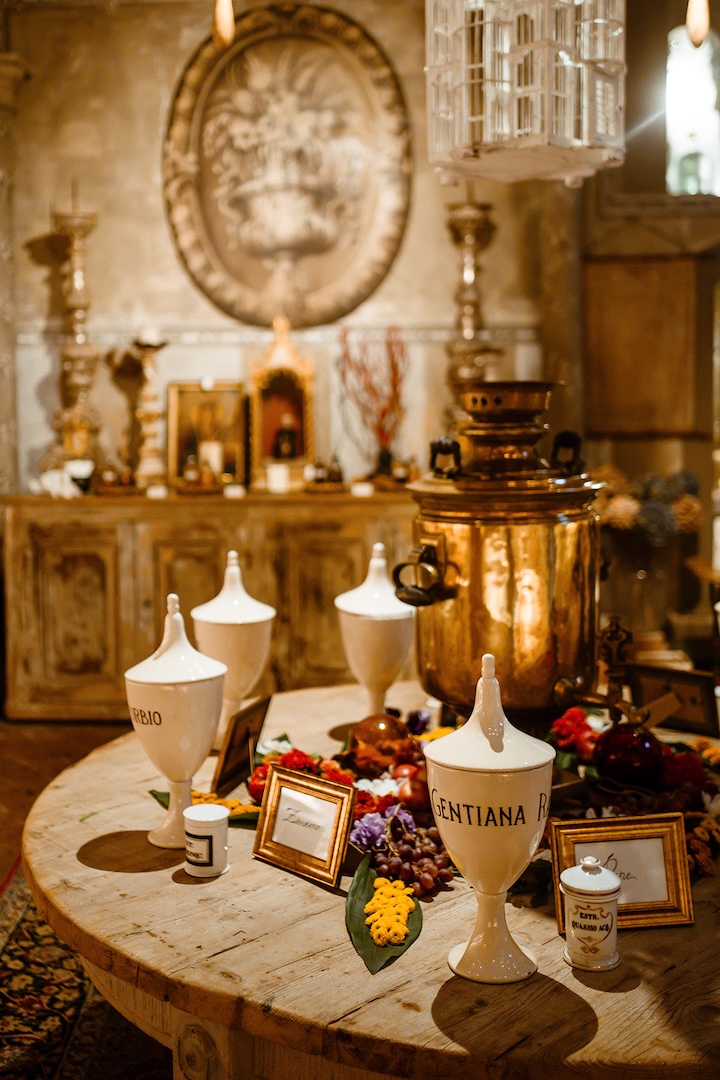
What stayed with us most was the physical experience of moving through the installation. Each room changed the atmosphere slightly, guiding the visitor from the warmth associated with Bharat Sandal towards the quieter world of Chandana. The progression felt intimate because the experience asked for attention: you entered one environment, stayed with a scent and then carried part of that impression into the next space.
This was where the immersive element became especially powerful. The perfumes were never experienced in isolation. Sound helped establish a rhythm and the visual environment created a sense of continuity, while the changing compositions gradually altered the mood of the journey. The result felt closer to walking through a sensory narrative than attending a conventional fragrance presentation.
Can perfume become a way of travelling?
Accord of Bharat ultimately starts from the idea that a place can be approached through what it smells like. Aquaflor chose to tell its story of India through the fragrant materials associated with it, translating their cultural memory into two contemporary perfumes and then giving those fragrances a space to inhabit.
During Pitti Fragranze 2026, that idea became tangible. You entered through tea and spice, moved towards sandalwood and eventually arrived in a quieter emotional landscape. The journey lasted only a series of rooms in Florence, yet for those moments the experience created its own sense of place, showing how perfume can carry us somewhere through the materials and memories held inside a scent.
ABOUT THE VIDEO
A multimedia video and sound installation conceived in collaboration with Istituto Marangoni Firenze students and Alumni. Inspired by a sensory journey through the notes, ingredients, and evocative essence of the two fragrances, the installation draws inspiration from India’s rich colors, textures, and natural elements. Moving images, immersive soundscapes, and atmospheric environments transform vibrant spices, sacred woods, and blooming flowers into dreamlike worlds where scent becomes image, sound, and emotion. Blurring the boundaries between nature, memory, and imagination, the experience invites visitors to slow down, reconnect, and embrace a journey of discovery, transformation, and wonder.
CREDITS:
Istituto Marangoni Firenze School
Director: Lorenzo Tellini
Director of Education: Francesca Giulia Tavanti
Fashion Business & Fragrances Programme Leader: Valentina Grigoletto
Art Department Programme Leader: Davide Daninos
Students:
Master Creative Digital Media: Akriti Agarval, Suraj Shyam Bundeley, Annalisa Cinci, Marian Naser
Master Olfactory Experience Management for the Luxury Industry: Claudia Fonollà Miras, Lucia Scarfò, Jaya Sharma
Master Fashion & Luxury Brand Management: Aparna Ajith Kumar, Patricia Etayo Romero, Emma Innocenti, Marta Del Giudice, Matilde Nuti
Art Department Alumni: Margie Mitchem, Aria Ixchel Zamora Morales, Abraham Yael Perez Mosqueda
Tutors:
Carolina Gestri, Cladio Granato, Gaia Poli, Francesco Migliorini, Enrico Pieraccioli
Photo shooting: Martina Lucchesi
Sound design: Emiliano Zelada


