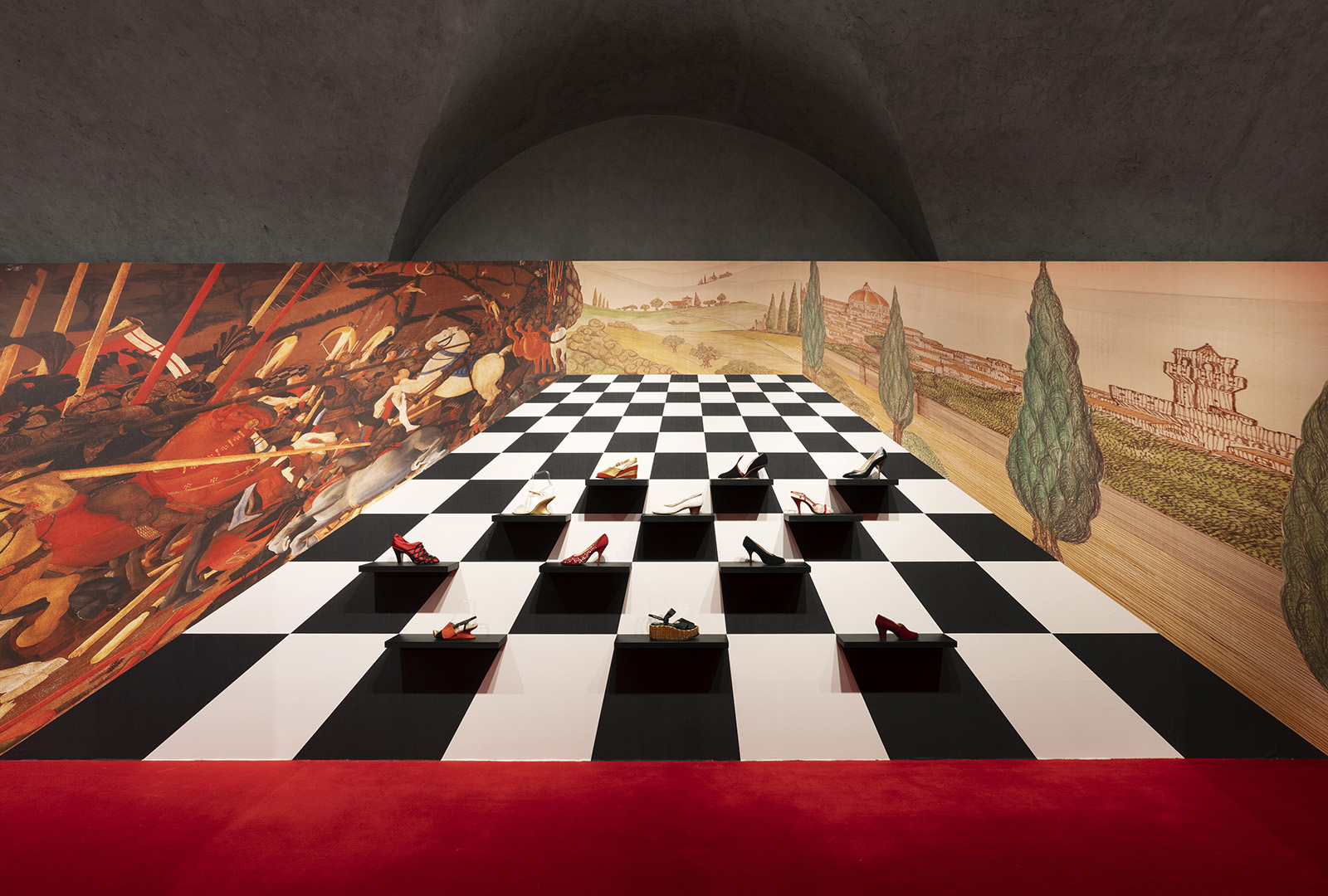
By Rebecca Ceccatelli. Cover image: Exhibition view of Salvatore Ferragamo 1898-1960. Courtesy Museo Ferragamo, Florence.
Salvatore Ferragamo: A Stunning Exhibition Celebrating the Shoemaker of Hollywood’s Golden Age
In 1923, on the Hollywood Boulevard, across from Grauman’s Egyptian Theater, a small shoemaker’s shop opened its doors. It belonged to a man who had emigrated to the United States in 1915 with a single dream: to ride the wave of success by creating masterpieces tailored for the stars of the 20th century.
That man was Salvatore Ferragamo, and the opening of his first store in Hollywood marked the beginning of an extraordinary career. The acclaim that followed earned him the prestigious title of “Shoemaker to the Stars.” And from the first pair of shoes he made for his younger sisters’ First Communion at just nine years old, Salvatore rose to become the shoemaker of choice for film stars and a defining figure in international fashion. Everyone wanted to wear Ferragamo shoes. More than a century later, Ferragamo’s career is being celebrated in Florence at the Museo Ferragamo with one of the most comprehensive retrospectives ever dedicated to his life and work.
Titled Salvatore Ferragamo 1898–1960, the exhibition — on view until April 6, 2026 — builds upon the designer’s first major solo retrospective in 1985, originally held at Palazzo Strozzi and later shown at many other important venues such as the Victoria and Albert Museum in London, the Los Angeles County Museum of Art, and the Sogetsu Kai Foundation in Tokyo.
Inside the Ferragamo Retrospective: A Century of Craft and Innovation
The exhibition spans the years from his birth to his early death, offering a journey through the life of the master shoemaker. It presents an array of documents, videos, archival materials, and of course, shoes — not just admired for their aesthetic beauty, but recognized as evidence of Ferragamo’s entrepreneurial spirit, anatomical knowledge, innovative techniques, love for color, and deep artistic inspirations. His legacy lives on as a symbol of craftsmanship, creativity, and cultural fusion, rooted in both ancient tradition and modern vision. Here’s a sneak peek into the life of the man who shod the stars!
A Boy, a Dream, a Pair of Shoes: The Inspiring Beginnings of Salvatore Ferragamo
Some lives seem destined from the start. For Salvatore Ferragamo, shoemaking wasn’t just a trade — it was a calling that felt as though it had been etched into his spirit long before he ever touched leather or thread. Born on June 5, 1898, in the small town of Bonito in southern Italy, Salvatore was the eleventh of fourteen children in a humble farming family.
While his older brothers had already emigrated to the United States in search of opportunity, young Salvatore remained, quietly drawn to a craft he appeared to know instinctively.
The moment that sealed his fate came when his sisters Giuseppina and Rosina needed white shoes for their First Communion—shoes the family couldn’t afford. At just nine years old, Salvatore stayed up through the night to make them himself. By morning, his sisters stepped out in brand-new shoes, and the boy from Bonito had taken his first step toward legend.
Following the death of his father in 1912, the family’s situation worsened, but Salvatore remained focused. He traveled to Naples to learn more about the techniques of shoemaking, then returned to Bonito to open a small workshop with two assistants—at an age when most boys were still in school. Yet Ferragamo was always looking further. In 1915, at just 17, he boarded the steamship Stampalia and crossed the Atlantic, landing at Ellis Island with a head full of dreams and a skillset already far beyond his years.
On display in Florence are numerous documents that not only showcase Ferragamo’s early talent through historic photographs and video montages but also feature authentic archival materials that trace the young shoemaker’s first steps in his remarkable journey. It is precisely in the presentation of these rare and genuine pieces that the true value of this grand retrospective lies, offering a precious glimpse into the origins of a fashion legend.
His story and legacy were also the focus of the acclaimed documentary Salvatore: Shoemaker of Dreams, directed by Luca Guadagnino, which explored the visionary journey behind his global impact.
From Italy to Hollywood: Ferragamo’s American Chapter
His first stop in America was Boston, where he worked at the Thomas G. Plant Shoe Factory, known for mass-producing Queen Quality Shoes. But the factory model disillusioned him.
The cold repetition of machine-made footwear had none of the soul or precision of artisan work. Seeking something greater, he moved to Santa Barbara in California to join his brothers Alfonso, Girolamo, and Secondino. And it was here that, literally, the cinema began.
His brother Girolamo worked pressing costumes for the American Film Company, and his cousin Jerry had a role in the silent film The Diamond from the Sky (1915). A lucky commission for a pair of boots in an early Western film introduced Salvatore to the studios, where the screen legends of the silent era would soon walk in his shoes.
How Salvatore Ferragamo Became Hollywood’s Favorite Shoemaker
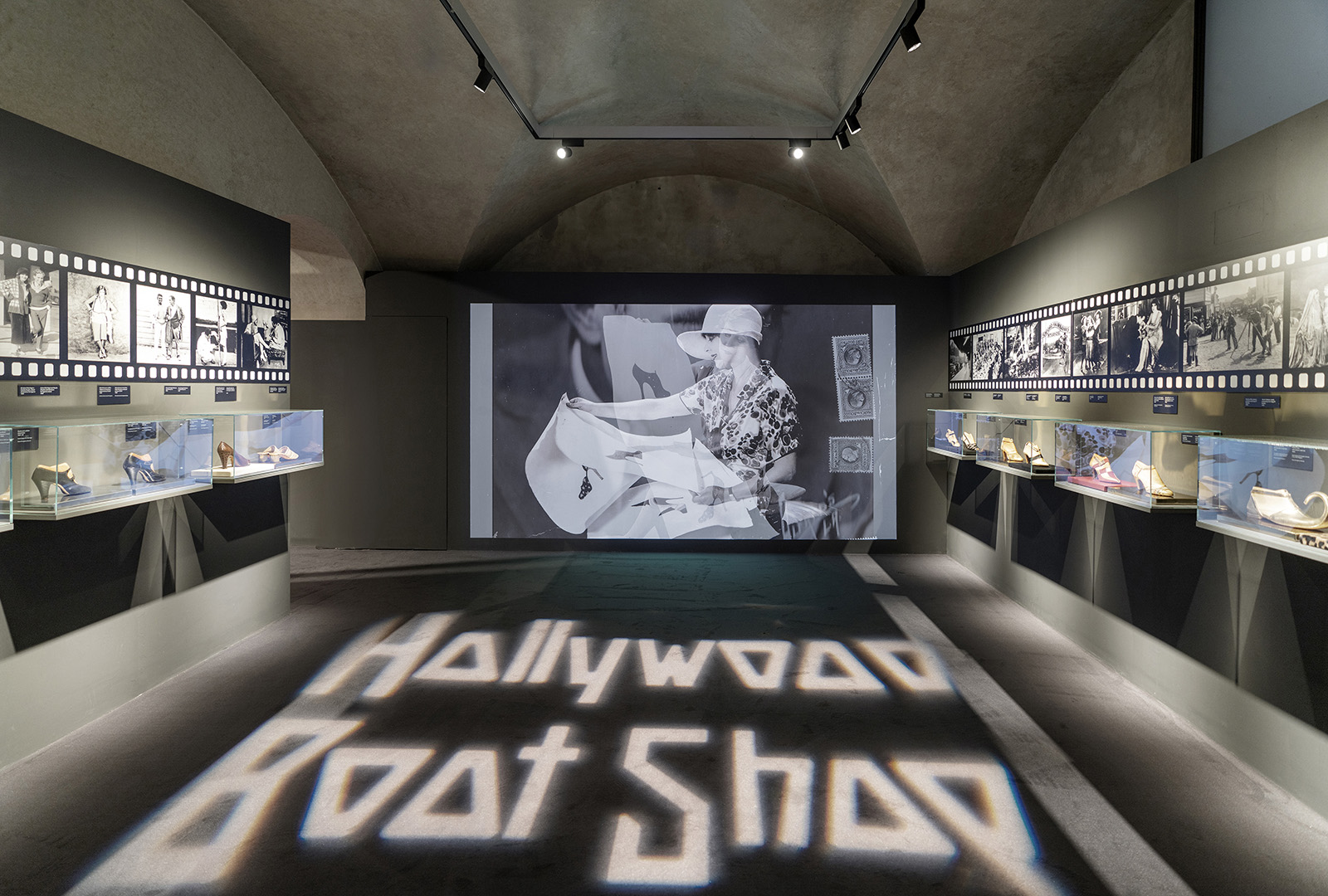
It’s the Golden Age of cinema: the exhibition recreates immersive settings like the one dedicated to his relationship and first commissions for cinema and theatre, in a dimply atmosphere where the highlights are exactly his creations.
The atmosphere is evocative of a vintage movie theater, with a soft, muted glow reminiscent of the flickering light inside an old film projection room. Along the walls, framed photographs and film stills capture iconic moments from early Hollywood productions, each accompanied by the very shoes Salvatore Ferragamo crafted for those silver screen legends.
Showcased are rugged, meticulously handcrafted boots and shoes designed for some historical epics of the period—sturdy yet elegant pieces made to meet the demands of both functionality and style under the spotlight.
Shoes for the Stars, Science for the Soul: Birth of Anatomical Shoemaking
But in the meantime, Salvatore understood that, in order to make the difference, he should have developed a more in-depth study of the anatomy of the feet, to make each piece studied and tailored for the anatomy of each individual client.
That’s why, in 1916, he enrolled in anatomy classes at the University of Southern California in Los Angeles. He wanted to understand not just how shoes looked, but how they worked—how they supported the arch, how they interacted with the human skeleton. That knowledge would become central to his designs.
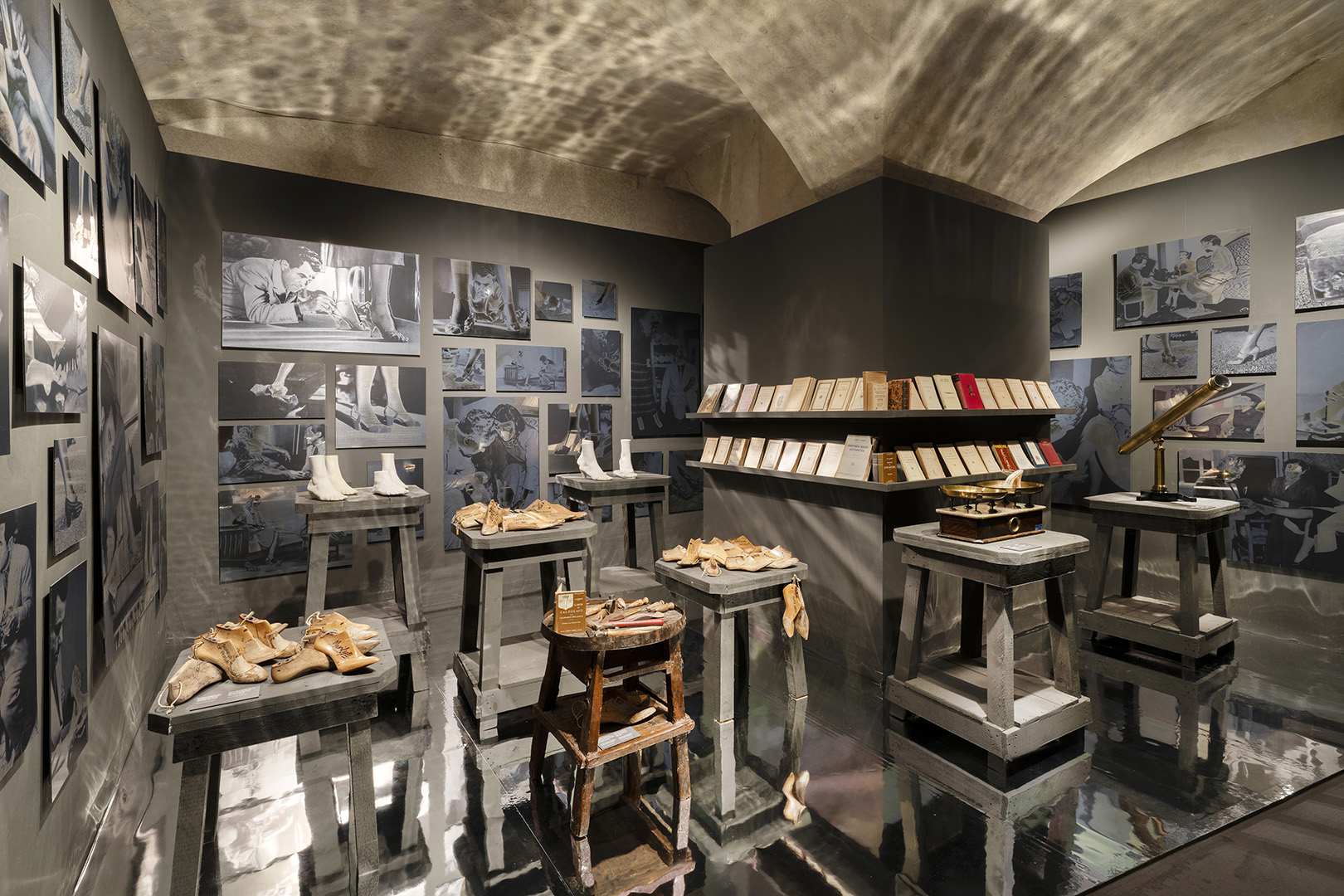
The exhibition also reveals how, from the very beginning, Ferragamo’s creative process was deeply rooted in genuine curiosity and a commitment to truly caring for his clients, supported by a continuingly evolving library made not only of a collection of scientific and technical volumes, but also punctuated by philosophical reflections and volumes about the cosmos, astronomy and transcendency, coming to speak about all the intellectual influences that shaped his unique conception of art and craftsmanship.
This library is reconstructed symbolically in a room of the exhibition, whose walls are dominated by laminated printed photographs of Salvatore, alongside just a small part of the widespread collection of wooden molds of the feet of his clients, shaped to match the unique anatomy of each foot. Each last bore the name of its owner, serving as a tangible reference every time Ferragamo crafted a new pair of shoes.
Ferragamo’s Comeback: Celebrities, Style, and Visual Identity
In 1923, Salvatore Ferragamo moved to Hollywood, acquiring the license for the Hollywood Boot Shop on Hollywood Boulevard and stepping into the world of silent film stardom.
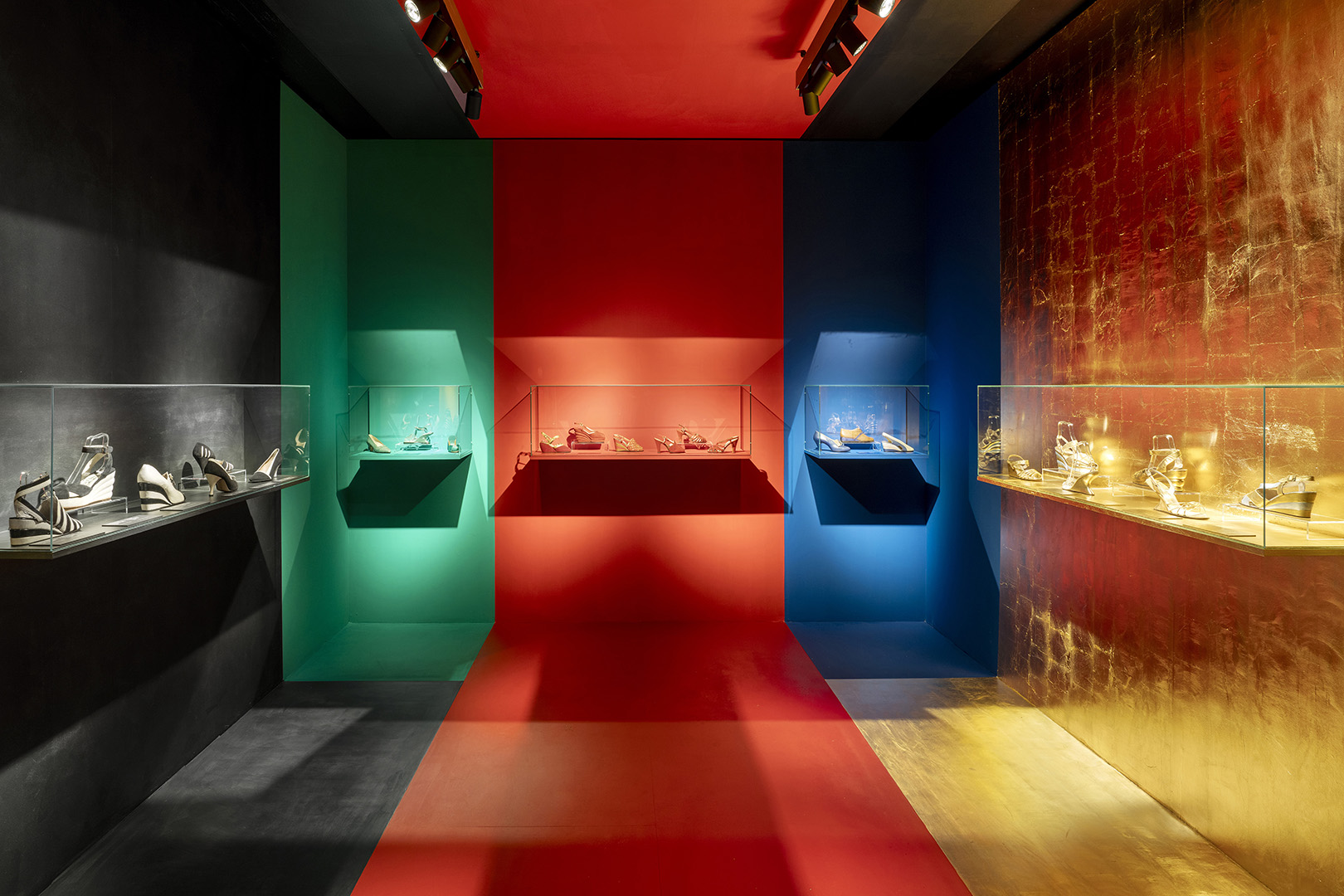
A dedicated room in the exhibition pays homage to Ferragamo’s illustrious celebrity clientele. Here, iconic photographs of stars wearing his creations are displayed alongside the original shoes themselves, from Greta Garbo to Marilyn Monroe, passing from Peggy Guggenheim to Audrey Hepburn.
After gaining American citizenship in 1926 and founding Ferragamo Inc., Ferragamo decided to return to Italy, choosing Florence for its rich artisanal heritage and vibrant cultural scene.
In Florence, Ferragamo opened a factory that blended the precision of American production methods with the quality and tradition of Italian craftsmanship. It was here that he began to weave together fashion and art—two realms he believed were deeply intertwined.
This vision led him to connect with Lucio Venna, a futurist painter and graphic artist whose avant-garde style perfectly captured the innovative and refined spirit of Ferragamo’s designs.
Ferragamo commissioned Venna to create his company’s trademark, promotional posters, and advertising leaflets starting in 1928. This collaboration was born from Ferragamo’s desire to merge fashion with contemporary artistic movements, turning each advertising campaign into a work of art. The futurist aesthetics of Venna and Ferragamo’s technical innovation fused to communicate an image of timeless craftsmanship and modernity—where shoes and art reflected and enhanced each other.
The Shoemaker of Dreams: Patents, Prestige, and a Lasting Legacy
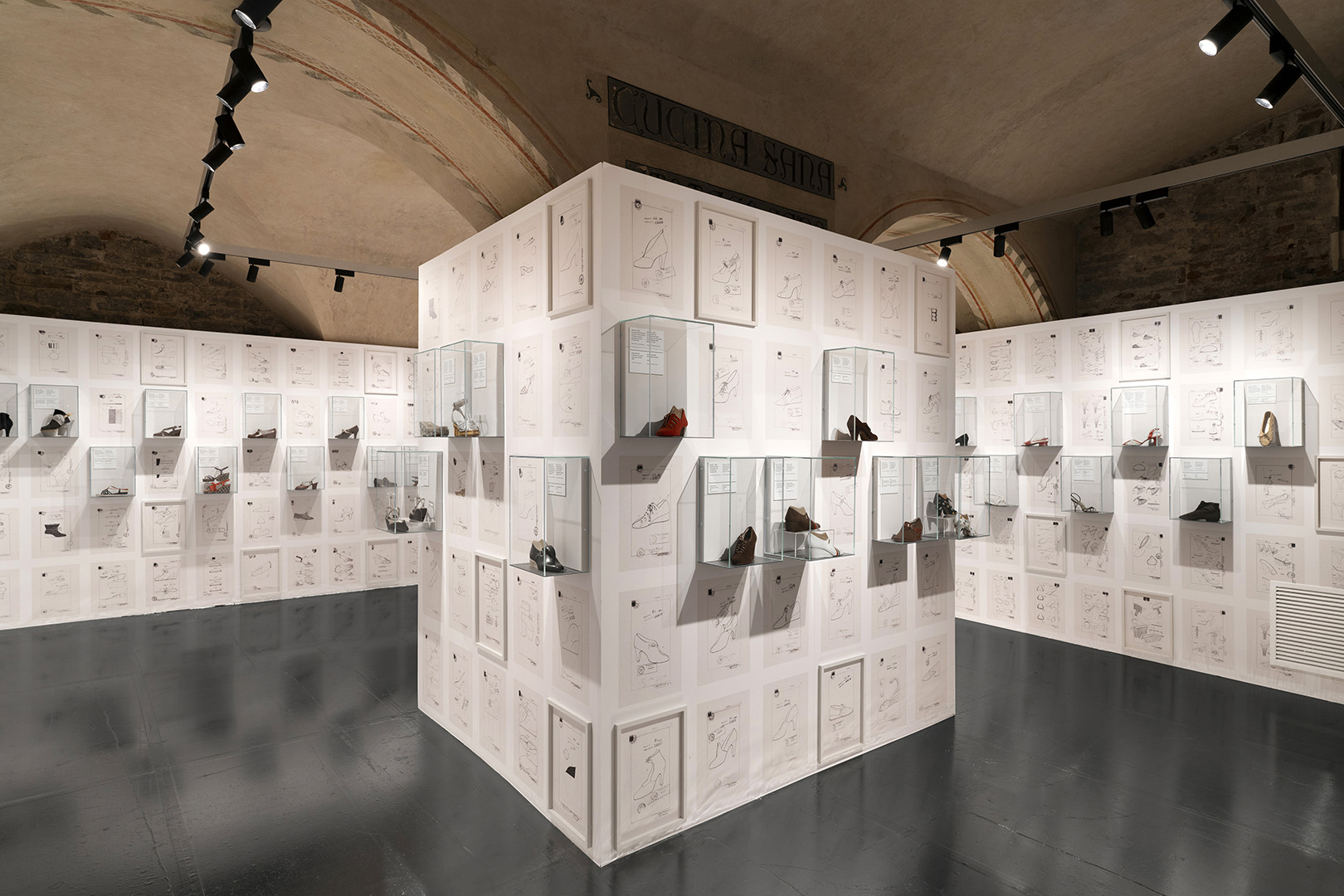
As Salvatore Ferragamo’s name became synonymous with innovation and elegance, he expanded his empire by opening new shops and ateliers, carefully balancing growth with the artisanal craftsmanship that was his hallmark. To protect the originality of his creations, Ferragamo began securing patents for many of his revolutionary shoe designs and technical innovations, ensuring that his inventive spirit and unique methods remained exclusively his own.
This dedication to both artistry and innovation earned him widespread respect within the fashion world. Legendary figures such as Elsa Schiaparelli and Christian Dior were not only admirers but also frequent visitors to his Florence ateliers, drawn by his ability to combine beauty, comfort, and engineering in every pair of shoes.
Even Andy Warhol, before his rise as a pop art icon and then working as a fashion illustrator, paid homage to Ferragamo by sketching his iconic footwear for prominent fashion magazines, celebrating the seamless blend of art and design that defined Ferragamo’s work.
By 1957, Ferragamo’s incredible journey from humble beginnings to global icon was chronicled in his biography: he was now the Shoemaker of Dreams.
However, just as he was riding the highest wave of his success, an unexpected death struck. Salvatore Ferragamo passed away suddenly, leaving his flourishing company in the capable hands of his wife Wanda and their daughters, who continued to nurture and expand the family legacy with passion and dedication.
How Ferragamo’s Legacy Lives On: Museum and Podcast Behind the Scenes
The wealth of information presented in the exhibition speaks to the depth of the Ferragamo Archive, which began to take shape under the direction of Stefania Ricci—still today the museum’s curator and director. It was from the landmark 1985 exhibition at Palazzo Strozzi that the archive was born. Since then, the Museo Ferragamo has honored and continuously enriched it through research, publications, public programs, and exhibitions aimed at bringing the past into meaningful dialogue with the present.
As an institution rooted in fashion—a field defined by complexity and constant change—the museum’s mission has been to keep the conversation alive between Ferragamo’s legacy and contemporary culture. This current project embodies that vision, bringing together objects, documents, ideas, and inspirations in a reflection on how history continues to shape the present.
Thanks to the collaboration of professionals dedicated to preserving Salvatore Ferragamo’s heritage—photographers, architects, and graphic designers—the exhibition employs creative strategies that pay tribute to his legacy with respect and innovation.
And it is precisely to explore these essential behind-the-scenes stories that Museo Ferragamo: Dietro le quinte di una mostra was created—a podcast produced by Fondazione Ferragamo in collaboration with Istituto Marangoni Firenze. Just as the exhibition offers an in-depth portrait of Salvatore Ferragamo as a visionary shoemaker, the podcast takes the same detail-oriented approach to uncover and share the creative and curatorial process behind the exhibition itself. It provides listeners with a comprehensive understanding of how such a project comes to life—from concept to installation—through the voices of those who make it possible.
Info:
You can listen to Museo Ferragamo: Dietro le quinte di una mostra in Spotify, Apple Podcasts, Amazon Music and YouTube.


