By Vittoria Giubbolini. Cover image: courtesy of Officina Profumo-Farmaceutica di Santa Maria Novella.
Can a fragrance hold the memory of a city? On 4 November 1966, the Arno burst its banks, flooding Florence’s historic centre and putting centuries of artistic heritage at risk. Thousands of books were soaked, priceless artworks damaged and streets buried in mud. In the days that followed, young volunteers arrived from across Italy and around the world to help save what they could. Known as the Angeli del Fango, the Angels of the Mud, they became an enduring symbol of solidarity. Sixty years later, Officina Profumo-Farmaceutica di Santa Maria Novella, whose roots go back to 1221, revisits this defining moment through Frammenti non dimenticati. Firenze, 1966, an exhibition of objects that survived the flood, and a limited-edition fragrance, Angeli di Firenze, inspired by the city’s recovery. Together, the two projects offer a different way of remembering Florence’s past, through the objects that endured and the scent of a city finding its way back to life.
The Night Florence Went Underwater
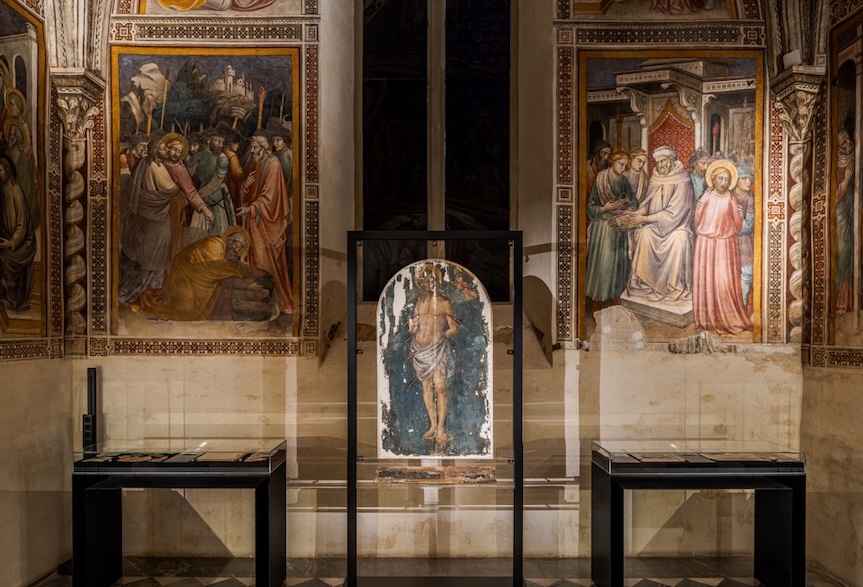
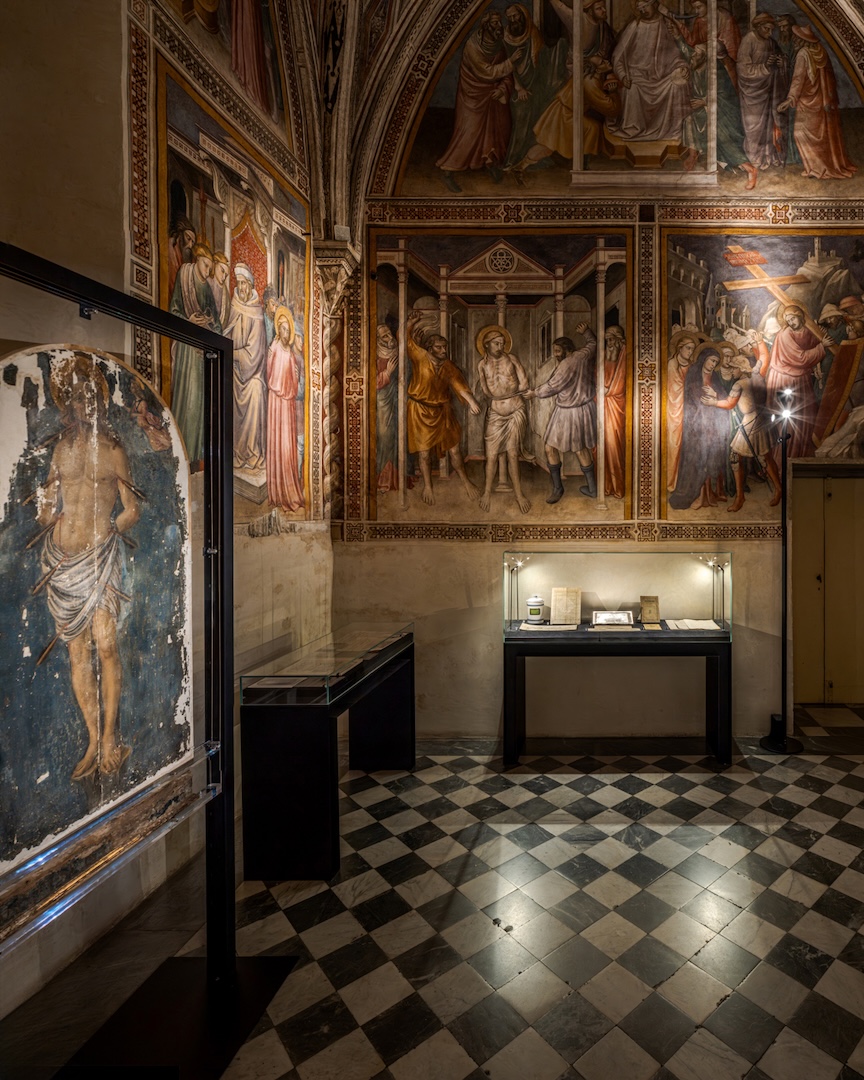
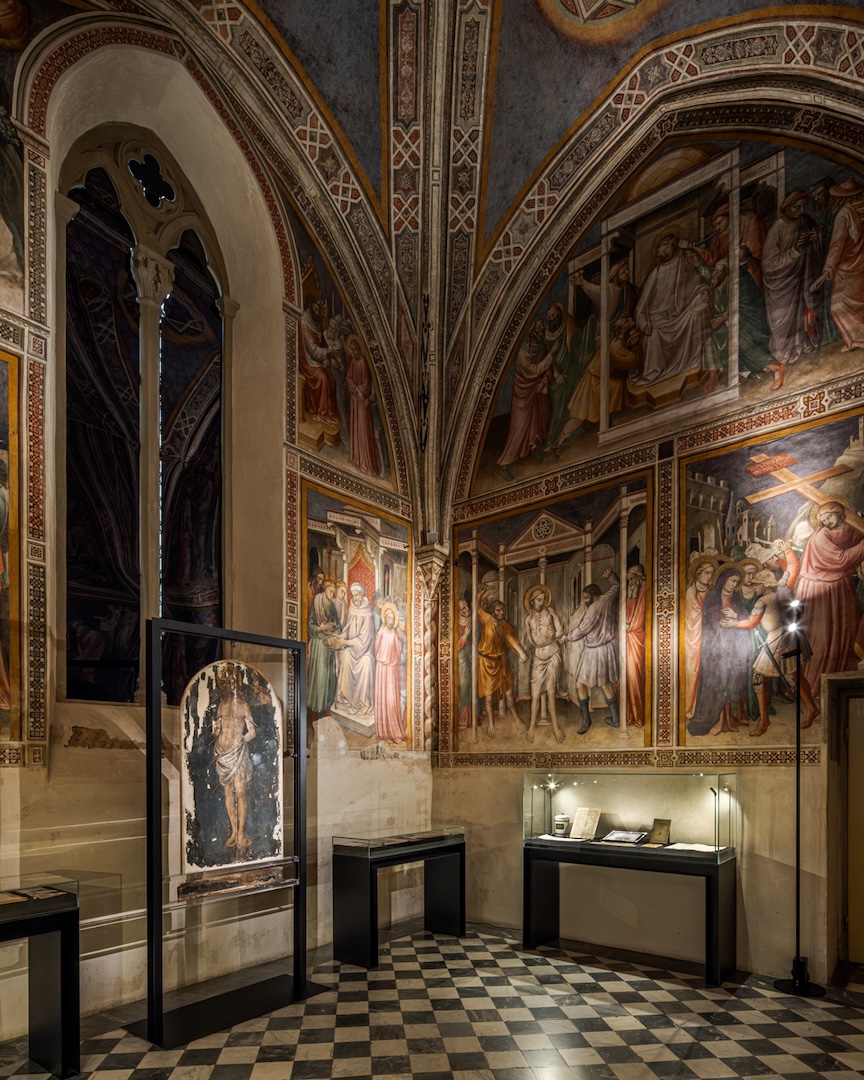
After days of heavy rain, the Arno overflowed during the night of 3–4 November 1966. By morning, floodwaters had swept through neighbourhoods on both sides of the river, reaching almost five metres in some areas. When the water finally receded on 6 November, around 600,000 tonnes of mud covered the city. Santa Maria Novella’s historic premises in Via della Scala were among the buildings affected, with serious damage to its laboratories and archives. In the sacristy, frescoes attributed to Mariotto di Nardo di Cione were damaged, while photographic plates and printing materials were lost alongside much of the historical documentation. Thousands of volunteers joined the rescue effort, helping recover books and artworks in a remarkable display of collective determination.
The Objects That Survived
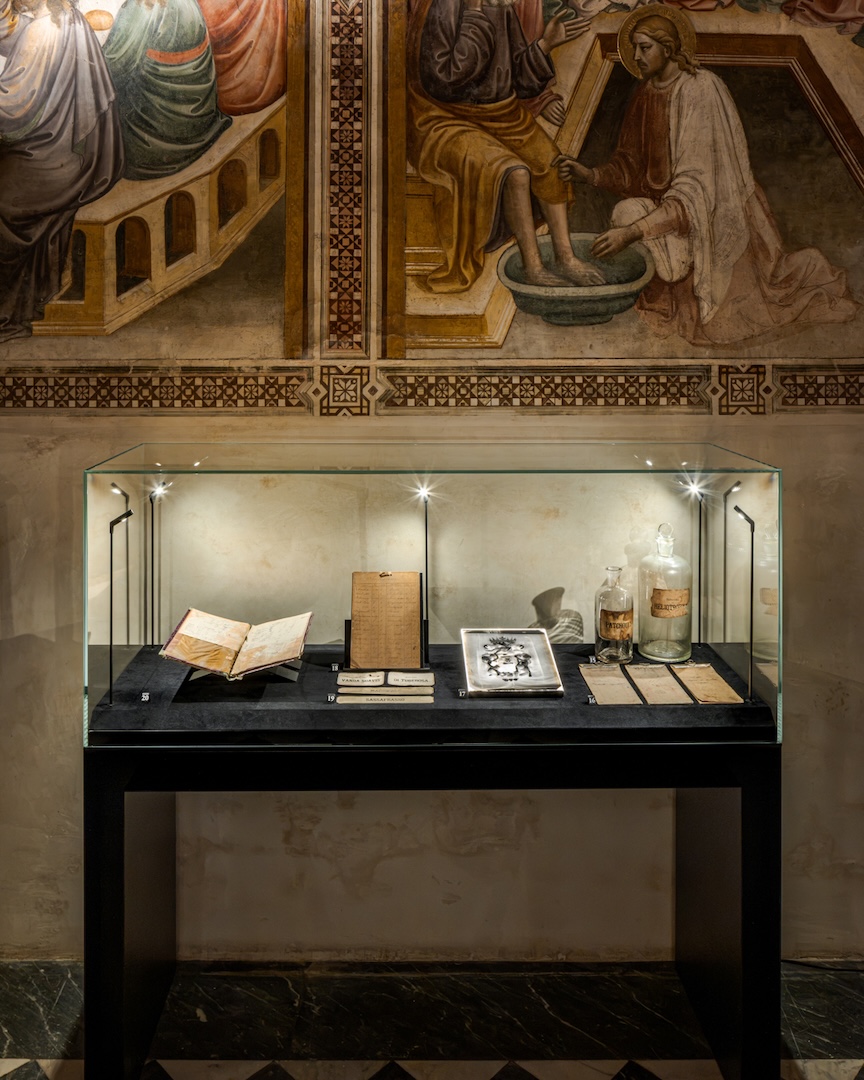
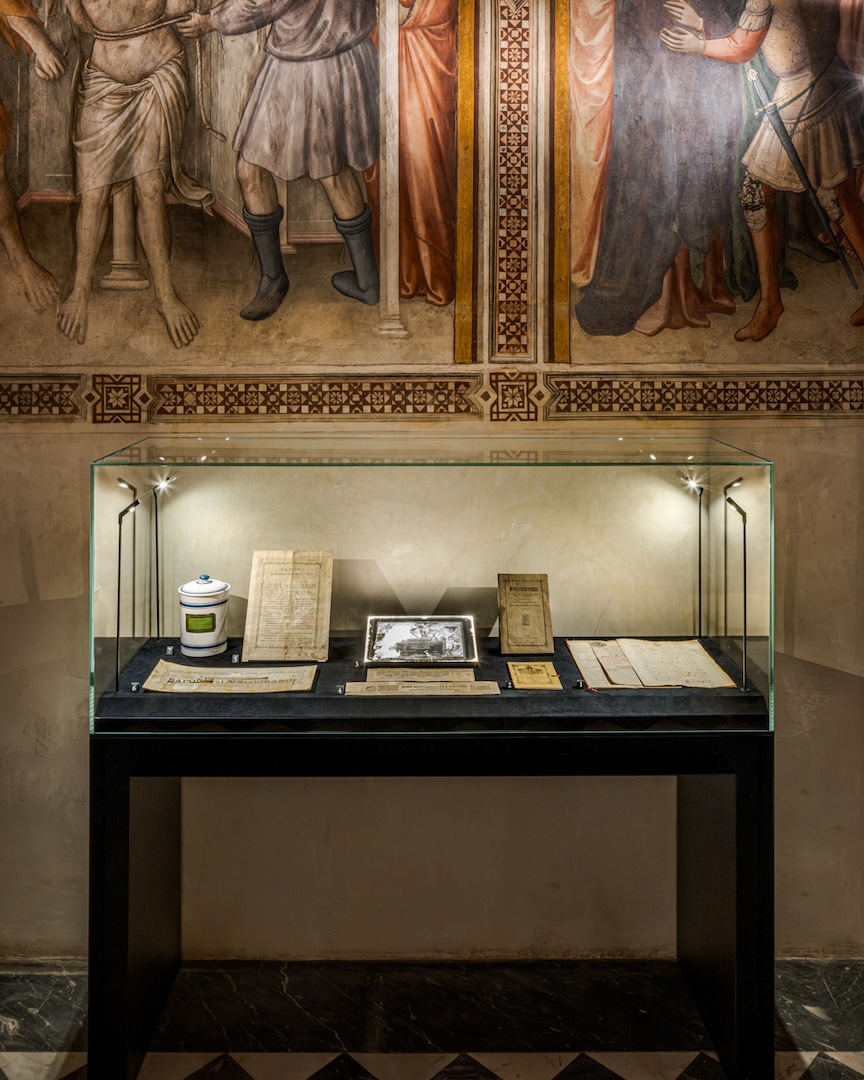
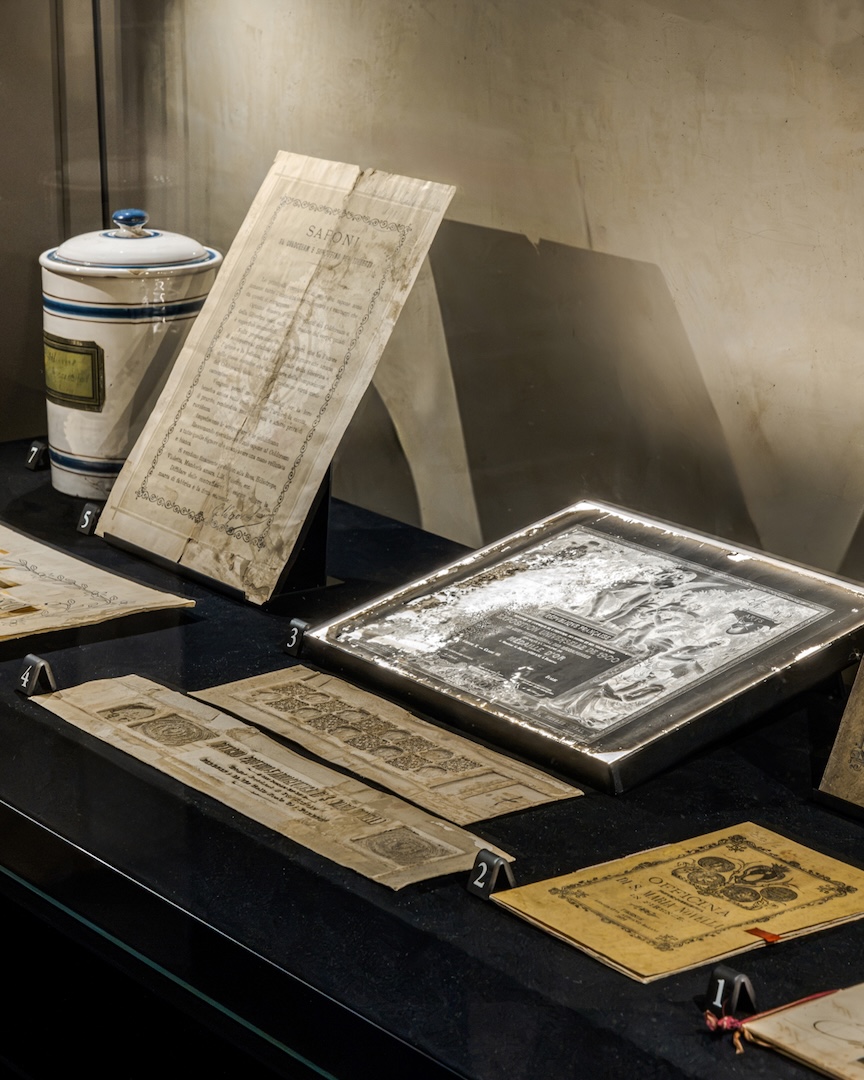
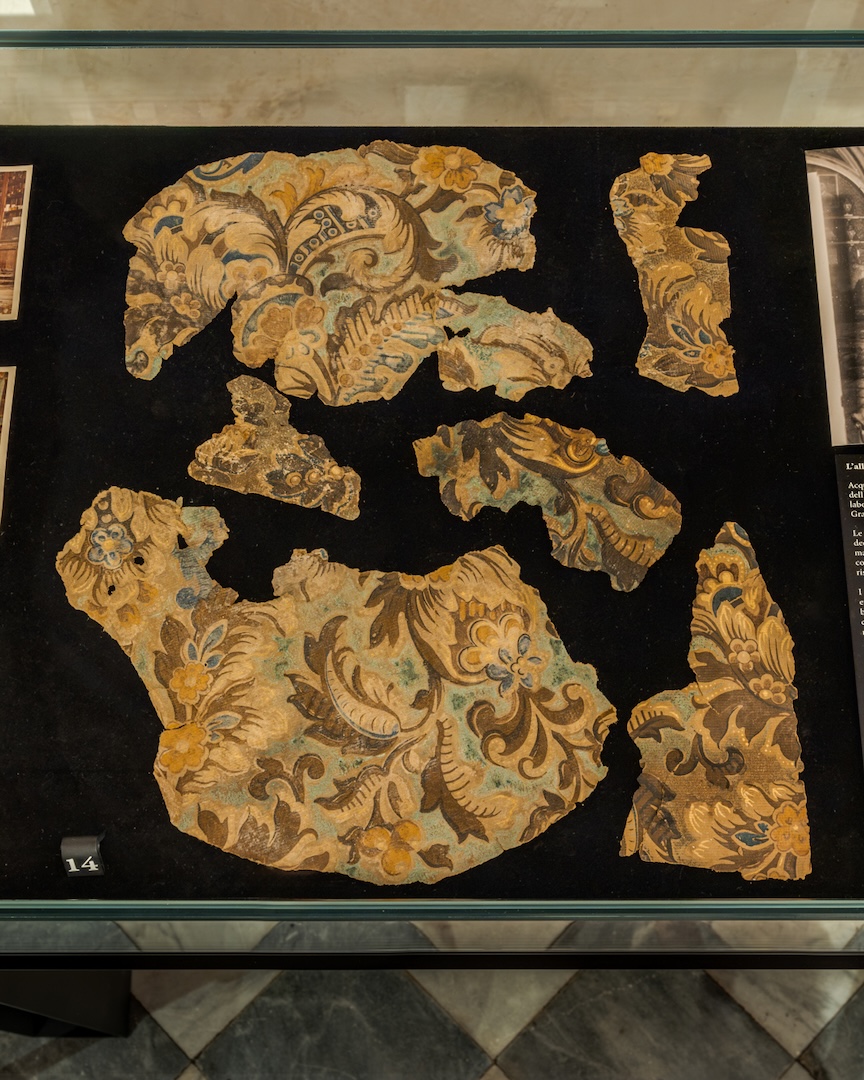
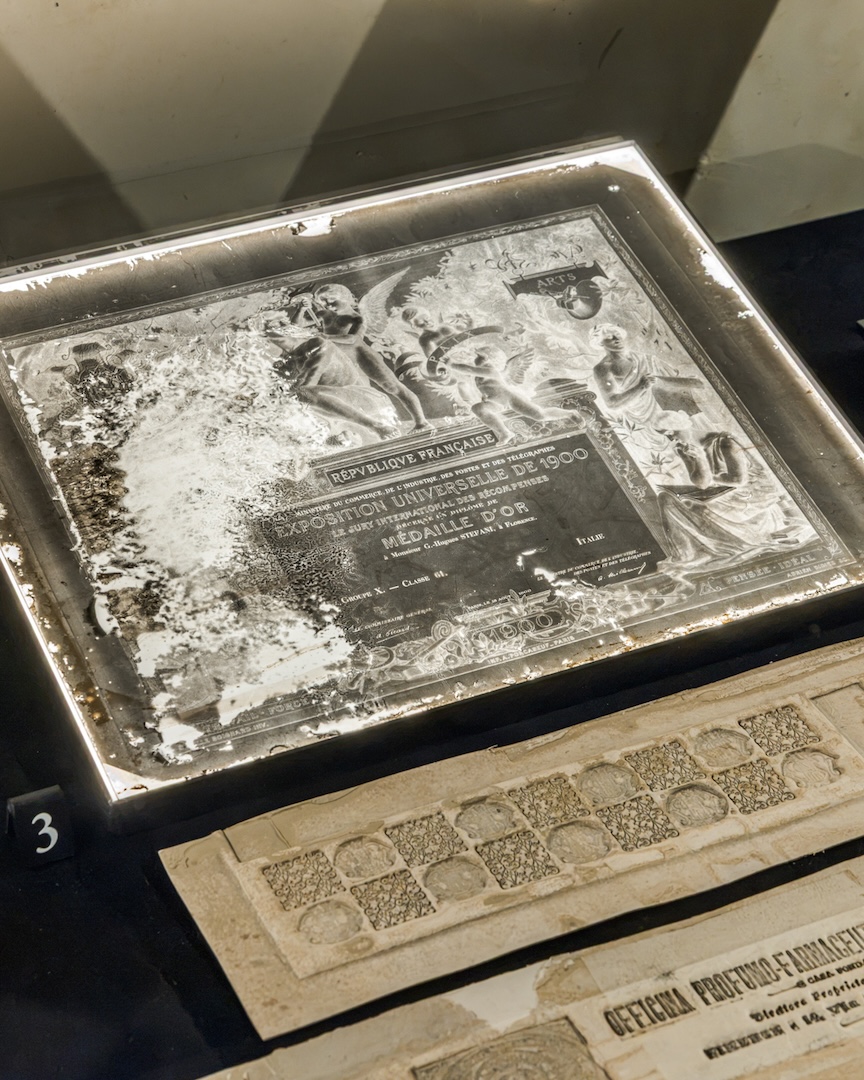
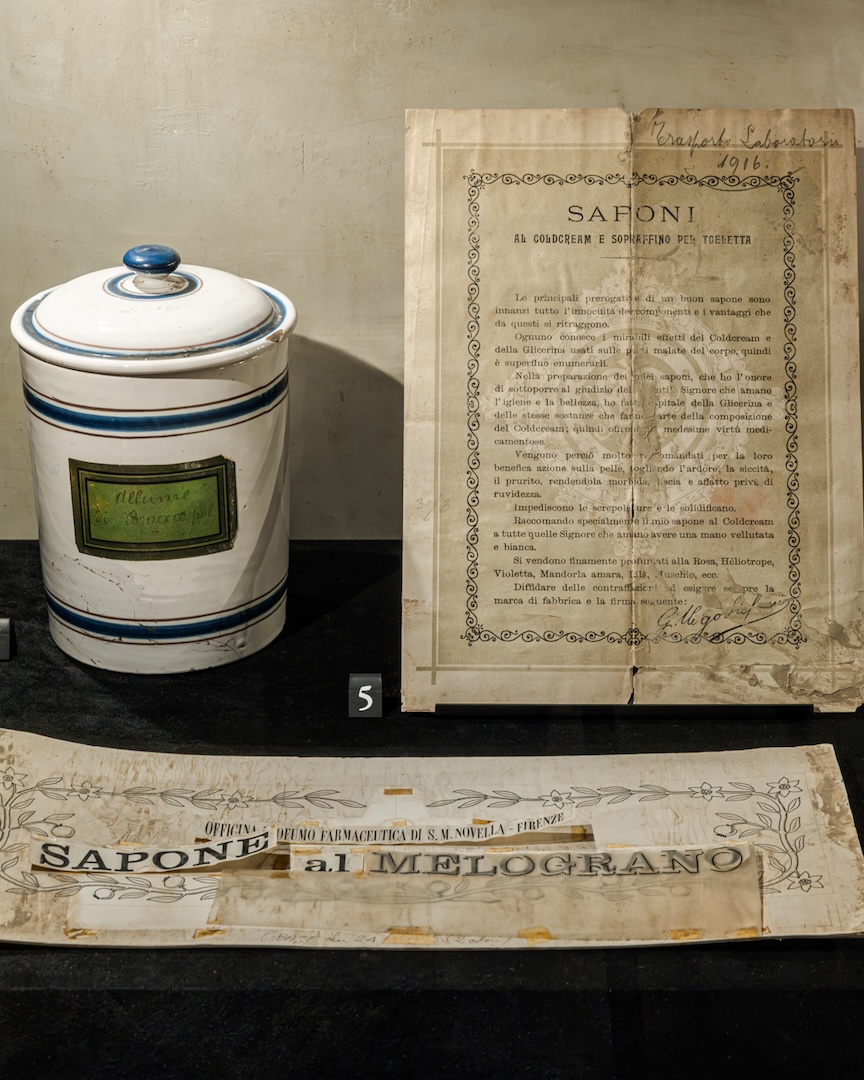
Frammenti non dimenticati. Firenze, 1966 brings together objects and documents from Santa Maria Novella’s collections, some restored and others still marked by the flood. Historical records dating from 1755 and 1866 sit alongside nineteenth-century product catalogues and a photographic plate of a diploma awarded at the 1900 Paris Universal Exposition, its surface permanently altered by water. Designs for the brand’s Pomegranate Soap packaging offer a glimpse into its visual history, while a Ginori pharmacy jar and laboratory bottles labelled Patchouly and Heliotropina recall the ingredients once used in its preparations. Handwritten recipe books, photographs of the flooded rooms and fragments of the Sala Verde’s original wallpaper, replaced during restoration work in 2012, complete a portrait of everyday life interrupted by disaster.
A Renaissance Painting Still Marked by the Flood
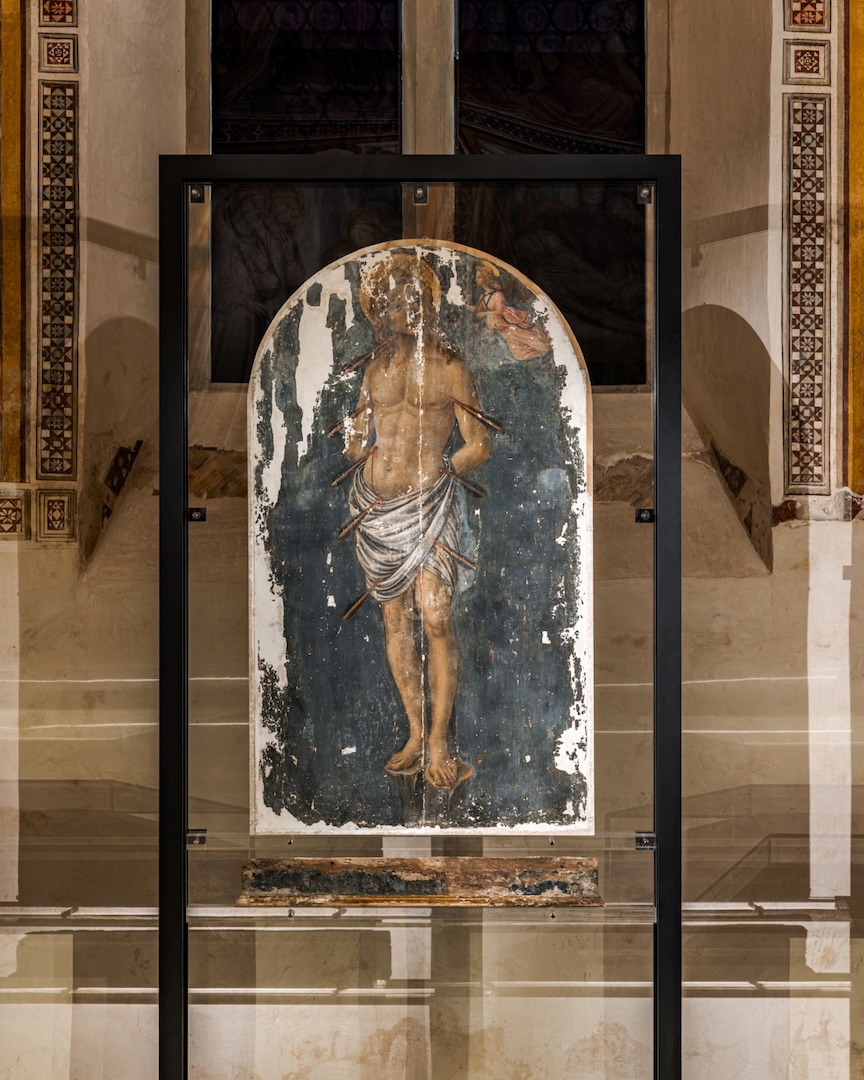
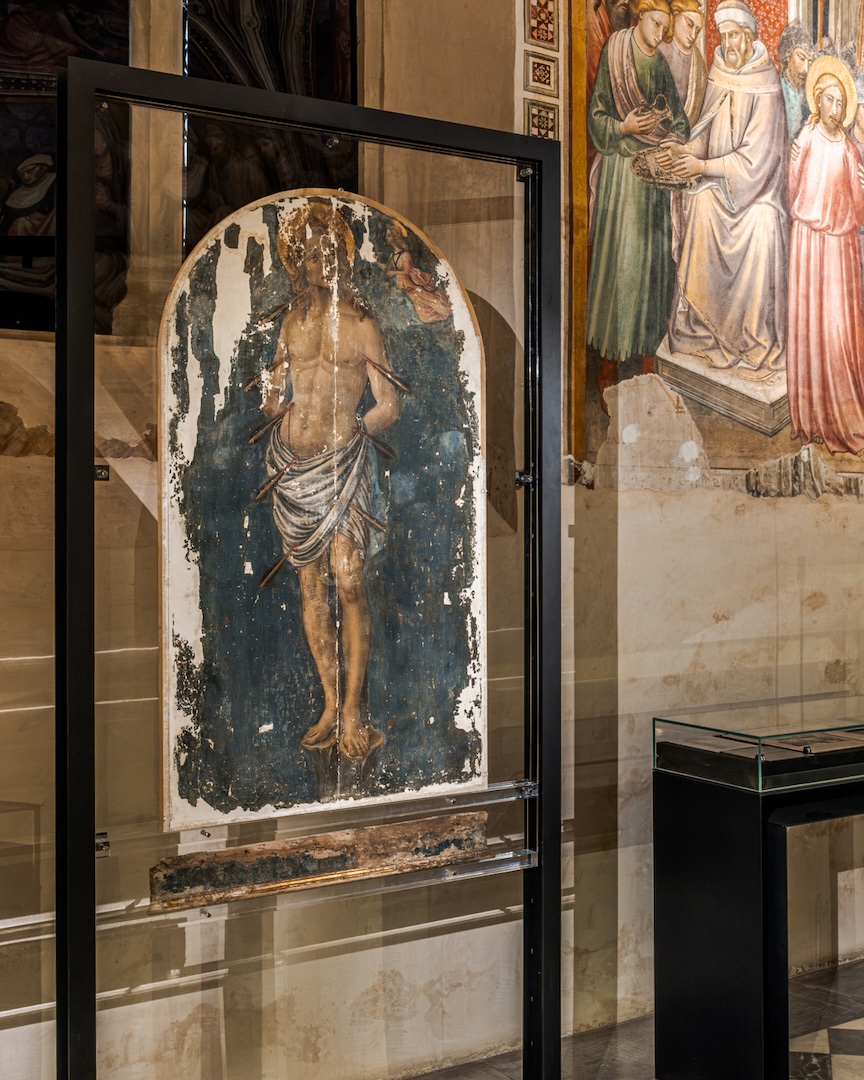
One of the exhibition’s most significant works is Saint Sebastian, a painting on wood by Florentine Renaissance artist Francesco Botticini, dating from around 1475–1480 and belonging to the Uffizi Galleries. It was in the Uffizi’s ground-floor restoration facilities when the flood struck, leaving its painted surface fragmented and its wooden support severely damaged. In 1967, specialists transferred the painted layers onto a new support and reconstructed the face using recovered fragments. Now, sixty years later, Santa Maria Novella is supporting a new restoration at the Opificio delle Pietre Dure. Displayed before the intervention, the painting offers visitors a rare opportunity to see an artwork whose damaged surface still tells part of its history. Once restored, it will eventually return to the Uffizi, following a presentation at a venue yet to be confirmed.
What Does Florence’s Rebirth Smell Like?
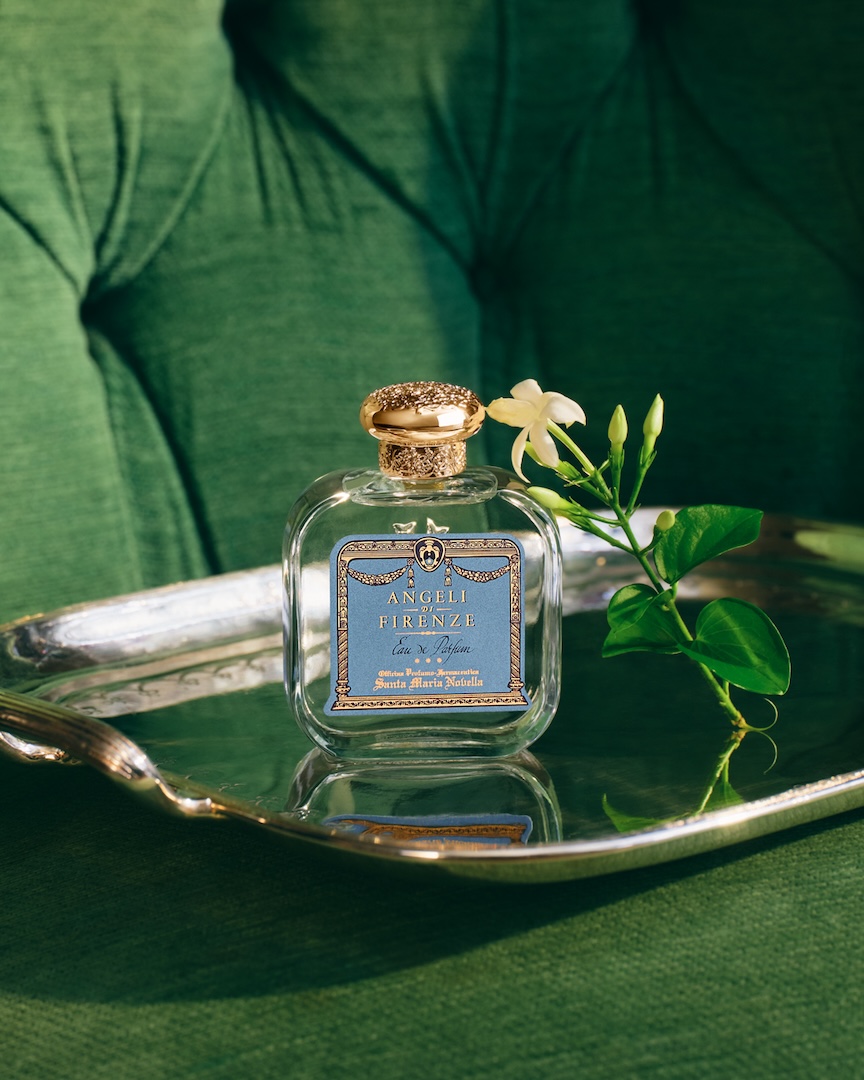
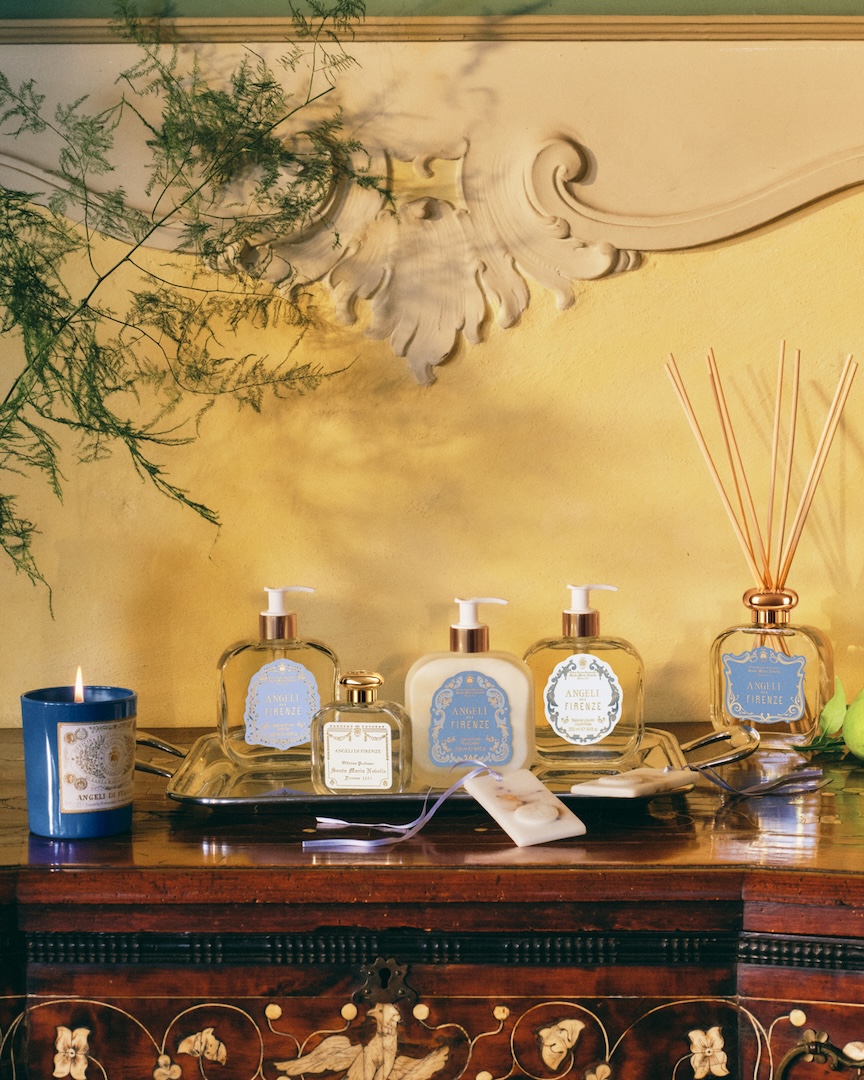
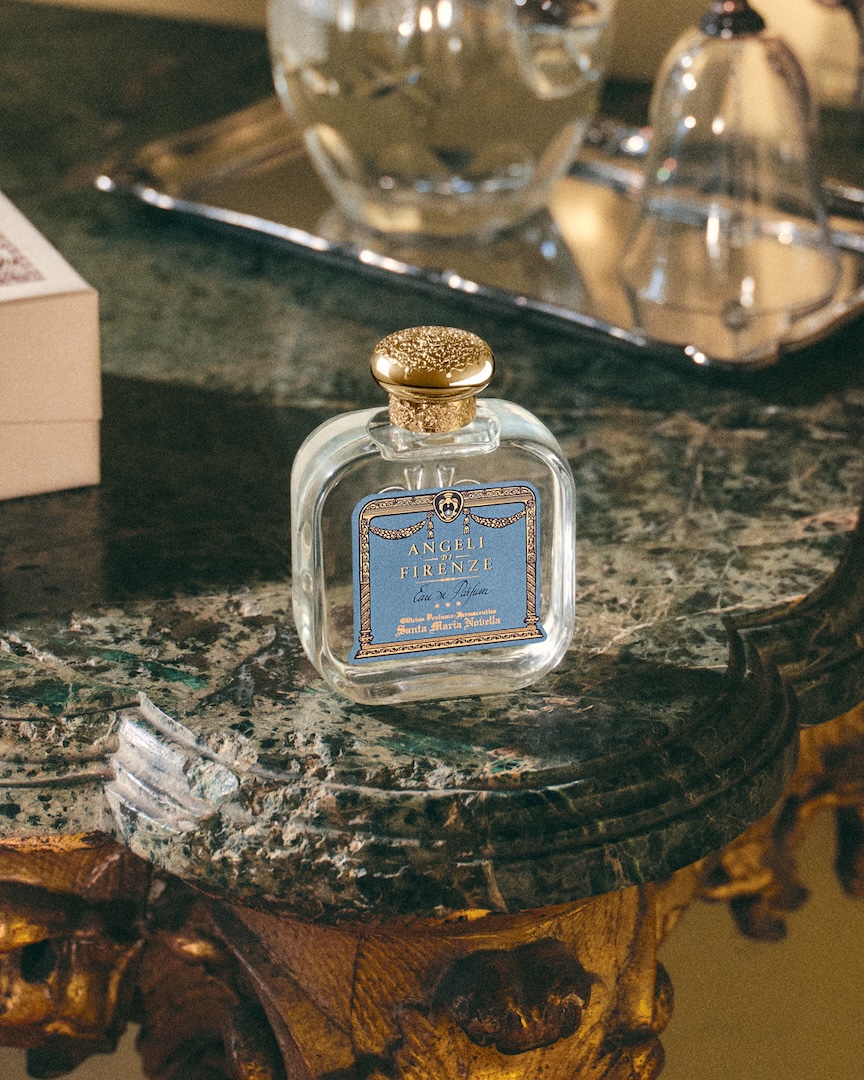
How do you translate a city’s recovery into perfume? Angeli di Firenze Eau de Parfum Limited Edition marks both the sixtieth anniversary of the flood and twenty years since the launch of the original Angeli di Firenze Eau de Cologne. Dedicated to the volunteers who helped Florence recover, the fragrance draws on floral and aquatic notes, with a green freshness that runs through the composition.
Bergamot and lemon open the scent with a bright citrus character, softened by a hyacinth accord. At its heart, jasmine and ylang-ylang meet rose, while melon adds a light, watery nuance. Vanilla, musk and cashmere wood bring warmth to the base, giving the fragrance a softer finish. Its most distinctive detail is an impression of wet stone, recalling the marble of Florence as it emerged from beneath the mud. The contrast between cool mineral notes and warmer accords captures the idea of renewal that inspired the perfume.
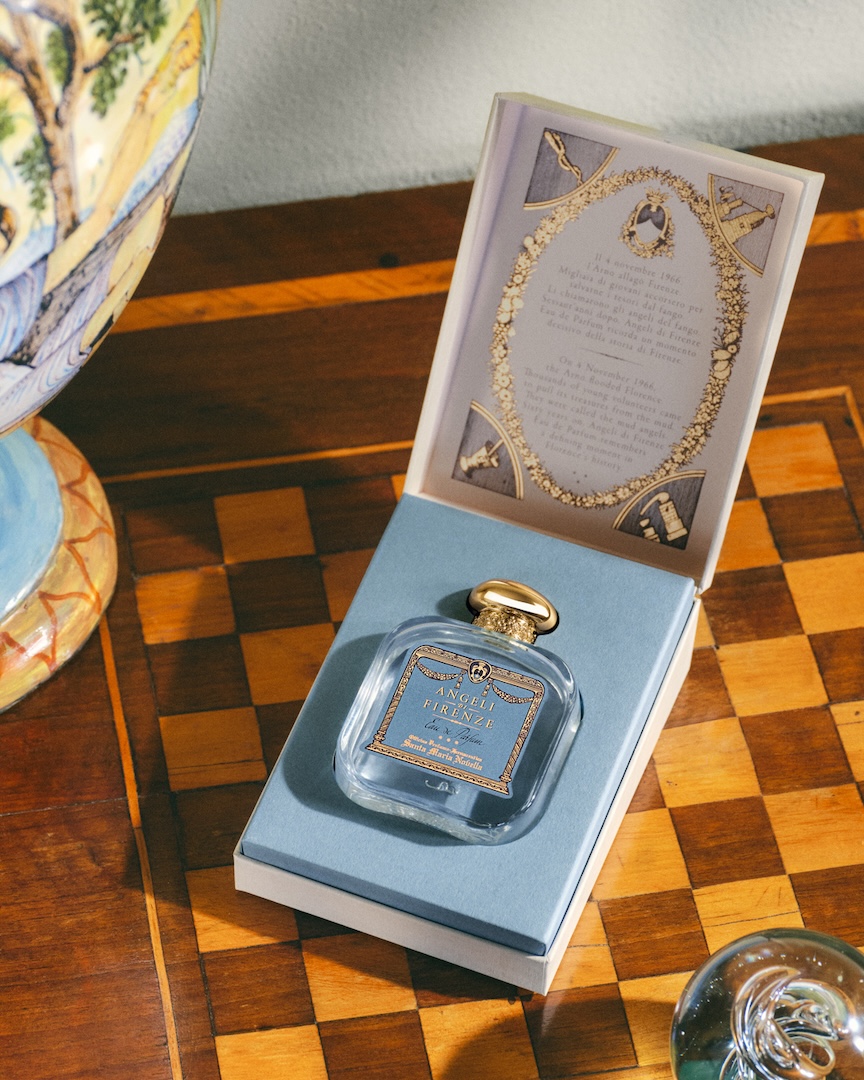
The packaging carries the story further. Art paper, raw painting canvas and wooden frames reference the materials associated with artworks and documents rescued after the flood, while the illustration depicts the Angels surrounded by light, beneath clouds inspired by the Arno’s swirling waters. The limited edition is available exclusively in selected Santa Maria Novella stores. Following its launch in Europe and the United States, it is scheduled to reach Japan and South Korea in the first half of 2027.
Where to See the Exhibition in Florence
The exhibition takes place at Santa Maria Novella’s historic headquarters, in the very building damaged by the 1966 flood. Its setting gives the archival material particular resonance, bringing visitors into direct contact with a chapter of the city’s history.


