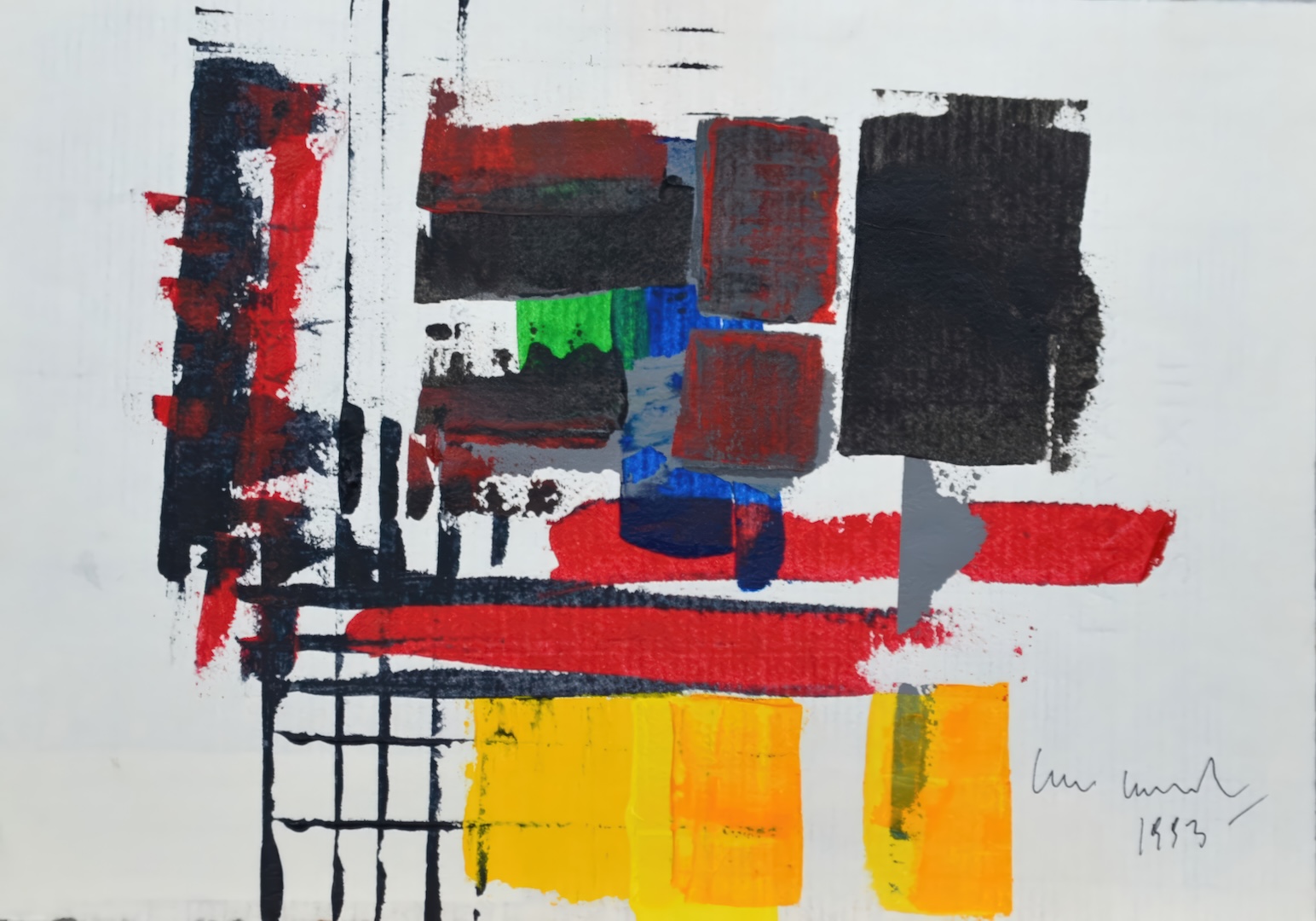
By Jelizaveta Demchakova. Cover image: Mario Maioli, Fermitas, 1993.
What connects FIAT’s iconic five-bar logo to more than 1,300 paintings? Mario Maioli’s creative vision. Trained in Milan, he built a career in industrial design before turning to painting in 1985. His artistic journey is explored in Mario Maioli. Dal progetto alle forme del possibile at Rifugio Digitale in Florence. We spoke with curator Isabella Patti about his approach to creativity and what his work can teach us in the age of artificial intelligence.
How did studying under Gio Ponti and Ernesto Nathan Rogers influence his creative vision?
Mario Maioli’s education at the Polytechnic University of Milan in the 1950s was shaped by the city’s vibrant cultural environment and its leading modern architects. Ernesto Nathan Rogers was particularly influential, introducing him to an approach based on firsthand experience of architecture and the connections between different arts. Study trips, encounters with figures of the Modern Movement and exposure to different design cultures reinforced his belief that architecture, urban planning, art and society were inseparable. His relationship with Gio Ponti was different: although Maioli admired his extraordinary talent and versatility, he felt Ponti’s teaching did not fully convey his creative sensibility. Ultimately, Rogers’s influence, direct experience, reading and Milan’s artistic scene shaped Maioli’s understanding of design as an open-ended, interdisciplinary exploration.
What does the story behind the iconic FIAT logo reveal about his approach to design?
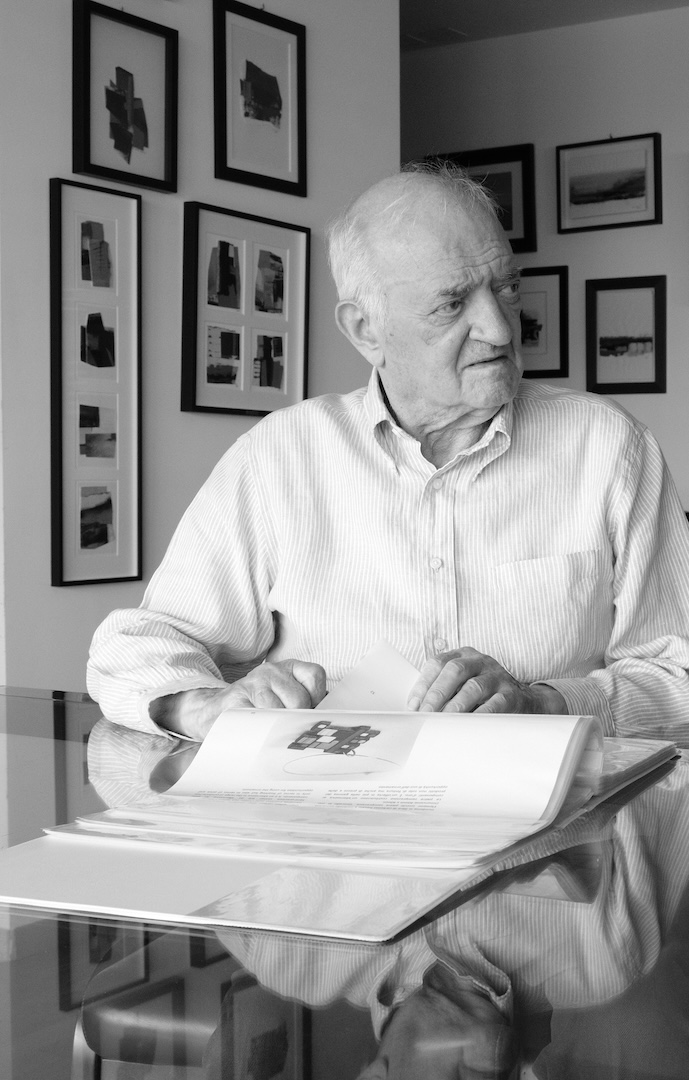
FIAT’s five-bar logo demonstrates how a simple graphic symbol can emerge from complex considerations of corporate identity, industrial production and communication. In the early 1980s, as FIAT underwent major changes culminating in the launch of the Uno, Maioli reinterpreted the company’s 1968 diamond-shaped logo as five bars, preserving its visual identity while expressing renewal. The design could be adapted across models, introduced through restyling and implemented at relatively low cost. Maioli initially considered his idea almost too simple, but his friend and former fellow student Massimo Vignelli recognised its rationality and compatibility with FIAT’s identity. Following market testing, it was gradually adopted across the company’s vehicles. For me, this illustrates his belief that good design lies in finding essential, coherent solutions that balance communication, technical requirements and economic considerations, rather than pursuing complexity or originality for their own sake.
How did his years in the automotive industry shape his understanding of form and visual identity?
Maioli’s automotive career developed principles he had already explored while working with Pierluigi Spadolini in the 1960s: systems-oriented design, production technologies and the physical, visual and tactile qualities of materials. At FIAT, where he eventually coordinated design across several automotive brands, he applied this approach on a larger industrial scale. Designing a vehicle also meant creating a recognisable identity that respected a brand’s history while evolving across models and generations. Form emerged from balancing function, technology, production, costs and communication, while visual identity became part of a wider system rather than a purely graphic element. This experience strengthened his understanding of design as a process of synthesis, in which creative freedom engages with constraints, a principle that later informed his painting.
What led him to embrace painting in 1985, and how did his artistic language develop over time?
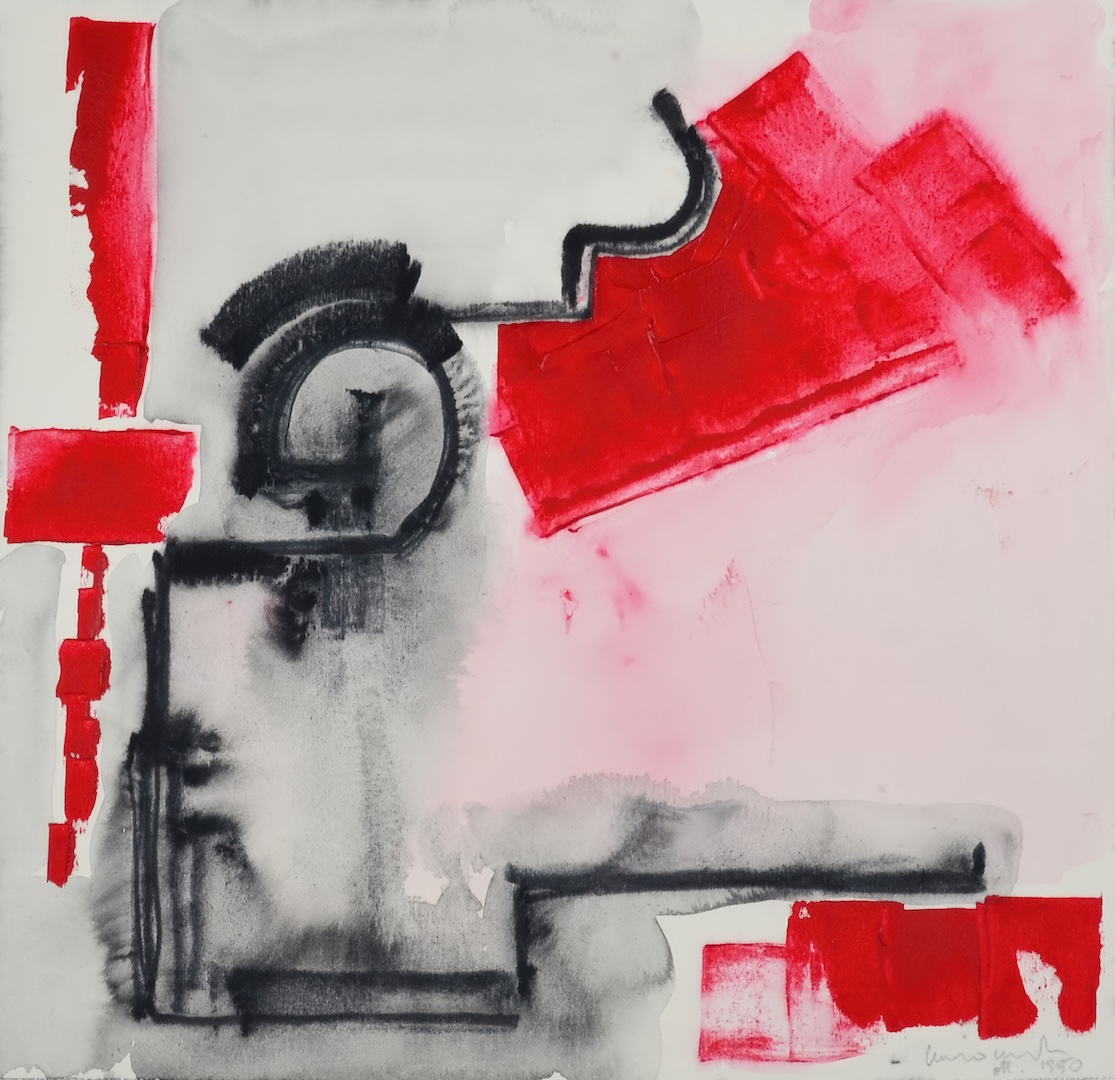
Maioli’s move towards painting began in 1985 after visiting FIAT’s Termoli plant, where two longstanding interests converged: urban planning and industrial development on one side, production technologies and factory organisation on the other. The experience inspired experiments in acrylic painting, ornaments and jewellery, reconnecting him with his family’s goldsmithing tradition. Painting expanded his creative practice beyond industry’s functional requirements, allowing him to explore form, colour and composition independently. Over time, he produced more than 1,300 works, ranging from rigorously structured compositions to freer experiments with movement, layering and mark-making. What interests me most is the enduring tension between rigour and freedom: even his most experimental paintings retain an underlying concern with construction and visual relationships, giving continuity to his work beyond any single style.
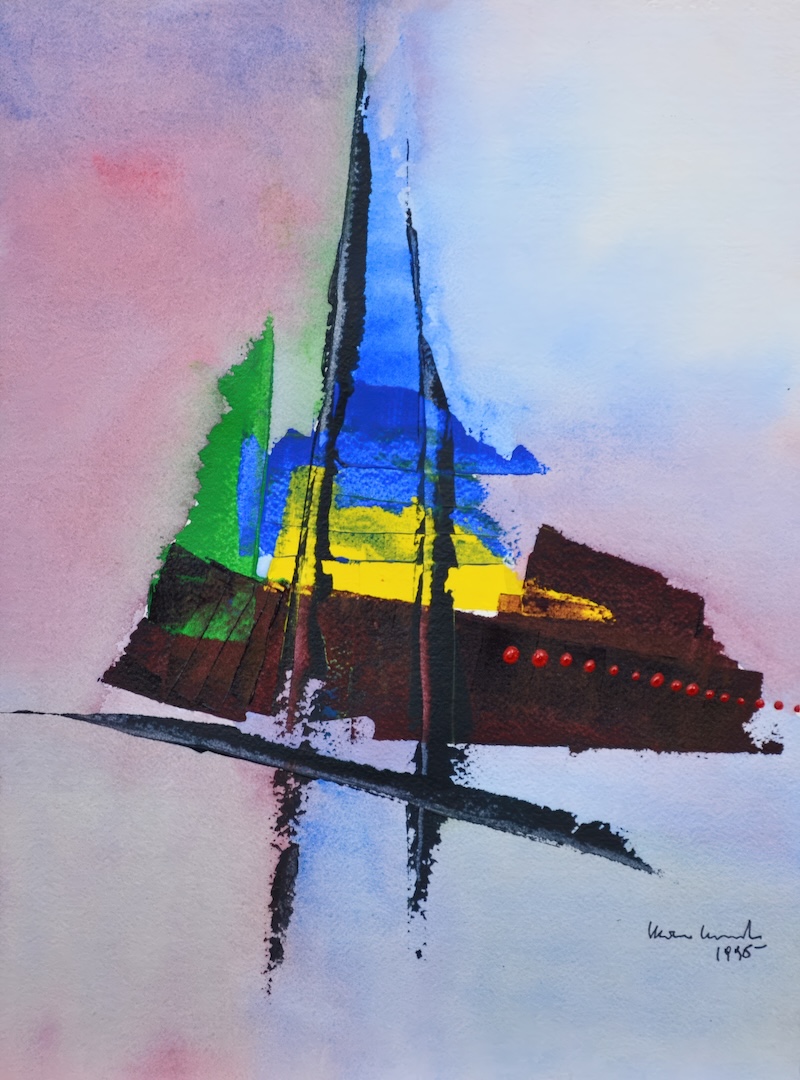
What guided your selection of works from an archive of more than 1,300 paintings?
Rather than creating a chronological retrospective or selecting representative works from each period, I wanted to identify the questions running through more than forty years of Maioli’s painting. From over 1,300 works, I chose those revealing connections across time, including recurring ideas, transformations and discontinuities. I focused on relationships between rules and freedom, structure and space, construction and memory, and design and image. This led to five themes: Constraint, Structure, Horizon, Trace and Return. These are my interpretative categories, not divisions established by Maioli or successive phases of his career. Each work was selected for its contribution to a broader dialogue, showing how the same question could reappear years later in a different visual form. The exhibition therefore presents what I call a “genealogy of problems”, revealing the continuity of his artistic research through its transformations.
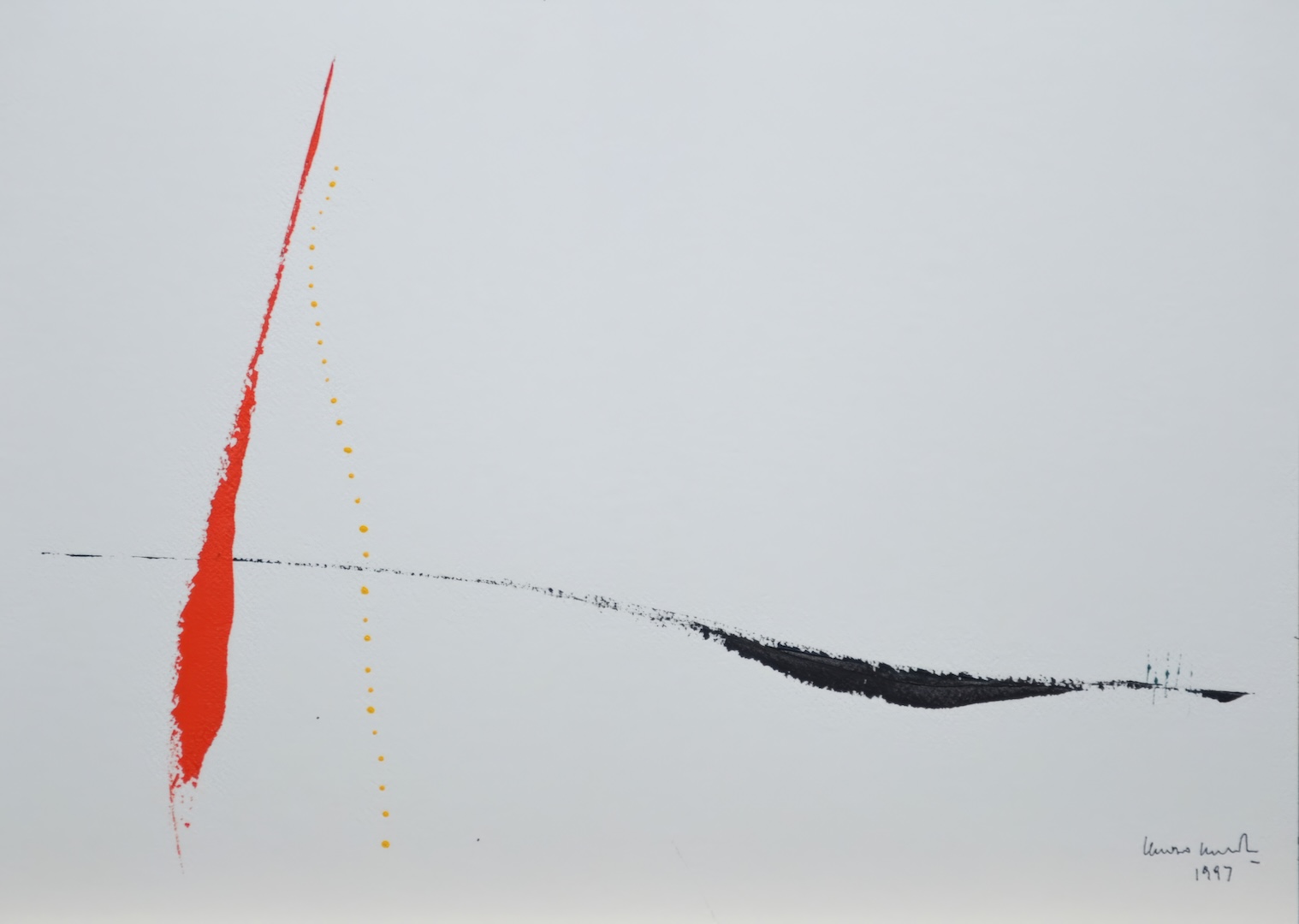
What do the exhibition’s five themes — Constraint, Structure, Horizon, Trace and Return — reveal about his artistic journey?
The five themes explore different aspects of how Maioli constructs form, connecting works created decades apart rather than dividing his career into periods. Constraint examines the rules and relationships that make creativity possible. Structure considers how elements organise themselves within an image. Horizon explores the relationship between form and space, including the tensions that push compositions beyond their boundaries. Trace reveals gestures, marks and layers that make the creative process visible, while Return identifies forms and ideas Maioli revisits and transforms over time. Together, they show a practice shaped by recurring questions rather than a linear progression of styles. Two additional frameworks, Migrations and Discontinuities, trace how elements move between works and where relationships between form, space and material change radically. For me, Maioli’s continuity lies in constantly questioning the possibilities of form. This is also the meaning of Dal progetto alle forme del possibile: design creates the conditions for new configurations to emerge rather than determining a final solution.
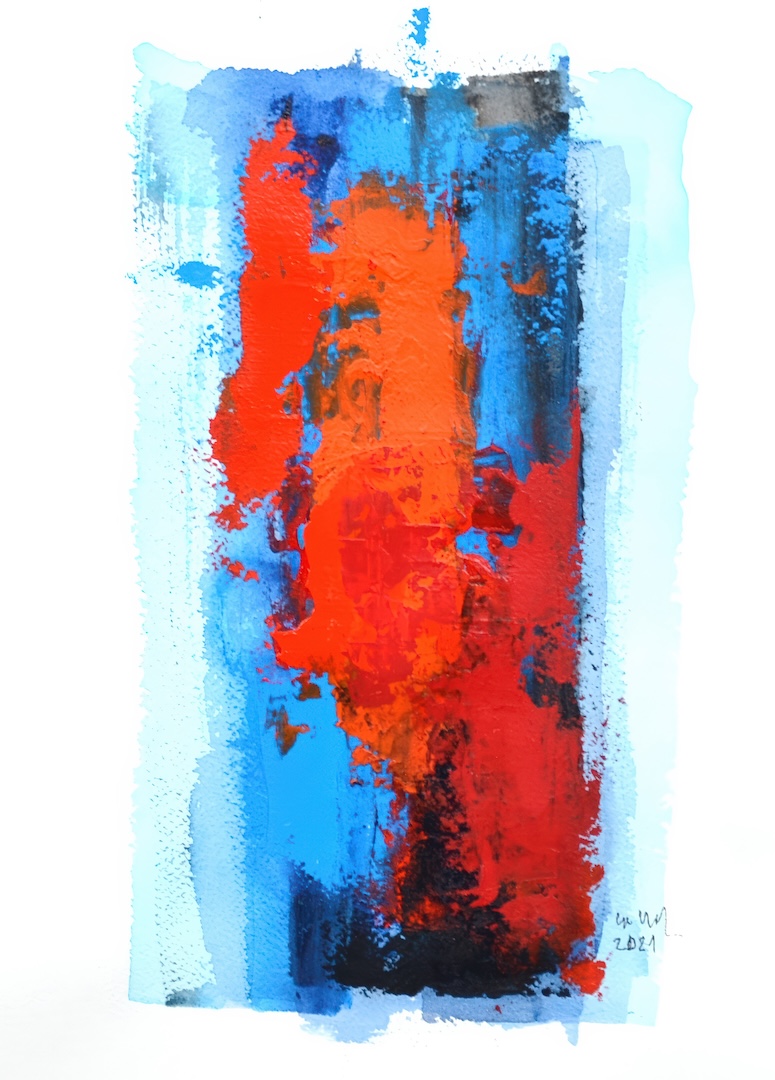
Where does the tension between structure and creative freedom emerge most clearly in his paintings?
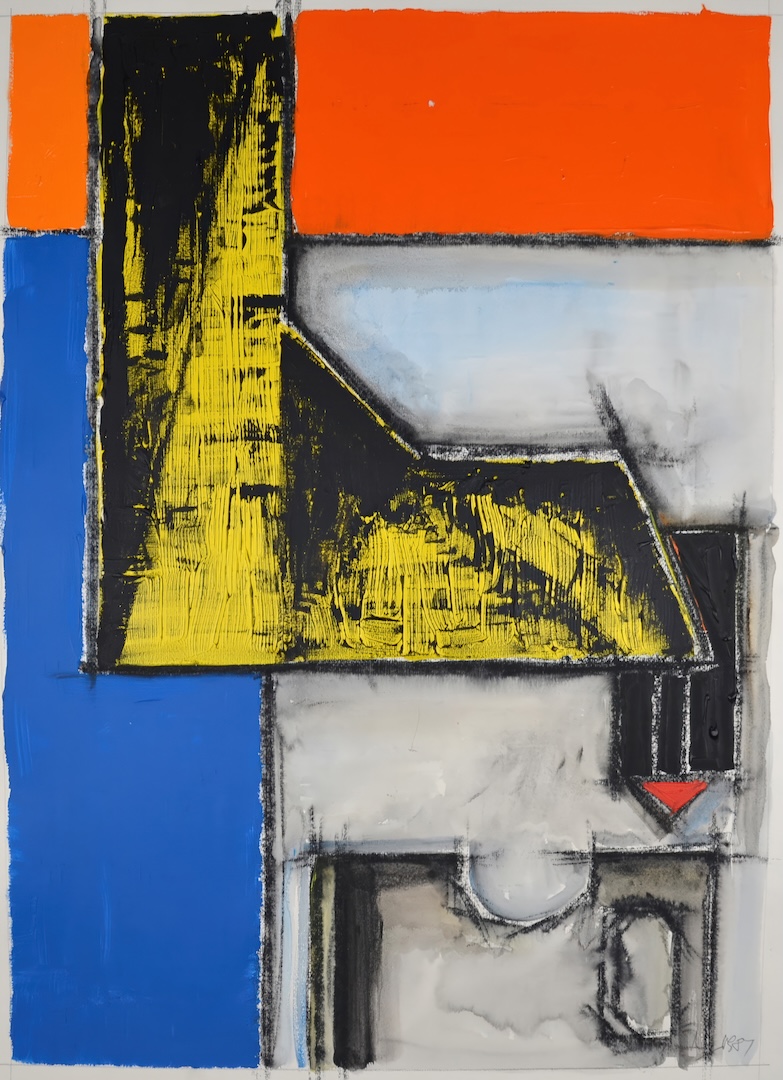
This tension is central to Maioli’s painting and reflects the continuity of his design background. It is particularly evident in Form and Freedom (1991 and 1992), Convergence (1993), Isostatic Structures (1993) and A Structural Complexity(1994). Here, structure becomes a dynamic system of directions, axes, balances and chromatic tensions, organising space without imposing a definitive form. Form and Freedom is especially revealing: expressive freedom can emerge through engagement with rules rather than their absence. Earlier works such as Casting and System Testing, both from 1987, already place the construction process at the centre of the image. Art critic Floriano De Santi identified this rational, design-oriented foundation in his early interpretations, observing how structural grids could undergo transformations and even dissolve. For Maioli, structure was something to test and reshape, allowing unexpected configurations to emerge. Constructing a form also meant keeping its possibilities for transformation open.
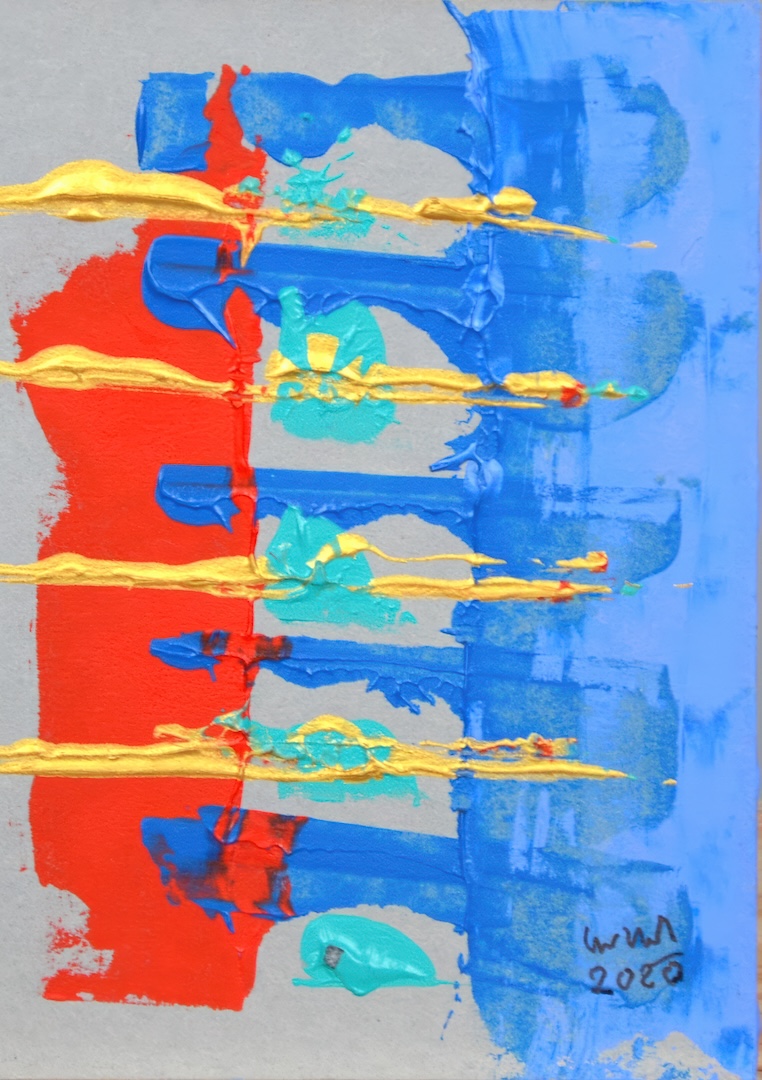
What role has Florence played in his creative journey, and why is Rifugio Digitale a meaningful setting for this exhibition?
Florence was central to Maioli’s teaching, professional collaborations and cultural exchanges. From the 1960s, he helped develop the city’s emerging industrial design culture through the Faculty of Architecture and ISIA. His relationships with Pierluigi Spadolini and Giovanni Klaus Koenig were particularly important, alongside collaborations with Paolo Felli and Benedetta Spadolini, who shared his interest in design culture. Florence thus became a key stage in his career, alongside Milan, where he studied, and Turin, where he worked in the automotive industry. Rifugio Digitale reflects the interdisciplinary nature of his practice, spanning architecture, urban planning, industrial design and painting, with a constant interest in technology and experimentation. Its digital exhibition format offers new ways to interpret more than forty years of work, highlighting connections and transformations without replacing the direct experience of painting. This approach reflects the exhibition’s non-chronological structure, allowing visitors to discover relationships between works created at different moments rather than viewing them as a simple sequence of images.
In the age of artificial intelligence, what can his approach to drawing and experimentation teach younger generations about creativity?
Maioli’s career offers younger generations a valuable perspective on the relationship between creativity, technology and design thinking. Having worked through major technological changes, from architectural drawing to industrial production and advanced automotive systems, he always regarded technology as an integral part of the creative process. This is especially relevant in the age of artificial intelligence, when tools can generate images and formal solutions almost instantly. The ability to ask meaningful questions, identify problems, establish connections and critically assess results becomes even more important. For him, drawing and experimentation were ways of exploring possibilities and testing hypotheses, allowing form to emerge through research rather than starting with a predetermined image. As a design lecturer, I believe this remains essential: mastering sophisticated tools is only part of the challenge. We must also understand their limitations and take responsibility for our design decisions. His legacy is not about defending traditional drawing against new technologies, but recognising that creativity goes beyond producing images. It involves developing a thoughtful research process, making meaningful choices and using available tools to generate knowledge and new possibilities.


