
By Gherardo Ulivi.
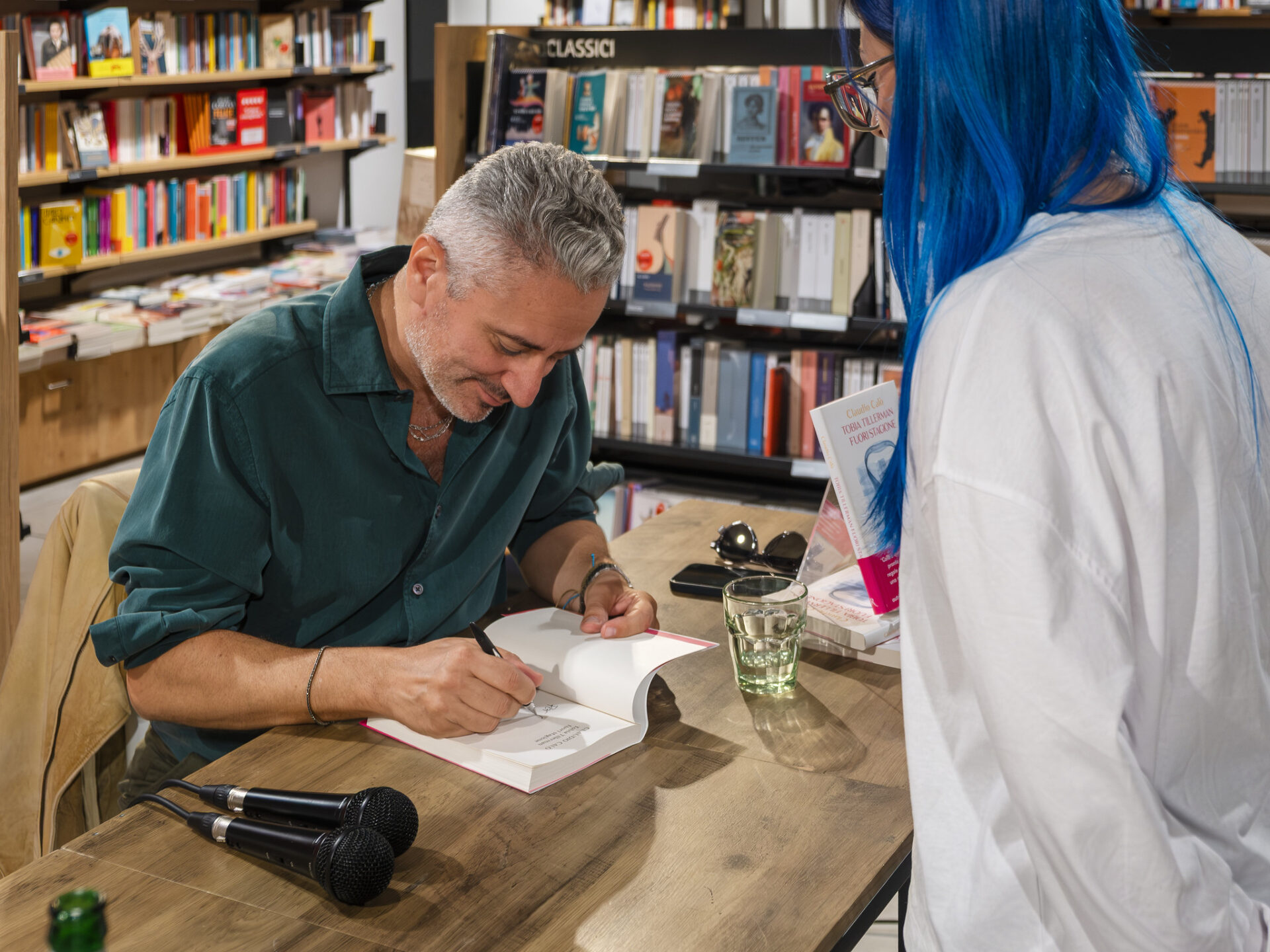
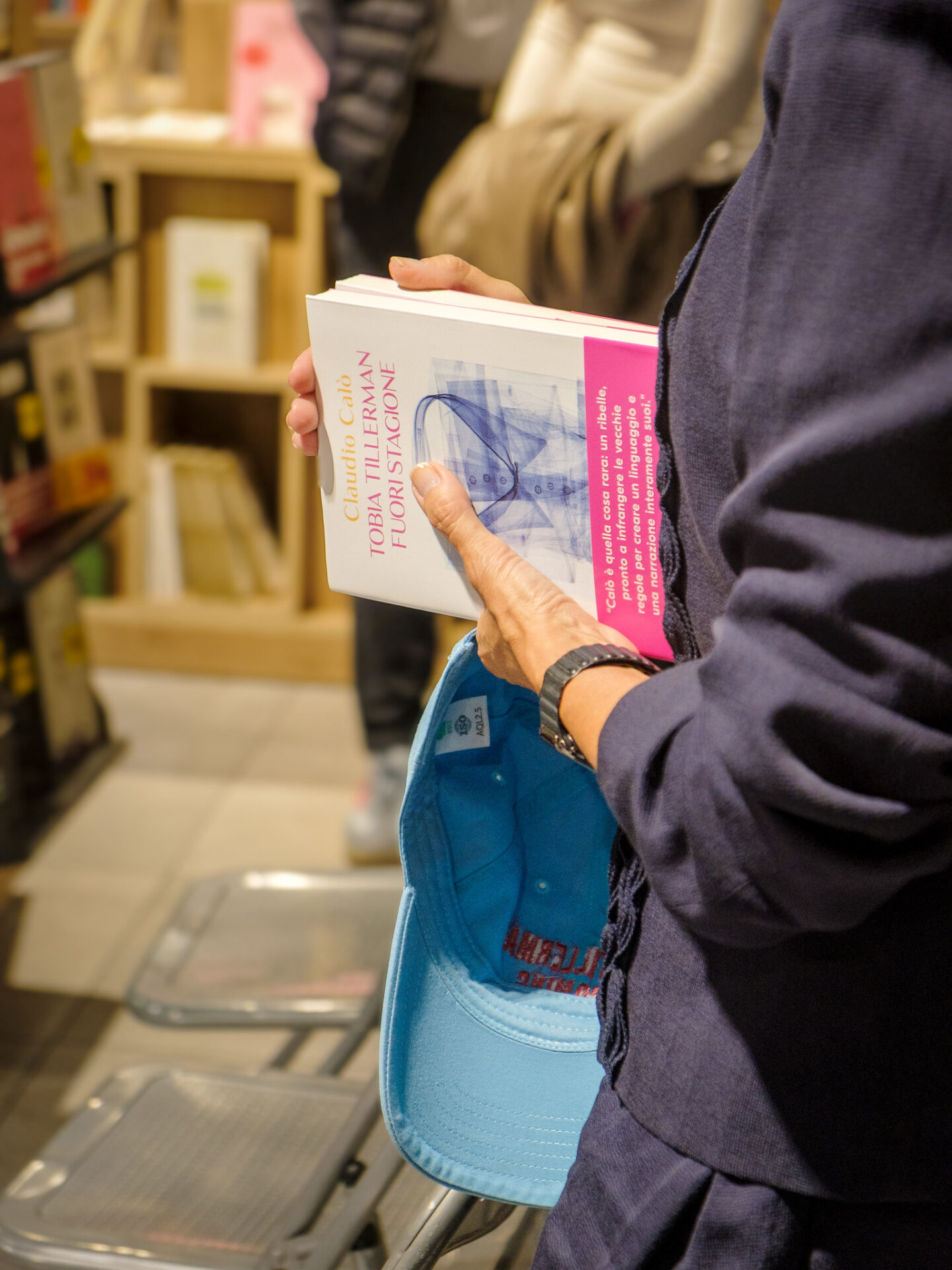
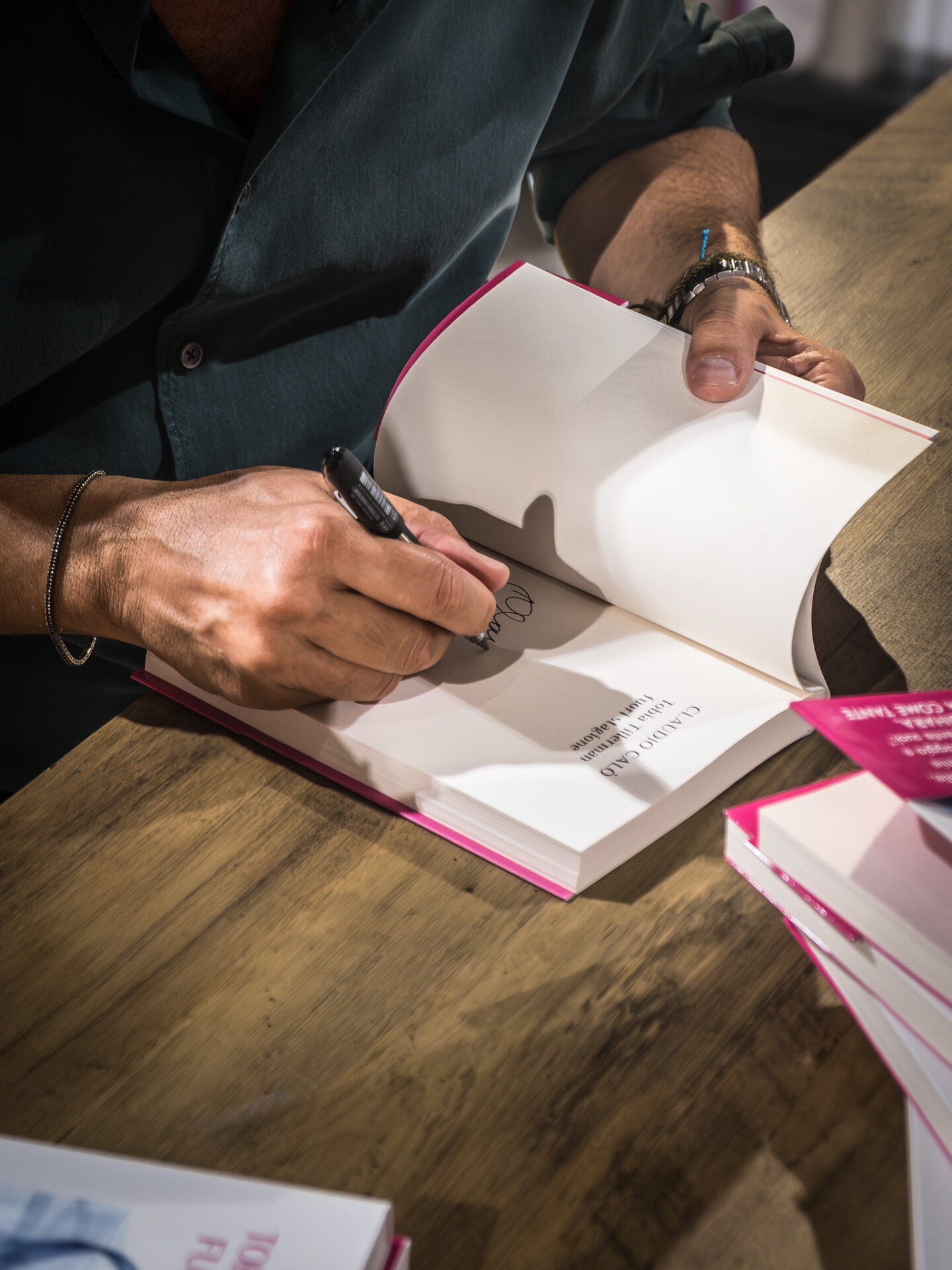
What happens when the life you’ve carefully planned begins to feel like the wrong one? In Tobia Tillerman fuori stagione (Rizzoli), Claudio Calò explores love, identity and the illusion of control through the story of a head stylist approaching forty. Moving between Milan, London and New York, Tobia navigates the contradictions of the fashion industry while remaining haunted by Nico, a love affair in Tulum that ended before it could fully unfold. Calò knows this world intimately: he has worked for Ralph Lauren and Emilio Pucci, served as Global Communications Director at Giorgio Armani and taught fashion communication at Istituto Marangoni. Now Marketing Director of the Feltrinelli Group, he makes his fiction debut at fifty, following his essay La sfilata di moda come opera d’arte (Einaudi, 2022). We spoke to him about the experiences that inspired the novel, the memories we carry and what it means to feel out of season.
From Fashion to Fiction
When did writing first become part of your life?
Very early on. I was about fifteen when I decided to write a book, and by twenty I’d already chosen my protagonist’s name, Tobia Tillerman. I thought that was enough for the time being, so I took a twenty-year break! My interest began at school, particularly thanks to an English teacher who introduced me to literature in its original language. I started writing about ten years ago, initially producing unrelated short stories. I was fortunate to study with Marcello Fois, who encouraged me by recognising an interesting voice in those pages. Then I was commissioned to write my essay for Einaudi, and fiction was put aside. When I returned to the stories, I realised they shared the same voice and could become a novel. Most of the writing happened over the past three years, encouraged by a literary agent who believed in the project.
The Birth of Tobia Tillerman
Tobia has been with you for almost thirty years. How has he evolved?
At first, I mainly had a voice in mind. I knew he would be half Italian and half English, I knew his name and some of his obsessions, but I hadn’t worked out his story. Writing in the first person inevitably means lending something of yourself to a character. In my case, it was certain habits and psychological traits rather than autobiographical events. I’ve discovered Tobia gradually, and he’s often surprised me. You think you know where a story is going, but sometimes the character takes you somewhere unexpected.
What Does “Out of Season” Mean?
What does being “out of season” mean? You published your first novel at fifty. Do you see something of yourself in that idea?
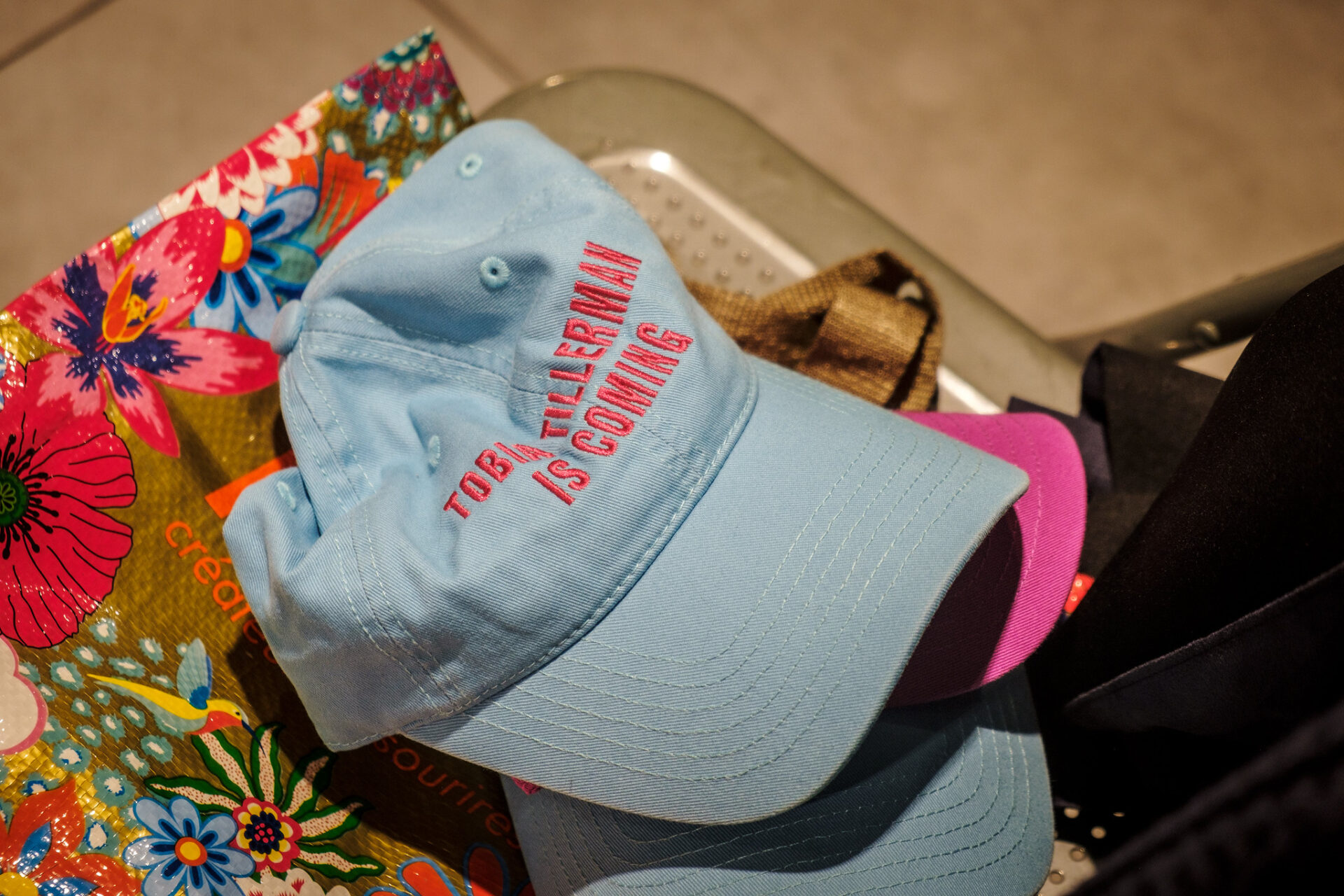
The title came together only in the final months. I wanted to keep the protagonist’s name, with its ambiguity between Italian and English, and find an expression that suggested incompleteness or a missed opportunity. “Season” worked on several levels: a stage of life, a love affair on a beach that ended too soon and, of course, the fashion seasons. My own debut has also come out of season. I decided to write a book as a teenager but didn’t publish one until I was fifty. I don’t think there’s a right age to begin, although this novel clearly needed time to take shape.
Between Fiction and Reality
You open the novel with a quote from Colum McCann: “Some of the novel had been autobiographical, but the fictional elements were truer.” How much of Tobia’s story comes from your own life?
I chose that epigraph partly to anticipate the inevitable question. It’s my first novel, written in the first person, and people know I’ve worked in the environments I describe. Naturally, they’d wonder how much was autobiographical. I believe writing reveals its own truth when we transform our experiences. We draw on real situations, but discover something new through the connections we create between them. I also came to understand Tobia better as I wrote. Had I simply described what happened to me, it would have been a memoir. Fiction allows you to reshape reality and uncover a different kind of truth.
The Illusion of Control
Tobia tries to control everything, yet behind his meticulous nature lies a deep insecurity. Where does that obsession come from?
That was one of his defining traits from the beginning. Tobia counts, categorises and organises everything to convince himself he can control his life. I deliberately exaggerated these habits to reveal his vulnerability. However carefully we plan, life ultimately has the upper hand. On a flight to New York, for example, he calculates how much time he’ll spend brushing his teeth during his lifetime. He arrives at ninety days and can finally fall asleep, satisfied. I wrote that scene about nine years ago, but recently my mother discovered family archives recording practically everything, from medical expenses and school reports to watch battery replacements. Among them were notes my sister and I left for our parents when they went out. I was about twelve and would simply write, “Goodnight, Claudio,” while my sister described our evenings in detail. In one note, she expressed her astonishment that I’d spent hours calculating how many grapefruits I would eat in my lifetime and how long I’d spend peeling them. I’d completely forgotten! Apparently, I’d given Tobia something deeply personal without realising it.
Fashion Behind the Scenes
You portray the fashion world with an almost surreal sense of humour. How much of it is real?
Many situations come from real experiences, naturally reworked for fiction. I wanted to isolate certain absurdities and explore how the characters reacted. Fashion is a setting that brings their personalities into focus, and I had great fun writing those scenes. I spent about seventeen years in the industry, working for fashion houses and later as a consultant, and I also taught fashion communication. Throughout that time, I kept mental notes of incidents I thought might be useful one day. For example, the novel includes a long list of demands from a model preparing for a photo shoot. These documents, called riders, really exist and specify what fashion houses must provide. That particular list is about 85 per cent real. I’d kept it for years, convinced I’d eventually find a use for it.
When Success Isn’t Enough
Tobia begins questioning the meaning of his work. Is that something you’ve experienced yourself?
Yes, I recognised something of myself in that aspect of his character. I was very ambitious during my fashion career and wanted to progress quickly in an international environment. Eventually, I began questioning how long I wanted to continue living that way and what genuinely interested me. That was also when my desire to write resurfaced. In the novel, Tobia watches Maralto drawing and glimpses what it means to feel genuine passion for your work. It makes him question what he truly loves about his own profession. I’ve asked myself the same thing.
Writing in Two Languages
Why did you choose to write the novel in both Italian and English?
It was one of my earliest decisions. At fourteen, a teacher introduced us to The Catcher in the Rye in English, and it was a revelation. Suddenly, literature felt much bigger. Since then, I’ve read extensively in English, perhaps even more than in Italian, and I wanted that part of myself to remain in my writing. There’s also a narrative reason: Tobia is half Italian and half English, and the languages reflect different ways of seeing the world. My editor and I worked to preserve dialogue in its original language while keeping it accessible. The Italian narrative provides enough context without translating everything. I wanted readers to experience Tobia’s constant movement between two identities.
Cassandra and the Meaning of Friendship
Alongside love, friendship plays an important role. What does Cassandra mean to Tobia?
Cassandra is essential. She’s Tobia’s constant counterpoint, giving voice to things he struggles to admit to himself. They’ve known each other since childhood, and she’s there until the novel’s final sentence. Some readers see her as an alter ego, others as Pinocchio’s Talking Cricket, his conscience. But the Talking Cricket was wise, whereas Cassandra is completely mad! She could use a conscience herself. There’s tremendous affection between them, and they help each other avoid convenient truths. They recognised something in each other’s differences from childhood, because in a way, they’re both out of season.
Nico, the First Great Love
Then there’s Nico, the great love Tobia meets in Tulum. Why does that relationship affect him so deeply?
Because it’s transformative. Tobia is in his early twenties, and Nico becomes his first great love, the relationship against which he’ll measure every feeling that follows. It’s an emotional rite of passage. I’ve always loved coming-of-age novels, although I’m not sure this is one. They traditionally follow young people through experiences that teach them something before sending them into adult life. I’ve never been convinced that growing up works like that. Sometimes we think we’ve learnt a lesson, only to discover we need to learn it again. Nico forces Tobia to confront what loving someone really means, what he can offer another person and what that person sees in him. Their relationship begins unexpectedly and ends abruptly, leaving a lasting emotional mark.
Love at Twenty and Forty
How much does the memory of Nico prevent Tobia from fully embracing the present?
I wanted to explore how we love at twenty and at forty. Tobia has changed, yet he still measures himself against an unfinished relationship. Nico represents something unattainable, but also illusory: they were together only briefly, during December and January, their Mexican summer in Tulum. Because that love remained incomplete, it became impossible to recreate. Confronting the past forces Tobia to question whether he’s really different at forty, whether he still carries the same anxieties and whether he’s capable of a more mature relationship. He believes he’s changed, yet discovers that many of his obsessions remain. I think that’s true of all of us. We grow older and understand more, but deep down, we’re still ourselves.
A Memory Worth Protecting
In a world so concerned with appearances, Nico’s memory seems to offer Tobia a private emotional space he wants to protect.
That’s an interesting interpretation. I hadn’t considered it quite that way. It’s an intimate memory that Tobia feels compelled to preserve. He works in an environment filled with absurd demands whose meaning he often questions. His relationship with Nico remains an emotional anchor, an irreplaceable memory of a time when he was happy as a young man. It belongs entirely to him, something he carries even as everything else changes.
The Freedom to Let Go
Perhaps real freedom means allowing yourself to be out of season?
Who knows whether Tobia has really learnt to let go? I’d be tempted to tell you how the novel ends, but I’d rather not. One possible lesson is to embrace being out of season, accepting who you are without constantly trying to organise everything or make every piece fit perfectly. But it’s an open question, because I’m not sure we ever learn that lesson once and for all.
The Price of Loving Someone
The novel also reflects on the pain we experience through the people we love. Is that the price of love?
Absolutely. The more someone matters to us, the more vulnerable we become. If a stranger insults me, I might be upset for five minutes, but the deepest pain comes from those we love because we’re emotionally exposed to them. In the novel, I describe a small circle of “tormentors”, in quotation marks, who have the power to hurt us. They’re the people we’ve allowed to become important enough to make us vulnerable.
What’s Next for Claudio Calò?
Are you already thinking about another book? Will you return to the fashion world?
I don’t have a definite plan yet. Writing this novel over so many years meant accumulating material: scenes, fragments and stories that sometimes entered the manuscript before being removed. I’ve kept them, although I don’t know what they’ll become. As both a reader and a writer, I’m particularly drawn to shorter forms. Even this novel has relatively short chapters, and I find short stories fascinating and challenging. The material I’m currently setting aside seems to be moving in that direction. It might become a collection or, by connecting the pieces, another novel. I’m told short stories don’t sell in Italy, which is a shame because the form deserves more attention. I already have two stories unrelated to fashion: one entirely in English, the other in Italian. I’m sure my publisher will be delighted! We’ll see.


