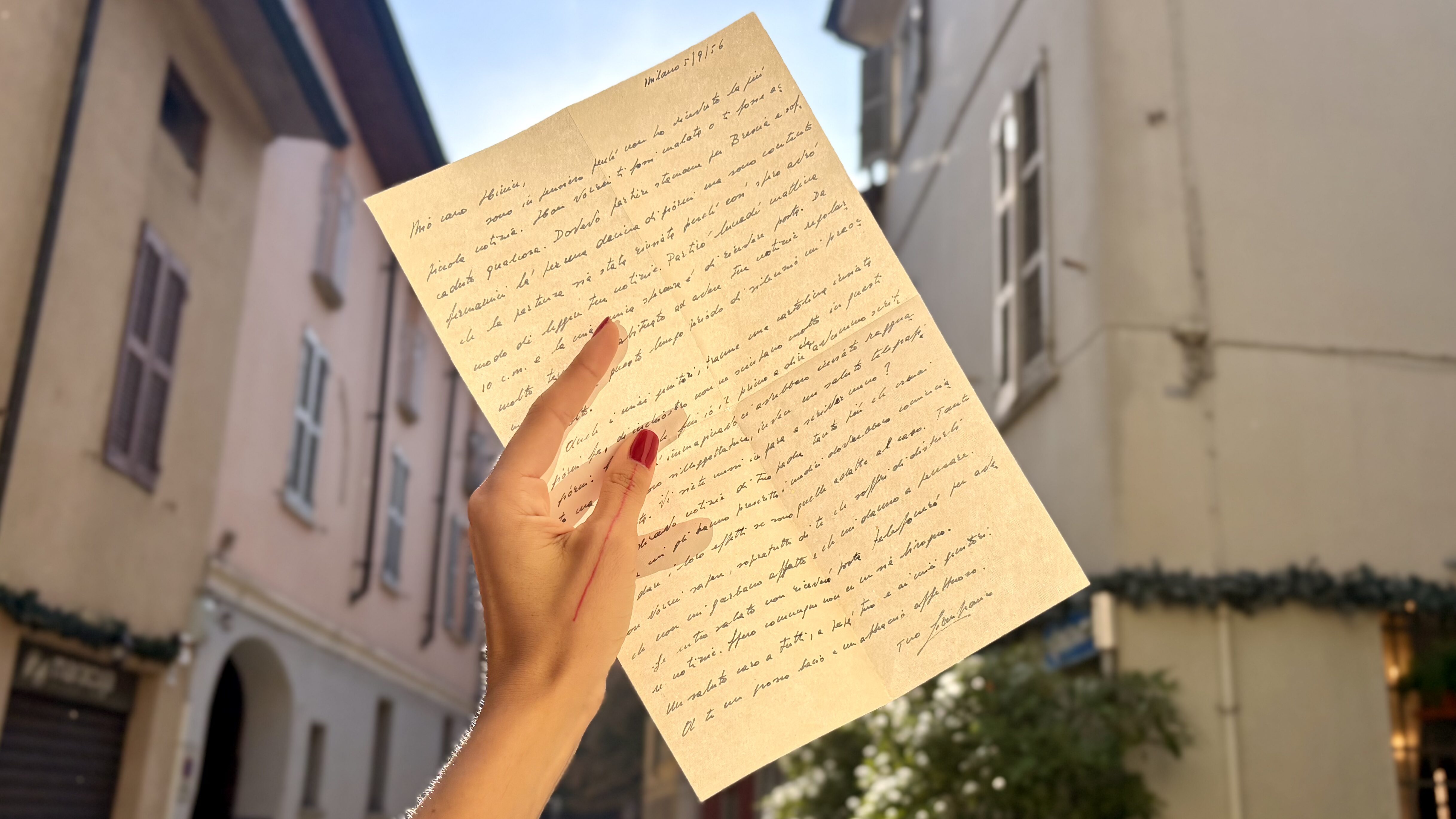
By Vittoria Giubbolini. Cover image by Gioia Nuzzo.
What does a love letter have to say in the age of DMs, ghosting and messages read in seconds? Quite a lot, apparently. On Instagram, Gioia collects and shares old love letters, postcards and dedications found at flea markets, bringing fragments of other people’s relationships back to life for a new generation. Her fascination began long before the project itself. Growing up in Salento, she spent much of her childhood listening to her grandmother and the women in her neighbourhood talk about love, courtship and the past. Years later, she found that same intimacy preserved on paper. There is an interesting contradiction at the heart of the project: a letter asks us to stop; Instagram asks us to keep scrolling. Gioia, who works in social media herself, sees our renewed fascination with handwritten words partly as a reaction to digital saturation and the speed at which we consume almost everything. Perhaps that is why these private stories still resonate with younger generations. We spoke to her about love before DMs, what old letters reveal about relationships today and why we might all need to start writing again.
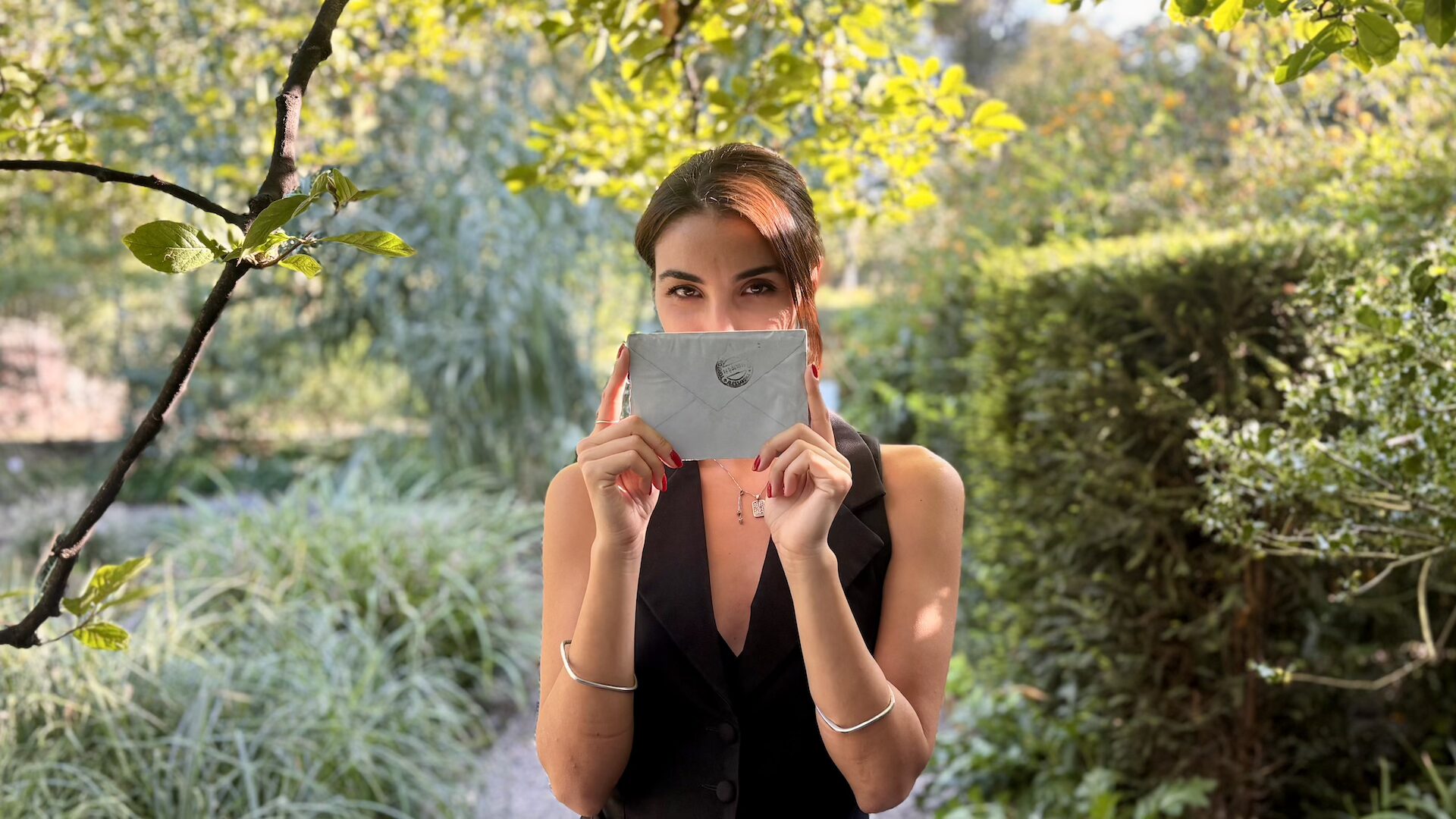
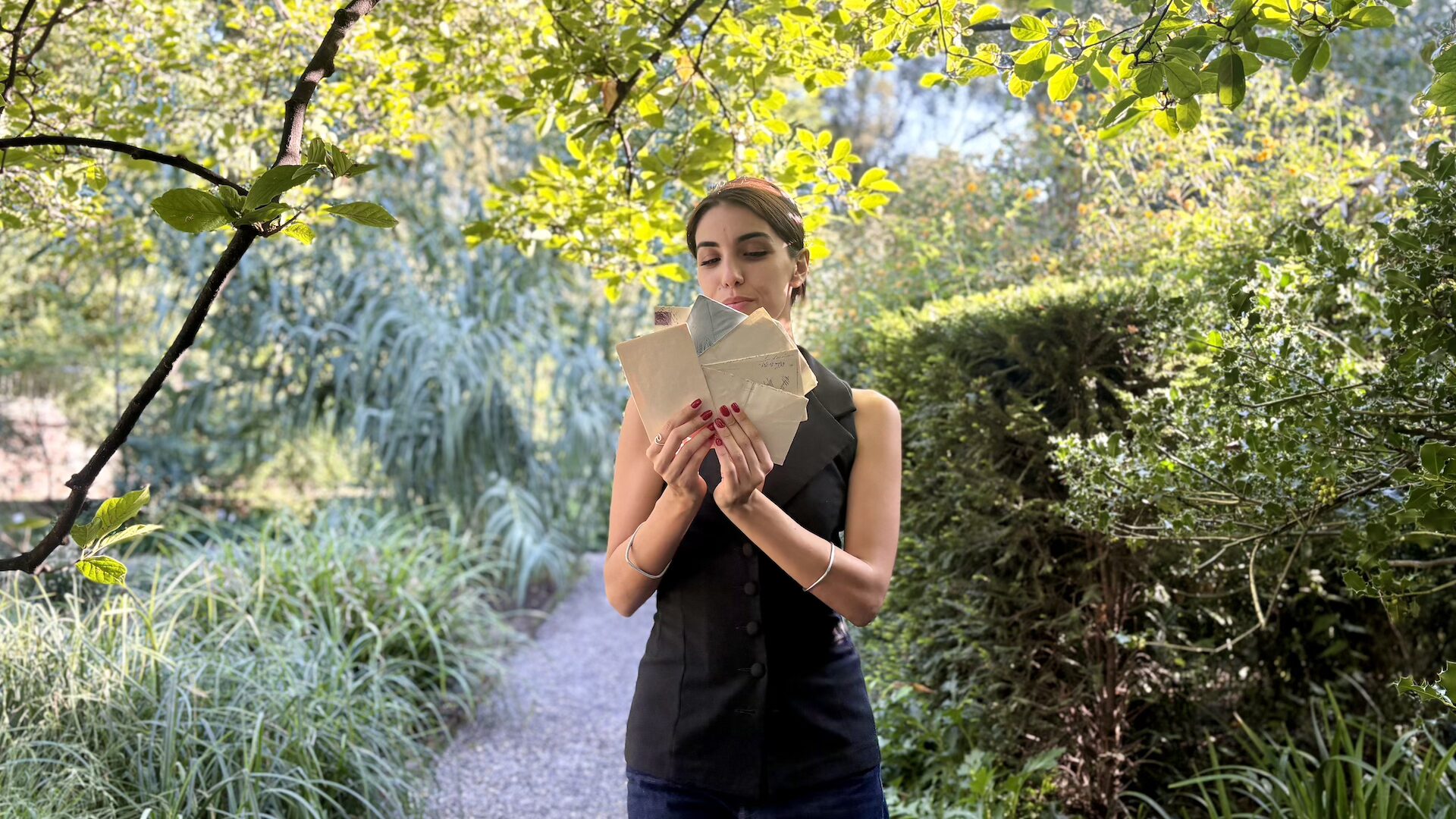
Where It All Began
Who is Gioia, and where does your fascination with other people’s letters come from?
Gioia is many things: a mix of the sun and sea of Salento, a job in Milan and memories of conversations with my grandmother and the women in her neighbourhood. I’ve always been drawn to stories and the emotions of people who came before me, as well as family photographs and archives. My grandmother raised me, and I loved asking her and her friends how they had met their husbands and what courtship was like. After some embarrassment, laughter and knowing looks, they would tell me their love stories, often ending with a phrase that said everything: “Ah, love, love.”
The First Letter
How did Lettere d’Amore begin?
I’ve always loved flea markets and rummaging through old clothes, trunks and lots of dust, especially during university. There wasn’t one precise moment when I thought, “This will become Lettere d’Amore.” It happened gradually. I do remember being in Rome after ending both a relationship and university, at a turning point in my life. I loved the city and its light reminded me of home; perhaps that was when I felt the need to open my heart to something I genuinely loved.
Love Stories Found at Flea Markets
What makes you stop and read a letter? Which one has stayed with you the most?
Love letters are difficult to find, but whenever I see one, I immediately stop to read it. I have a soft spot for complicated stories, especially funny ones. Two I haven’t shared yet really stayed with me: a postcard with “spicy” messages hidden beneath the stamp so the parents couldn’t read them, and a love letter accidentally sent to the wrong man, who wrote back to tell the woman about her mistake. Basically, the old-school version of sending a message to the wrong chat.
Are We Romanticising the Bare Minimum?
What have old love letters taught you about relationships today?
Definitely that the bar used to be higher. The tone, care and delicacy with which people asked for even the simplest things have changed the way I look at relationships. When my friends and I talk about dating — the guy who didn’t walk her home, the one who doesn’t reply, the one who messages everyone — I find myself saying, “Girls, have you seen the letters people used to write? We’re out here romanticising the bare minimum!”
Reading Between the Lines
What can handwriting and the physical letter reveal about its writer?
A huge amount. The envelope, paper, ink, handwriting and corrections can all reveal something, even whether the letter was written quickly or with great care. Of course, without knowing the writer’s story, much of it is intuition, which is why I’d love to work with a handwriting expert one day. I’m also receiving more letters and postcards from followers via DM. My dream is for the page to become a place where people share not only letters, but memories of grandparents, loved ones and the people behind those words.
When Private Stories Become Universal
How do you protect the intimacy of these stories? And how do younger followers react?
I try to remove as much identifying information as possible to protect the people involved. Once those personal details disappear, what remains is a love story that can become universal. What moves me most are the messages I receive, especially from young women who tell me a letter made them think of their grandparents, someone they loved or a love that is no longer there. It shows me that certain words can still go straight to the heart.
Love Letters vs. the Scroll
Why are handwritten letters fascinating us again in the age of Instagram? Do you still write them?
Getting people to stop and read a long letter isn’t easy: it asks you to interrupt the scroll and enter a completely different rhythm. Working in social media, I think we’re saturated with speed, from “three places you didn’t know about” to videos watched at 2x. Perhaps that’s why we increasingly want to slow down and be surprised by something we haven’t already seen online. I’ve always written love letters: as a teenager to other people, later to myself in my Moleskine. Today I leave Post-its around the house for my boyfriend, so the great epistolary tradition has downsized a little! Maybe this project is also a reminder to start writing longer letters again.
Three Love Letters to Read
Which three books of love letters should we read?
My friends gave me books of love letters for my graduation — instead of a wonderful trip, a new computer or a nice envelope full of cash! So I’d recommend those three: Amori diVersi by Flavia Novelli, a collection of love letters by major twentieth-century figures; Un viaggio chiamato amore, the turbulent correspondence between Dino Campana and Sibilla Aleramo; and Scrivi sempre a mezzanotte, Virginia Woolf’s letters to Vita Sackville-West, one of the great loves of her life.


