By Mila Johanna Papini. Cover image by Valentina Grigoletto.
Isn’t it fascinating to own such a vast collection of fragrances that you never have to wonder whether you have the right scent for the right moment?
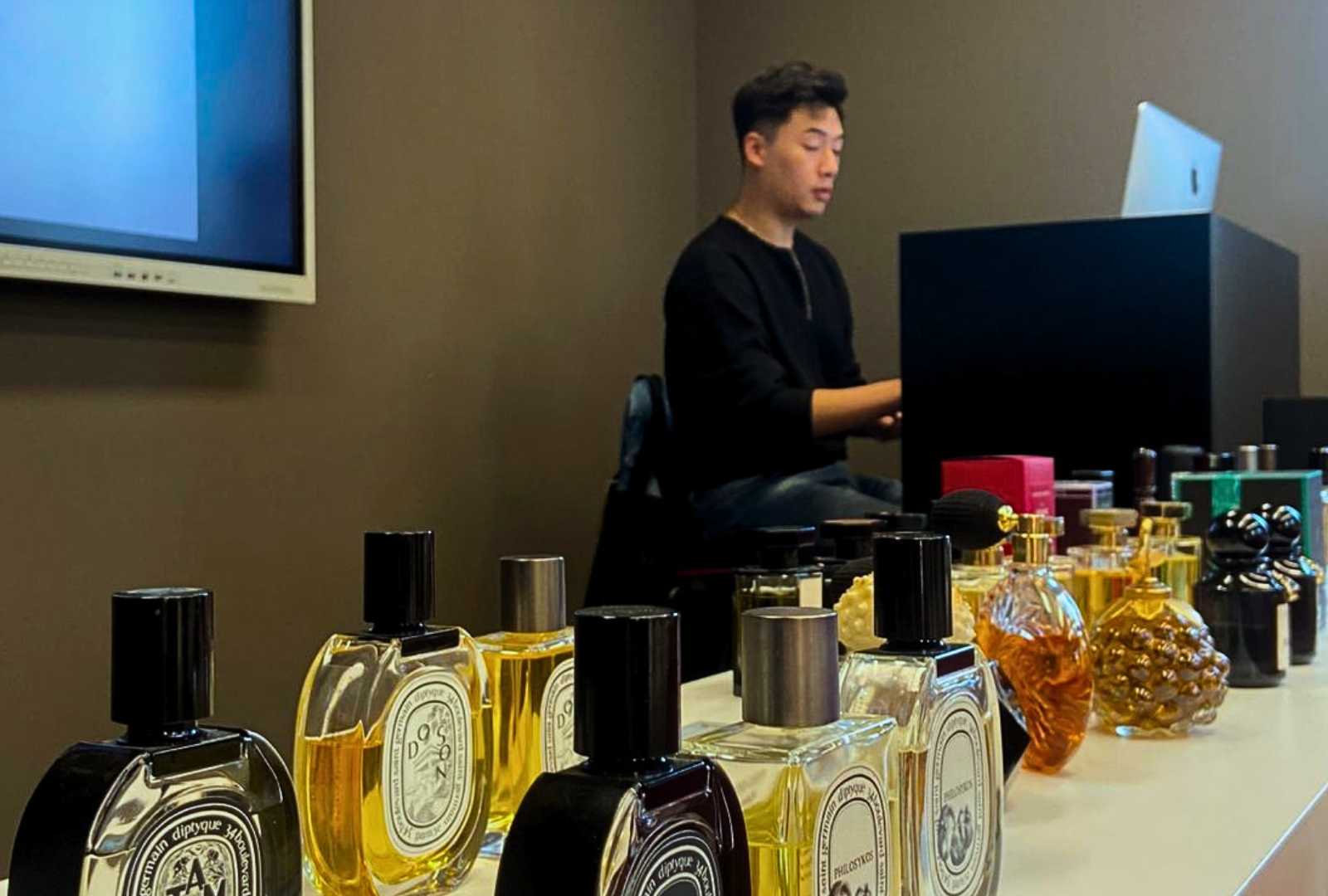
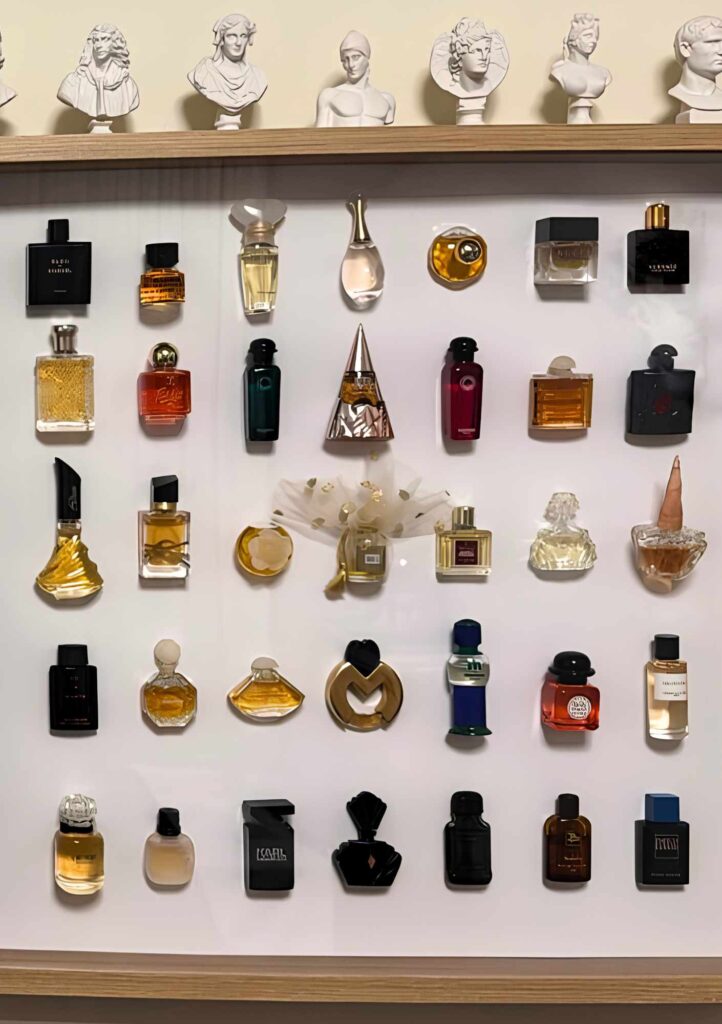
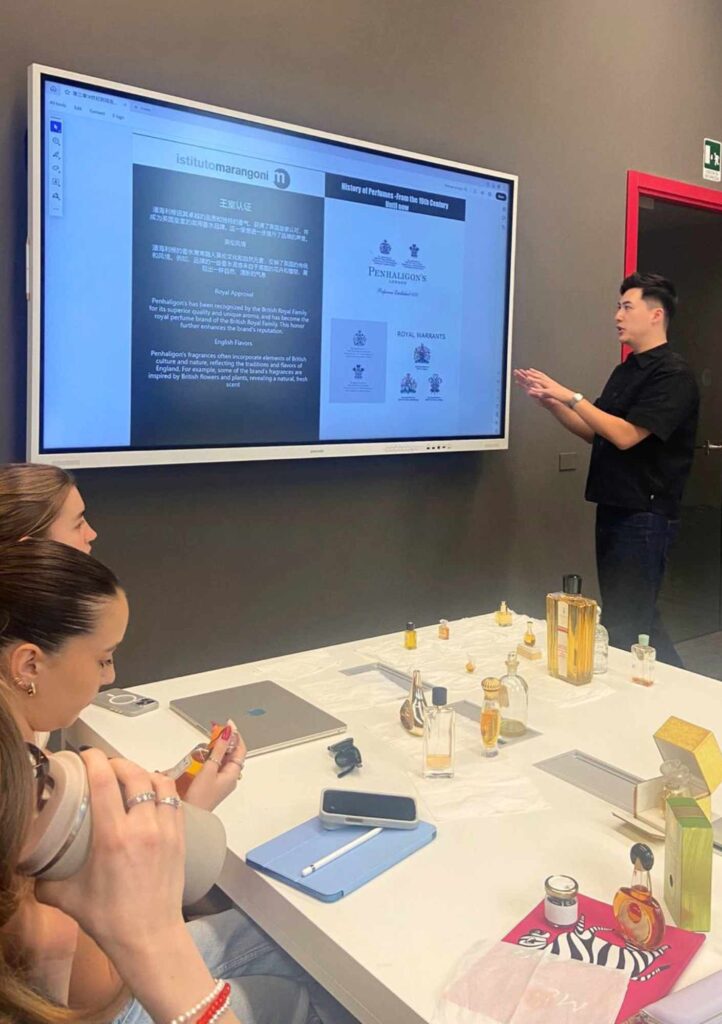
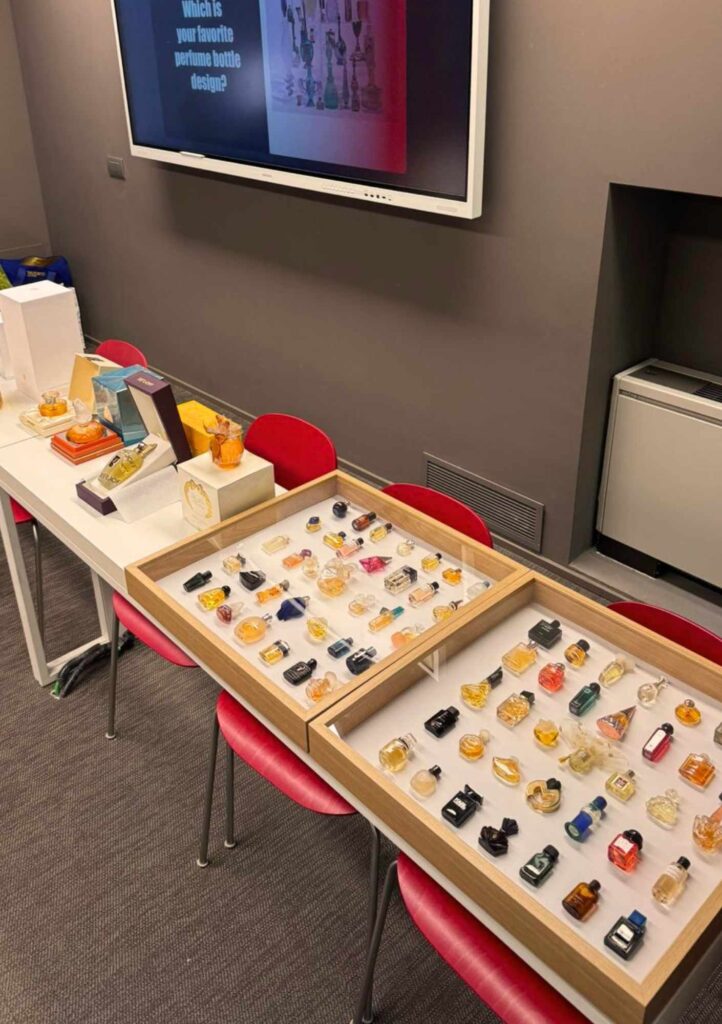
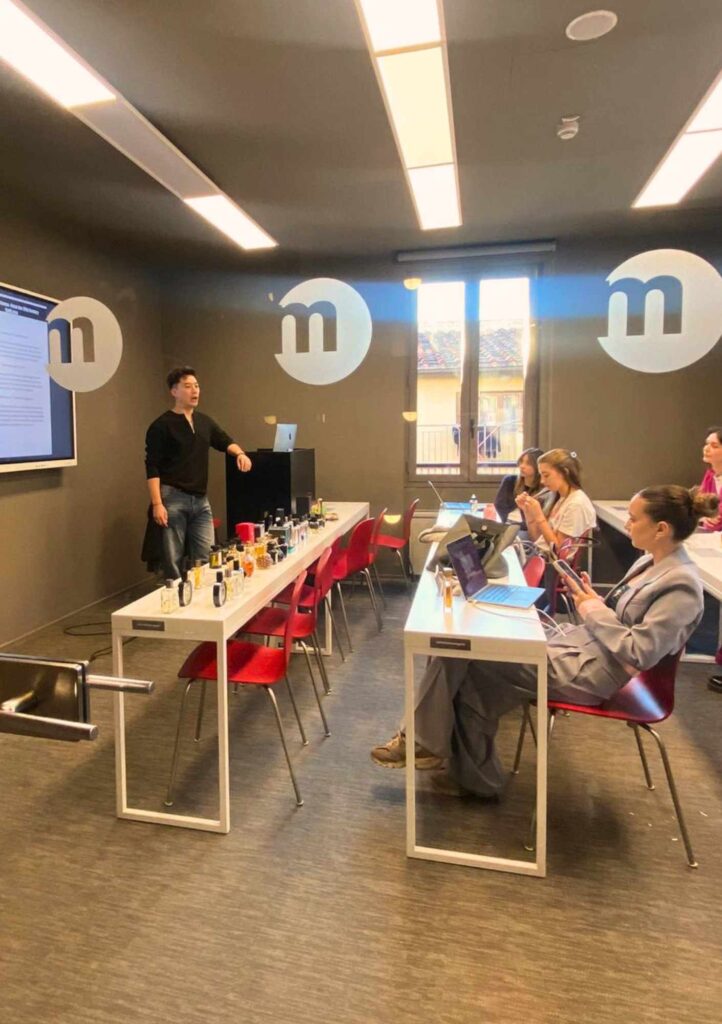
Giacomo Kam certainly does. A tutor at the Istituto Marangoni and an inspiration for those entering the world of perfumery, his expertise goes far beyond theory. It is built on something far more tangible: years of hands-on experience with the very objects he studies. Having begun collecting at just eighteen, his knowledge is rooted not only in research, but in the physical reality of over 1,700 bottles: each one a fragment of history, culture, and personal discovery.
The Story Behind Giacomo Kam’s Lifelong Perfume Collection
For Giacomo Kam, collecting did not begin as a deliberate act, but as exposure. Growing up surrounded by his mother’s collection – bags, garments, and, most notably, perfumes – he was constantly in contact with objects that carried stories. A table filled with bottles from different eras, some full, others empty, became an unintentional archive that quietly shaped his curiosity. At eighteen, that curiosity turned into action. What started as a personal exploration quickly
evolved into something more structured: a desire to explore what a perfume can reveal about the time and culture that created it. His early interest in Acqua di Parma marked a first step into this world. Initially perceived as niche, it later revealed to him the tension between exclusivity and commercial appeal, an awareness that would go on to define his taste. From that moment, collecting became a pursuit. Not of quantity alone, but of meaning, leading him across Italy and Europe in search of discontinued fragrances, fragments of olfactory histories that would otherwise be lost.
How Giacomo Kam Turns Perfume Collecting Into an Archive of Scent
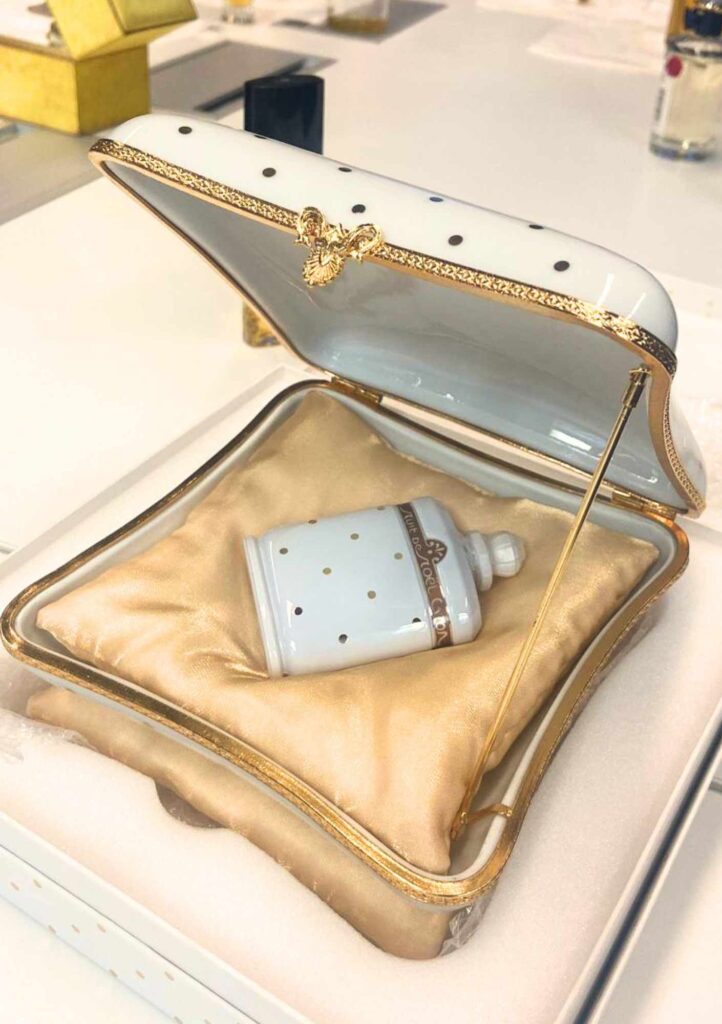
What distinguishes Giacomo Kam’s fragrance collection is not simply its scale -over 1,700 bottles – but the logic behind it. Each fragrance is selected as part of a broader system, one that reflects eras, moods, and identities. Rather than searching for a single “perfect” scent, he constructs a spectrum: fragrances that embody the spirit of the 1950s, the boldness of the 1970s, or the sensibilities of the early 2000s. This method extends to an almost archival precision. Kam collects multiple versions of the same fragrance – different bottles, formulations, and packaging iterations – to document their evolution over time. His dedication is particularly evident in brands such as Penhaligon’s and L’Artisan Parfumeur, whose releases he has followed extensively. A single fragrance, like Endymion, becomes not just a scent, but a timeline of subtle transformations. His philosophy challenges common habits in contemporary fragrance use. He rejects layering, viewing each perfume as a complete composition structured through top, heart, and base notes that should remain intact. Similarly, he avoids scented creams that might interfere with the olfactory integrity of a fragrance.
Taste, too, is treated as something fluid. Notes once loved, such as tuberose, can become intolerable over time, reinforcing his belief that fragrance is deeply subjective and constantly evolving.
How Perfume Design and Packaging Shape a Fragrance’s Identity
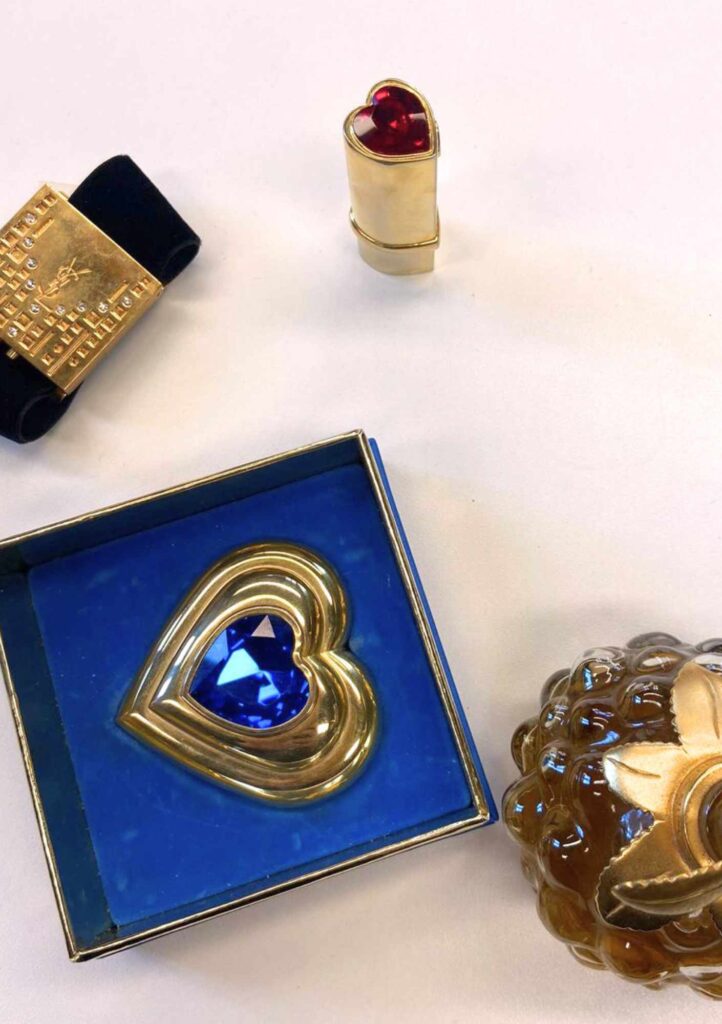
Beyond the act of collecting, Kam’s perspective expands into a broader critique of the fragrance industry. For him, perfume is inseparable from design and cultural storytelling. For Kam, the bottle and packaging are part of the fragrance’s story, revealing its era, craftsmanship and cultural influences. Minimalism, while popular, is often dismissed as overly simplistic and easily replicated, lacking the depth he seeks.
This sensitivity extends to the way brands engage with culture. Many fragrance houses in the past have drawn inspiration from other countries – China, Japan, or the Middle East, for example – but often without investing in genuine research. The result can feel superficial: exotic symbols, zodiac signs, or stereotypical motifs used more for marketing than for authentic cultural storytelling. Kam believes that true inspiration requires understanding the history, symbolism, and context behind a culture, rather than simply borrowing its surface elements. Only with respect and research can a fragrance truly honor the culture it references.
Why Vintage Perfumes Could Shape the Future of Fragrance
At the same time, Kam remains attentive to the shifting landscape of trends. While gourmand fragrances continue to dominate for their comforting, almost edible qualities, he anticipates a return to more challenging notes like leather, animalic accords, and earthy nuances that speak to authenticity rather than mass appeal.
Despite experimenting with his own playful creations, notes of red tea, popcorn, or milk, Kam shows little interest in launching a personal brand. His focus remains on exploration rather than production. For younger collectors, his advice is clear: look backwards to move forward. Seek out vintage fragrances, explore forgotten spaces, and value limited editions not only as investments, but as cultural artifacts. Ultimately, his expectations of the industry are simple yet demanding: fewer releases, greater depth, and a renewed respect for both the product and the consumer. His vision of the future is clear: a fragrance industry that slows down, tells better stories and gives each creation the attention it deserves.


