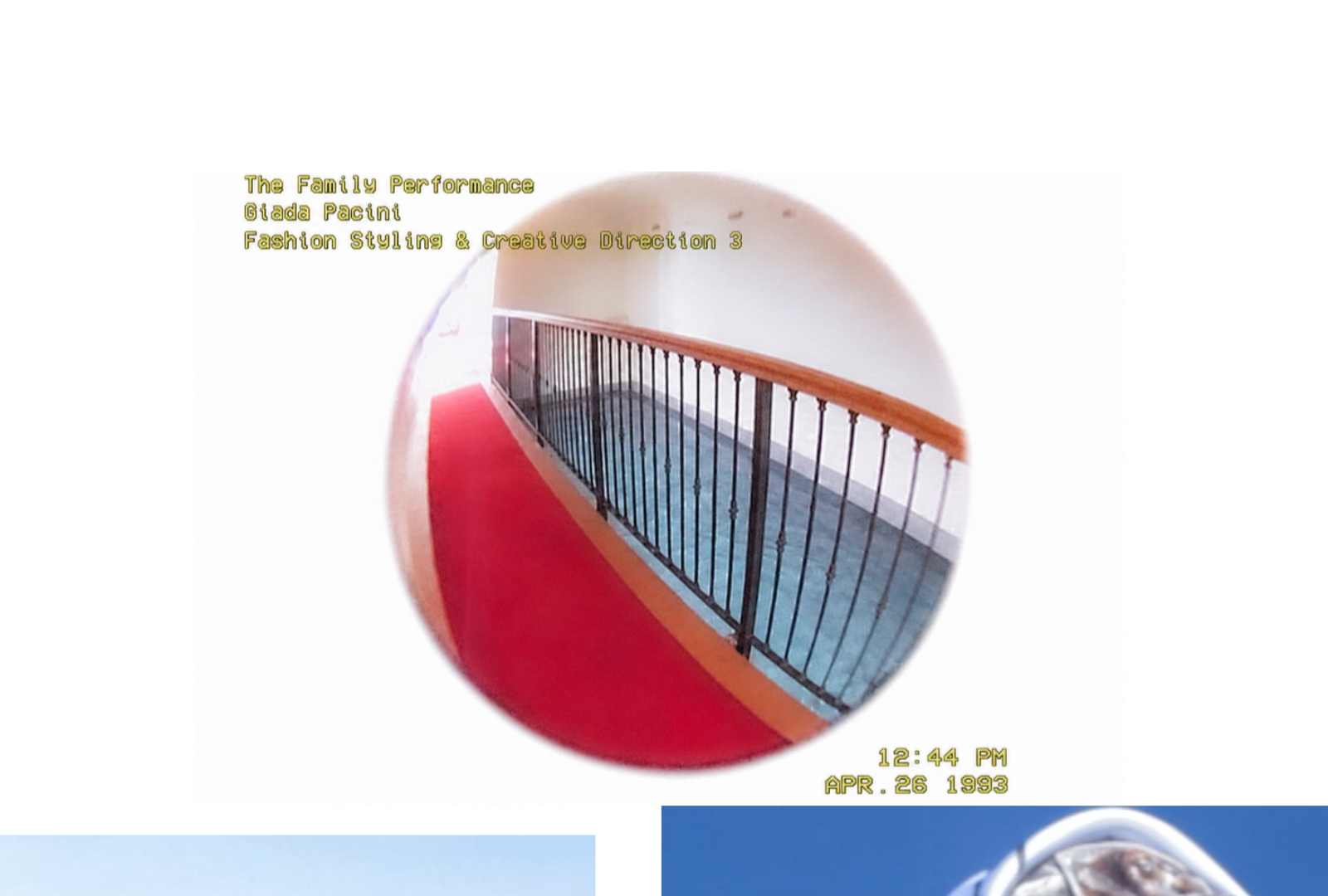
By Azzurra Rinaldi. Cover image The Family Performance by Giada Pacini
What happens when two fashion students from different cities, and different creative starting points, are asked to build one project together? The first Cross-School experience between Istituto Marangoni Firenze and Paris brought together two third-year Fashion Styling & Creative Direction students: Giada Pacini from the Florence campus and Aaliyah Berner from Paris. Selected through an open call, they collaborated on a joint thesis project, translating their research on family heritage and technology into a tableau vivant fashion film. More than a final outcome, the project became a process of creative translation, where two distinct perspectives came together to build a shared visual language.
Paris: Where the Project Takes Its First Shape
The first phase of the project took place in Paris, where the video production began.
For Giada, working in an international environment was one of the most meaningful aspects of the experience. Collaborating with people from different backgrounds required constant adaptation, but it also opened up new ways of approaching the project.
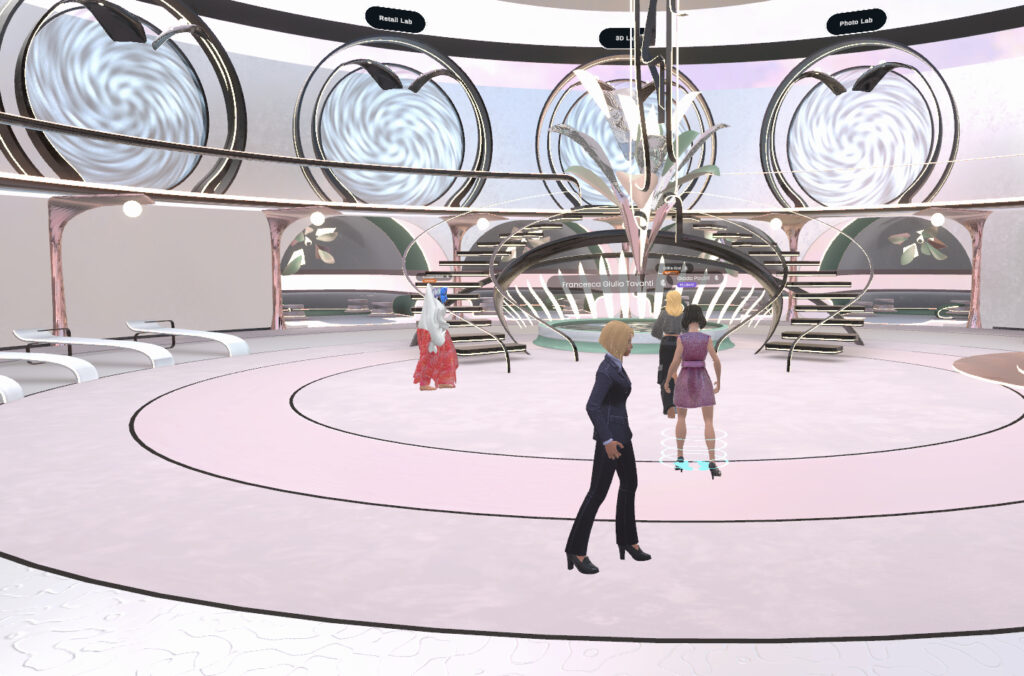
«For me, the most important part of this experience was the opportunity to work in an international team. It was not only about the final result», Giada reflects. Being in Paris also added an important contextual layer. As a Fashion Styling student, experiencing a city so deeply connected to the history of fashion meant engaging with it not only as a reference, but as a living environment that inevitably shaped the creative process.
This first stage allowed the team to define the visual direction of the project and establish the tone for what would later develop in Florence.
Florence: Where the Project Comes Together
The project then moved to Florence, at Villa Tolomei, where an editorial shoot with four models was developed. If Paris was about direction, Florence became the moment where everything came together.
Giada’s work on family dynamics and domestic roles met Aaliyah’s exploration of algorithms and digital communication. The task became finding a shared visual ground between two very different perspectives. «Communication was the key. The way we connected our ideas and made them work together really shaped the project», Aaliyah shares. That connection took shape through repetition, rhythm, and the idea of “mechanical roles” within human relationships, suggesting a parallel between social structures and digital systems.
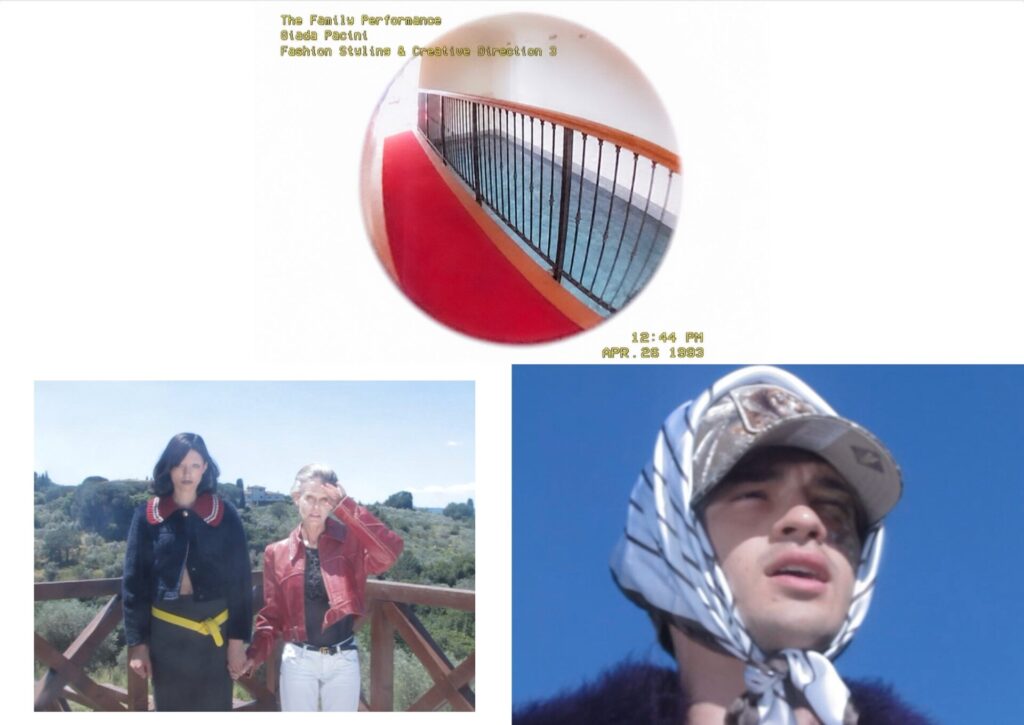
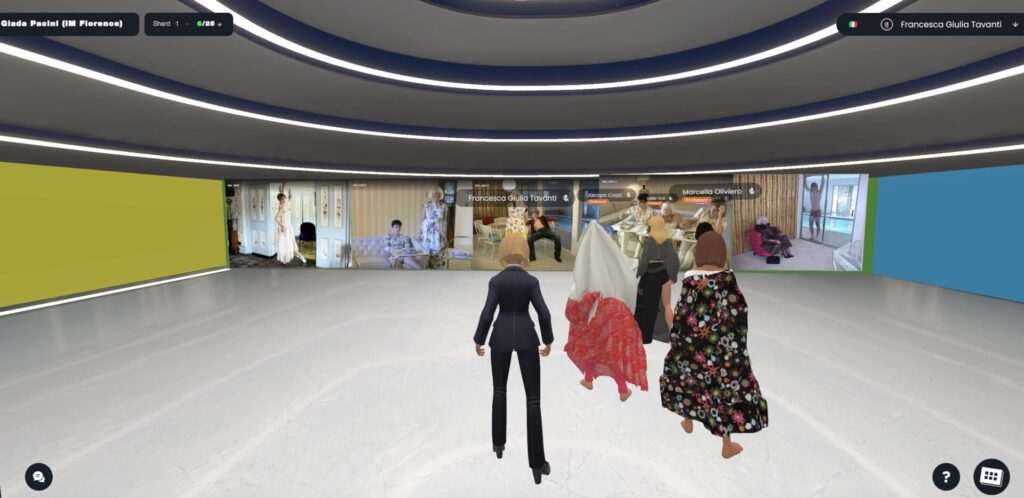
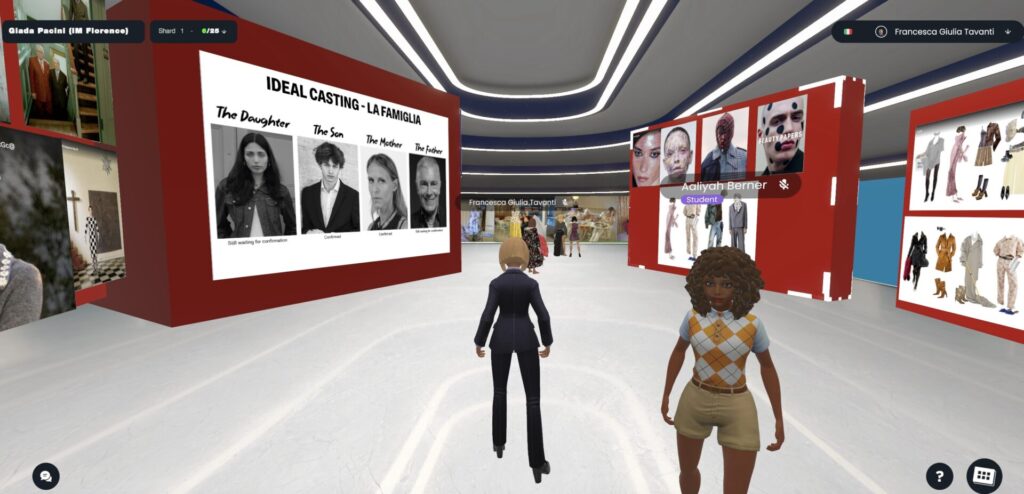
«We worked through different platforms, from social media to the Marangoni virtual environment, and this constant exchange made everything possible», Aaliyah adds.
The countryside setting of Villa Tolomei added another layer of contrast, reinforcing the dialogue between heritage and contemporaneity that runs through the project.
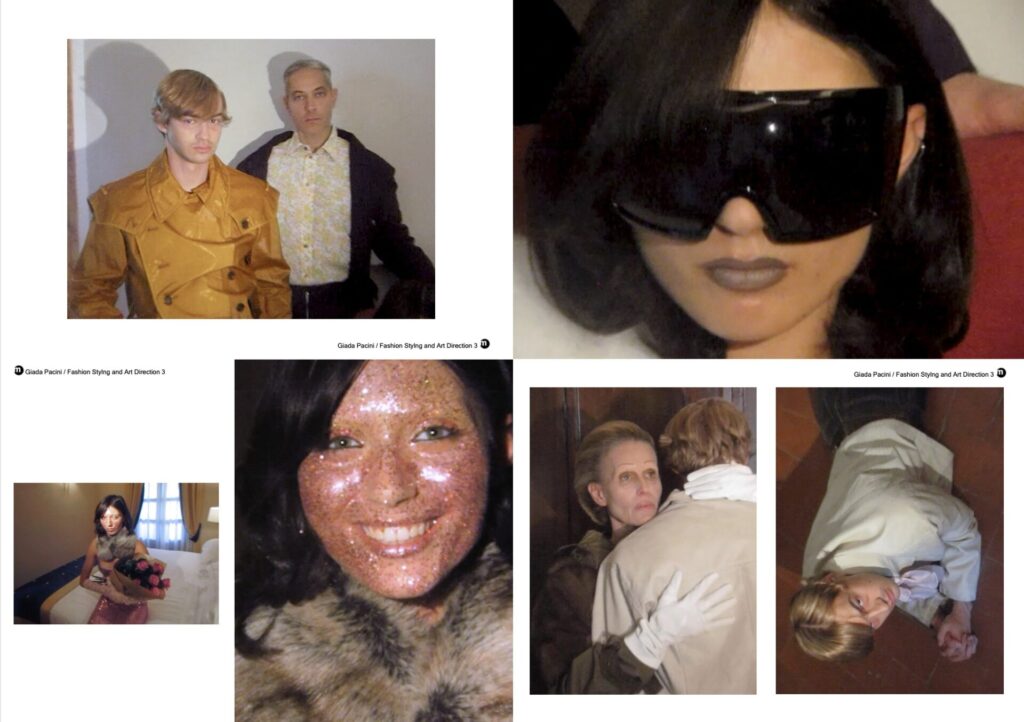
The Family Performance, curated by Giada Pacini, ph Leonardo Casalini
Inside the Cross-School Project: Two Students, Two Perspectives
At the core of the project are two distinct but complementary lines of research. Aaliyah’s work focuses on the contemporary digital landscape. Starting from everyday experience, she explores how social media algorithms shape preferences, influence perception, and contribute to the construction of identity. What initially appears to be a personal and intuitive space reveals itself as a structured and highly mediated system.
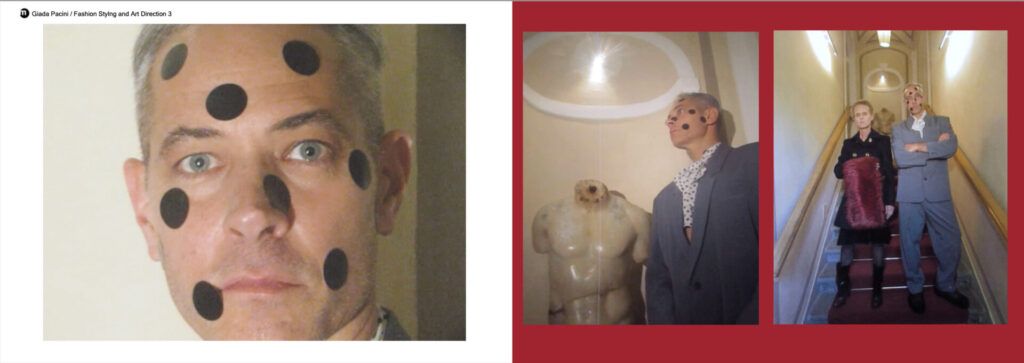
The Family Performance, curated by Giada Pacini, ph Leonardo Casalini
Giada’s thesis, on the other hand, stems from a more personal reflection. Her work explores family performance and domestic dynamics, questioning how ideas of “perfection” are constructed and represented. By observing how visual culture and trends reinforce specific aesthetics, she develops a more critical and personal reading of these models.
From Open Call to Final Outcome
As third-year students, Giada and Aaliyah are now developing their final dissertations, where theoretical research meets practical outcomes. What began as an open call evolved into a shared experience connecting two schools and two different approaches. The project shows how ideas shift across contexts, becoming a shared narrative.


