By Azzurra Rinaldi. Cover Istituto Marangoni Firenze
Inside the Backstage at Istituto Marangoni Firenze’s MĪRĀBĬLIS Fashion Show
There were not many people when I arrived. It was still early, but everyone was rushing around, trying to take care of the final details before the show began. Nervous faces, quick footsteps. The event would begin in just thirty minutes.
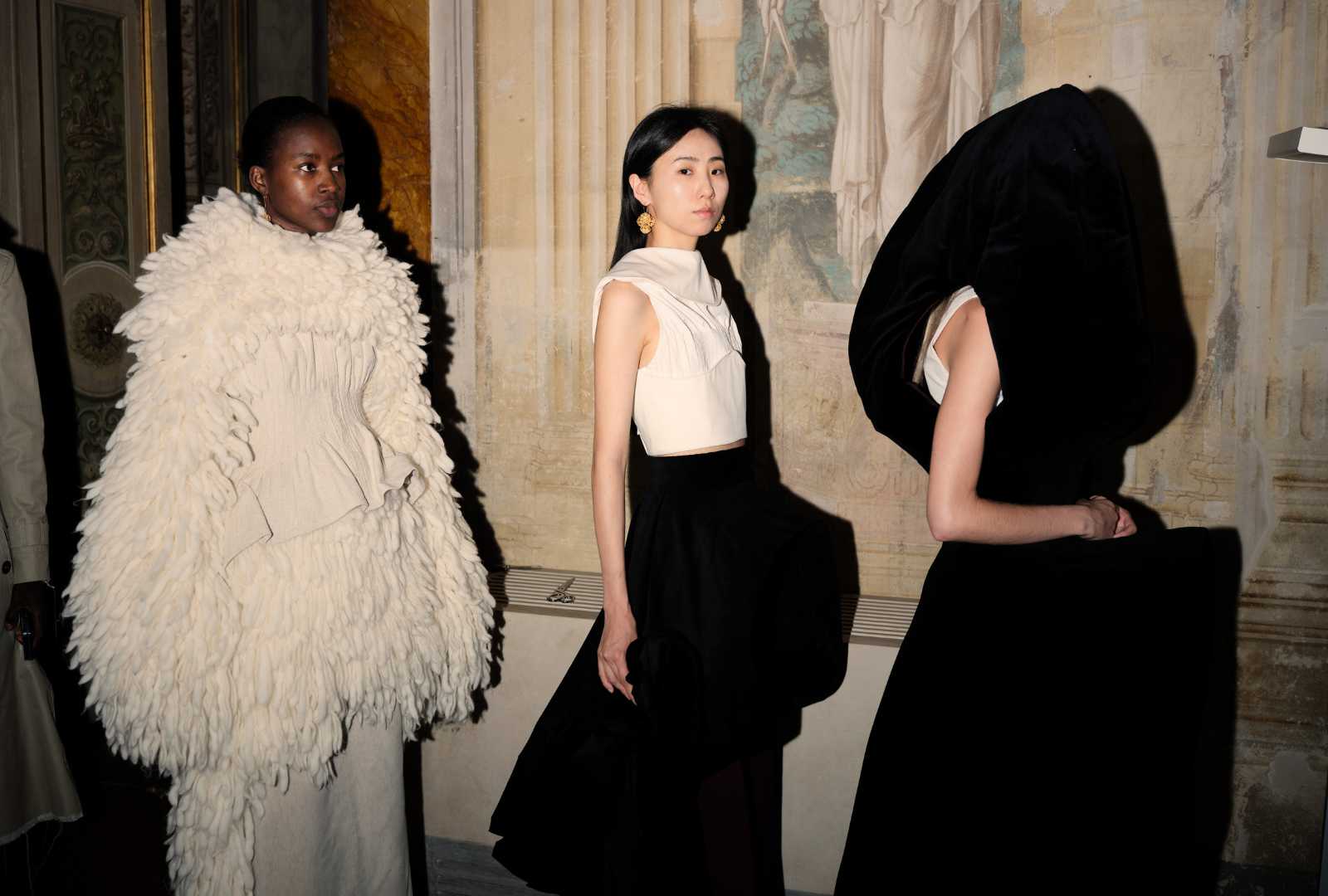
This was MĪRĀBĬLIS, the 2026 Graduate Fashion Show by Istituto Marangoni Firenze, staged in the historic Palazzo Corsini and presenting the final collections of the school’s most promising third-year Fashion Design students. Inspired by the Latin mirari, “to look with wonder”, MĪRĀBĬLIS explored the dialogue between reality and illusion, turning the palace into a world suspended between myth and imagination.
I had time to look around, wandering through rooms and corridors. Each room was painted from floor to ceiling, and each had its own name: the runway would take place in the Hercules Room.
I found the name perfect for the show. It evoked a mythological space and symbolized all the challenges each student had to face before arriving there. The place truly had something magical about it. The deeper you moved through the rooms, the more captivated you became by the beauty of the space. Someone switched on the microphone near the fountain as the audience began to arrive, and the atmosphere became even more enchanting. The water rushed like a torrent; you could feel its freshness even from another room. Looking up, you could see the shadows of the trees moving overhead.
I was backstage, where several screens showed different views of the Hercules Room. Next to me, a computer displayed the Istituto Marangoni Firenze Instagram page, ready to livestream the catwalk.
In front of me hung garments covered with pointed crystals. These were the creations of Monica Beduzzi. From such a close distance, I could appreciate details that would have escaped me as a spectator. I could touch Kangsan Lee’s jacket and admire every stitch. I felt lucky to be there.
The Mirabilis Runway Begins: Myth, Craftsmanship and Emerging Designers
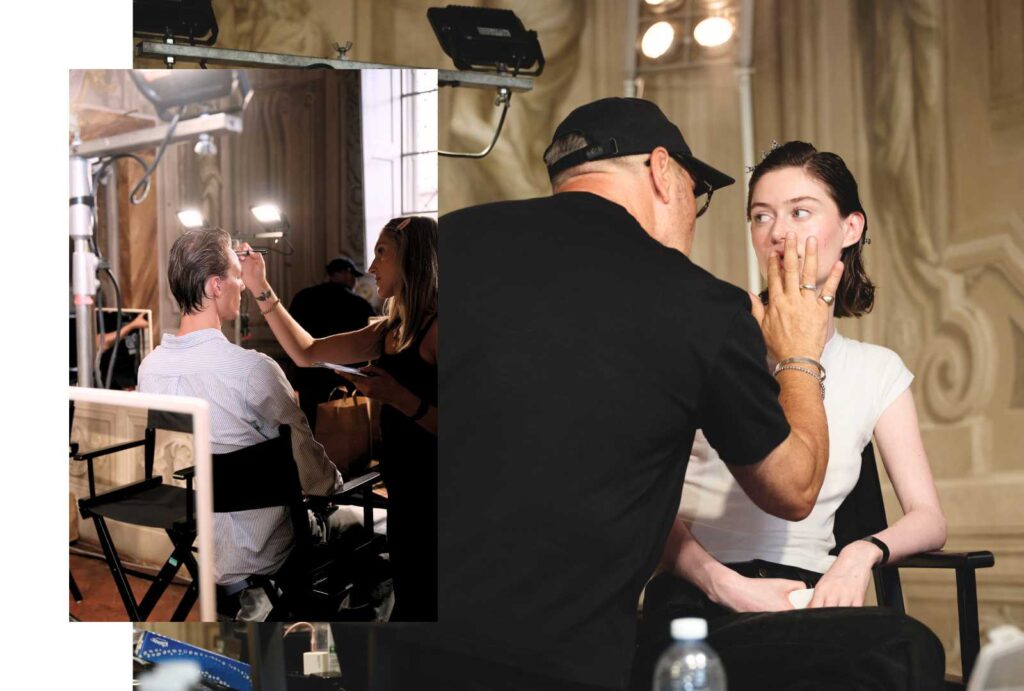
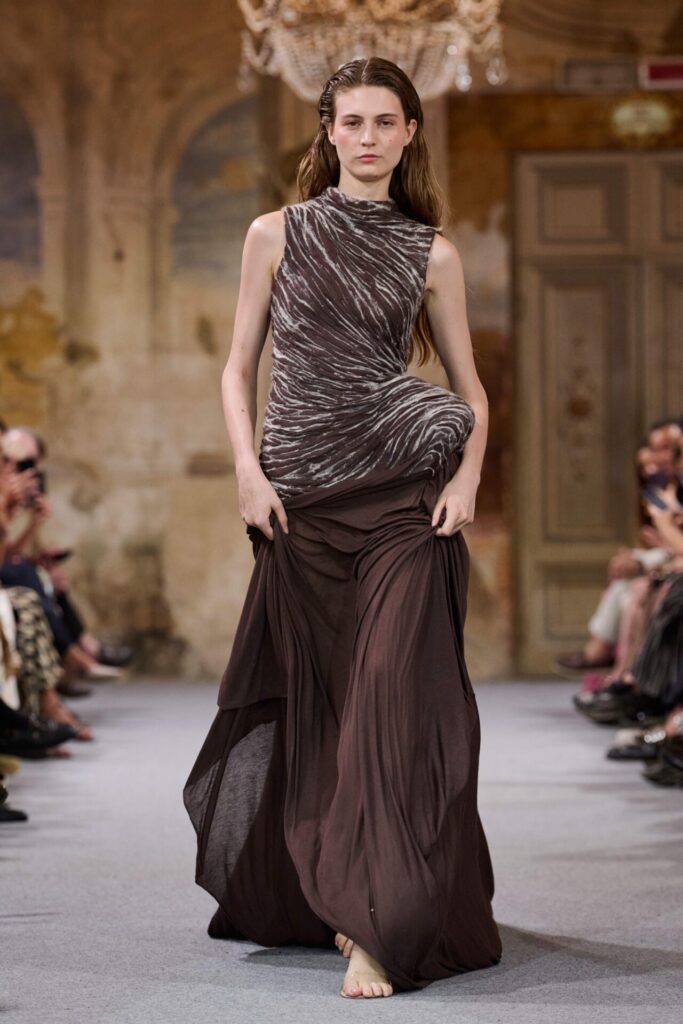
The models arrived and lined up. Students and make-up artists gave them their final touch-ups. Sara Peng adjusted a pair of socks on one of the female models, pulling them over her shoes. A little face powder, and she was ready to go. The fountain fell silent, and the enchantment began. Models glided down the runway in sculptural garments, like magical creatures performing in a ballet. Kendall Spitz opened the show with a fantastical siren wearing a brown tie and carrying a white swan wrapped in a voluminous cape.
Matilde Bonecchi brought menswear to the runway with La Forma del Sentire. Wool merged with denim and other textiles to create hybrid creatures from an enchanted forest: elves dressed in shades of pink and brown. One coat was especially striking. It blended boiled wool with traditional wool, fading gradually from brown to pink. Was it a hallucination?
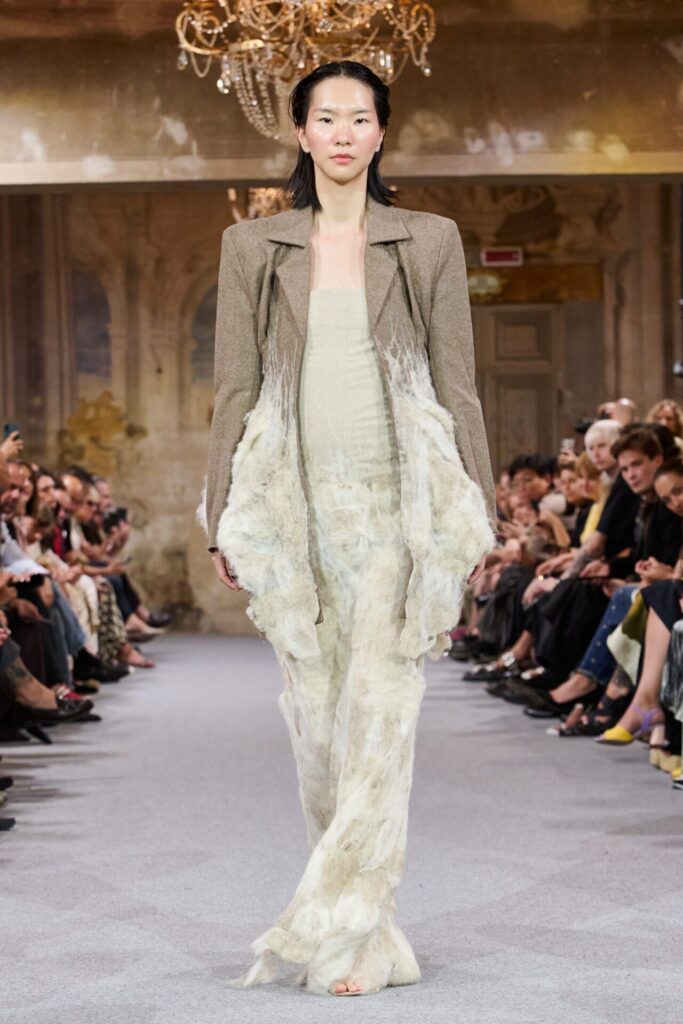
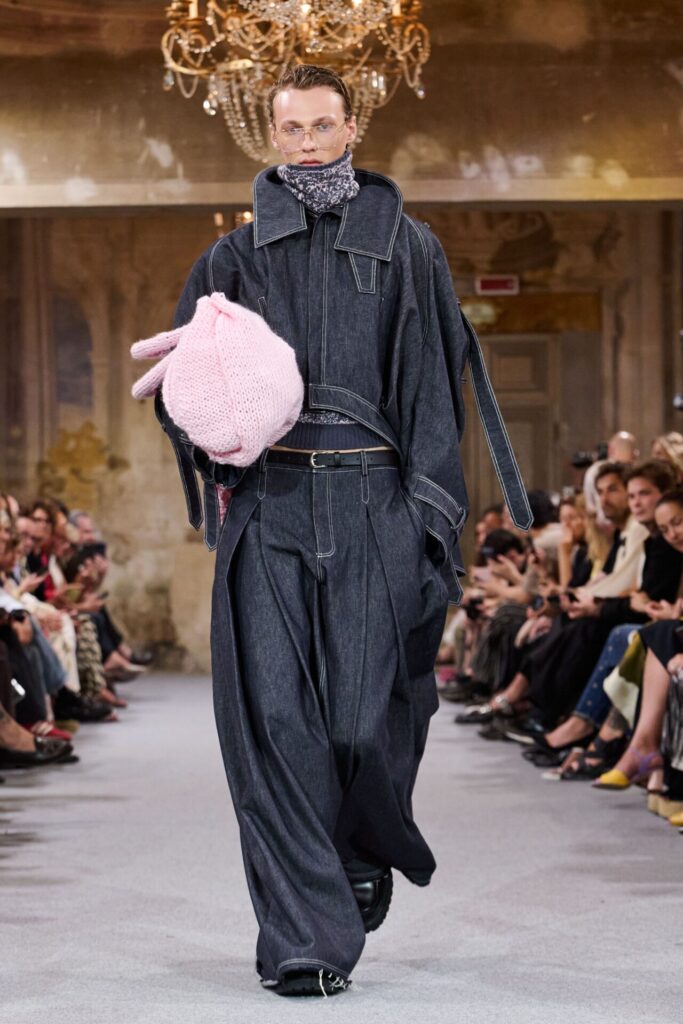
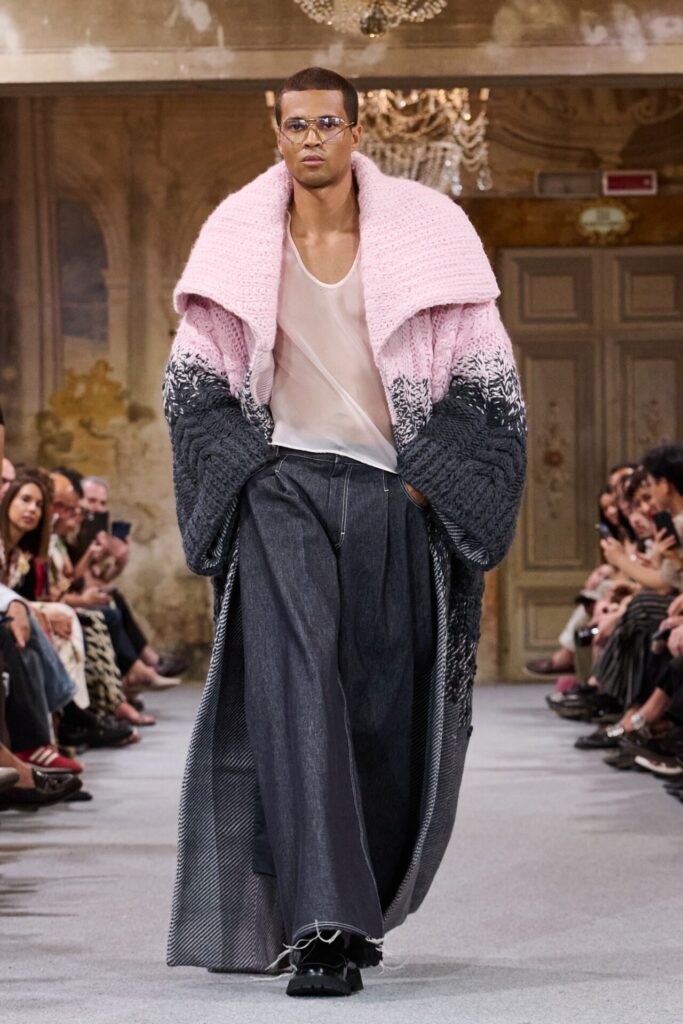
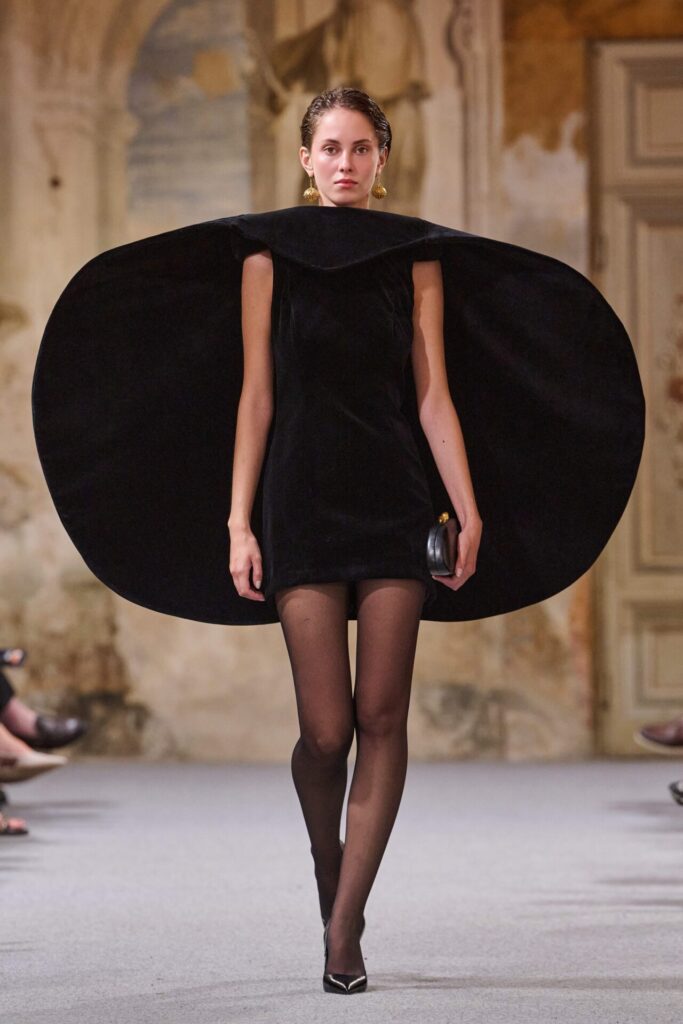
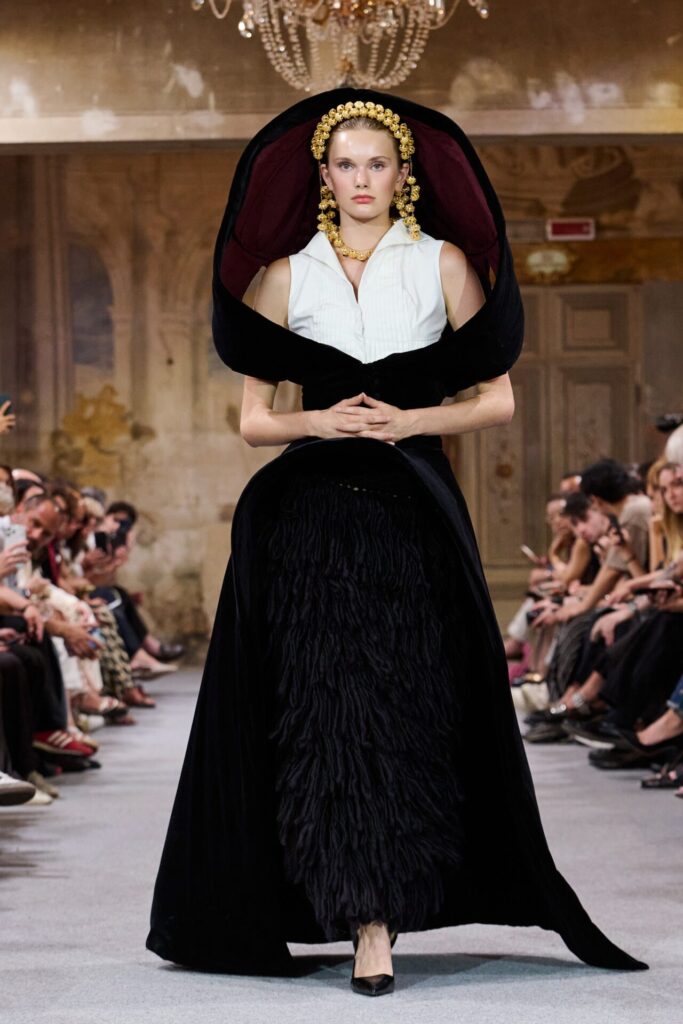
Then came Arianna Corrias and her black velvet creations. The silhouettes were rounded. Inspired by Sardinian mothers, her garments also recalled marine creatures, almost like fascinating jellyfish emerging from the sea.
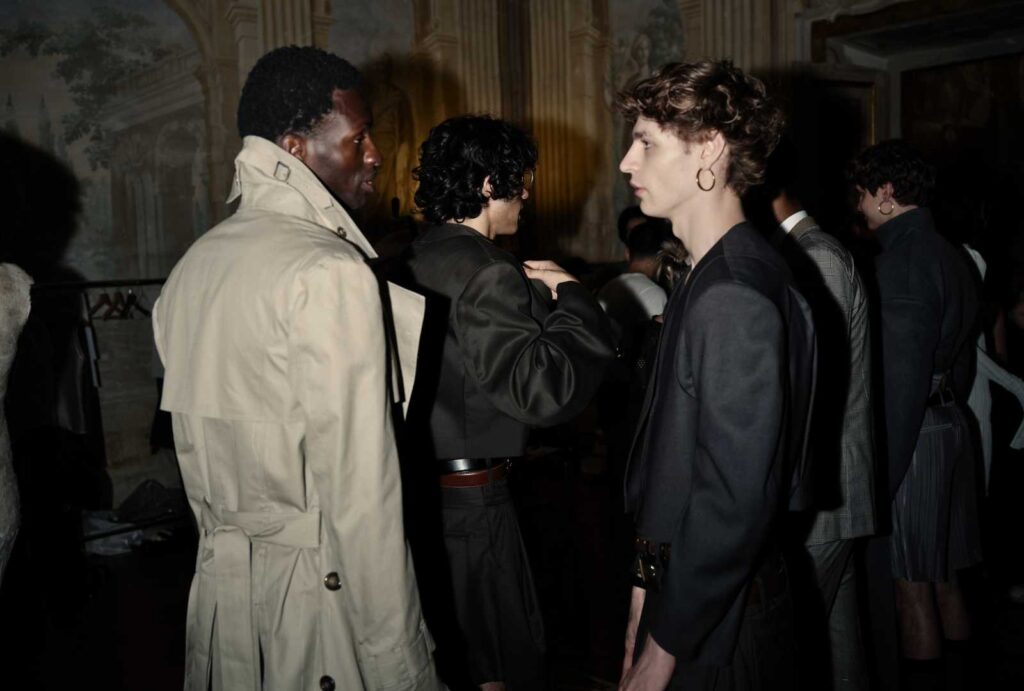
The music changed. Behind me, the director instructed the camera operators on which angles to capture. I felt as though I were dreaming. It was my last moment of lucidity before immersing myself completely in the magical world unfolding around me. Yet behind the spell, reality continued. People talked. Anxiety slowly gave way to happiness. Some students had already completed their presentations; others were preparing to step onto the runway, silently hoping everything would go well. Models left the stage while others prepared to enter.
The Final Looks: Fantasy, Colour and the Fashion Project of the Year
Karla Muzladin presented a procession of enchanted knights through her project Opasana. The men wore oversized garments that somehow enhanced the body rather than concealing it. In her description, the designer explains that Opasana refers to a traditional belt worn around the waist while also symbolising protection, structure and control. From the runway, all of these ideas were clearly visible.
Masks. Garments that were not what they seemed. Sara Peng’s collection evoked mischievous creatures, perhaps forest spirits. Her looks were built from layers of clothing. There was a face and a mask, one garment and another covering it. It felt as though a gust of wind could lift the upper layers and reveal the true nature of what lay beneath. The outer garments were rich in drapery and flowing folds.
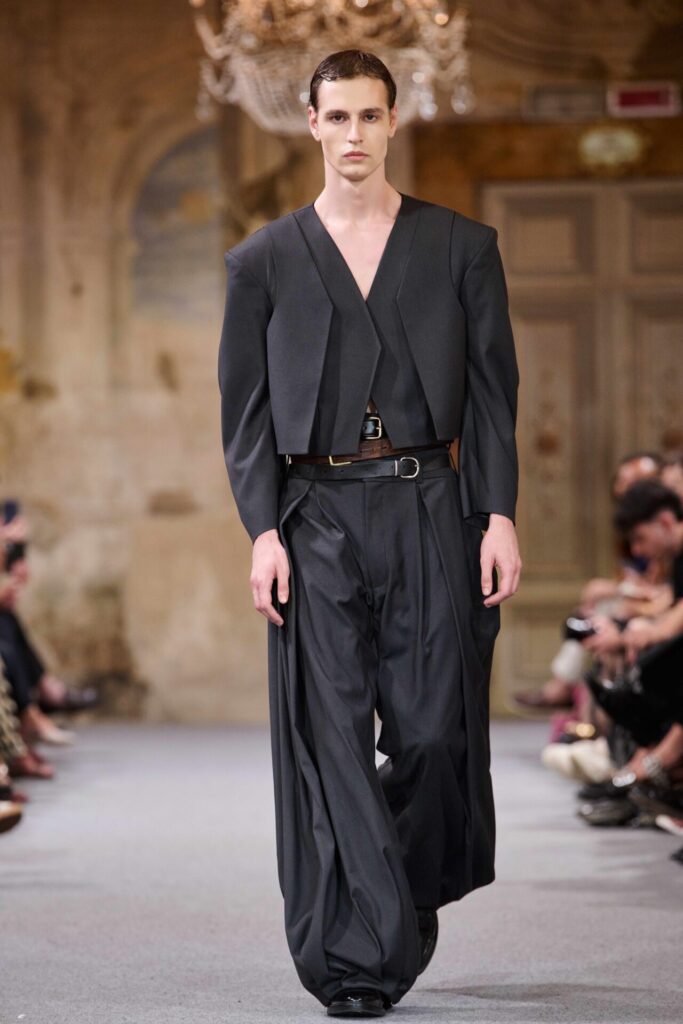
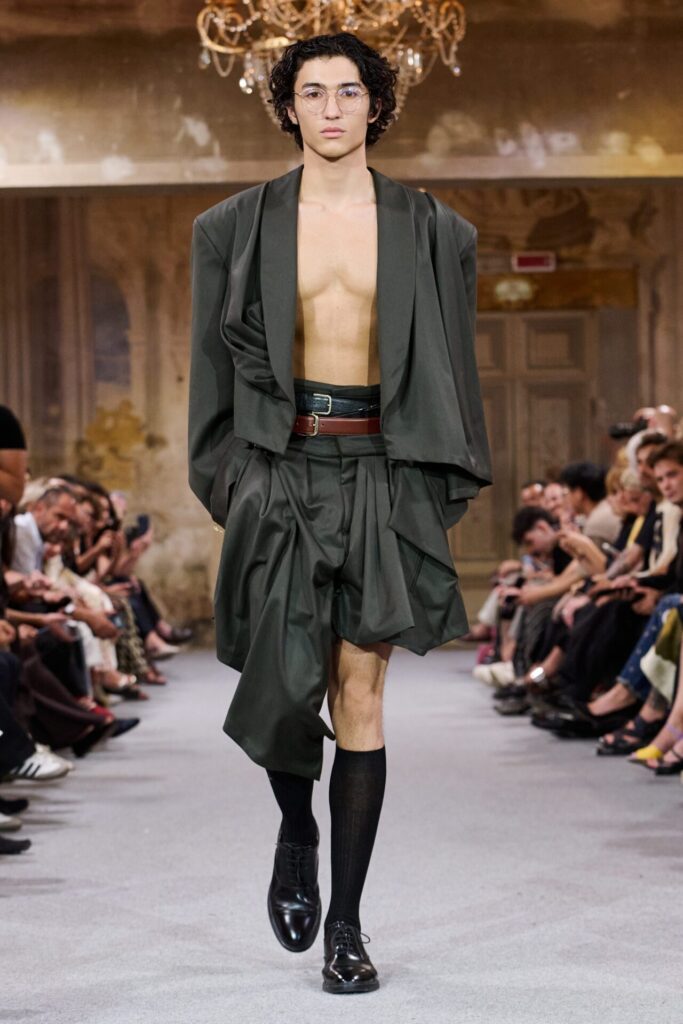
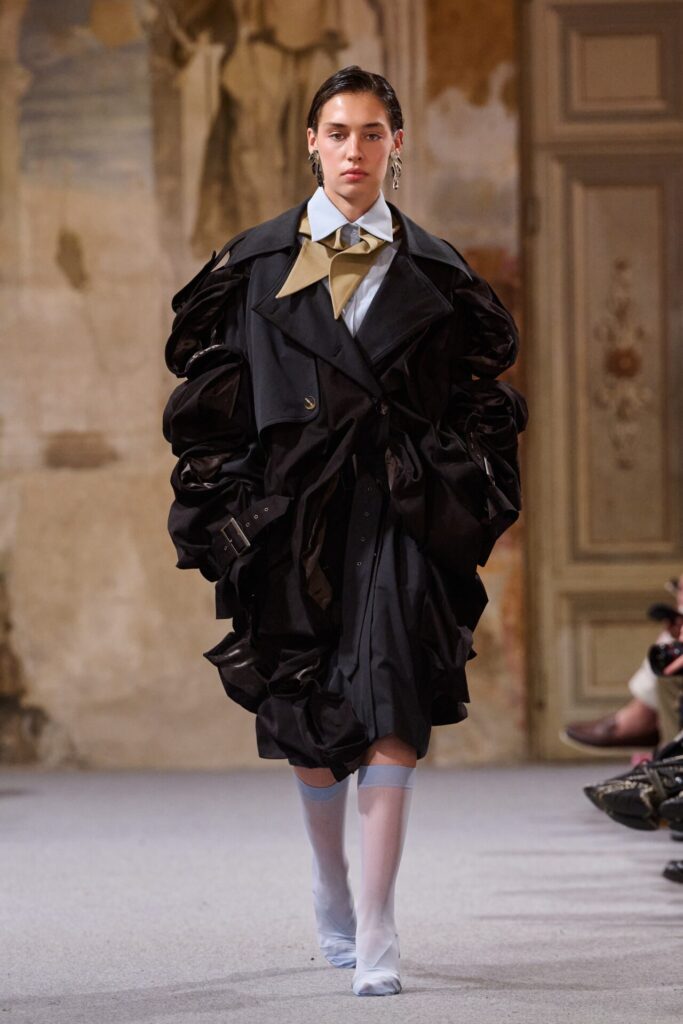
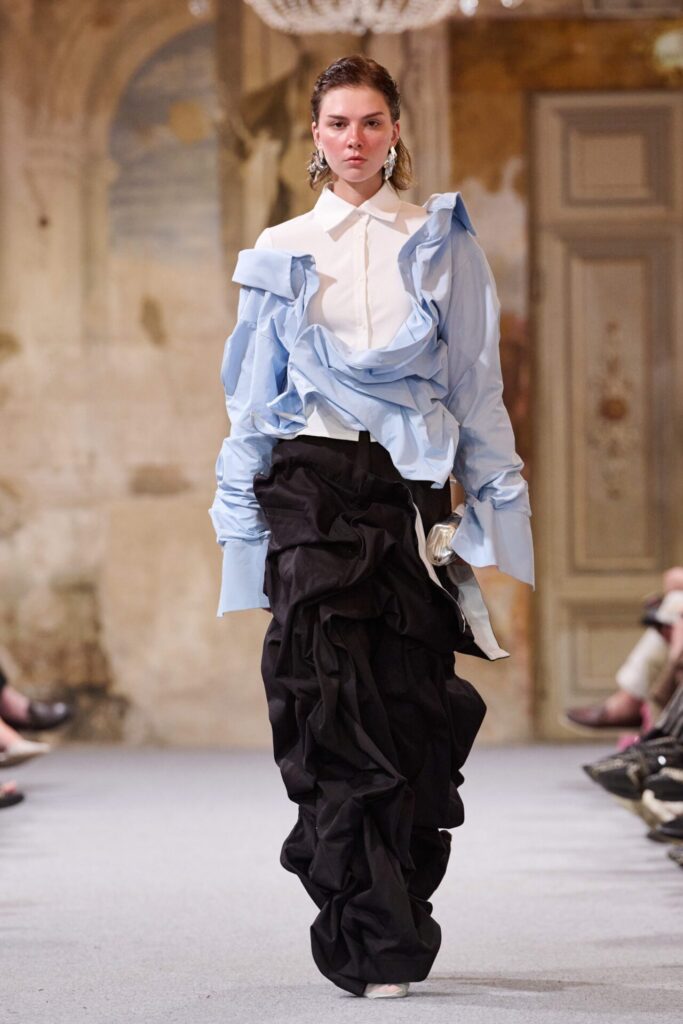
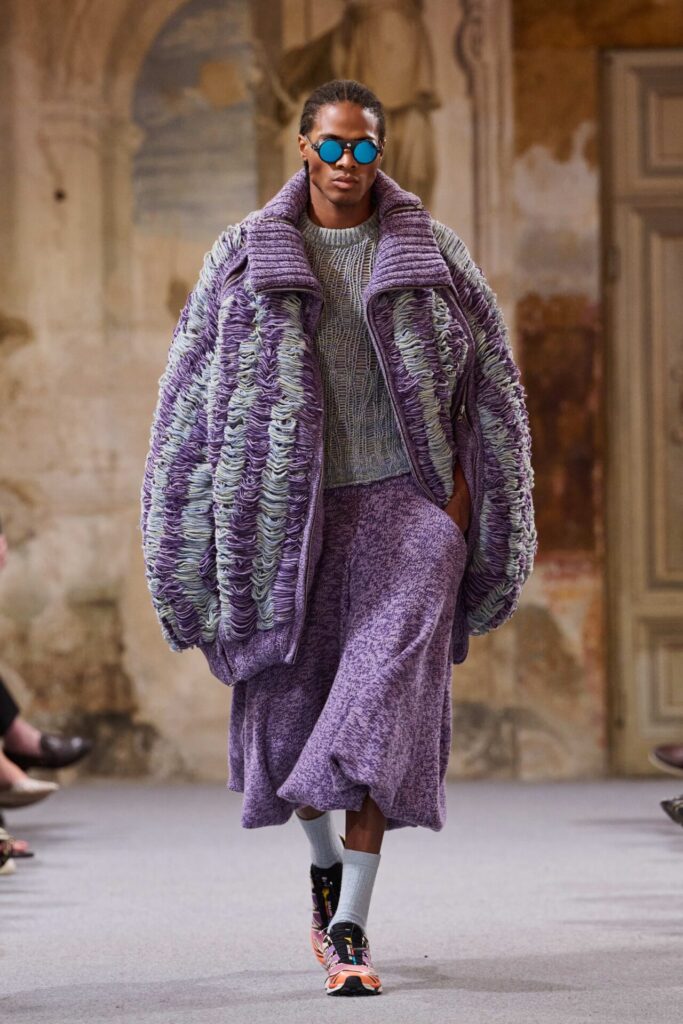
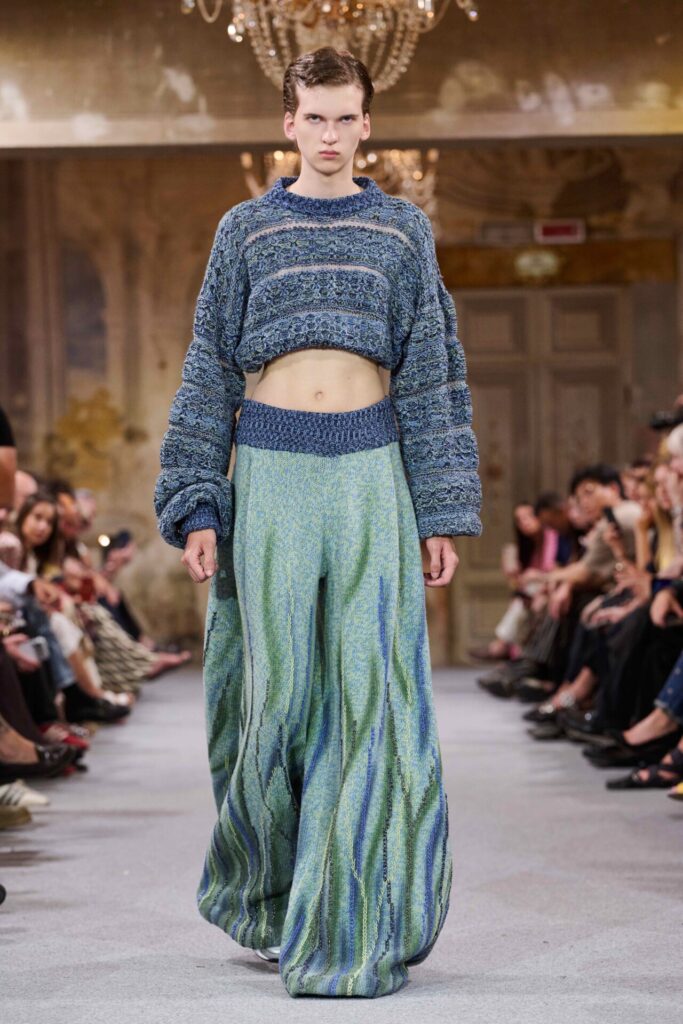
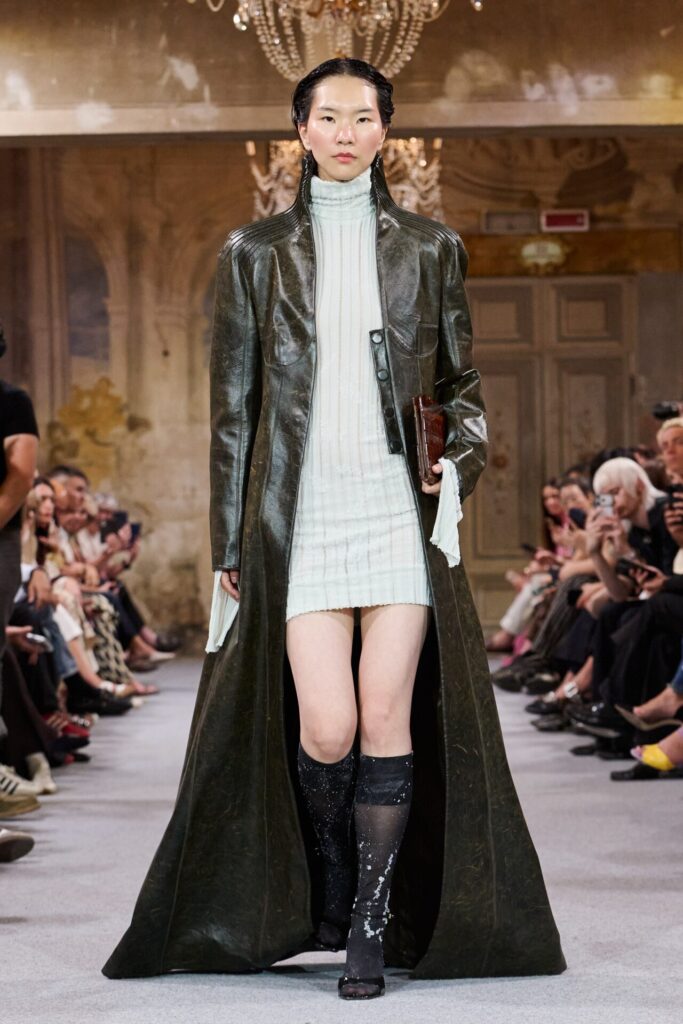
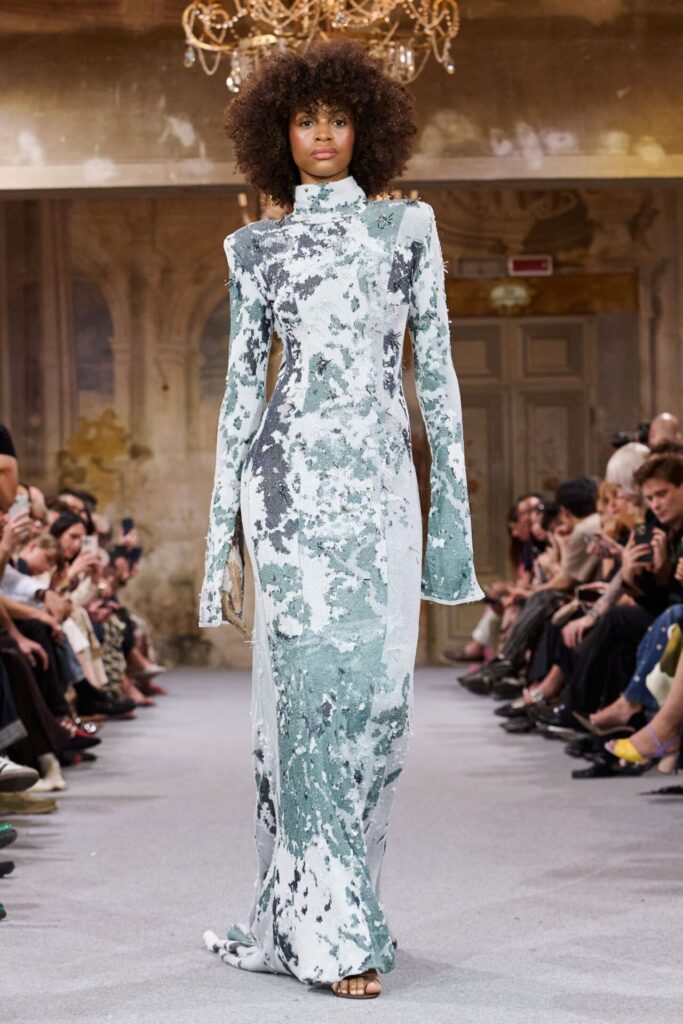
Then came Matilde Gori. She used wool, but above all she used colour. Most collections featured black, white and brown. Some call it the crisis of colour, and I must admit there may be some truth in that. Yet she had the courage to bring psychedelic shades of green, violet and pink to the runway. The silhouettes were soft, and the wool gave them an even greater sense of comfort and fluidity.
Then the fairies of the forest arrived. Dressed in shades of brown and grey, they appeared in extraordinary garments covered in crystals. The designer was Monica Beduzzi, who combined technology and craftsmanship to create these sparkling embellishments. Under the lights, the crystals made the garments even more enchanting. One look in particular caught my attention: a black model wearing a fitted dress covered in grey and white crystals, slowly walking through the audience. She reminded me of a childhood creation of mine: a dark fairy with butterfly wings. Who knows? Perhaps she was carrying a pair of invisible wings.
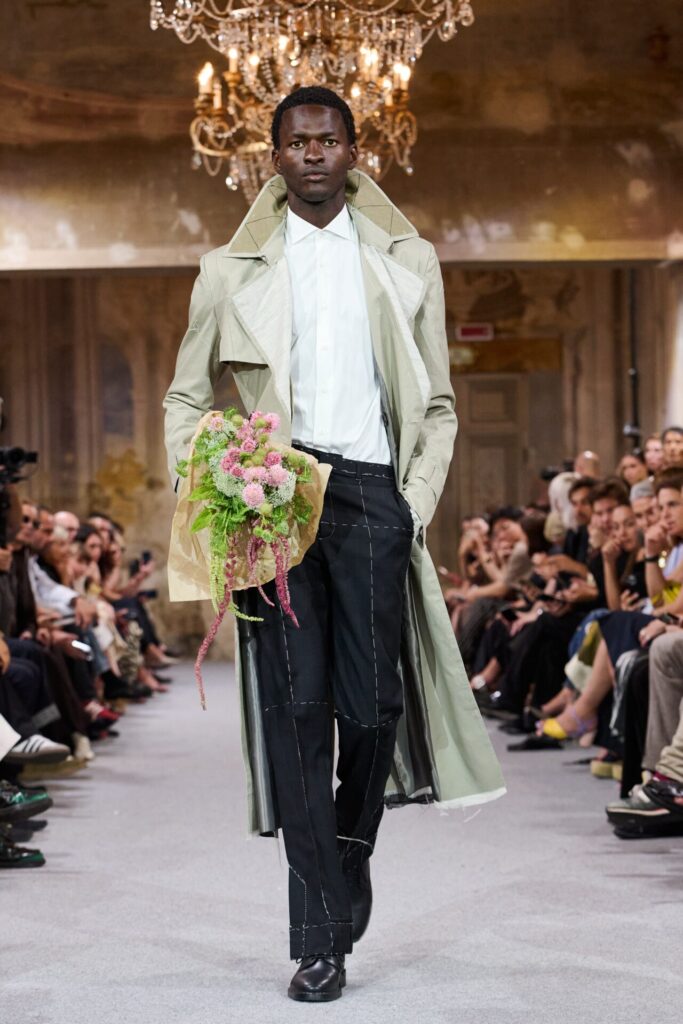
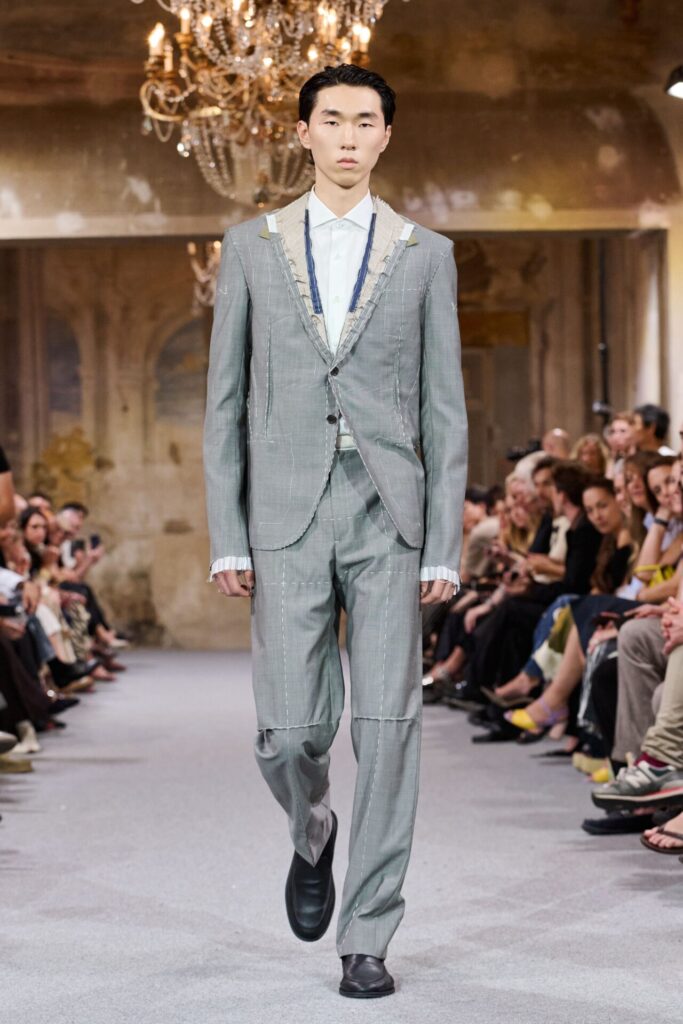
Finally, Kangsan Lee presented his more classic menswear collection: tailored, elegant and meticulously crafted. The humans had arrived, but the magic remained. He also received the Fashion Project of the Year 2026 award.
After the Runway: When Mirabilis Became Real
Everyone looked happy and emotional. Students cried and hugged one another. The adrenaline was finally fading, and it was time to celebrate. Outside, the audience was enthusiastic. Everything had gone perfectly. The garments were beautiful, and the atmosphere had been magical. Throughout the show, I felt suspended on the threshold between reality and wonder. While the audience saw magic, backstage I could still hear the language of concentration, timing and hope. And yes, for one evening, Mirabilis mirabilia became real.


