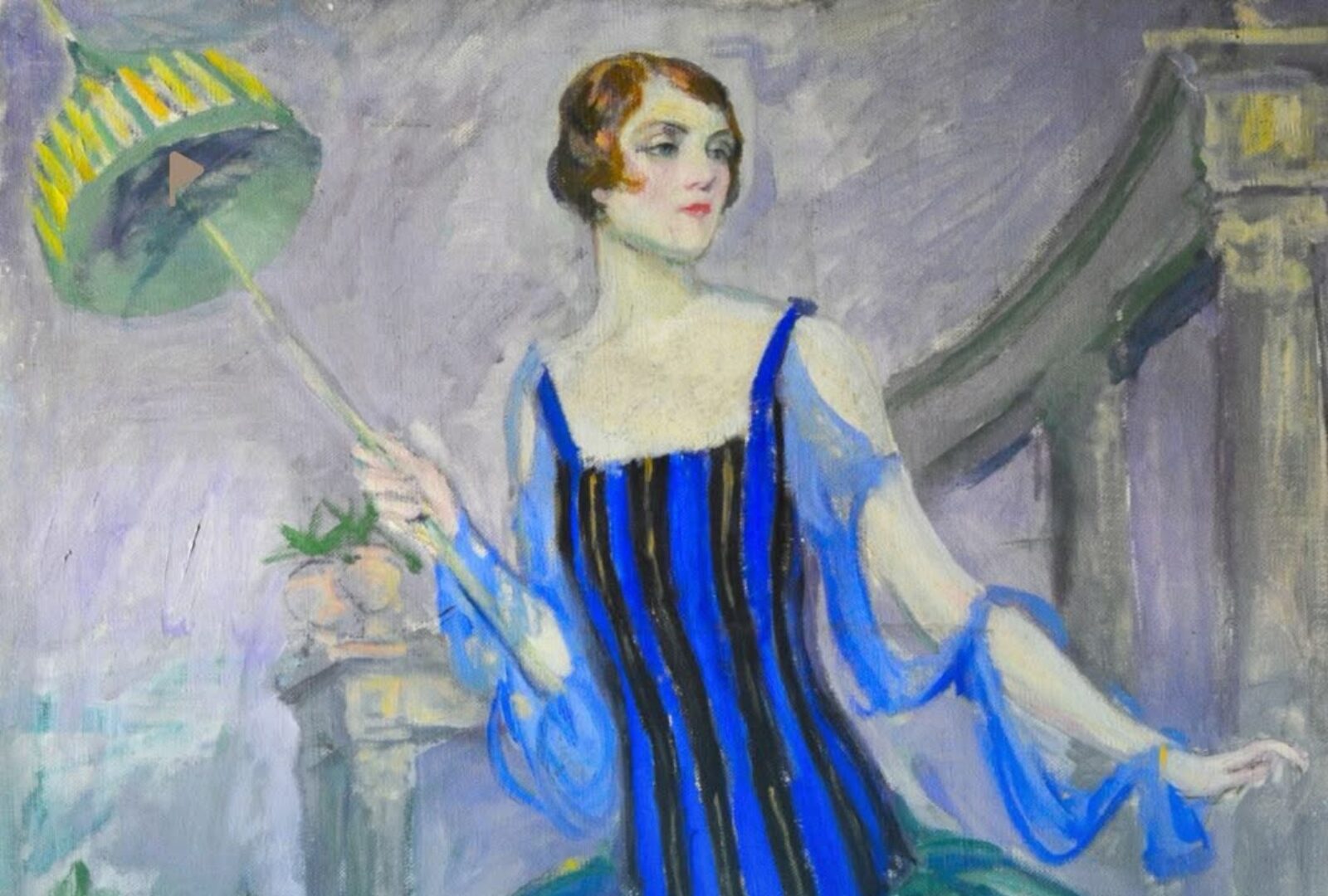
By Azzurra Rinaldi. Cover Arthur Acton, Portrait of Cora Antinori wearing La Moda designer by Umberto Brunelleschi in the Garden of Villa La Pietra (1915), New York University, Acton Collection, Villa La Pietra, Firenze
Why Palazzo Medici Riccardi Is Worth Visiting
Most visitors come to Palazzo Medici Riccardi for its extraordinary Cappella dei Magi and its association with Cosimo de’ Medici. Yet the historic palace also hosts temporary exhibitions, and Firenze Déco. Atmospheres of the 1920s is one of the most surprising cultural discoveries in Florence this season.
I visited almost by chance on a summer weekend, with no particular expectations. Perhaps because the Rothko exhibition at Palazzo Strozzi attracted much of the spotlight, this show has flown somewhat under the radar. That makes it all the more rewarding.
If you’re planning a trip to Florence this summer 2026, this exhibition deserves a place on your itinerary.
Step Inside Florence’s Art Deco World
Open until August 25, the exhibition is relatively small, but it offers a fascinating glimpse into the artistic and cultural atmosphere of Florence during the Art Deco era. The selection is concise yet carefully curated, featuring paintings, illustrations, decorative arts, fashion pieces and graphic design.
Among the most unusual objects on display is a table used for spirit séances: a small round table decorated with the letters of the alphabet and surrounded by illustrated hands indicating where participants should place their own while attempting to communicate with spirits.
The Art Deco Illustrations That Connected Florence and Paris
My favourite section is the opening room, dedicated to the cultural dialogue between Florence and Paris through fashion and costume design. Here visitors encounter illustrations inspired by the characters of Commedia dell’Arte, a recurring subject in early twentieth-century visual culture. Particularly striking are the twelve works from the Cycle of Commedia dell’Arte by Umberto Brunelleschi, originally published in the prestigious Journal des Dames et des Modes in Paris in 1914.
Among the characters are Arlecchino, Brighella, Pantalone and Florindo, whose elegant lace cape draped over a red cloak makes him one of the most memorable figures in the series.
Although Art Deco is generally associated with geometric forms and sharp lines, Brunelleschi’s illustrations still retain some of the flowing elegance of Art Nouveau. This blend feels natural: in 1914, Art Deco was only beginning to emerge as a distinct style.
The exhibition also features works by Alfredo Müller, whose Arlecchinate paintings reinterpret stories centred on Arlecchino. The revival of these theatrical characters became particularly popular in Paris among artists who, while remaining outside the Avant-Garde movements, adopted stylistic elements that would become characteristic of Art Deco, including flat areas of colour and simplified compositions.
Inside the Glamorous Costume Culture of the 1920s
Another highlight is the section devoted to costume culture. Artists such as Umberto Brunelleschi, Alfredo Müller and Gino Carlo Sensani designed costumes that found success in Paris before being translated into real garments in Italy. Costume parties were enormously fashionable during the period, and photographs from the Acton Mitchell family offer a vivid glimpse into this glamorous social world.
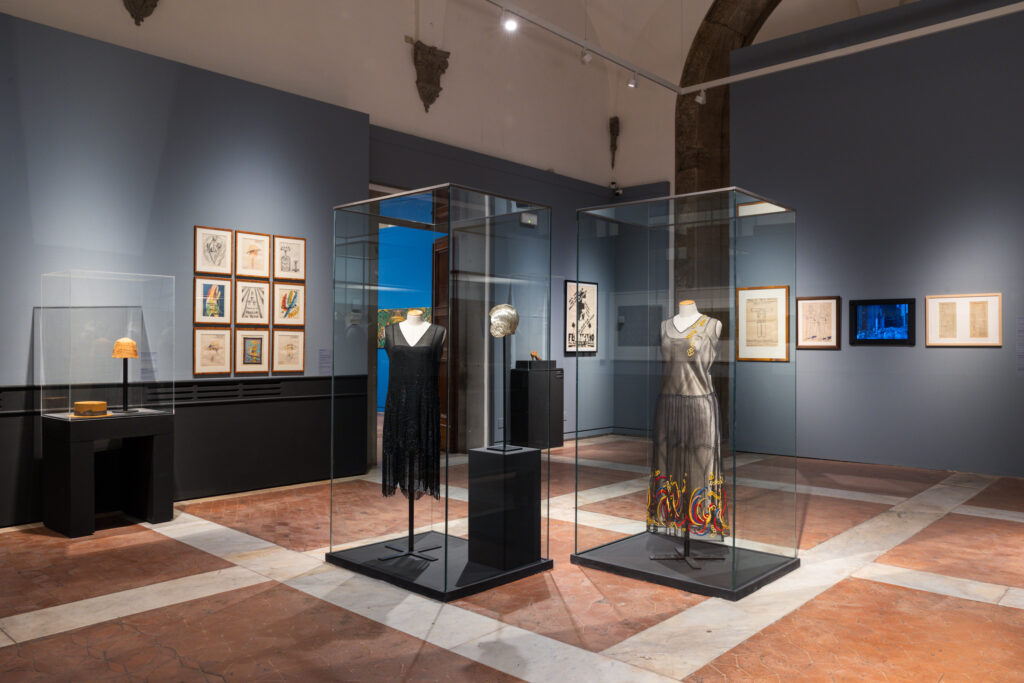
Visitors can also admire theatrical costumes created by Sensani, whose designs embody the aesthetic codes of the 1920s through elongated silhouettes, clean lines and dresses that fall naturally along the body.
Art Deco Jewellery and Decorative Arts
No exploration of the 1920s would be complete without jewellery. Among the featured artists is sculptor Dario Viterbo, whose work ranges from monumental public commissions to delicate decorative objects. His jewellery often depicts acrobats, dancers and performers, capturing the dynamism and theatricality of the era.
Why Firenze Déco Is Worth Seeing
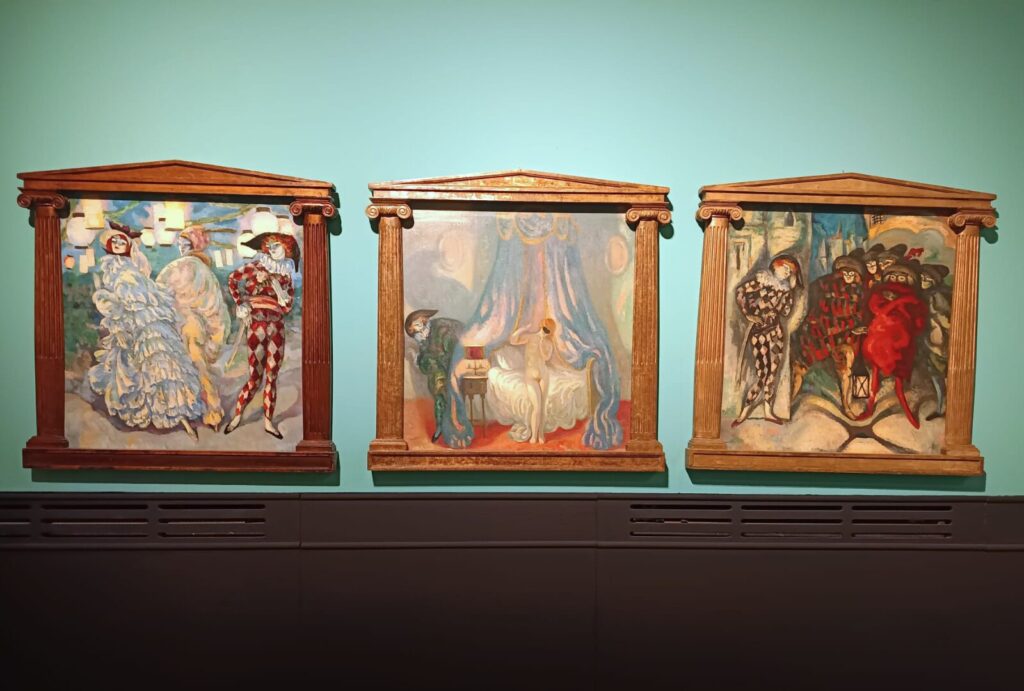
Left to right, Pantomime (1914) by Sergei Sudeikin. La Camera Rosa and Notturno (1918) by Alfredo Müller Ph. Azzurra Rinaldi
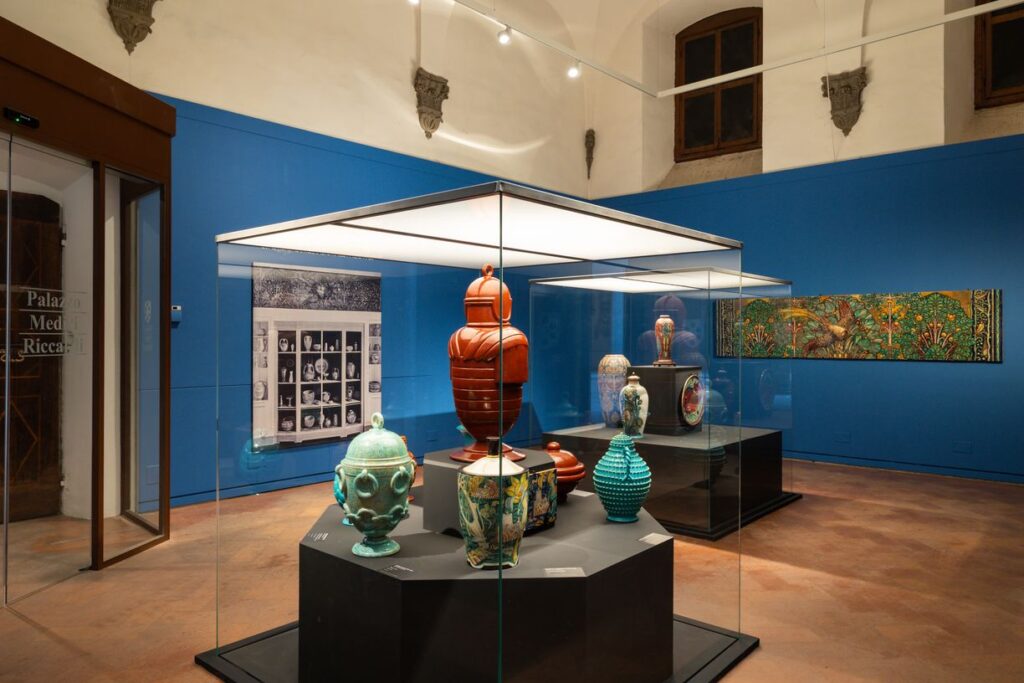
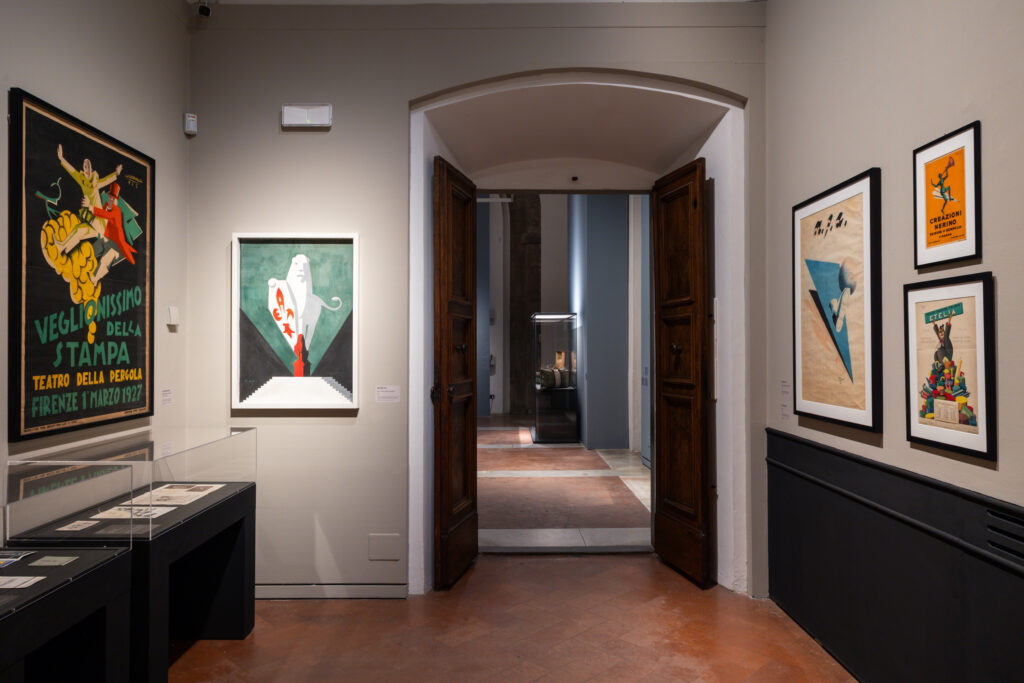
To describe the whole exhibition, it would take a book, which already exists: the catalogue edited by Giunti. What makes Firenze Déco so appealing is not its scale but its density. Paintings, fashion illustrations, theatre costumes, jewellery, ceramics and vintage advertisements come together to recreate a world suspended between elegance, modernity and fantasy. There are also ceramics produced by Richard Ginori and designed by Gio Ponti, one of the most important Italian designers, as well as paintings and advertisements that can be quite funny if seen with a contemporary eye: “A hat should be elegant, it should be fashionable”. The exhibition also provides the perfect excuse to visit Palazzo Medici Riccardi itself. If you’ve never seen the Cappella dei Magi, prepare to be amazed.
If I had to describe Firenze Déco in three words, they would be: small, rich and surprising.


