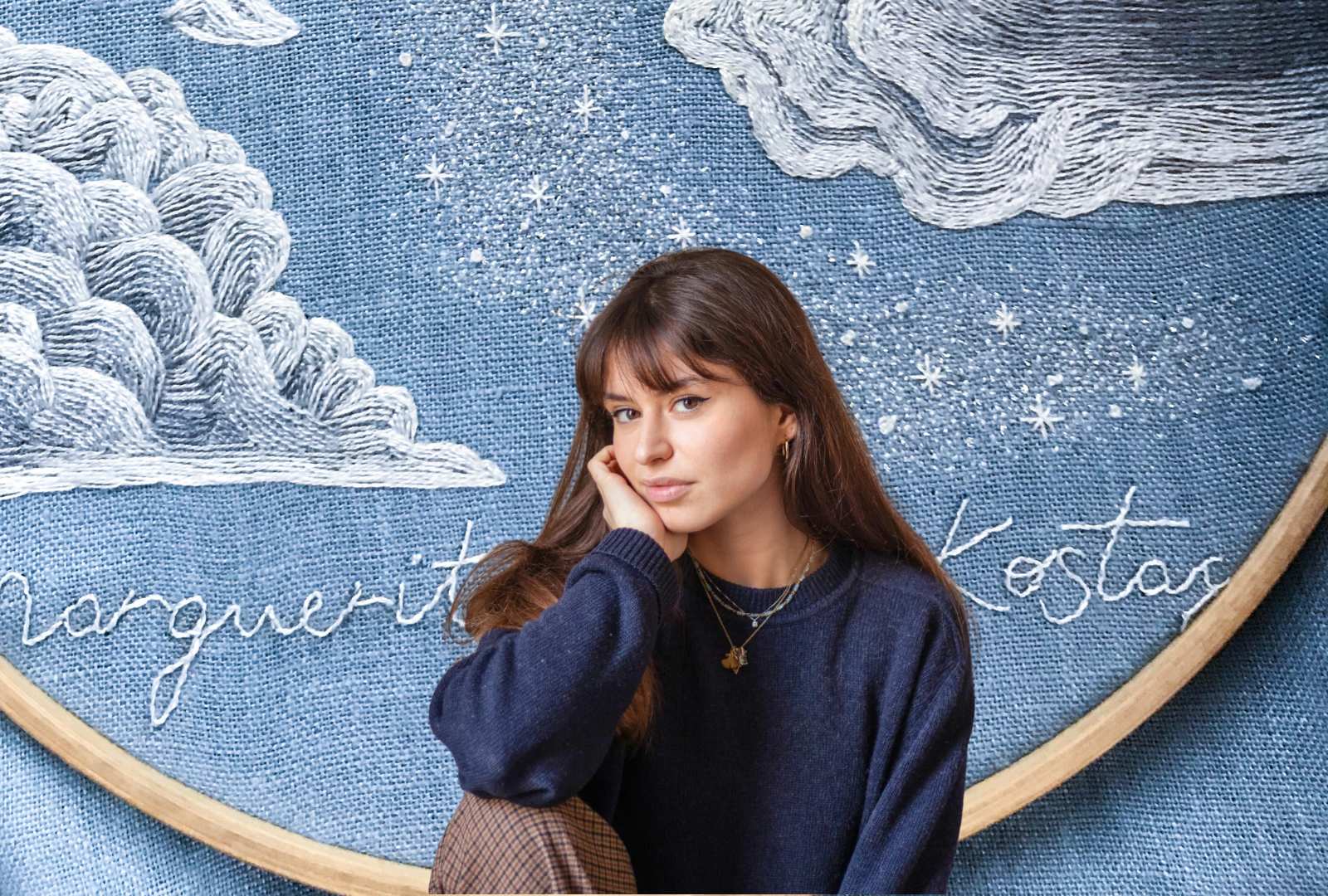
By Azzurra Rinaldi, Librarian. Cover image I’M FIRENZE DIGEST
From haute couture ateliers to fashion schools, embroidery is experiencing a revival as brands and creatives rediscover the value of handcraft. Bianca Hodselle is an embroidery designer and a lecturer at Istituto Marangoni Firenze. She first took up embroidery following a tibia fracture that confined her to bed for an entire summer, and that is when the magic happened. Embroidery soon became a superpower, opening the doors to the worlds of fashion, luxury, and haute couture.

Why Embroidery Is Fashion’s Most Creative Craft
«I love that it’s creative, that I can use my hands and touch fabrics while creating. I love that there are so many different materials you can add to an embroidery, so it’s not just about needle and thread», says Bianca Hodselle. «I’m talking about beadwork, feathers, sequins: there are just so many materials you can use, making it a highly creative job. Plus, I adore having the chance to use so many colors. I’m very attached to colors, and I’m one of those people who wishes the world were more colorful again».
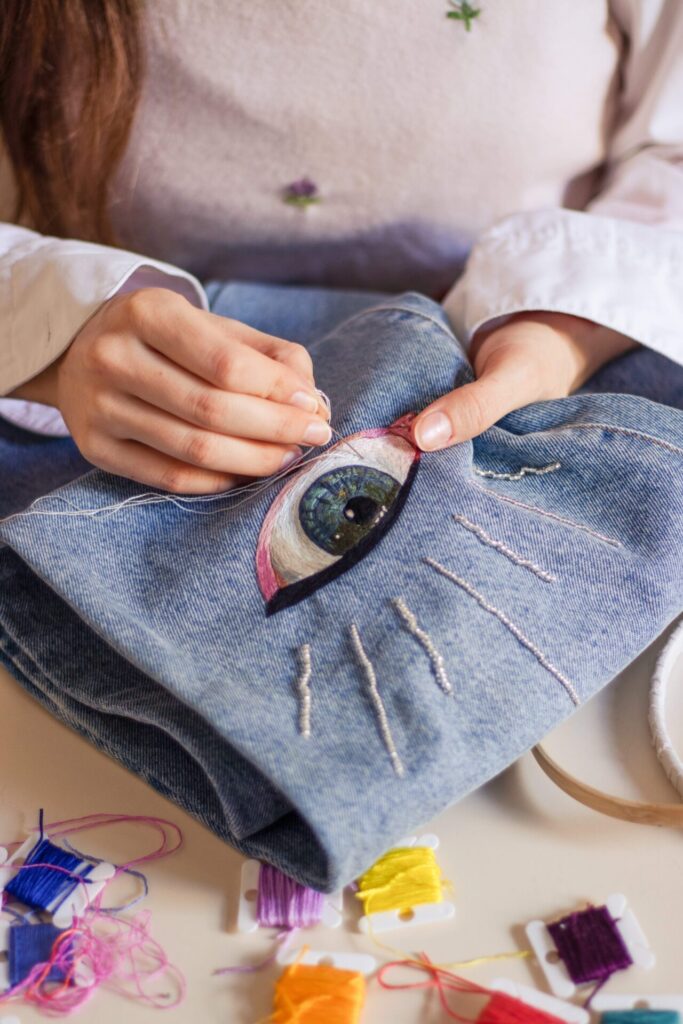
Bianca emphasizes that the slow pace of embroidery is precisely what makes it beautiful. It is a precise, almost obsessive craft that forces one to slow down, directly contrasting today’s fast-paced world. This creates a unique challenge in the digital age; as a side note, she mentions how difficult it is to showcase embroidery on social media, where platforms demand rapid-fire content while the craft itself requires time and patience.
How Embroidery Became a Career in Luxury Fashion
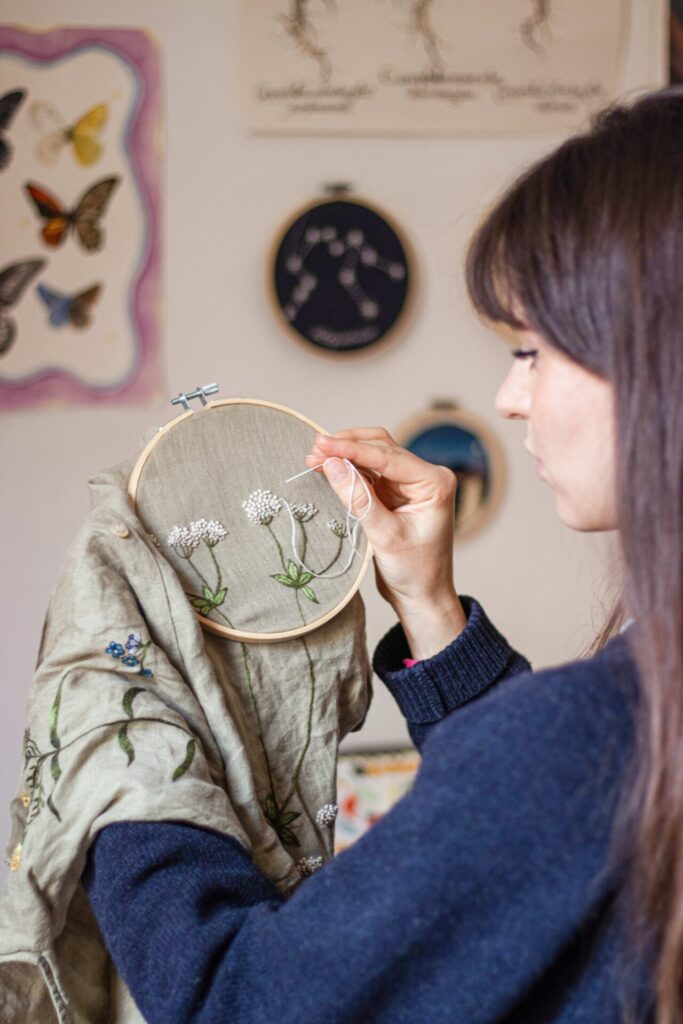
Bianca Hodselle started her career at Gucci with an internship and was later hired as an Embroidery Designer. «While it was a dynamic and rewarding role, I missed the hands-on aspect», she recalls. «My responsibilities included designing embroideries, developing artwork, selecting materials, creating technical charts, and coordinating with suppliers based on their specific expertise». Following Alessandro Michele’s departure from Gucci and the subsequent major restructuring of the company, she chose to leave her role at the Rome style office.
Behind the Scenes of Made-to-Order Embroidery and Haute Couture
Bianca Hodselle then went freelance and began working on Dior’s special projects, Made-to-Order collections and Haute Couture pieces. « Sometimes I was involved in both the embroidery design process and the development of prototypes and samples. So, my job became exactly what I wanted: doing a bit of everything and not just sitting in front of a computer», she says.
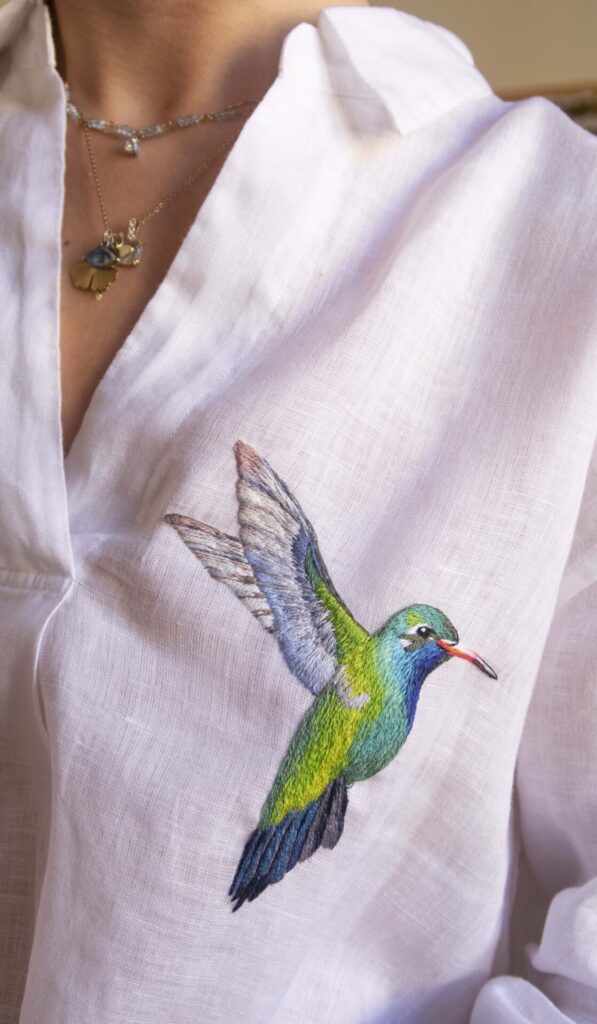
Hodselle explains that Made-to-Order (MTO) embroideries are rarely replicated due to their time-consuming and costly nature, limiting their use to celebrity gowns and special projects like Dior Lady Art. While small, on-demand production runs do happen, they never reach large-scale manufacturing, thus preserving their artisanal, handmade quality. As a freelance designer, her role ends at the prototyping stage. Once a sample is approved, production is entrusted to specialized embroidery ateliers.
Why Luxury Fashion Still Depends on Human Hands
When asked about the importance of handmade elements, her answer is sharp: «Mass production is cold and you can see it, you can feel it. When we talk about a luxury item, we are talking about something created with careful attention and passion, because haute couture is love for fashion, for materials, fabrics, fibers, and handwork», says Hodselle. «So, it is clear that what a machine produces will never be comparable to what a person can create with their own hands». In her opinion, craftsmanship is a way of caring for things and “taking care” is part of something much broader: a form of self-love and love for others.
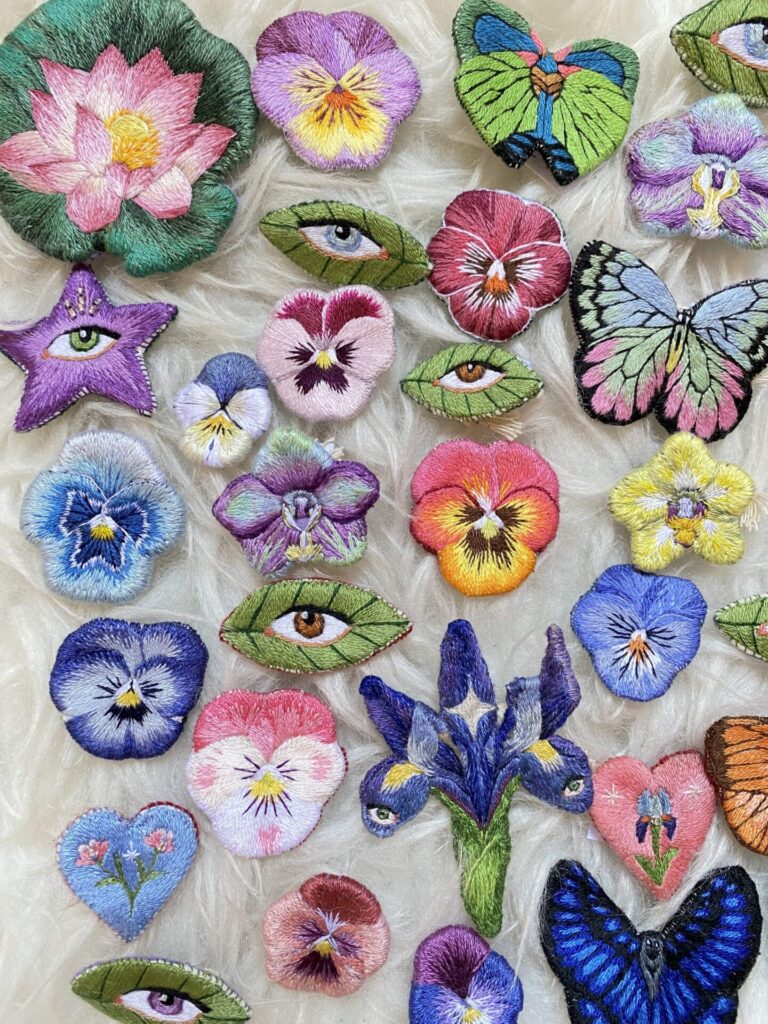
Embroidery Skills in Demand: Why fashion Students Should Learn the Craft
Bianca Hodselle teaches Fashion Design courses at Istituto Marangoni Firenze, where she also leads a new intensive program in Patternmaking and Embroidery. When asked about the importance of studying embroidery, she highlights three key reasons. The first is the preservation of Italian craftsmanship and heritage, warning that this endangered craft must not be lost. Second is the strong market demand, noting that luxury and haute couture brands continue to seek this increasingly rare savoir-faire. Finally, she emphasizes its value as a powerful medium for creative expression, not only within fashion and art but also as a personal, deeply meditative practice: «I feel like I’m in a state of total meditation; for me, it’s a way to disconnect from the world. Of course, it’s my job, but it is also a huge passion of mine, so I truly do it with pleasure».


