By Mila Johanna Papini. Cover image Arantza Silva Lopez.
Why do our body creams, shampoos, and shower gels all need to smell like perfume now? At some point, I started noticing that every luxury beauty product I bought came with an intense fragrance attached to it. A body lotion wasn’t just hydrating anymore: it had to leave a trail. A shampoo couldn’t simply make hair feel healthy: it had to smell long-lasting and refined. And while I love fragrance, I began wondering: when did skincare stop being about skin first?
Sometimes, layering scented body care with perfume feels less like self-care and more like sensory overload. If perfumes and body mists already exist, do we really need every product in our routine to compete for attention?
When a Full Fragrance Routine Starts Feeling Like Too Much
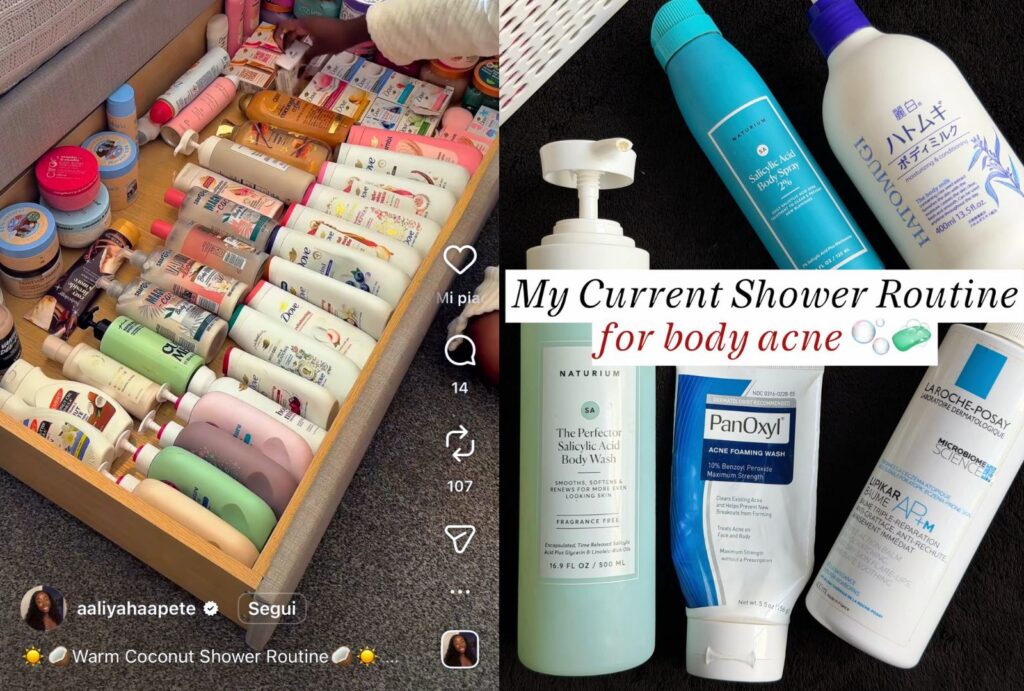
I’ve always loved fragrance. For me, smelling good has never been just a detail, it’s part of how I express myself. At one point, my routine included everything imaginable: perfumes, body mists, hair perfumes, scented oils, body creams, shower gels, and even soap bars, all designed to leave a scent behind. The more products I discovered, the more I felt tempted to turn fragrance into a full-body experience. But after a while, something started feeling off. Instead of smelling elegant or intentional, I often felt like I was wearing too many scents at once, almost like combining too many colors in one outfit. So, like many consumers today, I turned to matching collections: the perfume paired with its body lotion, shower gel, or hair mist, hoping everything would blend more harmoniously. And while the routine looked luxurious, it slowly stopped feeling like actual self-care. That was probably the moment I began questioning the role of fragrance in body care. I realized that, personally, I feel better using more neutral products that focus on hydration and skin health first, then adding perfume separately afterward. In a way, it made me appreciate fragrance even more, because instead of competing with every other product, it could finally stand out on its own.
Why Luxury Brands Want You to Smell the Same From Head to Toe and Why Gen Z Disagrees
What I started noticing is that this feeling is not just personal, but actually reflects a much larger shift in the beauty industry. Today, many luxury brands have moved far beyond the idea of perfume as a single product. Houses like Chanel, Dior, Diptyque, or Acqua di Parma build entire scented universes around perfumes, extending the same bouquet into body lotions, shower gels, hair mists, and oils. Fragrance is no longer something you simply wear; it becomes something you live through. The idea of layering has turned into a ritual in itself, where every step of the routine is designed to reinforce and prolong the same scent. At the same time, it is also a trend amplified by social media, where countless videos show layering combinations and “signature scent routines”. Interestingly, this is also something that often comes up in conversations with my classmates. Studying the same field, many of us share a similar feeling: while fragrance is something we genuinely appreciate, there is also a growing preference for more neutral skincare, especially when the focus is on skin health and comfort rather than scent. This also reflects a broader shift in consumer behavior. My generation is more informed and increasingly attentive to ingredients, which is why brands such as The Ordinary, Beauty of Joseon, or Medicube often feel more aligned with these expectations. There is, therefore, an interesting contrast between the emotional world of luxury fragrance and the increasingly functional approach to skincare. Both clearly respond to different needs, but for many of us, the line between them is becoming harder to blur.
Fragrance vs. Skincare: Why Keeping Them Separate Makes Both Work Better
After reflecting on this, I don’t think the issue is fragrance itself, nor the idea of scented body care as a whole. On the contrary, fragrance remains one of the most emotional and expressive elements in beauty. The question, for me, is more about intention and moderation. There is something powerful about letting each product have a clear role. Skincare should first of all support the skin -hydrating, protecting, and maintaining its health- while fragrance can exist as something more expressive and personal, applied with purpose rather than repetition. In a way, this separation allows perfume to regain its individuality instead of becoming diluted across every step of a routine. Of course, there are moments, special occasions or situations where we want our fragrance to stand out more, when layering scented products can become part of the experience itself. But in everyday life, finding a healthier equilibrium between care and scent feels essential for overall wellbeing. Ultimately, I don’t think my perspective is about rejecting scented body care, but about becoming more conscious of how and why we use it. And it will be interesting to see how the industry and the brands shaping it continue to evolve in response to these changing expectations and more mindful consumers.


