By Mila Johanna Papini. Cover image by Taline Nesheiwat.
Let’s be honest. Do we really have the time, or the patience, for a ten-step routine of skincare, makeup, and fragrance every single day? Even when we do, there are always those rushed mornings or low-effort days when simplicity becomes essential. That’s exactly where a new wave of beauty innovation steps in. Today, brands are creating multifunctional products that blend skincare, color, scent, and even SPF into a single step, offering maximum results with minimal effort. This shift isn’t just about convenience — it reflects a broader change in how consumers approach beauty, prioritizing efficiency, experience, and versatility all at once.
Why We All Stopped Wanting Ten-Step Routines
This shift toward hybrid beauty reflects a deeper transformation in consumer values, where efficiency and versatility are becoming more important than the accumulation of products. Rather than building extensive routines with single-purpose items, consumers are increasingly seeking solutions that deliver multiple benefits at once, without compromising performance. Recent industry data shows that around 67% of global beauty consumers prefer makeup products with added skincare benefits, highlighting a clear move toward simplified yet effective routines. This change is largely driven by fast-paced lifestyles, but also by a growing awareness of value—both in terms of time and cost—as one product can replace several others while maintaining similar results. At the same time, evolving expectations around product performance mean that consumers are no longer satisfied with basic formulations; they now expect cosmetics to actively contribute to skin health, combining aesthetic results with treatment benefits. Consequently, beauty is no longer perceived as a multi-step process based on quantity, but as a more intentional and streamlined experience, where fewer products are used more strategically to achieve both functional and sensory outcomes.
Leading Brands in Hybrid Beauty
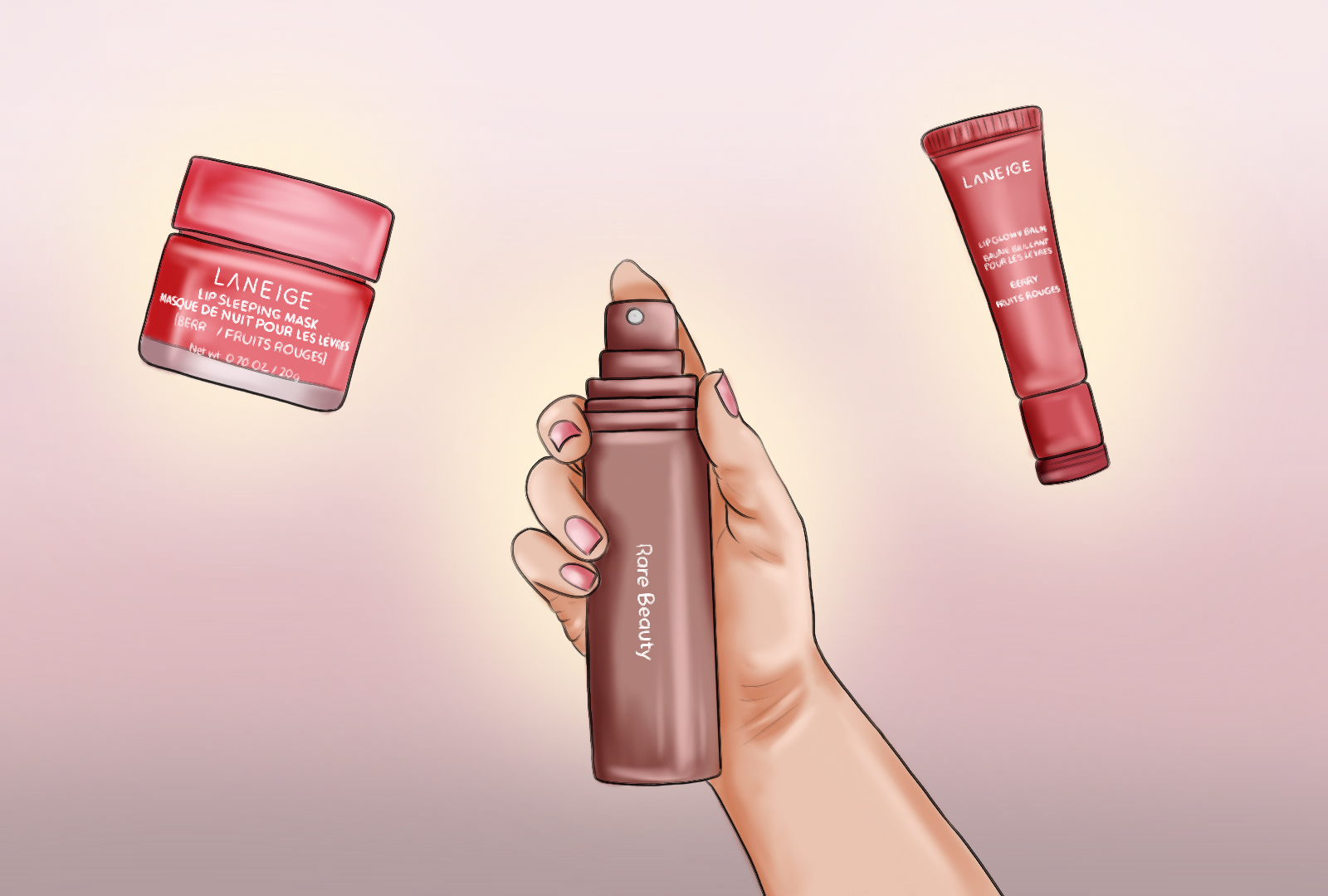
Hybrid beauty becomes most visible in how traditional product categories are being redefined through formulation and function. Instead of treating skincare and makeup as separate steps, brands are now developing products that merge treatment, texture, and aesthetic effect in a single application. In lip care, this shift is especially evident. The Korean brand Laneige has built an entire category around this idea with products such as its Lip Sleeping Mask and Lip Glowy Balm, which function not only as cosmetic finishes but also as intensive overnight and daily treatments designed to repair and nourish the lips over time, while also adding color and a pleasant scent.
Similarly, Hailey Bieber- founded Rhode has positioned its peptide lip treatments as hybrid essentials, combining active skincare ingredients with subtle tint and sensory application to blur the line between treatment and makeup. This logic extends further into brands like Glow Recipe, which integrates skincare benefits such as hydration and brightening into its lip care, while also expanding into SPF-based products that combine sun protection with skincare actives and cosmetic wearability. In complexion products, Erborian exemplifies the same trend through its CC creams, which adjust skin tone while simultaneously incorporating skincare ingredients aimed at improving skin texture and radiance. Even beyond traditional makeup categories, body and fragrance care are evolving in a similar direction. Rare Beauty has extended its range into body mists designed to offer both scent and a calming, sensorial skincare experience, encouraging a sense of comfort and emotional well-being as part of daily beauty routines. Similarly, Dae brings this hybrid approach into haircare with botanical-infused hair and body mists that blend fragrance with lightweight nourishment. Across these categories, hybrid beauty is no longer an isolated concept but a structural shift in how products are designed, experienced, and understood.
Where Hybrid Beauty Is Taking the Industry Next
The rise of hybrid beauty is not simply a response to changing consumer habits, but a structural transformation within the industry itself. As highlighted by Vogue Business, the “skinification” of makeup, a term increasingly used by industry analysts, represents a broader philosophical shift, where consumers increasingly prioritize skin health over coverage, accelerating demand for products that merge skincare and cosmetics. This is reflected in consumer behaviour, with around half of US consumers actively seeking hybrid products, rising to over 60% among Gen Z and millennials. In response, brands are not only repositioning existing products but reformulating them entirely, integrating active ingredients such as hyaluronic acid and niacinamide into traditionally cosmetic categories like foundation.
At the same time, this evolution challenges the industry’s traditional structure: while brands have historically operated within distinct categories, consumers now approach beauty more fluidly, focusing on results rather than product type. However, this shift is also driven by a growing sense of fatigue toward overly complex routines, reinforcing the appeal of products that promise both simplicity and performance. In this context, hybrid beauty signals a move toward a more integrated and results-driven model, where fewer products are used, but each is expected to deliver more. In the end, hybrid beauty isn’t really about doing less or more—it’s about what we expect from the things we use every day.
As categories blur, so do the boundaries between care, performance, and identity. Maybe the real question is no longer what we apply, but why we need so many steps to begin with.


