By Giulia Piceni. Cover image Archivio‘s room, Gucci courtesy
The reopening of Palazzo Gucci in Florence under Demna marks not just a spatial transformation but a conceptual rupture in the previous history of the brand. Once an extension of Alessandro Michele’s immersive imagination and now renamed Gucci Storia, it re-emerges as a self-reflexive structure that questions the very premise of heritage.
Why Florence Makes Heritage Complicated
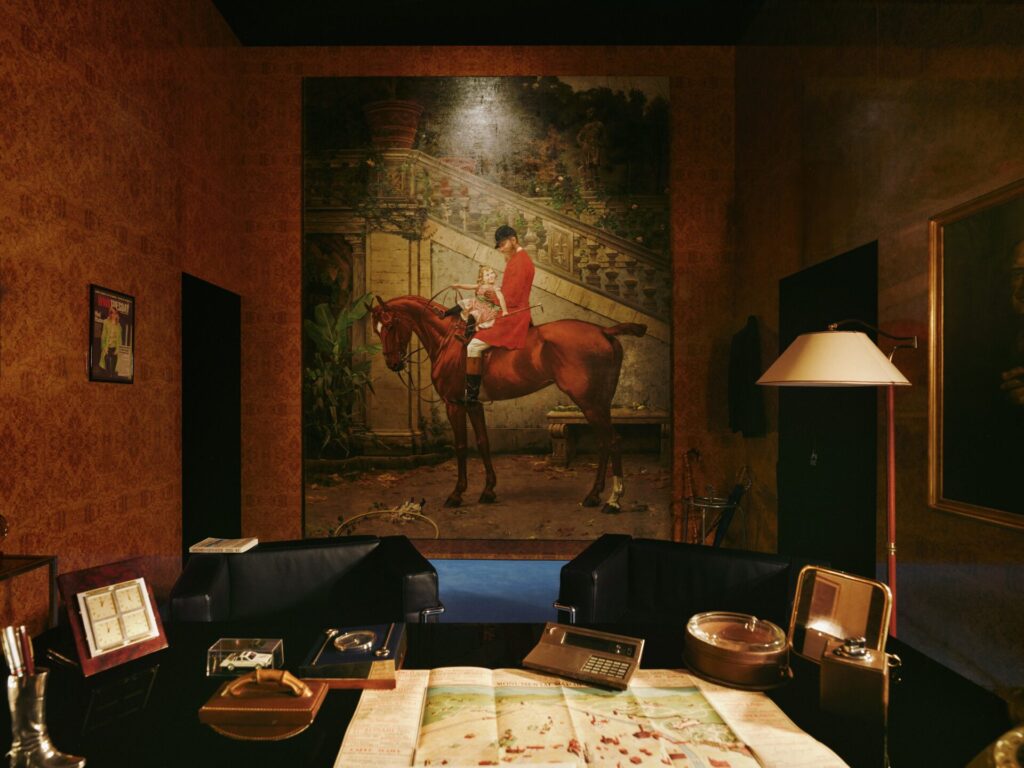
In a historical city like Florence, continuity is not just an aesthetic value but a civic expectation. Museums are meant to stabilize time, to transform history into something legible for the tourist crowds that flood the streets. Palazzo Gucci, located within the medieval Palazzo della Mercanzia, has always existed in glamorous tension with this expectation. For a time, under Alessandro Michele, that tension felt convincing and necessary: an archive of oneiric atmospheres, an excavation of references where garments and objects functioned as fragments of an imagined past. It aligned seamlessly with the sensorial intensity of Gucci Osteria da Massimo Bottura right next to it, forming a total environment in which Gucci’s identity appeared coherent. Yet this model relied entirely on authorship. When Michele exited, what remained was not a flexible system but a highly specific worldview that could not be adapted to De Sarno’s art-savvy bourgeois taste. The museum was no longer a living organism but a residue of a creative vision that could not easily be translated into a new language.
De Sarno’s Short Reign: When Legacy Became Neutral
The transitional phase under Sabato De Sarno exposed the fragility of the brand museum as a format. For a period, the space remained materially unchanged, as if waiting for a new narrative to take shape. That narrative never fully emerged. De Sarno’s Gucci, still defining its direction, did not extend into the museum with enough force to alter its structure. What followed was a gradual flattening. The space shifted toward a didactic mode, emphasizing chronology, product categories, and recognizable milestones. It fulfilled the basic function of an archive but lost its capacity to generate meaning. This moment reveals a central paradox: a brand museum is often conceived as a repository of heritage, yet heritage is not self-sustaining. Without a strong interpretative framework, it becomes indistinguishable from a catalogue of corporate memory. The condition that defined this period was aesthetic and structural: the museum no longer articulated a clear position, and in that absence, it revealed how dependent it had been on a singular creative voice.
Demna’s Gucci Storia: A Museum Where Every Room Tells a Different Story
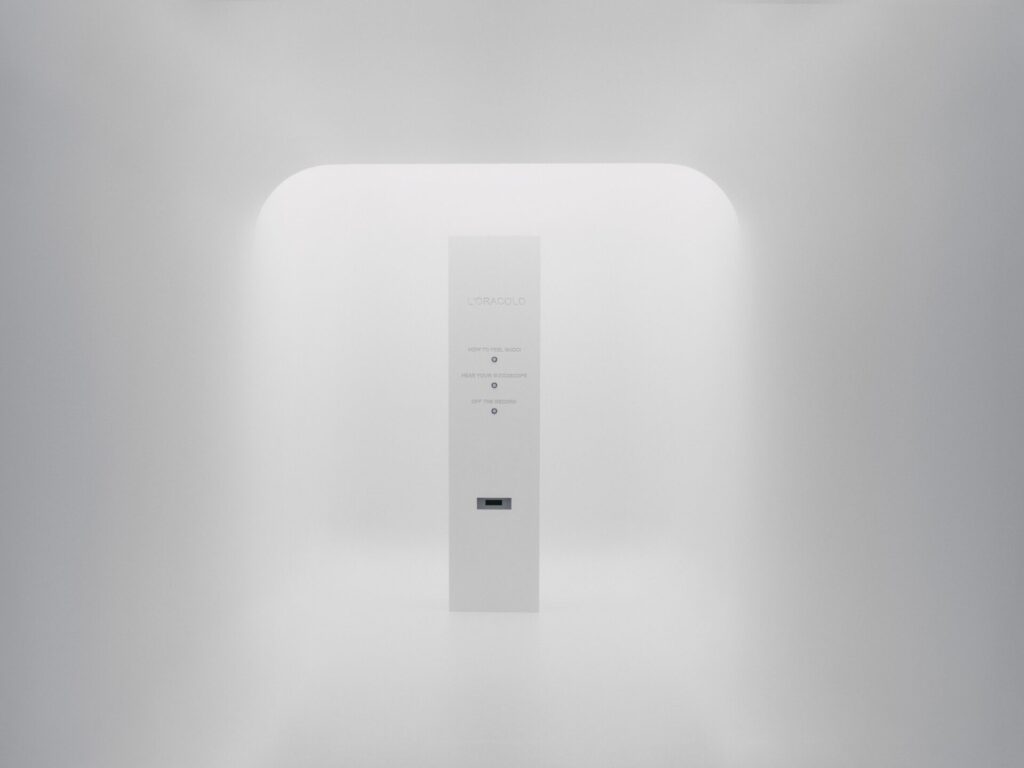
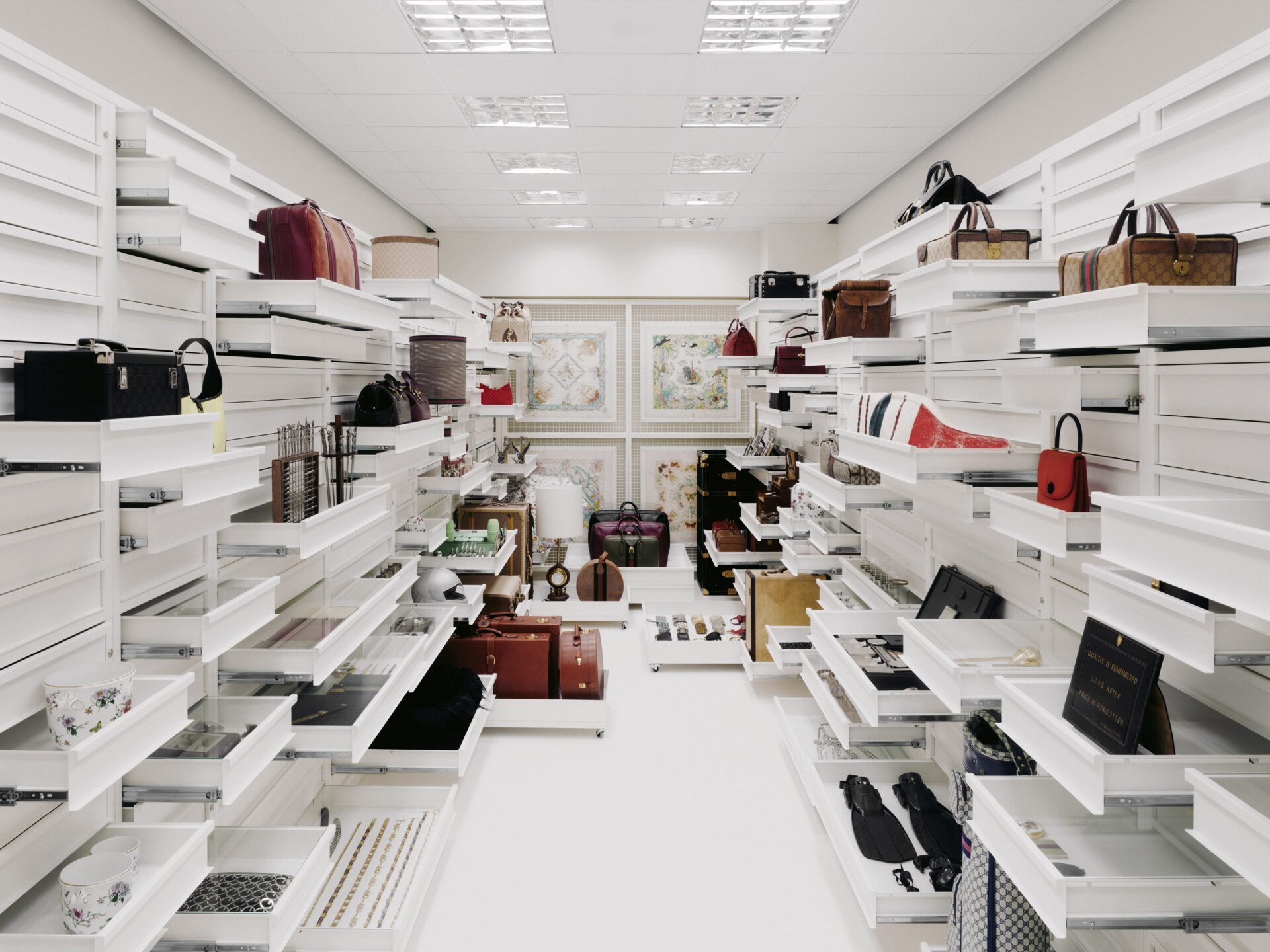
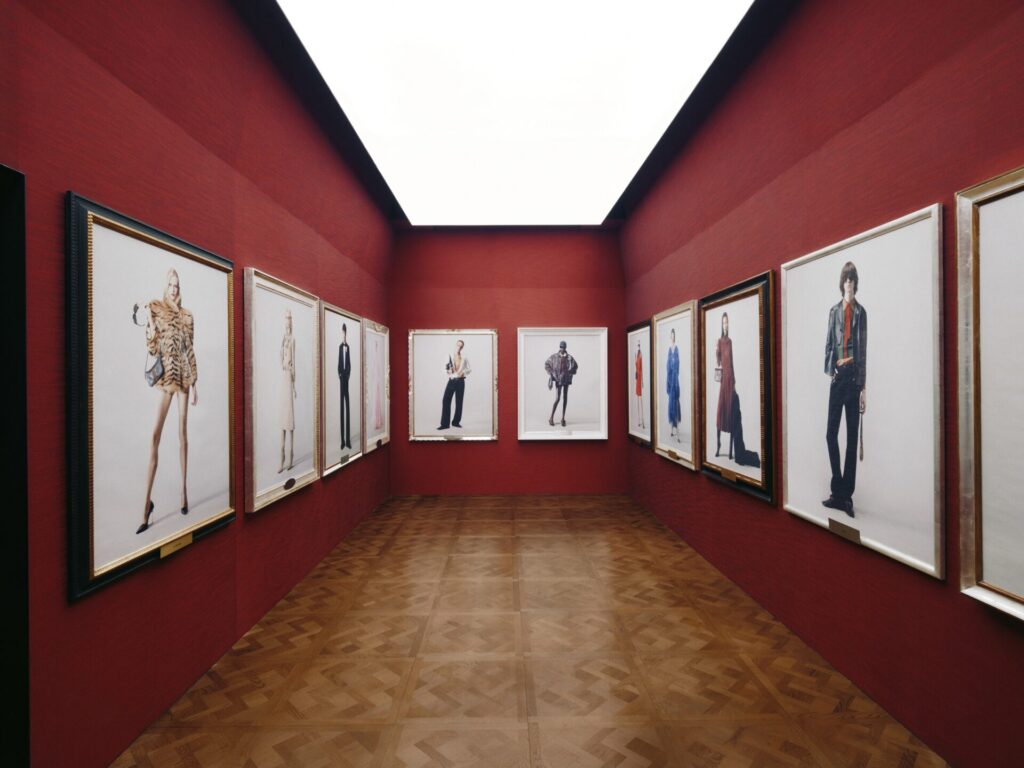
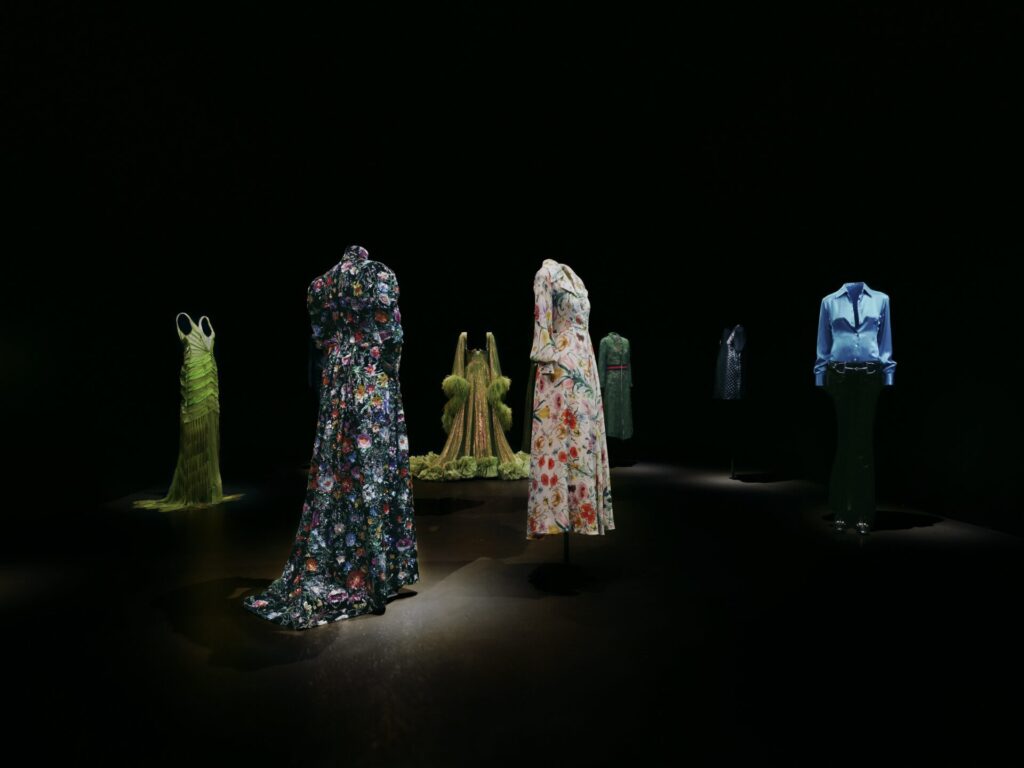
With Demna, the response is complete reconfiguration. Gucci Storia rejects the idea that a museum must provide a unified account of the brand. Instead, it introduces a structure based on discontinuity, where each room operates according to its own logic. The opening space replaces chronology with allegory, merging Renaissance visual language with contemporary image production to suggest that history is always mediated. The presence of Guccio Gucci alongside a self-referential image of Demna asserts authorship, positioning the present as an active force in rewriting the past. This approach continues in the portrait gallery by Catherine Opie, where identity is constructed through typologies, and in the archival room, where objects are arranged without chronological order, encouraging associative readings. Heritage here is contingent, shaped by proximity and interpretation. Even the spaces dedicated to craftsmanship and innovation avoid simplification: artisanal products are displayed alongside technological experimentation, not to demonstrate progress but to maintain tension between tradition and invention. In this way, the museum becomes not just the place that defines Gucci, but a system that reveals how the brand continuously produces its own image.
Does Fashion Even Need a Museum Anymore? Gucci Storia’s Answer
Nevertheless, Gucci Storia does not offer clarity but encourages reflexivity, transforming the museum into a space of questioning, where heritage is presented as a contested narrative instead of a stable inheritance. If Alessandro Michele’s vision created immersion and a sense of belief in the world it constructed, Demna introduces distance, exposing the mechanisms through which brands fabricate their histories without proposing a new mythology to inhabit. The result reflects the condition of contemporary fashion: self-aware, analytical, and in constant motion. In Florence, where history is often treated as fixed, this approach feels disruptive. It also raises an unresolved question: can a museum grounded in instability still function as a cultural anchor, or does it simply reflect the impossibility of permanence within fashion? By refusing to resolve these tensions, Gucci’s museum takes on a new role. It does not preserve the past as a stable reference point, but continuously renegotiates its meaning, leaving the visitor suspended between interpretation and doubt.