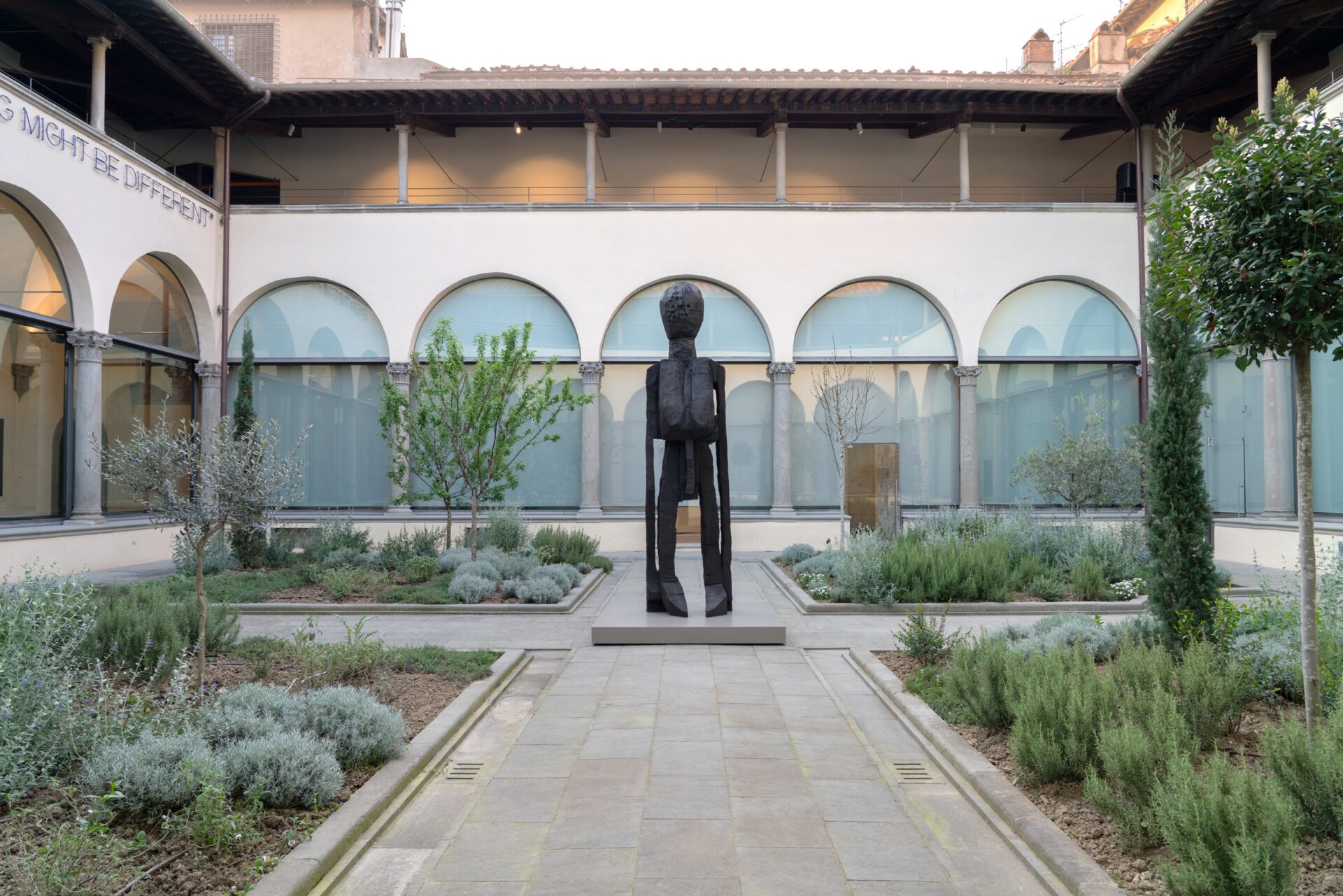
By Diana Cuza. Cover image Georg Baselitz, 1965, 2024, patinated bronze. Ph. Elisa Norcini
AVANTI! creates a beautiful dialogue between past and future, where Georg Baselitz’s radical rethinking of image and form, alongside his sustained engagement with inversion and printmaking, interacts with Florence’s artistic legacy.
What happens when an artist turns the world upside down?
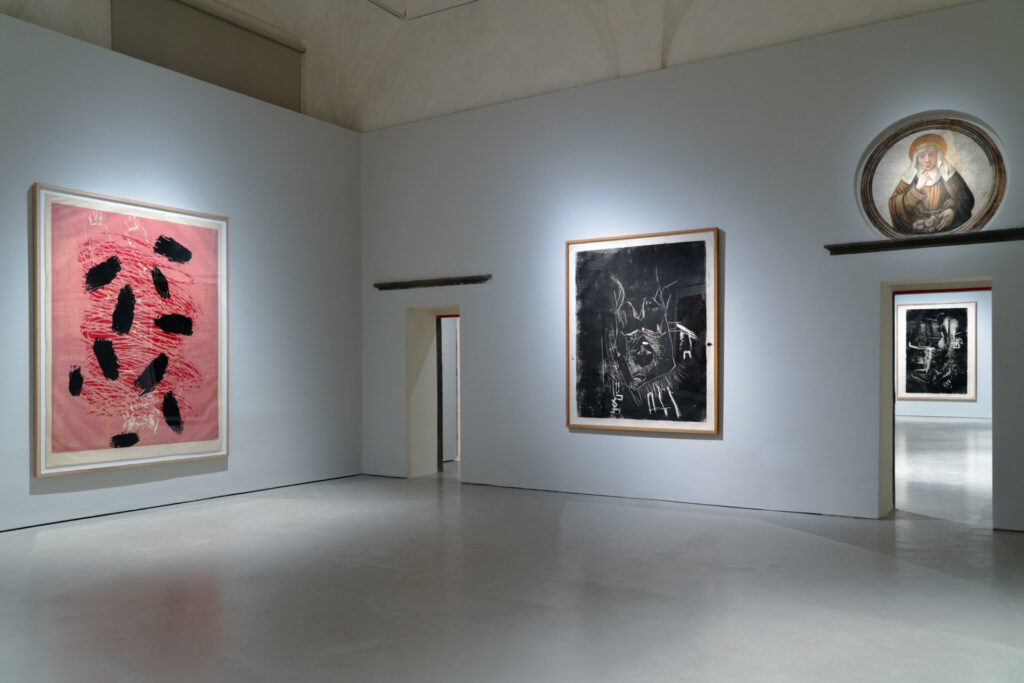
For more than 60 years, Georg Baselitz has explored this question through his art, using inversion to challenge perception and dismantle the conventions of representation. Emerging from the fractured landscape of post-war Germany, Baselitz developed a practice defined by resistance: against convention, against categorization, and against the limits of representation itself. Now on view at Museo Novecento in Florence until 13 September 2026, the exhibition AVANTI! brings together over 150 prints, paintings, and sculptures that reveal Baselitz’s practice. The museum dedicates almost the entirety of the former Leopoldine convent to the artist. This historical space, deeply rooted in tradition, becomes the stage for Baselitz’s radical thinking on form, creating a dialogue between past and future. While it may appear to be a retrospective, the exhibition feels more like a return—for both the artist and the city itself. Baselitz’s artistic journey was profoundly influenced by his time in Florence.
Georg Baselitz and the Logic of Inversion in AVANTI!
Georg Baselitz, born Hans-Georg Bruno Kern, is known for his radical inversion of figures, literally turning his works upside down. For decades, he has worked against traditional ways of seeing, resisting clear categorization and challenging the conventions that have defined Western art.
Shaped by post-war Germany, his work is rooted in the need to question, not only representation, but also the deeper cultural and historical frameworks behind it. By inverting his subjects, Baselitz disrupts the viewer’s instinct to immediately recognize and interpret the image. Instead, he shifts attention to form, composition, and the act of painting itself.
“If you want to stop constantly inventing new motifs, but still want to go on painting pictures, then turning the motif upside down is the most obvious option. The hierarchy of sky above and ground below is, in any case, only a pact we have agreed upon, but one that we do not have to believe in. Ultimately, all that interests me is being able to go on painting pictures”.
– Georg Baselitz
How Printmaking Became Georg Baselitz’s Experimental Language
The exhibition AVANTI! primarily focuses on printmaking, a medium that runs consistently throughout Baselitz’s career. While the artist has worked across painting, sculpture, and woodcut, printmaking remains the practice to which he has most persistently returned.
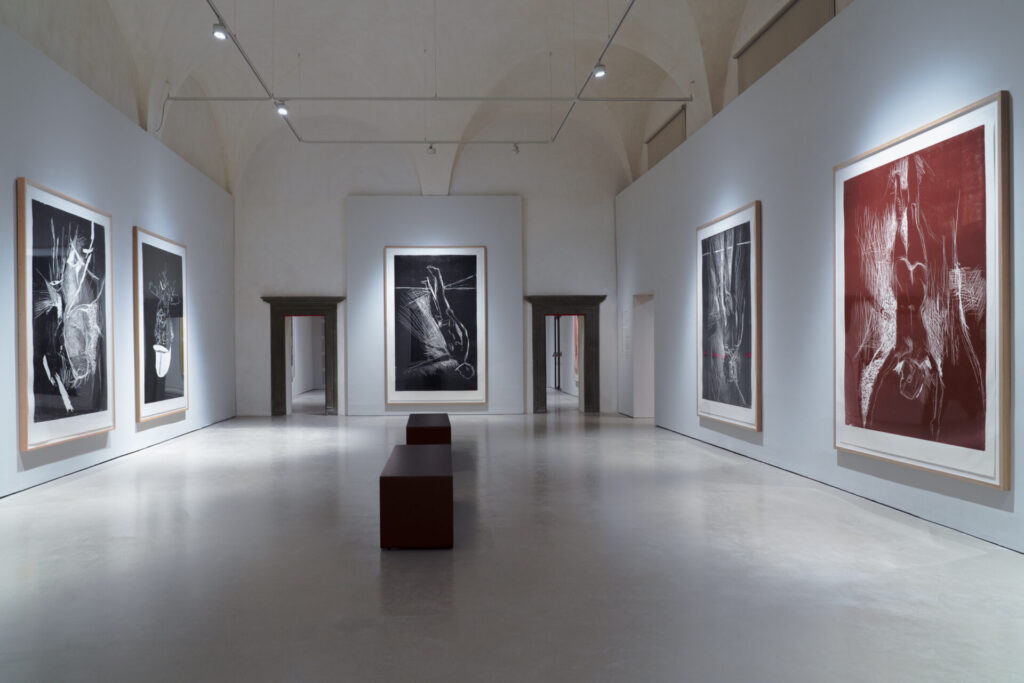
During his time in Florence in the mid-1960s, while staying at Villa Romana, Baselitz discovered the engravings of Mannerist masters such as Parmigianino. This encounter deeply influenced his practice and left a lasting mark on his approach to technique. From that moment on, printmaking ceased to be just a tool and turned into a space for continuous experimentation.
Through processes such as etching, woodcut, and linocut, Baselitz was able to test, refine, and rework the visual ideas developed in his paintings and sculptures. The works on paper in the exhibition reveal how printmaking allowed him to push the boundaries of figuration, fragment the body, and revisit recurring motifs, making it a key engine of his artistic evolution.
Inside the Exhibition: Georg Baselitz at Museo Novecento in Florence
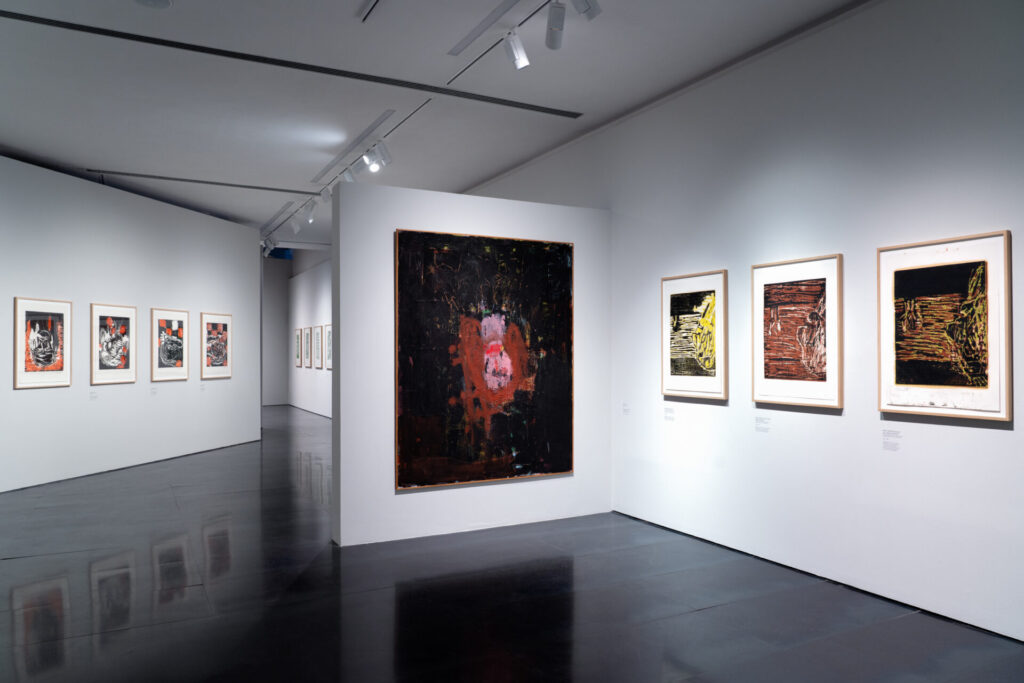
The exhibition unfolds across the two floors of Museo Novecento, bringing together large-scale prints, woodcuts, and an extensive selection of works on paper from major collections. At the center of the museum’s inner garden, a monumental sculpture by Baselitz greets visitors, immediately setting the tone for the experience. The journey begins on the ground floor with a striking series of large-scale linocuts from the late 1970s to the 2000s. Here, the body emerges as the central motif: solitary, in pairs, or fragmented.
In the Renaissance chapel, a group of works engages directly with Peace Piece, a sculpture created in honour of Michelangelo. This juxtaposition creates a compelling visual tension, where Baselitz’s raw, inverted forms encounter the measured harmony of Renaissance space.
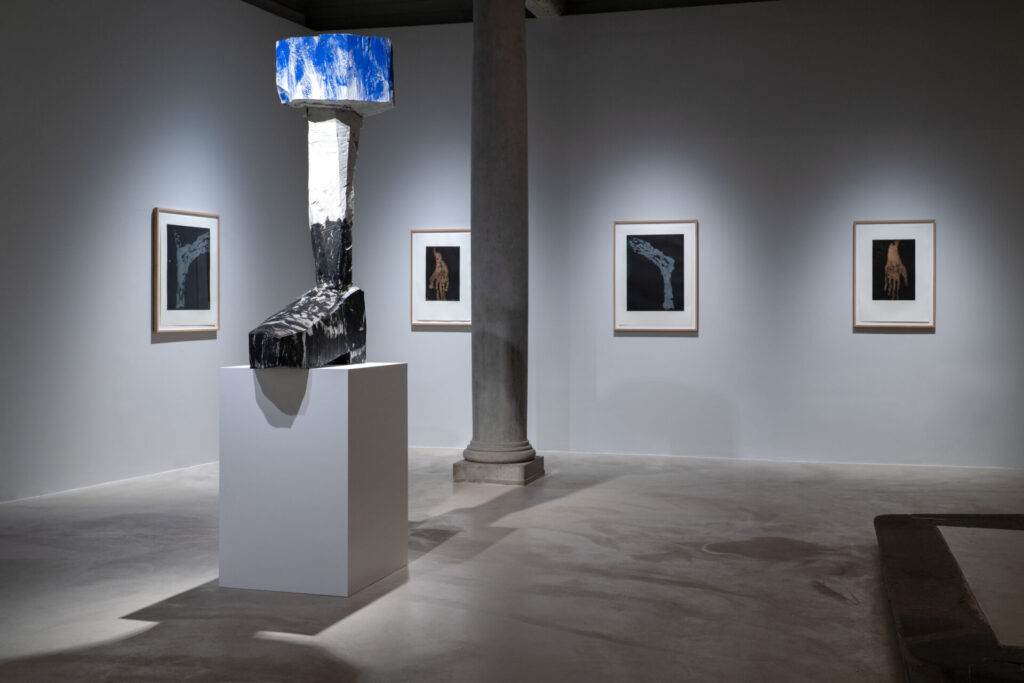
On the second floor, two rooms are dedicated to his biography, featuring archival materials and a video that offers further insight into his lifelong practice. The Remix series reveals his ongoing dialogue with his own past, revisiting and reworking earlier compositions. In this series, Baselitz revises and repaints motifs from significant earlier works, often with a style that is lighter, more concise, and more rapid.
As Baselitz himself has stated: “Art becomes possible again when it speaks multiple languages, when it runs through multiple traditions, when it expresses many different things in different ways”.
Why Georg Baselitz in Florence Is One of 2026’s Must-See Exhibitions
AVANTI! is unquestionably one of Florence’s key exhibitions of 2026. Baselitz’s works unfold in a powerful dialogue with the city itself. Within the former Leopoldine convent, his artistic journey bridges space, memory, and creative evolution, finding a natural resonance.