By Tripon Andra Madalina. Coover image by Taline Raed Eid Nesheiwat.
In many ways, 2026 feels like the new 2016, especially in the world of cosmetics. But this isn’t just about trends recycling themselves, it’s about how people interact online, how beauty is used as self-expression again, and why, collectively, we seem to be turning towards the past.
It started small: influencers and celebrities sharing photos from a decade ago. Slowly, 2016 has crept back into style, reshaping everything from makeup and skincare to fashion and lifestyle. In a world where nothing feels certain anymore, nostalgia has quietly become the trend to watch.
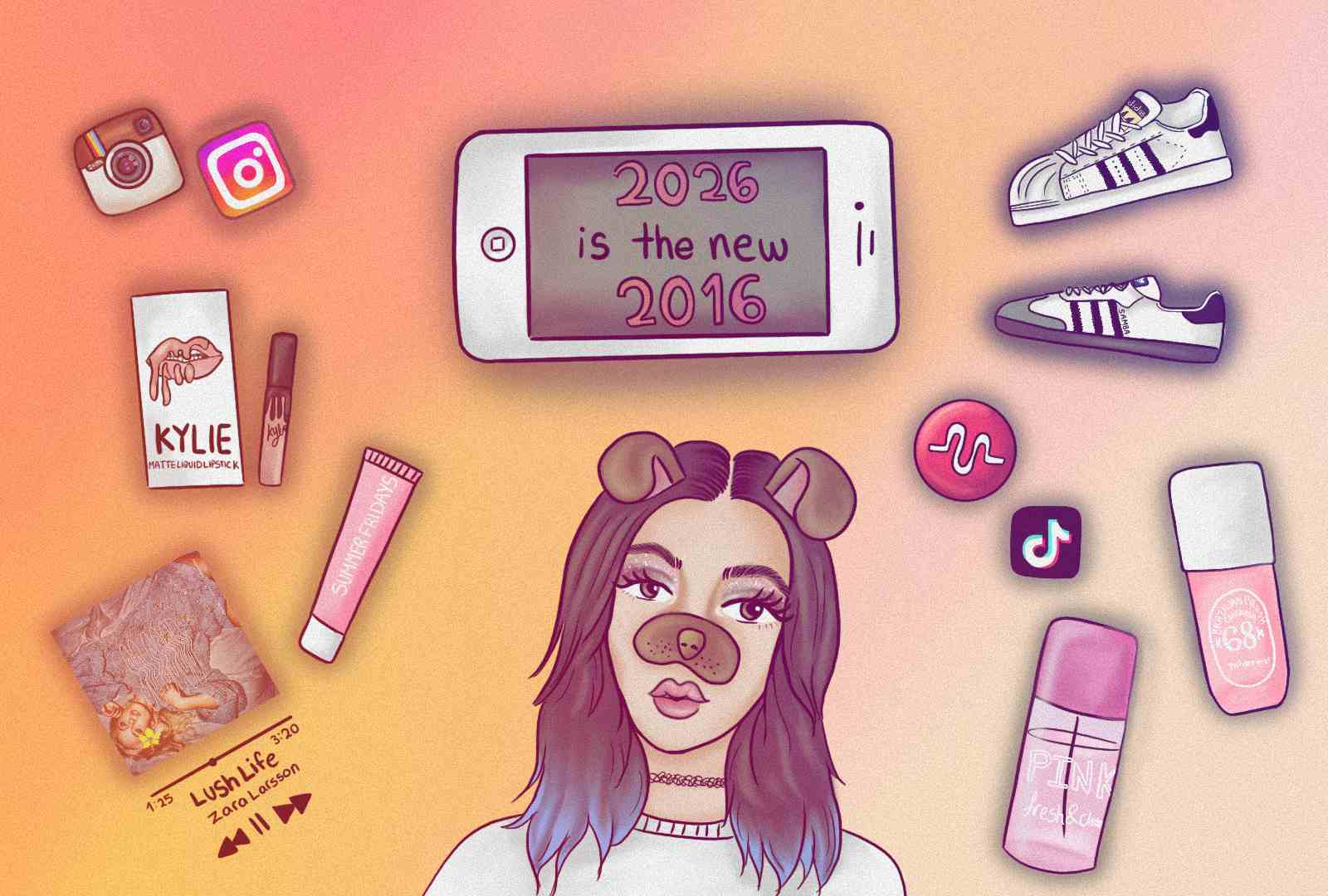
Personally, I hope it will last. I was too young to enjoy it the first time around. Everything I know about Snapchat filters, Kylie Jenner, James Charles, Musical.ly, MAC Cosmetics and Urban Decay era is from my older sister, who was a proper teenager back then, wearing matte lipstick, Converse sneakers, and Triangle swimsuits. I remember being jealous of her and trying to copy everything she was doing, so you can imagine how thrilled I was when I saw the trend coming back. I know this time I am going to do it right!
Why 2016 Makeup Trends Are Making a Comeback in 2026
From Reese Witherspoon to The Kardashians, everybody is trying this trend, but why? Since the early 2020s, the beauty industry pushed a specific aesthetic: the clean look. With everything happening in the world, from pandemics to wars, having a clean routine and looking healthy from the inside out, was like a breath of fresh air. That worked for a while, but nostalgia thrives in moments of uncertainty. The years leading up to 2026 have been marked by rapid technological change, social fragmentation, and online burnout.
In contrast, 2016 represents a time when makeup was about experimenting with colors and shapes, trends lasted longer than a few weeks, and social media didn’t feel as commercial or inauthentic as it does now. People are starting to miss that. Not every post was an ad for the fifteenth serum that sits untouched in your bathroom. Doing makeup that looked like makeup — full coverage foundation, purple eyeshadow with sparkles— wasn’t just about looking good, but about having fun, playing with your look, and not taking everything so seriously.
Returning to these aesthetics gives people a sense of control. Recreating a 2016 makeup look becomes a small, grounding act, something familiar in a world that feels increasingly unstable.
The Return of Full Glam: Makeup as Self-Expression in 2026
For the past few years, everybody has been obsessed with the “clean girl aesthetic”: healthy diets, daily workouts, and the newest skincare innovations. The healthy glow and the no make-up – makeup look were in. Everything was beige, modern and minimalist, colours didn’t matter anymore.
Looking back to 2016, make-up was a form of rebellion. Choosing full glam with a bright pink lipstick said no more than the fact that you want to be seen, heard and respected. It was a way to express yourself when you didn’t know how.
Fast forward to 2026: in a world where societal norms still often dictate how individuals should behave and appear, cosmetics can be a language of self-expression. Over time, society has grown more aware and compassionate. Mental health, body diversity, personal identities and different communities are no longer taboo, but realities that deserve understanding and respect. The world is far from perfect, but because of this growth, expressing yourself is now safer and easier than ever. So why don’t we start dressing differently, doing unconventional make-up and most importantly, being real with each other?
How Beauty Influencer Culture Is Shifting Toward Authenticity
The evolution of influencer culture has made us all feel like there is something wrong with us if we don’t look perfect all day, every day. People stopped filming in their bedrooms with a phone and started investing in expensive equipment, not only to look more professional, but to make everything appear flawless. Influencers began promoting the “effortless” perfect body, face and lifestyle, adding filters, renting houses and cars and projecting more success than they actually have.
In recent months, the most successful influencers and public figures have been the ones showing us the real selves. Some of the most notable examples include Selena Gomez, Alix Earl, Mikayla Nogueira and many more. By talking openly about what is happening in the world and their own insecurities, not being afraid to have a normal body and a face with texture, they remind us that everyone has flaws and we should all love ourselves. This mirrors the early YouTube era, when creators felt more like friends rather than brands. The success of these creators shows that audiences crave authenticity, something that can’t be bought.
Why the 2016 Revival Is More Than Just a Trend
From the beginning of time, trends always cycled back and forth every few years, most of the time with a modern twist. Skinny jeans are back, but everyone is wearing them with long boots, the eyeliner is smaller, and YouTube 10 minutes vlogs are now 3 minutes Instagram reels. But does that mean that this trend is not here to stay?
The 2016 revival feels deeper than a simple aesthetic loop. It’s about how we connect, comment, remember, and express ourselves, and people are loving it. This is one of the most loved trends in a while now, because it makes everyone think of a good old memory. And not being controversial only proves that this trend is here to stay.
The past offers emotional clarity. It gives us reference points. In 2026, revisiting 2016 allows people to reconnect with a version of the internet, and themselves, that feels more human and purer.


