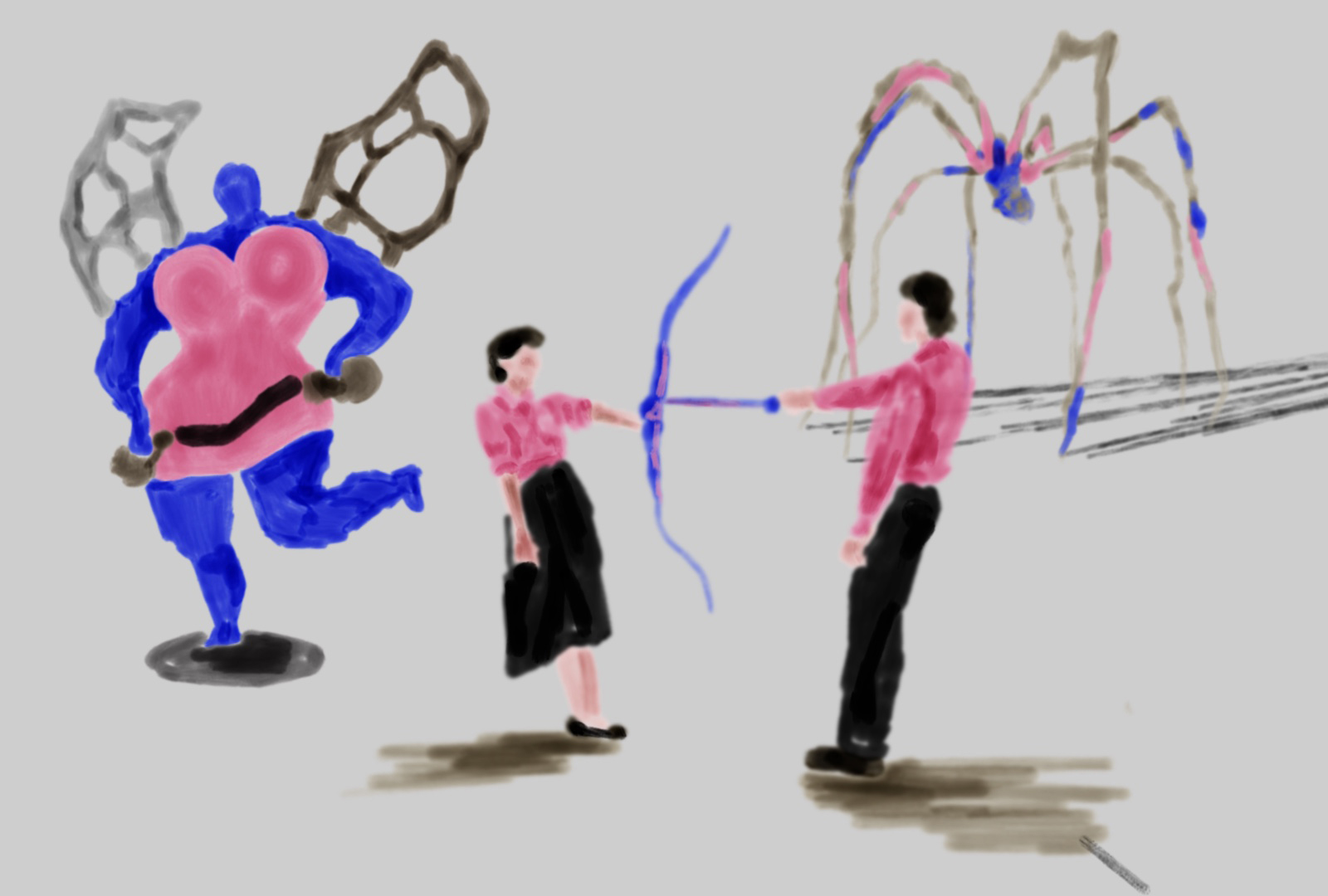
by Phoebe Pierce. Cover Image: Diana Kolikova.
The contemporary market is beginning to address one of the greatest questions in art history:
where are all the great women artists? In November 2025, a Frida Kahlo painting sold for $54.7 million at Sotheby’s in New York, breaking the record for the highest price achieved for a work of art by a woman artist. In contrast, the all-time auction record of $450.3 million for Leonardo da Vinci’s Salvator Mundi shows that women artists are only just beginning to reach the financial valuations of their male counterparts. This development reveals that works by women artists are now selling and increasing in value at auction.
To ask the question “why are women artists selling now?” we must acknowledge the history of women artists, which has been statistically under-celebrated in comparison with that of men.
Linda Nochlin’s 1971 Essay and the Rise of Women Artists
In 1971, Linda Nochlin shocked the art world with her landmark essay, Why Have There Been No Great Women Artists?.The essay opened an important discussion about the lack of “great” women artists in the historical narrative. It raised the question of why roles such as artist and art historian had historically been granted primarily to men.
Several entrenched practices in art history have inadvertently maintained the field as male-dominated. Reducing women artists to the status of “protégées” dependent on their male teachers, and teaching that those born female possess less artistic vision, were among the toxic, socially accepted notions that circulated for decades.
Taking a more egalitarian approach, the art world began—around the time of Nochlin’s essay in 1971—to acknowledge the systemic barriers that women faced in gaining academic access to the study of art throughout history. “A feminist critique of the discipline of art history is needed which can pierce cultural-ideological limitations, to reveal biases and inadequacies not merely in regard to the question of women artists, but in the formulation of the crucial questions of the discipline as a whole,” writes Nochlin.
Nochlin’s essay sparked a conversation that had a major influence on the art world and has only grown more relevant since. Women artists are rising to prominence in all areas of the art world.
Women Artists Take Center Stage in Museums, Fairs, and Media in 2026
In 2026, women-only booths at art fairs, women-focused museums, collections, spotlights, and exhibitions provide evidence of institutional changes made to showcase the prominence of women artists. Media representation also highlights female artists, such as The Great Women Artist, a podcast that grew out of the popular Instagram platform of the same name. Hosted by art historian and curator Katy Hessel, the podcast celebrates women artists by inviting conversations with artists, curators, writers, and passionate art lovers. Each episode focuses on a woman artist who has been particularly meaningful to the guest, tracing both her life and her impact on art history.
FAMM and the Museum Spotlight on Women Artists
Strong signals are coming from the museum world, with institutions like FAMM in France putting women artists front and center. The MACM (Mougins Museum of Classical Art) has permanently closed to make way for FAMM: Female Artists of the Mougins Museum, a private institution dedicated to celebrating women in the arts. Located in the heart of the historic village of Mougins and spanning four floors, FAMM presents nearly 100 works by 90 internationally acclaimed women artists. The impressive collection of paintings, sculptures, and photographs highlights the creative brilliance of women who have played pivotal roles in shaping major artistic movements, from Impressionism to contemporary art.
Among the great names represented are Berthe Morisot, Mary Cassatt, Eva Gonzalès, Barbara Hepworth, Frida Kahlo, Leonor Fini, Lee Krasner, Maria Helena Vieira da Silva, Dorothea Tanning, Louise Bourgeois, Leonora Carrington, Elaine de Kooning, Lalan (Xie Jinglan), Joan Mitchell, Helen Frankenthaler, Niki de Saint Phalle, Marina Abramović, Marlene Dumas, Nan Goldin, Shirin Neshat, Tracey Emin, Jenny Saville, as well as works by leading emerging women artists.
Until April 6, 2026, FAMM is also presenting the first institutional exhibition in Europe dedicated to Elizabeth Colomba, a French artist whose work revisits the grand narratives of Western art history. Curated by Simon de Pury, the exhibition REMINISCENCE brings together 31 works, many shown for the first time, including large-scale oil paintings, preparatory drawings, and watercolors. Drawing on Old Master techniques, Colomba re-centers the Black female figure within European artistic canons, transforming histories of colonialism into a visual language of dignity and emancipation. The exhibition marks her institutional debut in France and strongly aligns with FAMM’s mission to highlight women artists who have long been underrepresented.
“Once again, women are ruling the roost at a major art fair, as galleries and museums alike scramble to be the first to revive the reputation of yet another shamefully overlooked historical virtuosa,” reported Jo Lawson-Tancred, a journalist, primarily writing for Artnet News, at TEFAF (The European Fine Art Foundation) Maastricht, one of the world’s leading art fairs, showcasing fine art, antiques, and design from top international dealers. The 2026 edition of TEFAF Maastricht is scheduled to take place from March 14 to 19, 2026.
Ewa Juszkiewicz: The Polish Artist Redefining Female Portraits and Art Value
Ewa Juszkiewicz is a Polish artist born in 1984 whose work presents a feminist artistic critique while also commanding strong market value. At 41, she is achieving high auction records—US $1.6 million at Christie’s in 2022—and she maintains an active secondary market. She received an MA in Painting from the Academy of Fine Arts in Gdańsk and a PhD from the Academy of Fine Arts in Kraków. In her traditional European painting style, she often depicts a female subject.
However, her work contains an element of the grotesque. Where the female figure’s face should be, there is coiled hair, foliage, or the back of the subject’s head. This unsettling element clearly calls into question the distortion of female value grounded in ideals of beauty. What is the value of a woman who is not an artistic muse? Would a painting of a grotesque woman be as valuable as one of a traditionally beautiful woman? The market for Juszkiewicz’s work suggests yes. Through her provocative practice, a woman becomes more than a passive artistic muse; she is an agent in her own right, as demonstrated by the artist’s commercial success.
Should You Buy or Sell Work by Female Artists in Today’s Market?
With all this market speculation, we also have to address the practical question: should I buy or sell now? Well, common sense applies to collecting, and the age-old adage still holds true: don’t buy it unless you love it. This advice only becomes more relevant as prices rise. If you don’t love the art for its artistic value alone and it never appreciates, the only thing likely to increase over time is your frustration. For professional collecting guidance, you should consult a qualified art advisor.
Just because female artists are achieving record-breaking sales does not automatically mean that now is the right time to buy or sell a work simply because the artist is a woman. However, looking back at the major shifts in the agency of female artists since 1971, it appears that by 2026, capital is beginning to catch up with feminist critique.


