By Rebecca Ceccatelli. Photos by Asia Niero and Margaret Mitchem
We welcome you behind the scenes of an exhibition.
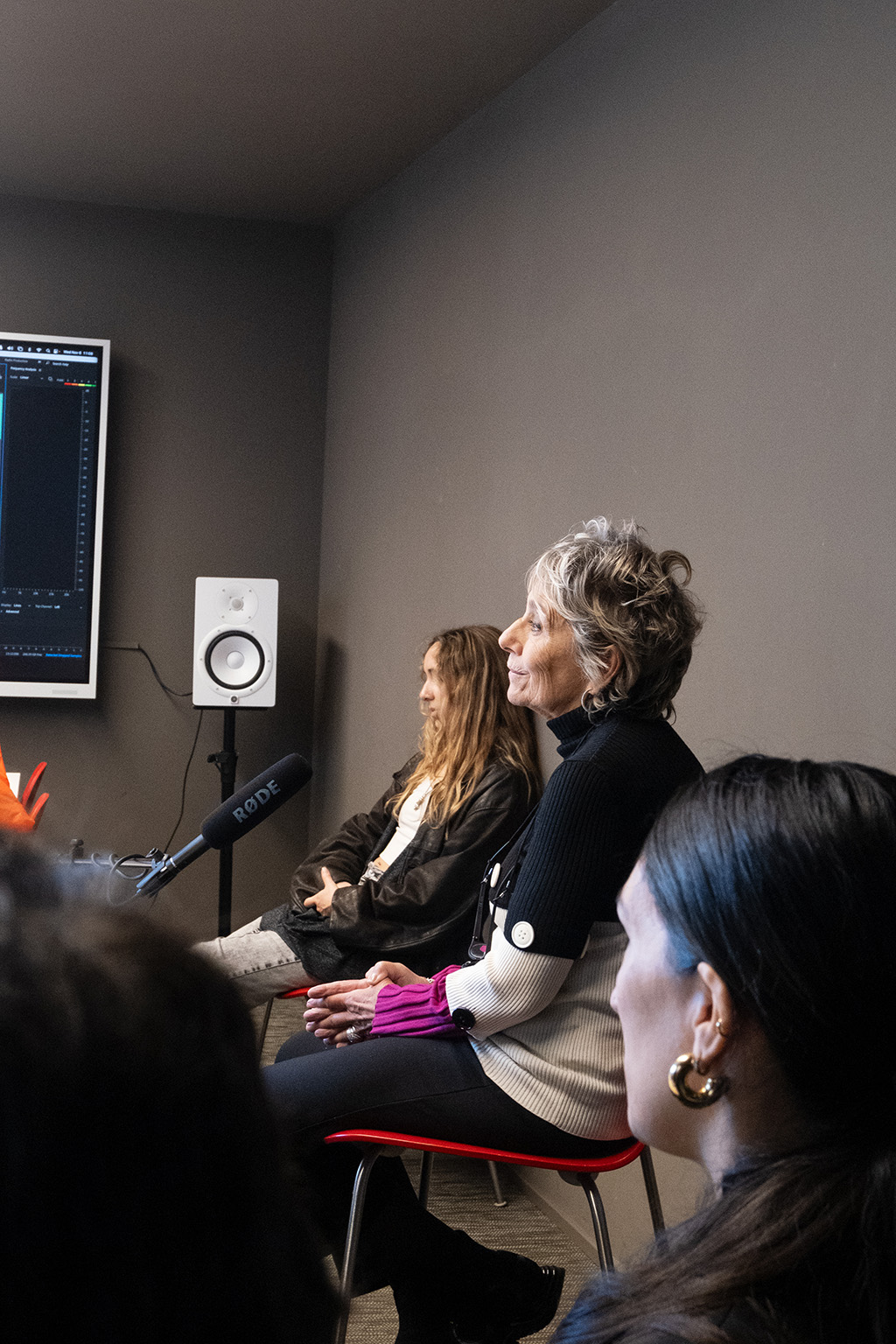
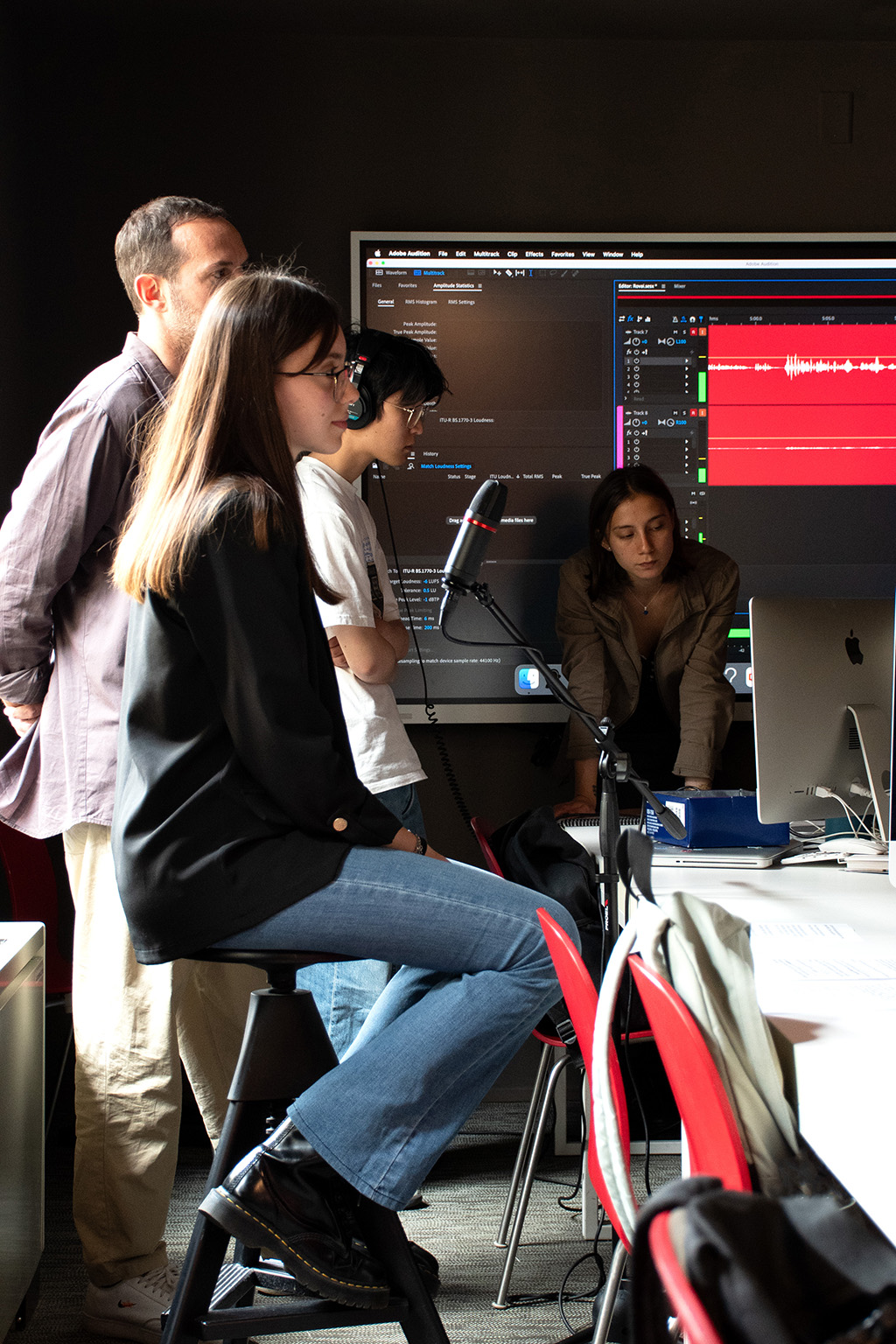
This is how each episode of the podcast Museo Ferragamo: Dietro le quinte di una mostra [Museo Ferragamo: Behind the Scenes of an Exhibition] begins. Created by the students of Istituto Marangoni Firenze from the Arts Curating and Multimedia Arts courses, in collaboration with the Fondazione Ferragamo, the podcast aims to narrate and explore the backstage of the exhibition currently running until April 6, 2026 at Museo Ferragamo in Florence, titled Salvatore Ferragamo 1898–1960.
The exhibition is the largest retrospective ever dedicated to the great historic shoemaker of Hollywood stars, retracing not only his biography and the most significant stages of his career, but also the smallest details of his creations, from materials to anatomical studies.
The podcast created by the students seeks to adopt the same approach as the retrospective, but this time keeping as the central focus of the research not so much the figure of Salvatore Ferragamo, but the exhibition itself.
Thus, each episode is presented as an exploration of one of the different figures who, from behind the scenes, contributed to building the exhibition. Through interviews, they narrate their collective project – its challenges, processes, and insights.

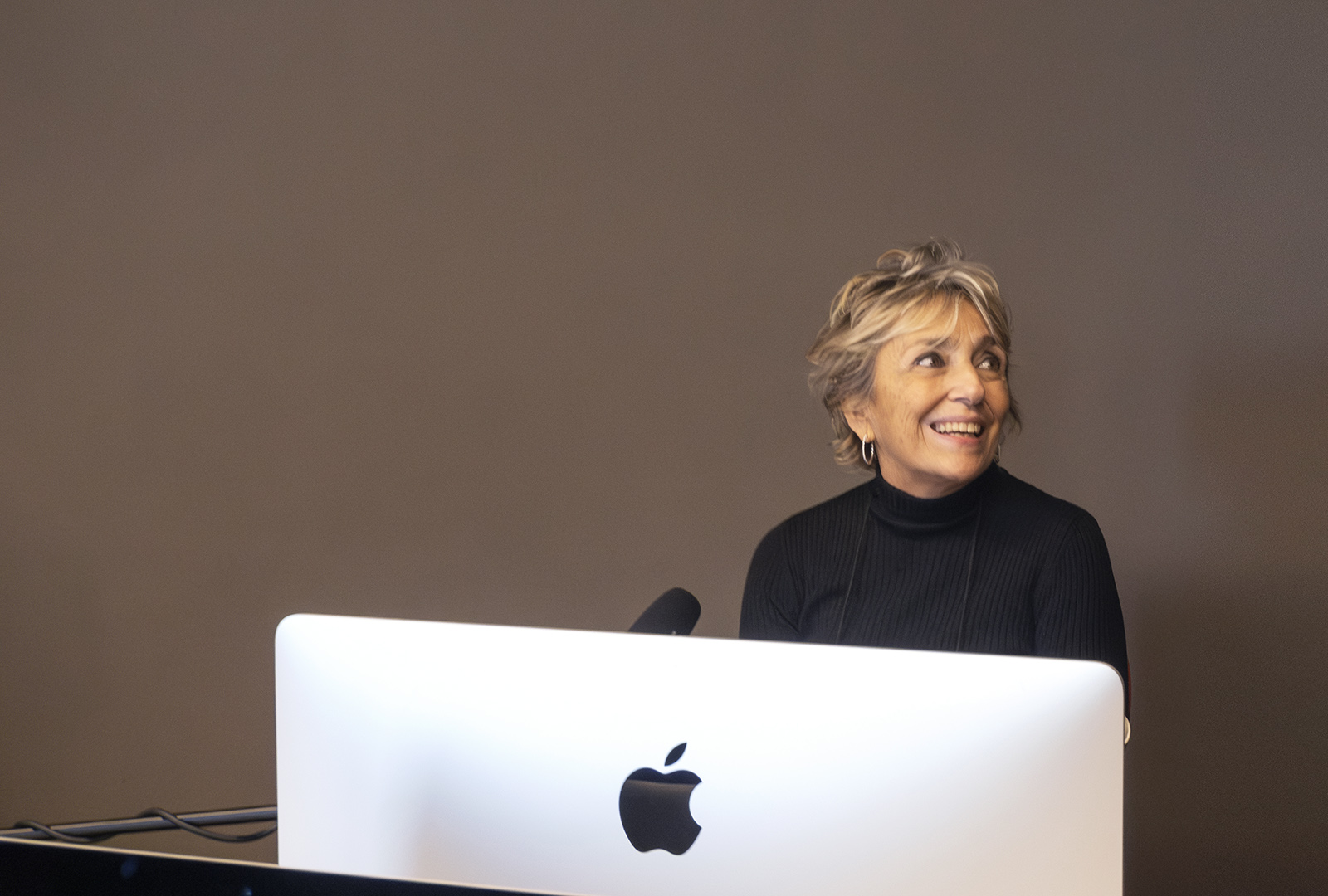
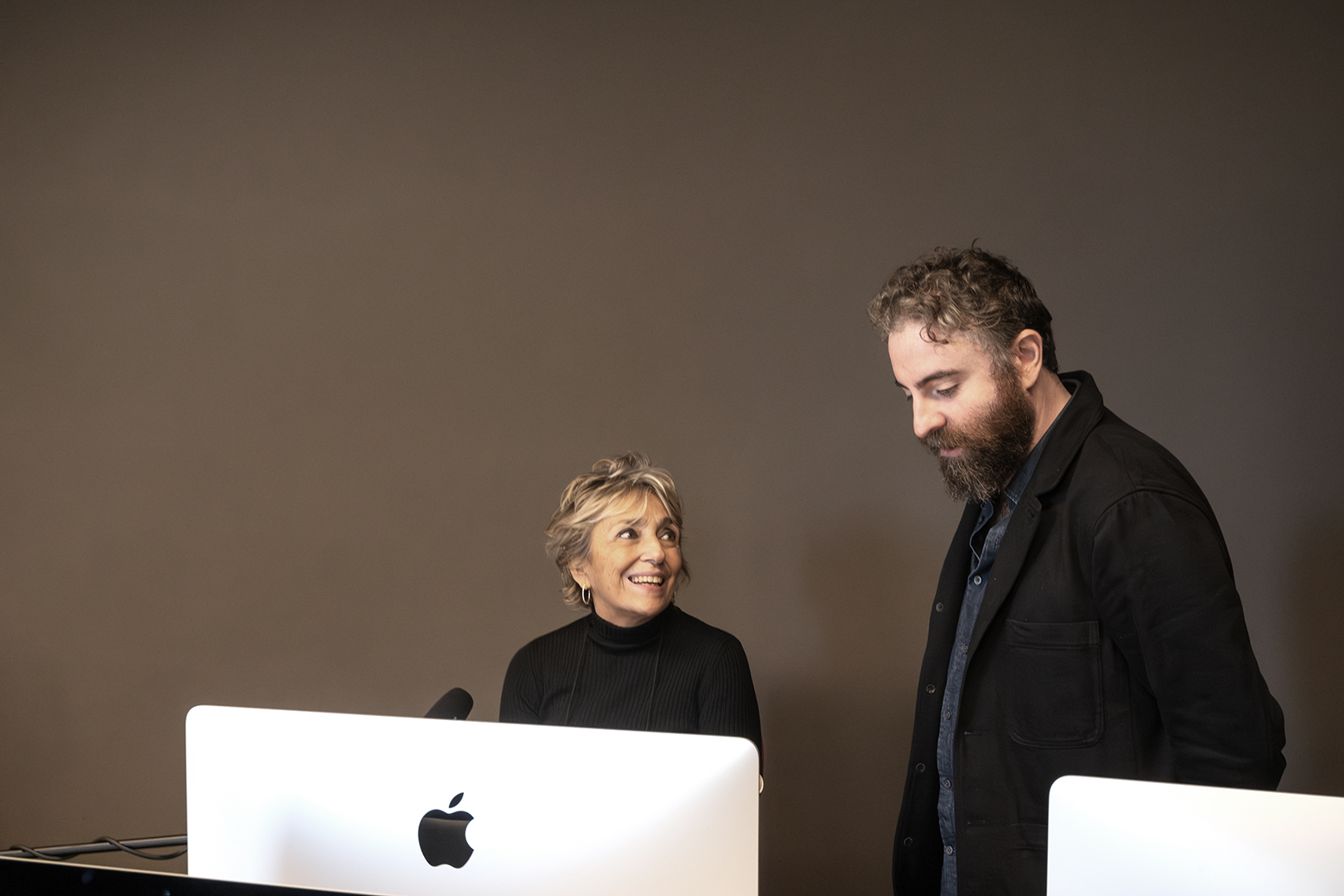
In the first episode, Witnessing the Process: Curating, Stefania Ricci, curator and director of the Museo Ferragamo, recounts the process hidden behind the work on display, speaking from her privileged perspective as the curator.
Welcome and thank you for being here with us. Your career has its roots in the field of art history. How did you encounter the world of fashion? And how did your experience in art help you find your direction?
I am an art historian, and as often happens, my encounter with fashion happened by chance.
I was working at the Costume Gallery of Palazzo Pitti. I was consulting for the then-director of the Costume Gallery, who had also become head of an association for the study of textiles and fashion. I was helping her with this role – the kind of jobs you take just after graduating. She proposed that I should have curated an exhibition on Salvatore Ferragamo because my way of working, my discipline in the workplace, had made her think I could handle such a complex task.
At that time, I knew very little about fashion – shoes, for example, I mostly bought because I liked them. I was not a fashion history specialist. But it is also true that a historical discipline gives you a method of study and research, and therefore a way to apply this research when creating and developing an exhibition project. So, what I had learned in studying artists, I instead applied to the world of fashion, with the same rigor.
And I must say that it was, in my opinion, a winning formula because fashion is often treated rather superficially. People tend to limit themselves to the theatrical aspects of fashion or to the purely aesthetic side. Yet there is an entire world of research, design, inspiration, and even artisanal execution and production, which requires deep investigation. This makes fashion an extremely varied, complex, and fascinating field. So once I entered this sector, I must admit, I was captivated by fashion and never went back, even if, as I always say, my passion for art is visible in the way the exhibitions are set up at the Museo Ferragamo, which I direct, where there is always a distinctly artistic element.

In this podcast, we have the opportunity to hear the perspectives of different figures within the team that made possible the construction of such a complex exhibition – from architects to photographers to graphic designers. At the center of this team, however, we find you. How do you bring together and choose the people you can work best with? And how would you describe the relationship you build with your collaborators?
Every exhibition project requires different expertise. For example, when it comes to photographers: not all photographers have the same skills for any object they are asked to photograph. We have photographers who specialize in artworks, others specialized in the world of fashion.
So generally we try to approach different professions, different professionals, depending on the subject. The same applies to exhibition design and staging. And we usually try to change from project to project, so as to gain different perspectives. Because beyond the curatorial aspect, beyond the vision of the exhibition and what it aims to convey, the relationship established with the exhibition designer or set designer is very important.

How are they chosen?
They are chosen based on their portfolios, based on what they have done before, which projects they have worked on. Sometimes these encounters happen unexpectedly. For example, Maurizio Balò – he is a stage designer who had worked mostly in spoken and opera theater. I chose him for an exhibition on Audrey Hepburn because I had seen the model of one of his stage designs preserved in the archives of the Teatro Comunale in Florence. It was an absolutely essential, very elegant design, which I found perfect to represent the essentiality and elegance of the great American actress.
So I called him. At first, he said no because he had never designed an exhibition. I had to convince him for quite some time, and eventually, he accepted. It became an exhibition of incredible success – one million visitors – due also to this extraordinary staging. Because a great harmony was created between us and with the subject itself, which led to the success of the exhibition.
That said, you are not only the curator of the current exhibition, but also hold the important role of director of the Fondazione and Museo Ferragamo. How can a museum keep alive the legacy of Salvatore Ferragamo?
The legacy of a company, a brand, a founder is kept alive by creating projects that have contemporary relevance. It should never be nostalgic or projected only into the past. It should never tell a story as an end in itself, but rather a story for what it can teach and how it can project itself into the present or the future.
For example, creating a podcast with Istituto Marangoni Firenze students, with young people experimenting with this kind of project, is proof of how to keep the museum and Ferragamo’s story alive.
To conclude, how have your research and dedication to the institutions you lead and to Salvatore Ferragamo ultimately defined your profession as a curator?
I like doing research, but not research for its own sake. I want to do research with the goal of a project – predominantly an exhibition, but it could also be a book, an event – in other words, a project that is destined for others. This is what a curator does in particular: they make their knowledge available to the public, while clearly providing a perspective. This is very important in defining the role of the curator.
The curator always provides a perspective that is personal, that offers a specific interpretation. Those who think they are creating totalizing exhibitions generally do not do good work. You can tell when there is no curator, because a curator is the one who selects and arranges the materials, documents, and objects to follow the thread of a story and an interpretation. And this is extraordinary, because it always keeps you alive, makes you continue studying, researching, and ensures you never settle into what you already know.
INFO
This interview is part of a special series based on the podcast Museo Ferragamo: Dietro le quinte di una mostra, which explores the creative voices shaping the museum’s latest exhibition.
Want the full conversation? You can listen to all episodes on Spotify, Apple Podcasts, Amazon Music and YouTube.


