
By Rebecca Ceccatelli and Giulia Piceni. Images courtesy of Enrico Dal Buono.
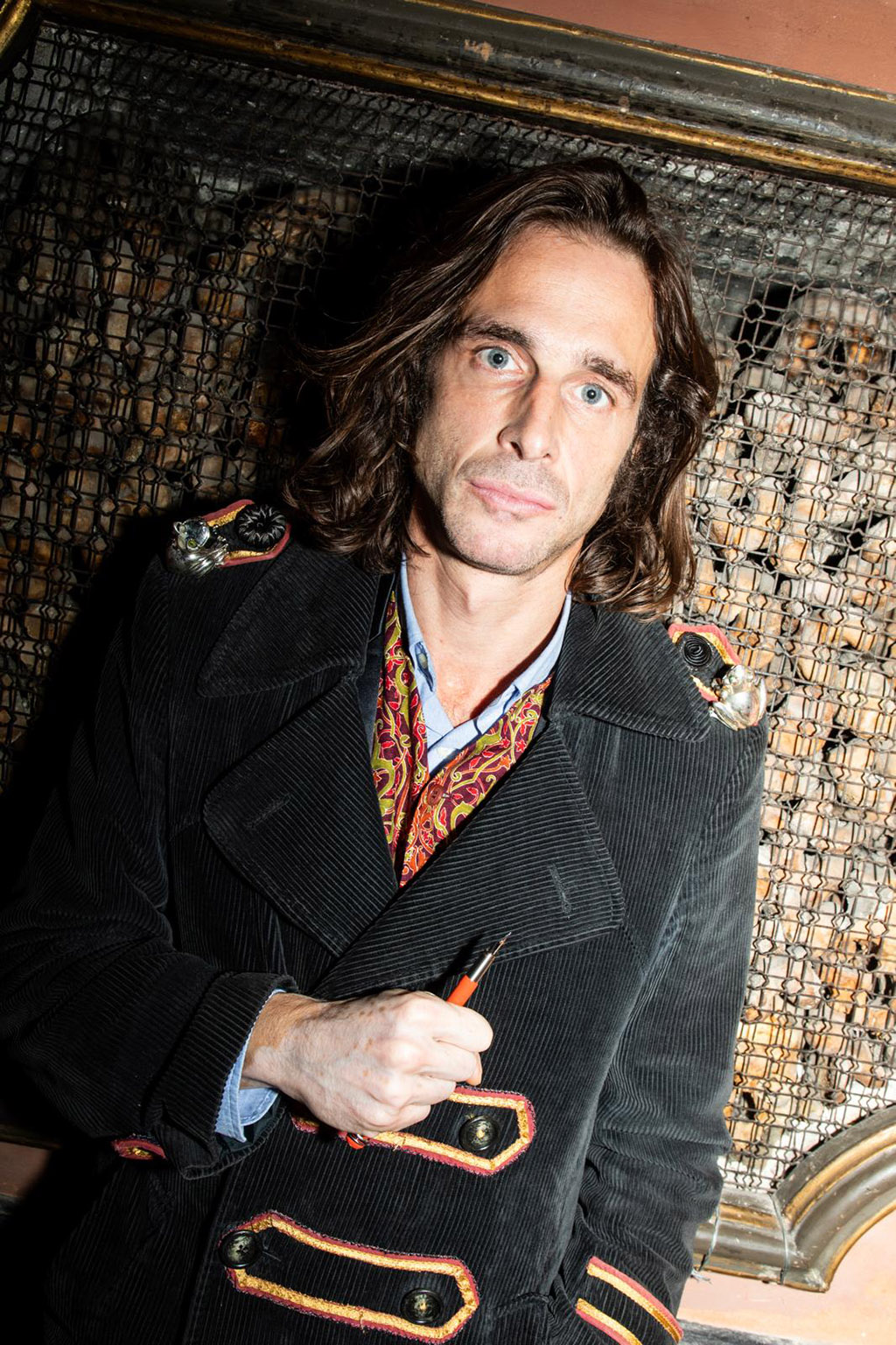
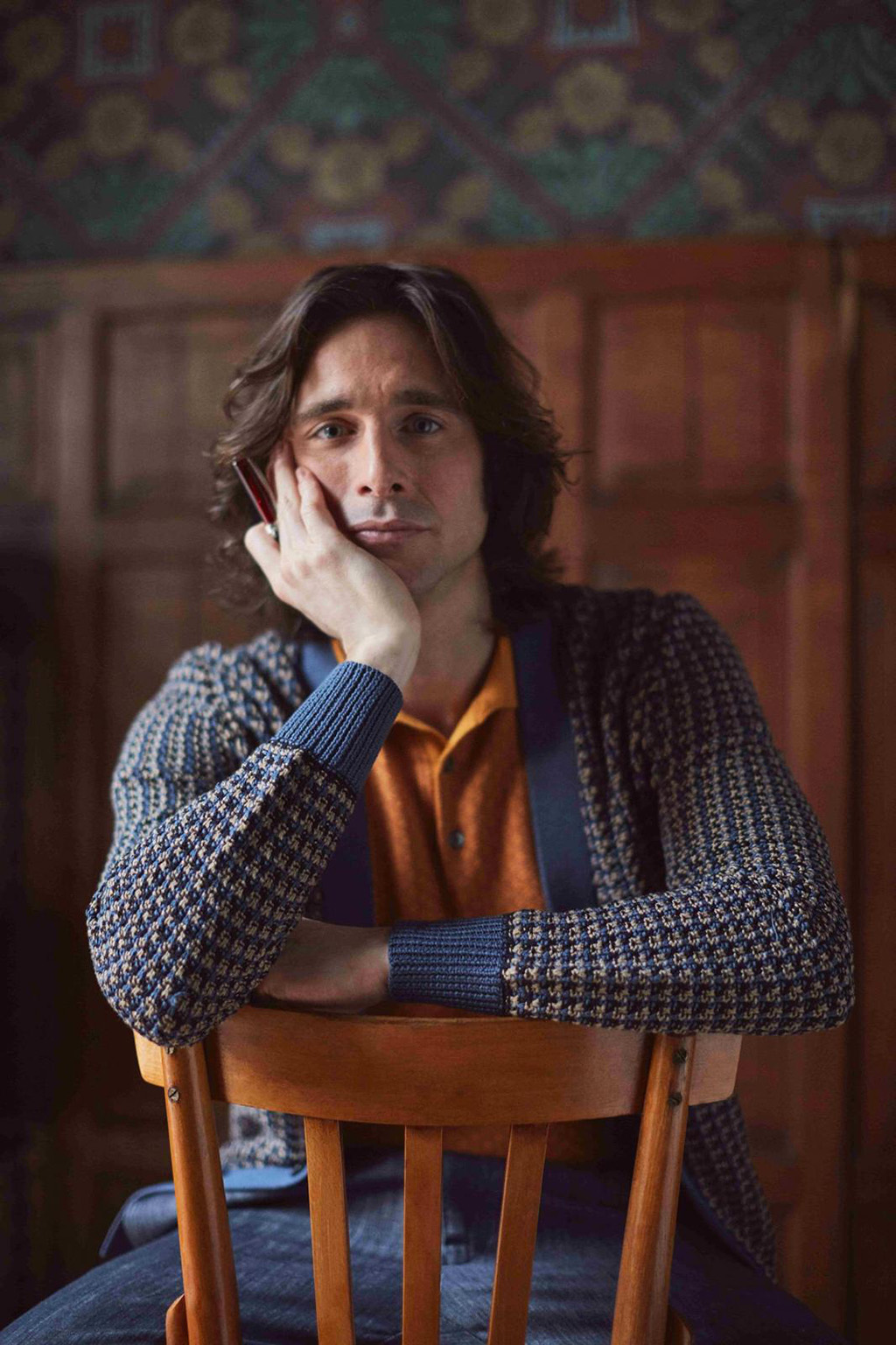
Enrico Dal Buono is a Milan-based writer, a sharp voice in the Italian literary landscape, where he moves between irony, lucidity, and disruption. In this conversation, he speaks about the madness of writing, the role (or uselessness) of meaning, and the need to go deep—even when the path leads nowhere. Dal Buono teaches creative writing at Scuola Holden and is the author of a short story collection, an essay, and four novels. His latest, Il male maschio (La nave di Teseo), is a bold inquiry into power, gender, and the darker folds of identity.
One Mind, Many Forms
On switching between essays, fiction, and criticism
As a writer whose work spans essays, novels, and more critical journalistic pieces, your writing covers a wide range of formats. Do you think differently when working in each of these literary forms? Do you feel like a different writer depending on the format?
Writing, in all its forms, always pursues the same goal: to make sense of things through the order of words. Of course, non-fiction tends to express an explicit meaning, whereas fiction should show something whose deeper meaning is left to the reader’s interpretation.
What Academia Leaves Behind
On boredom, doubt, and the madness of truth
Your academic background ranges from political science to philosophy and Russian literature. How do these disciplines influence your daily writing practice?
Political science taught me that politics bores me to death, philosophy that nothing is certain, and Russian literature that only madmen brush against the truth.
Teaching and the Futility of Depth
On students, perspective, and the unteachable urge to dig deeper
How do your teaching experiences reflect on your personal creative work? Can writing be taught?
Dealing with students is very useful: it reminds me that one can live perfectly well without any interest in what happened more than twenty years ago. Unfortunately, my personality is already formed, and I am compelled to search for a pointless depth in things.
Syntax, Madness, and the Illusion of Meaning
On recurring obsessions and the inevitable unraveling of language
Do you have a word, a phrase, or a syntactic rhythm that recurs in your work like a personal motif, something that insists on returning?
The search for an absolute meaning and the constant awareness of the madness of that search. This is reflected even in individual sentences. They begin with grand promises and end in a grimace.
Writing as Habit, Ethics, and Survival
On the rituals, responsibilities, and silent battles behind the act of writing
In an age where words are quickly consumed and discarded, what do you believe is the writer’s ethical responsibility toward language?
Absolutely none. Other than writing well.
Do you have a specific routine or ritual that helps you enter the “writing state”?
Coffee and cigarettes (the burning kind).
In an age of distractions, how do you protect the silence and focus necessary for writing?
I’m too much of a coward to openly confront those who disturb me, so I mutter and brood under my breath.
Artificial Intelligence and the Fate of Creativity
Have you ever thought of the text as a form of intelligence? How can different types of intelligence (natural, artificial, human) collaborate creatively?
The developments in artificial intelligence will answer an old philosophical question: what does it mean to create? If it’s merely about recombining real-world data in new ways, then—given AI’s superhuman combinatorial capacity—in the medium term, most creative professions are more or less doomed.
A first version of this interview was published in Title(s), I’M Firenze Digest first printed edition, published for TEXT(S)TURE(S), Istituto Marangoni Firenze Fashion Show 2025.


