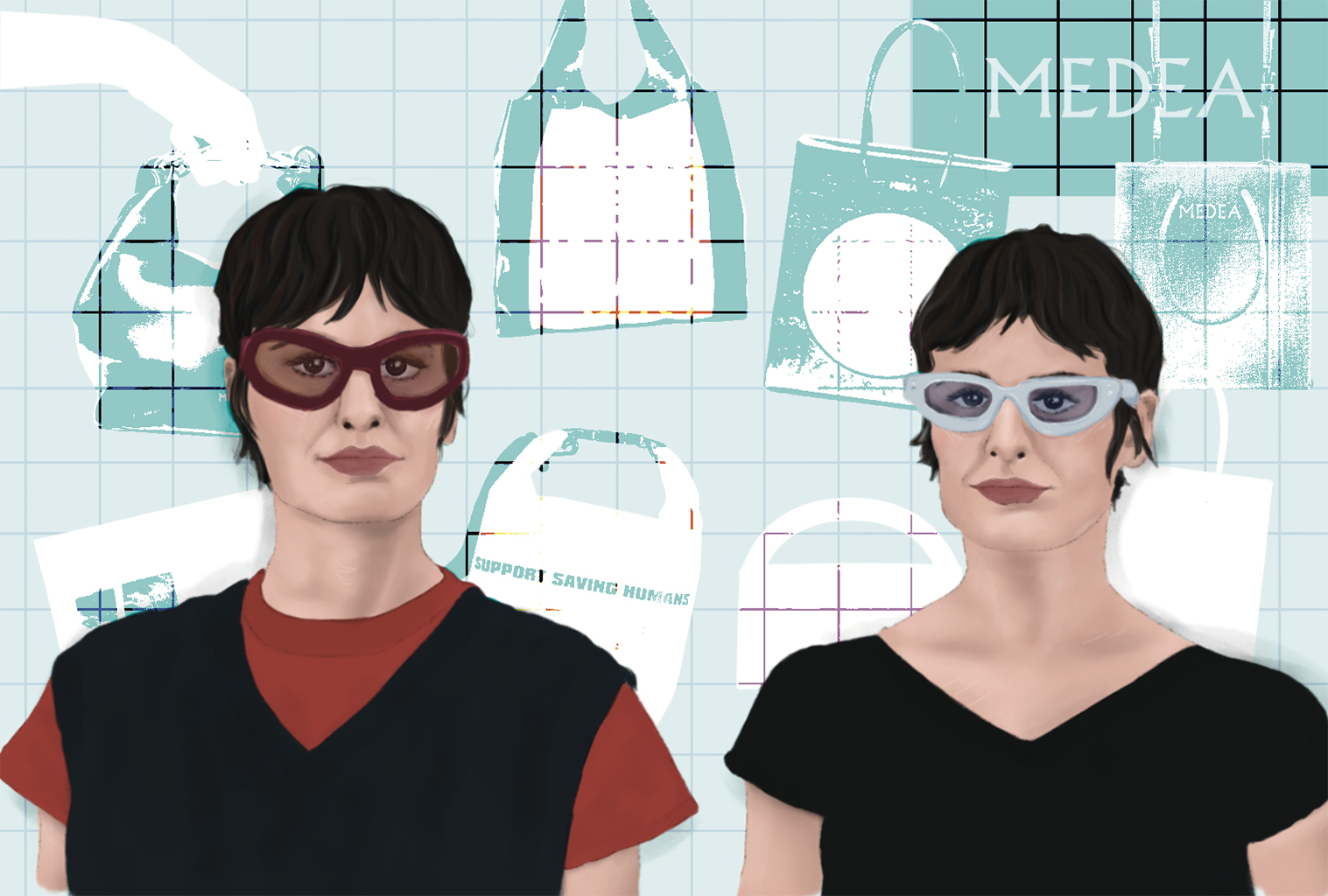
By Camila Heredia Oranday and Giulia Piceni. Cover by Rosy Ramirez.
Giulia and Camilla Venturini are two twin sisters behind Medea, a supercool brand that specialises in bags and accessories. Both women have a cultural and cosmopolitan approach and a strong focus on sustainable materials. They are continuously exploring new creative avenues, often through collaborations with artists and photographers. It is no surprise that their it bags have become objects of desire for many pop stars and top models, from Rihanna and Beyoncé to Kaia Gerber.
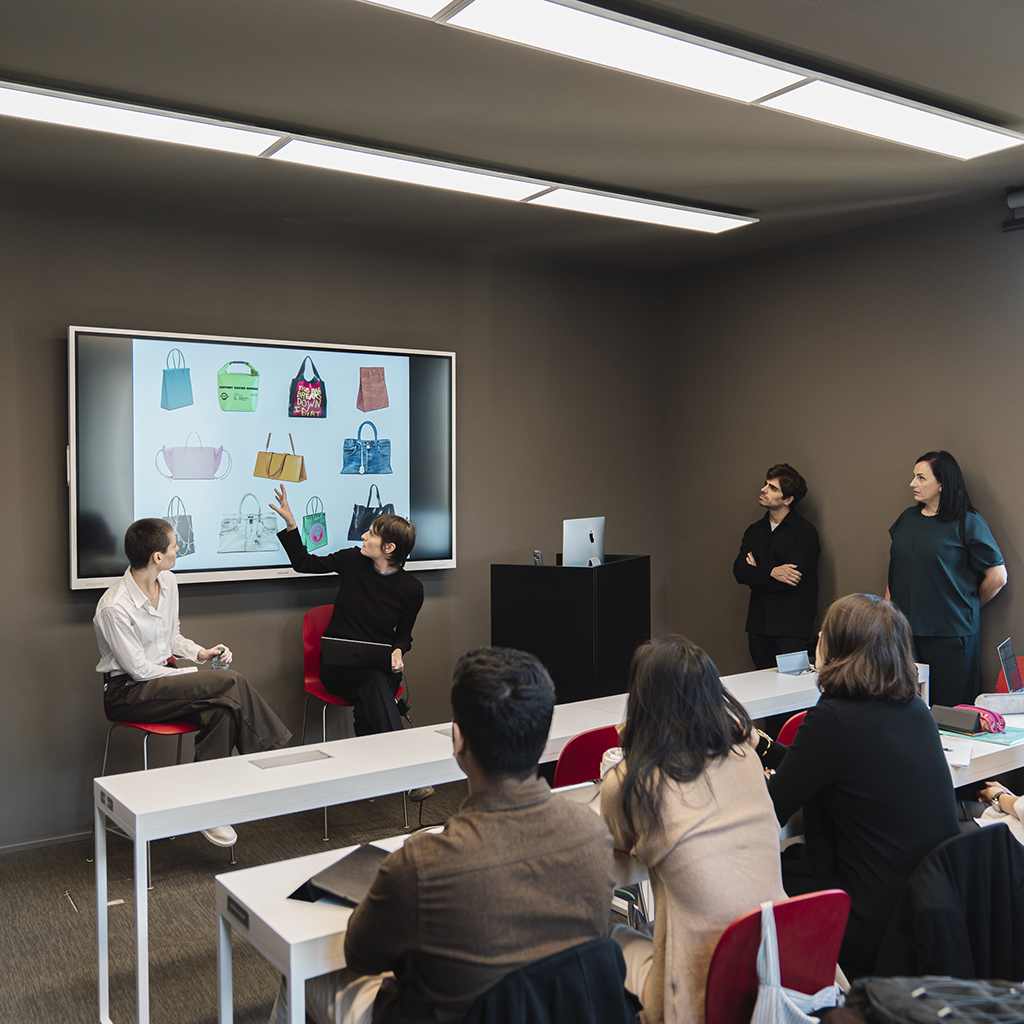
During a a talk held at Cinema La Compagnia in Florence, two students from the editorial board of the Digest magazine seized the opportunity to have a private conversation with the creative duo behind the Medea Sisters brand, who are now mentors at Istituto Marangoni Firenze. From recent collaborations to contemporary issues and even glimpses into the brand’s future, here are the great inspirations and stories they have shared with us.




How did you come up with the idea of launching the Medea brand?
Medea is the result of our first collaboration as sisters. Prior to this venture, our careers were unrelated to the fashion industry. We both shared a desire to embark on a project together, which led us to conceive the idea of a leather shopping bag. After creating a prototype, we solicited feedback from stores, which proved overwhelmingly positive. We started with a modest collection, and thankfully, our concept gained traction. Initially, we launched with just one bag, commencing our enterprise on a small scale. The brand name Medea pays homage to a Pierpaolo Pasolini film from 1969 that we hold in high regard, featuring Maria Callas, who has always been a significant inspiration to us. Selecting the name was an easy decision, given our admiration for the film and its lead actress.
How does Medea integrate eco-friendly practices into its production and ethos?
The majority of our accessories are crafted in Italy, and we are very particular about sourcing materials from suppliers in close proximity to our factory. Establishing personal relationships with these factories is a pivotal step for us. When it comes to leather, we strive to use leftover materials from other collections or brands rather than fixating on specific types. Initially, we focused on particular leather types for our first bag collection, but we soon realised that being flexible in our colour selection was beneficial. It’s impossible to please everyone with a single choice. For our accessories, we prioritise researching the sustainability of various types of leather, including vegan alternatives, and scrutinise their composition to ensure they aren’t merely plastic masked as eco-friendly. When it comes to bags, we prefer to use metal-free leather, which significantly reduces air and soil pollution during production. Our commitment to recycling and reusing materials is fundamental to our ethos.
How is the creative process divided between the two of you?
We’re fortunate to share similar tastes, which minimises any possible conflicts. Our frequent agreement on matters helps us streamline our processes. Additionally, we endeavour to divide our workload while we are in the office, ensuring efficiency and fostering a cohesive team atmosphere. Though we hold meetings to discuss progress, we consciously assign tasks based on individual strengths. While there may be areas where one of us excels, we don’t strictly compartmentalise responsibilities into financial and creative realms.
As a student of curating, I’m curious to know more about your interest in art. Your collaboration with Nan Goldin seems a symptom of an interest in building bridges between the worlds of art and fashion. How has it sparked?
When we first launched the Medea brand, we had a specific vision in mind – we wanted to incorporate the concept of imprinting images onto our bags. Our initial step was to compile a list of artists we hoped to collaborate with. Since our bags have a flat surface similar to a canvas, we approached Nan Goldin for this specific project. Fortunately, she agreed, and we used a state-of-the-art digital printing machine designed for leather. The outcome surpassed our expectations; the quality of the image on the bag was truly remarkable, almost surpassing that of paper. The craftsmanship of the bag was impeccable, which further enhanced the project’s appeal. We also enlisted Nan to take photographs for our campaign, which proved to be an invaluable addition. The fact that she captured the images gave the project a genuine authenticity. When we presented our portfolio, the inclusion of her photography significantly resonated with our audience in a deeply organic manner.
What were the specific features that made you pick Mediterranea over other organisations that deal with immigration?
I find it to be more of a human choice, really. The desire to help those in need has always resonated with us like a shared passion. Finally, we found a platform to extend our help, and we were determined not to let the opportunity slip away. Medea embodies a robust feminine presence, and bringing this project to fruition echoed her indomitable spirit.
From the project’s outset, it became clear that many people are hesitant to associate themselves with certain concepts – no matter how righteous they may be – and prefer to remain neutral. Numerous brands, particularly the larger ones, are also reluctant to take risks, as they fear losing customers. However, we are not concerned about such issues. While some may not support our project and choose not to buy our bags, we accept that. There will always be those who disagree with your beliefs and do not support your efforts and convictions. But in the end, it’s up to you to determine whether you are brave enough to stand by your principles.
The fashion world is constantly evolving. How do you stay ahead of trends while maintaining Medea’s distinctive style and brand integrity?
When it comes to trends, I believe it’s quite challenging to stay on top of them, and I feel it’s something that needs to evolve naturally through social interactions and just going out— that’s essentially the only way to observe them. You can browse the internet, but there are just too many trends, and some fade away quickly. Therefore, I believe in being present and staying in the moment. Sometimes, you may also encounter individuals for whom setting new style standards comes effortlessly.
Are you interested in developing your work through publications linked to the brand, like many other brands are also doing?
Our publication is MedeaLand, a limited-edition independent magazine created in collaboration with TOILET PAPER (a well-known magazine founded by Maurizio Cattelan and Pierpaolo Ferrari, where Giulia Venturini worked for several years, ed). It follows the same format as it is also image-based. This is our first edition, and it’s truly remarkable. We have already produced some zines and have plans to create more in the future.
Looking to the future, what exciting developments or expansions can we expect from Medea?
We are currently focused on jewellery. We have a genuine passion for it. Considering our deliberate pace, we introduced one piece in September last year, and now we are preparing to unveil another because the collection consists of three new pieces. While some may consider it a small accomplishment, it is a significant milestone for us. We believe that people will be pleasantly surprised by these new pieces, which are unexpected yet delightful.


