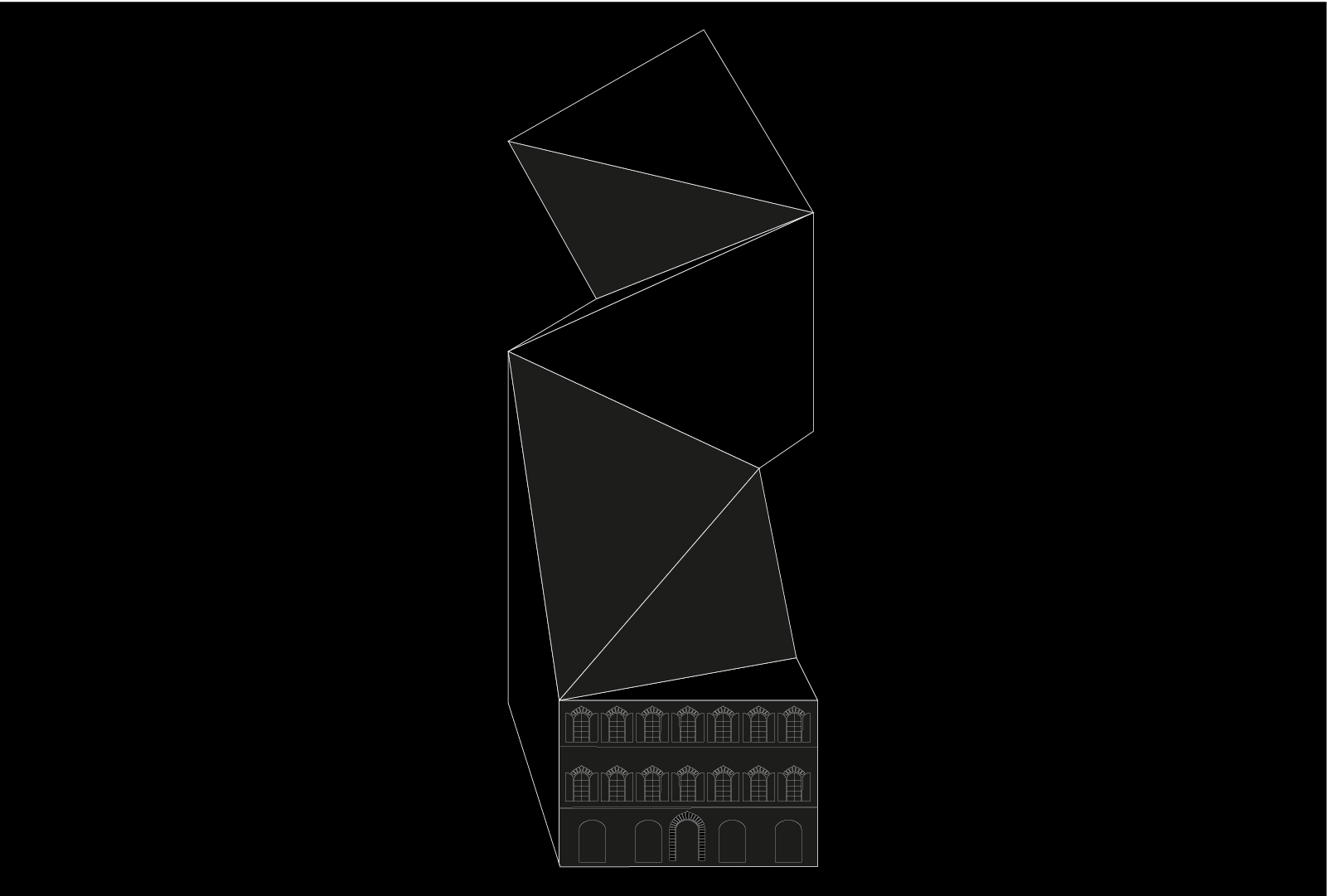
By Rebecca Ceccatelli.
INDEX
- INFO
- SCHEDULE OF THE NIGHT
- A FIRST DECADE
- CONCEPT
- LOCATION
- MAP
- BOOK CLUB: GROUND FLOOR
- ART GALLERY: MEZZANINO, FIRST FLOOR
- ATELIER, RESEARCH & ALUMNI: SECOND FLOOR
- CREDITS
INFO
MĪRĀBĬLIS · The Exhibition
05-07 November 2026
Opening 05 November, 18.00-20.30, by invitation.
Entrance through Via delle Belle Donne 12/r, Florence
06 November, 10.00-19.00, entrance through Via de’ Tornabuoni 17, Florence
07 November, Open Day, 10.00-17.00. Entrance through Via de’ Tornabuoni 17, access only via Registration.
SCHEDULE OF THE NIGHT
Doors open to visitors at 6 p.m. from the entrance located in Via delle Belle Donne 12/r, where the exhibition path begins. A welcome refreshment sets the tone, then the evening is yours to wander: follow the routes marked throughout the building and let the school’s rooms and floors lead the way.
A FIRST DECADE
MĪRĀBĬLIS started on a runway. It opened as the Istituto Marangoni Firenze Fashion Show on July 2nd, 2026: the first act of a project that falls in a special year, the one that celebrates the school’s 10th anniversary. Now the story moves indoors: the same name, the same anniversary, and a school that opens its own rooms to tell everything the runway could not. As the first important anniversary, it represents the first building block in the history of our school. It is a first milestone and the school has chosen to mark it by showing rather than telling what it has become: many disciplines, many languages, one direction.
CONCEPT
Wonder begins when perception becomes possibility.
MĪRĀBĬLIS grows out of a year-long reflection on the sensibile, the “sensible”, as articulated in the philosophy of Emanuele Coccia.
For Coccia, the sensible is not a passive object registered by our senses, but the very environment in which the world exists and manifests itself: a living, shared matter in which bodies intermingle, and the rigid distinction between who perceives and what is perceived dissolves. We do not simply stand before the world, but we perceive what surrounds us through our senses and, in doing so, we are shaped by it. But it does not end there. The sensible is also the capacity to act in the opposite direction, to bring something forth from within and return it to the world. It is, in this sense, a form of exchange, and therefore a form of knowledge.
Art inhabits this space of exchange. It is the human desire to give form to an intuition, to let something exist out of an idea and to create something capable of unsettling perception and awakening a sense of wonder.
Through art and fashion, what is perceived becomes tangible expression, and experience matures into knowledge. It can surprise us, move us, or reveal the familiar in an entirely new light; it makes the invisible tangible and invites us to look beyond what we already know.
Wonder, in this sense, is not simply a response to beauty, but the beginning of a new way of looking. At Istituto Marangoni Firenze, this idea took shape through two interconnected events: a fashion show spotlighting the school’s fashion vision and, now, an exhibition extending the narrative across its different creative disciplines.
The shared title, MĪRĀBĬLIS, is the common thread between them, celebrating the plurality of creative languages and souls that coexist within the school, and the unexpected possibilities that emerge when they meet.
LOCATION
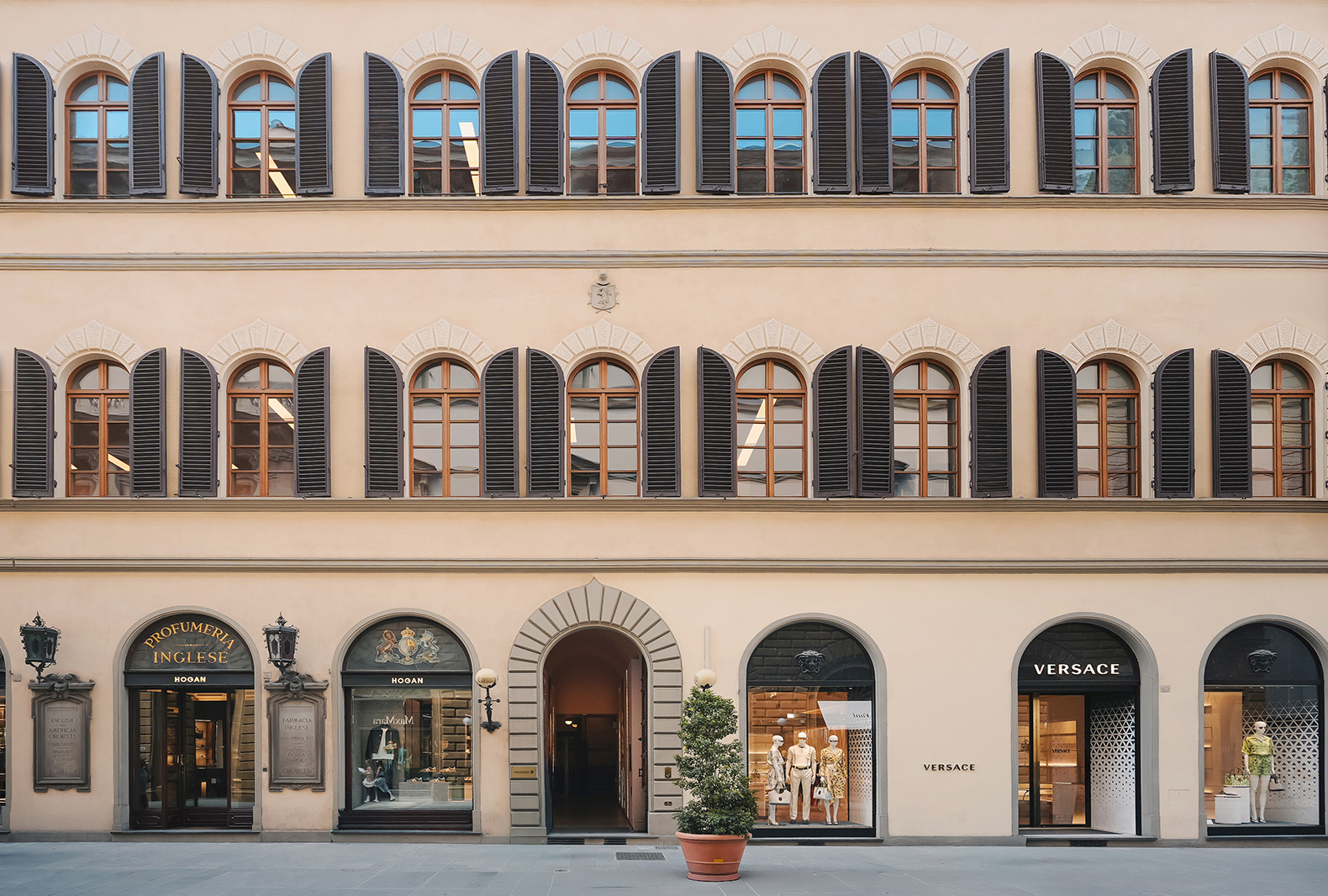
The exhibition takes place within the school itself, a choice that is direct but far from obvious: it tells the many souls of Istituto Marangoni Firenze from the place where they coexist.
As Francesca Giulia Tavanti, Director of Education, explains: “What better place to do so than the building in which we live every day, where we communicate and share our daily life and our creativity? It is here that students learn and complete their educational journey. The school is the place where all of this begins.”
To present the work within these walls means returning it to its place of origin, and treating the school as the most natural setting in which to tell its story.
At the same time, the building can be read and lived in different ways, offering a new narrative and an alternative experience of the works on display. The exhibition therefore sets out to transform the school into a space that, through its physical configuration and a collectively developed curatorial path, brings out the character of each area and each project, along with the specific experience each one requires. Light becomes an integral part of this experience, shaping the atmosphere of each floor and guiding visitors through the different spaces. Carefully calibrated to the character of each environment, the lighting creates distinct moods and perceptions, contributing to a journey in which every level reveals its own identity.
Yet the building will not be experienced as usual. The visit follows an alternative route: the main entrance moves from Via de’ Tornabuoni to Via delle Belle Donne, where the library, the school’s only street-facing window, opens onto the city.
From there begins the exhibition path, which, for usual inhabitants and visitors, will turn familiar spaces into unexpected ones.
EXHIBITION PATH
BOOK CLUB: GROUND FLOOR
Fashion Communication & Image Department
Library and Cafeteria
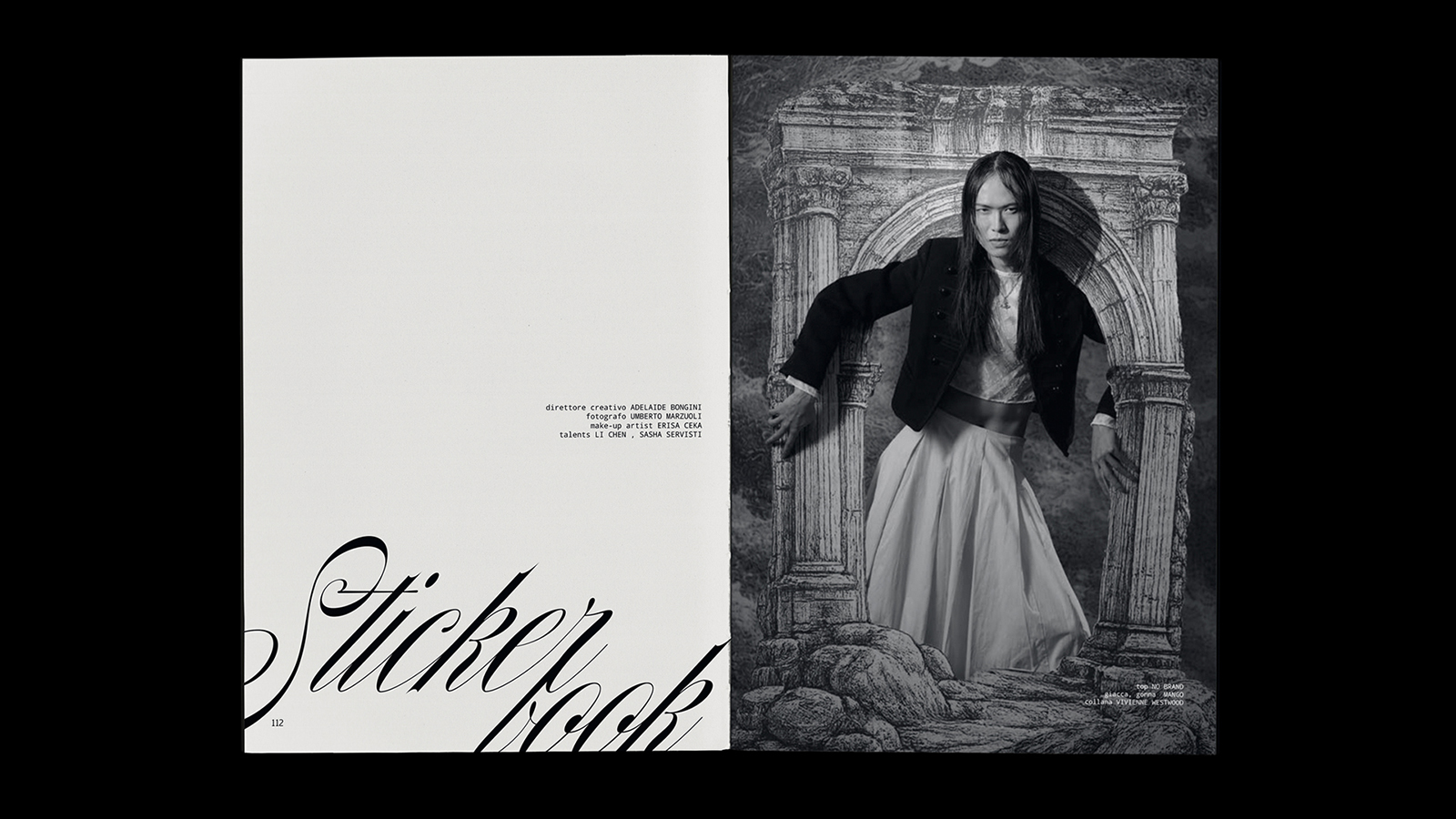
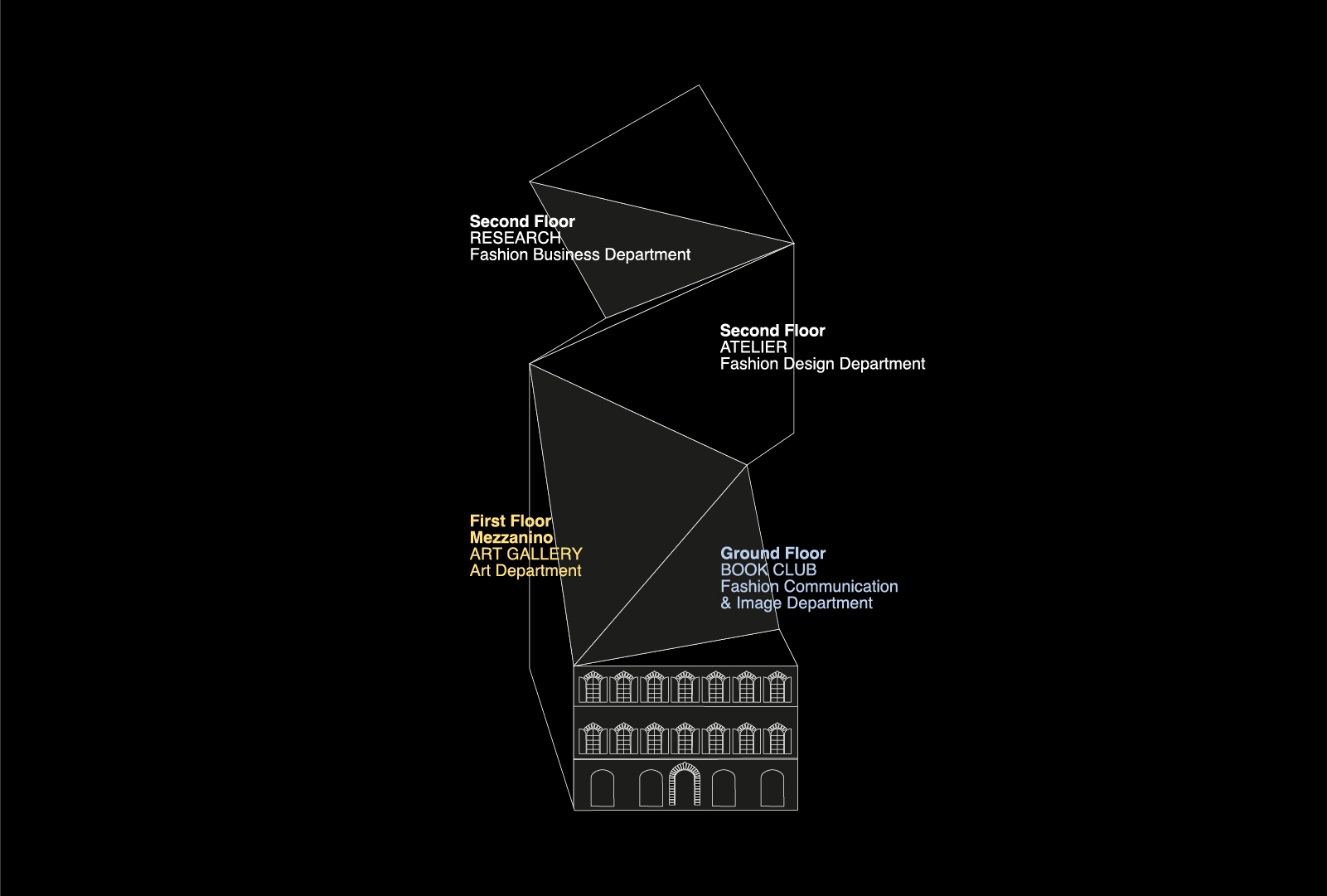
The visit begins here. The ground floor, home to the school’s library and cafeteria, has been transformed into the Book Club: the first space visitors encounter when entering from Via delle Belle Donne, and one that opens directly onto the street. Conceived as a place between a bookshop and a club, it brings together the work of students from the Fashion Communication & Image course in an enveloping and engaging environment where images are not simply displayed, but invited to perform.
The space presents a selection of magazines produced through the students’ editorial research and creative work over the past year, alongside three enlarged posters featuring selected fashion shoots. Both the printed works and the videos explore Il sensibile, the theme of last year’s Summer Brief and the starting point for MĪRĀBĬLIS.
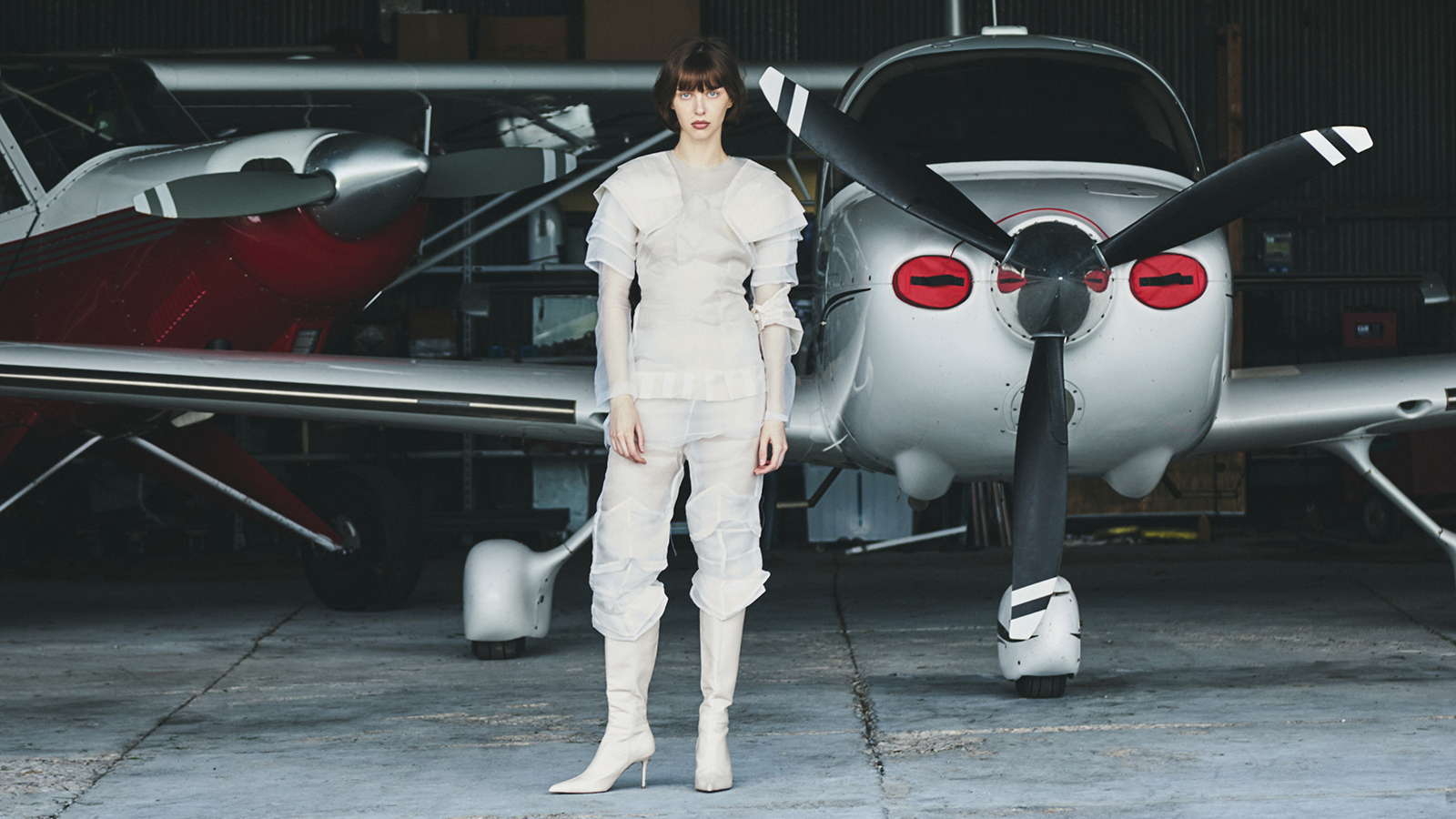
Through individual and group projects, students offer a range of personal interpretations, experimenting with different visual languages and techniques: from tactile and material-based approaches to fashion films entirely developed using AI, including sound design.
More than an exhibition of finished outcomes, the Book Club is an invitation to experience the students’ creative vision, where fashion imagery becomes a language of its own, engaging the viewer beyond the boundaries of conventional display.
POSTERS: Giada Pacini, Clara Ekroth, Pamela Estefania Robalino Monsalve, Ericka Miranda Garza Corpus and Maria Emilia Alvarado Balcazar.
VIDEOS: Clara Ekroth and Mia Steinhart x FARMA; Asia Banchelli, Allegra Cortopassi, Chiara Maria Pacini, Aditya Kamotra, Tanishka Awla, Clara Ekroth, Mia Steinhart.
MAGAZINES: Stefania Gardini, Martina Giorgieri, Viola Angela Pirrone, Matilda Scollo Abeti, Sara Senesi, Adelaide Bongini, Colette Le Manach, Maria Vittoria Mischiatti, Estella Pasqualis, Agnese Augusta Patriarca Bertoli, Bianca Signorini, Amanda Sofia Esmeralda Levinsson and Hanlu Chen.
ART GALLERY: MEZZANINE, FIRST FLOOR
Art Department
On the first floor, the school’s classrooms and corridors become a gallery developed within multiple rooms and environments. Each work by the third-year Multimedia Arts students has its own space, with its own perimeter and code, so that the physical and temporal experience of the visitor follows the concept of the work itself. Visitors are invited to immerse themselves in the diversity of sensory experiences that inhabit the school’s premises.
Bo Bernard, Poupée, 2026
Room 901
Single-channel video, sound, 1’44’’
Poupée is about memory, attachment and what happens to childhood objects as we grow older. Its protagonist is the artist’s own stuffed animal, left on a shelf for years, present yet absorbed into the background of everyday life. Filmed quietly, often still, she seems to watch rather than be watched, and the camera moves as simply and instinctively as a child’s, between comfort and unease. Beside her appears a river in Rufina, with sunlight filtering through the trees in warm, unstable flashes that pull the viewer back into childhood memories. The sound, recorded on location, is left unaltered. The only interventions are moments of black screen and French subtitles, written from Poupée’s perspective in the language the artist spoke to her as a child. Keeping her is a form of responsibility to a younger self: growing up does not mean leaving childhood behind, but learning to live with its quiet presence.
Bo Bernard, Light, 2026
Room 901
6 engraved aluminium slates, each 21 x 29.7 cm
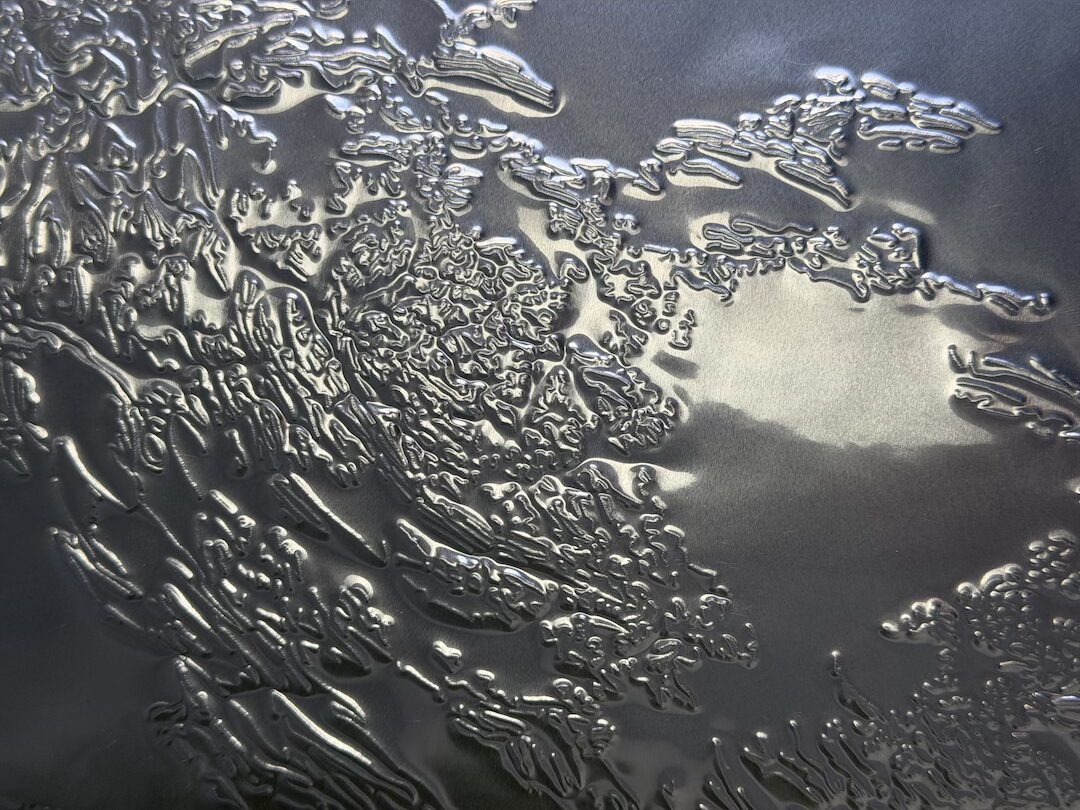
Light is a series of engraved aluminium pages that explores light as fragment, reflection and spiritual force. It began with a lived experience: a sundog, the rare halo of refracted light around the sun, glimpsed from a motorcycle one summer, a moment at once visual, emotional and bodily. From photographs of reflections, shadows and sunlight, the artist traced digital drawings, then transferred them onto thin aluminium sheets and engraved them by hand. Each sheet is recessed on one side and protruding on the other, so that light becomes texture, reflection and form, an attempt to hold what cannot be held still. Mounted in transparent acrylic frames that show both sides, the pages invite visitors to move around them, and even to handle and reposition them, as reflections change with the angle of the light.
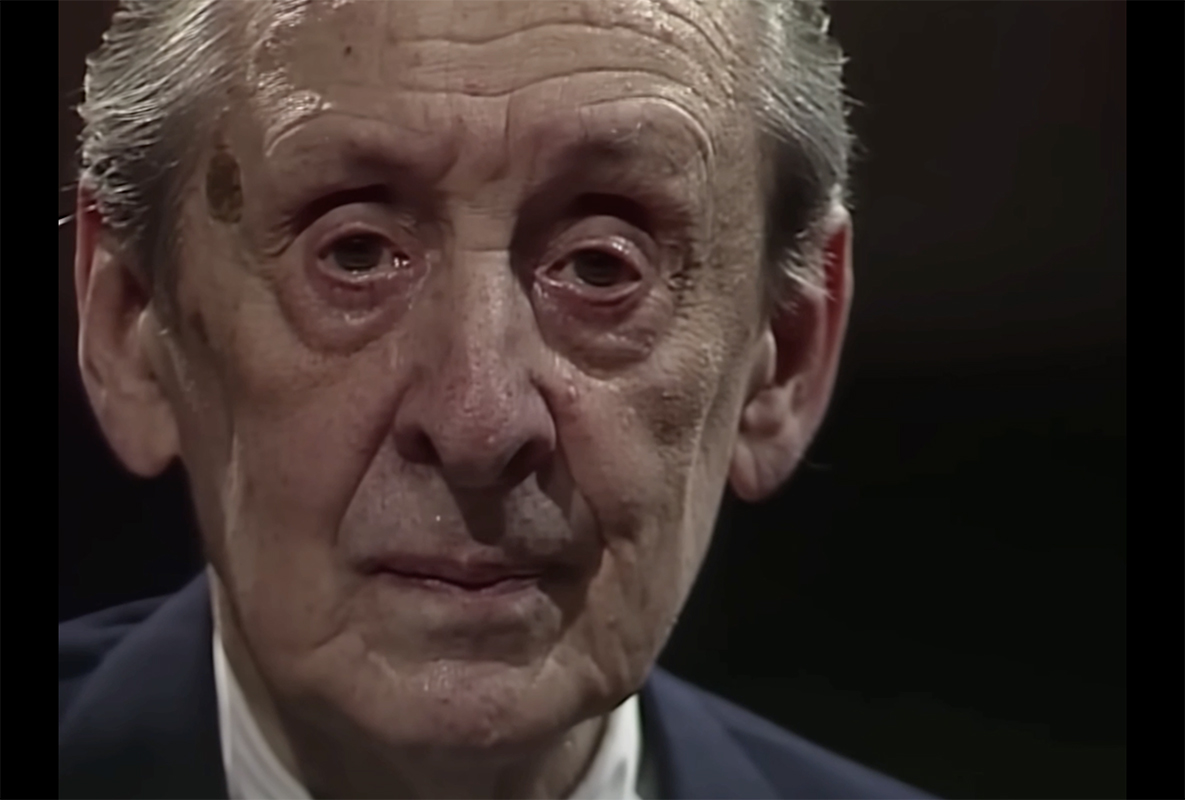
Armando Aureliano Sauzullo, Bambino su Sedia with Broadcast I, 2026
Room 902
Video installation: video, colour, sound, 13′; clay, wood, hemp fiber and metal, 50 x 50 x 120 cm; red ambient light
Bambino su Sedia explores how spectatorship shapes the construction of the self. It originates in the artist’s memory of watching television as a child in an almost catatonic state, a meditative vacuum in which influence, aspiration and validation take shape and keep shifting. The sculpture was developed intuitively, through a process of building up, damaging, cutting back and rebuilding, and its cracks and collapses were deliberately preserved. The figure that emerges hovers between puppet, relic, memory and sentient being. Its body bears the marks of physical and emotional trauma, tender in some places and emaciated in others, as if suspended between nourishment and starvation.
Placed in front of it, Broadcast I presents montaged scenes from Vladimir Horowitz’s 1987 solo concert in Vienna. The pianist repeatedly walks on stage, sits at the instrument and receives applause without ever playing a note. Recognition stays constant while the promise of worth is endlessly deferred, and the gesture becomes increasingly hollow and impersonal. Together, the two works reflect on influence, performance and the internalisation of expectation, and on how identity is shaped by what is projected onto us before we are able to define ourselves.
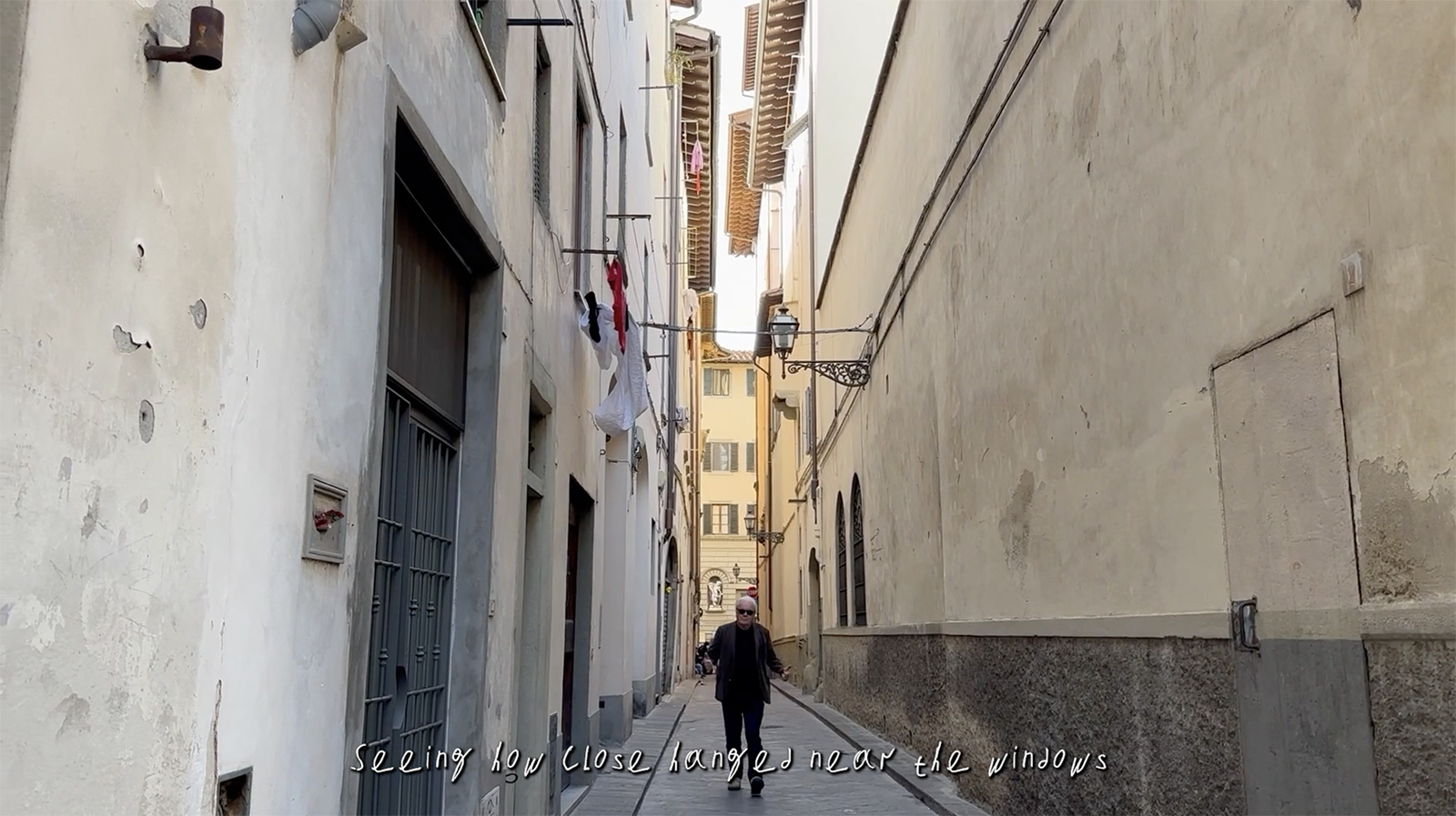
Mikhael Grinblat, Florence-Gesture Collective Respiro, 2026
Room 902
Single-channel video 4’20’’ HD, color, two sound channels
Florence-Gesture Collective Respiro is made of videos gathered by the artist over three years of living in Florence as a foreigner.
Rather than the monuments, it looks at what a city is made of day to day: the bodies that cross it, the gestures that leave no trace, the collective breath of the people who belong to a place. Everyday life is observed as rhythm, not event, through fieldwork and a return to the same places over time, across the cycle of day and night.
The two sound channels split the experience: the speakers carry the ambient sound of the environment, while the headphones add music over the background, so that visitors can choose between the city heard from the outside and the one inhabited from within.
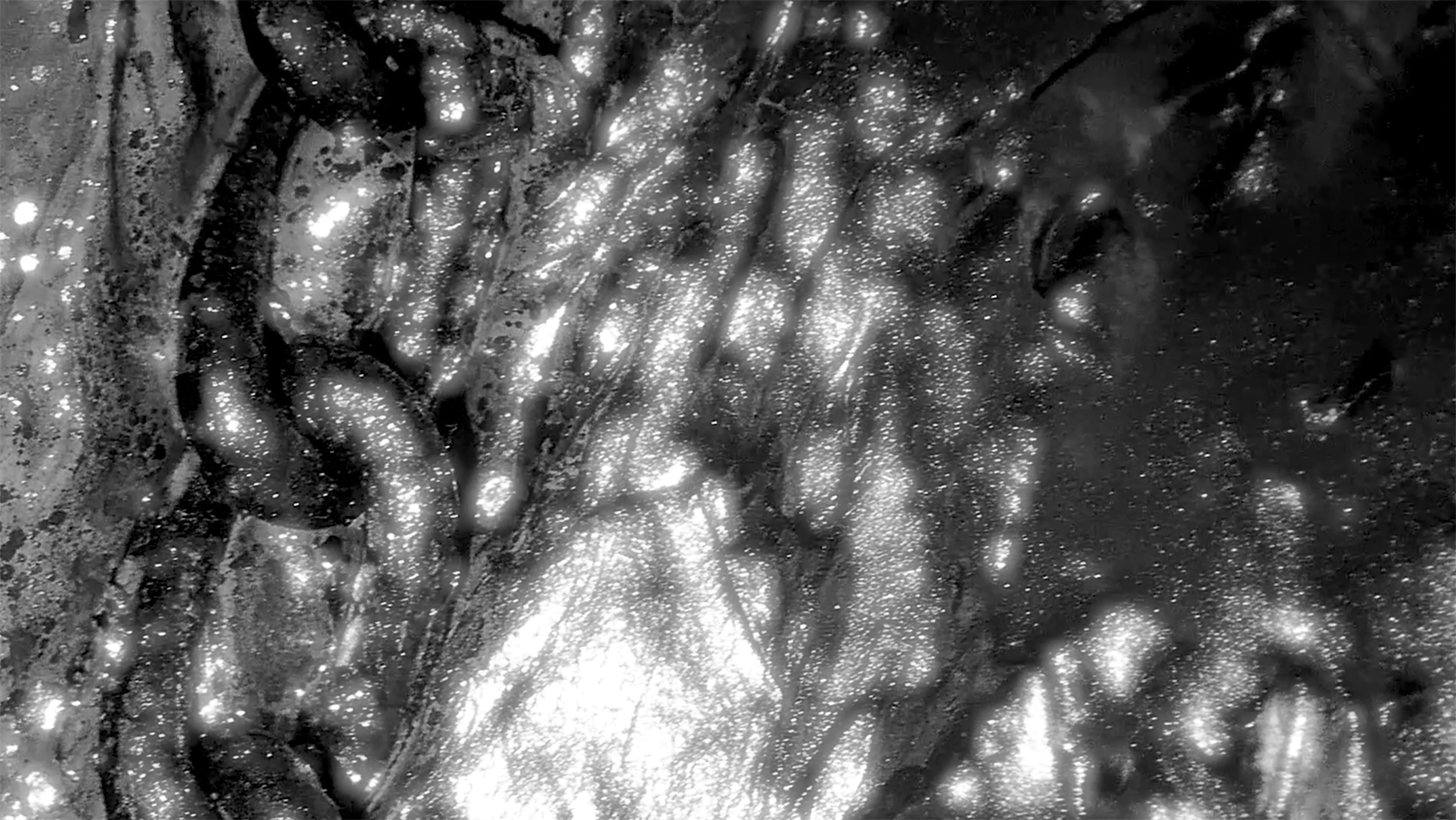
Kristine Urban, The Saints, 2026
Room 104
Single-channel video, colour, sound, 5’
The Saints is a meditation on form and light, an abstract moving image inspired by the experimental cinema of Stan Brakhage and by what he called preverbal forms of perception. The camera is held like a pencil with a loose grip. A macro lens drifts, rotates and searches across the surface of a painting, turning the canvas into a textural terrain, while the footage oscillates between infrared and the grain of camcorder images. The sound, an original composition of layered synthesizers, texture machines and frequency effects, builds an immersive sonic environment. Its dissonance is meant to produce tension and, finally, a physical reaction in the viewer.
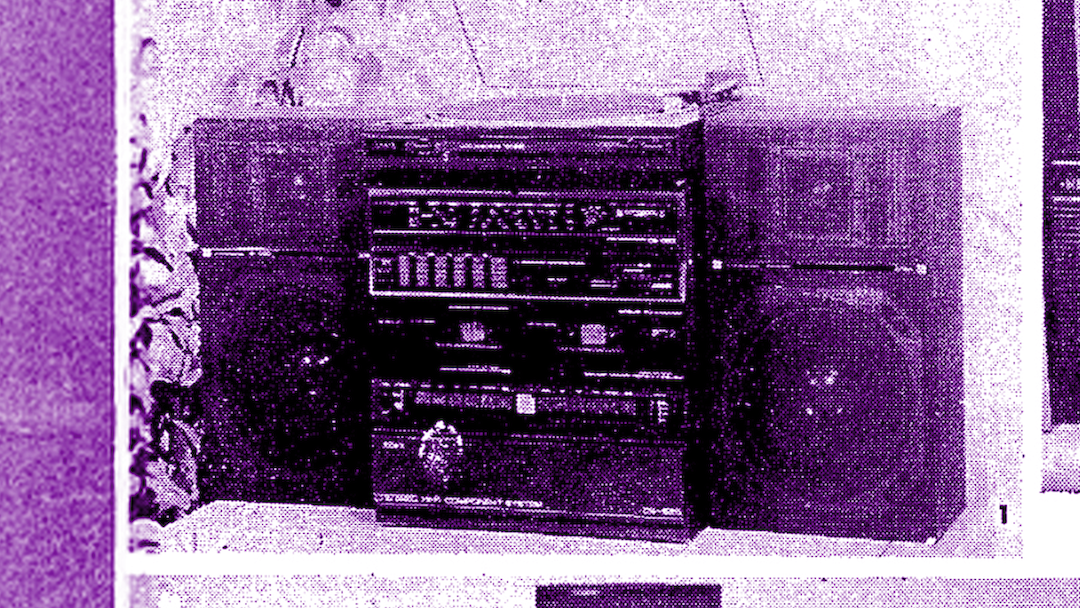
Rosy Ramírez, Sonider@s: Y los sonidos de la música, 2026
Room 105: Photo Studio
Single-channel video, colour, stereo sound, 13’; archive footage and images, research materials
Sonider@s: Y los sonidos de la música explores how music is mediated in the contemporary ecosystem, in terms of corporeality and community. Its subject is the Sonidero, a Mexico City movement in which the event and the performer coincide: music becomes an entity shared by everyone present, rather than the curated, individual experience of a DJ. Sonideros ask people to dance with one another, burning the cold boundary that exists when music asks the body to move alone. Built from archive material drawn from UNAM’s digital collections, Discogs and interviews, the video brings still images to life through one of the most elemental animation techniques, moving things from side to side. The rhythm is playful and deliberately artificial, underlining the handmade quality of the work, while cumbias and tropical sounds carry the viewer through different times and contexts.
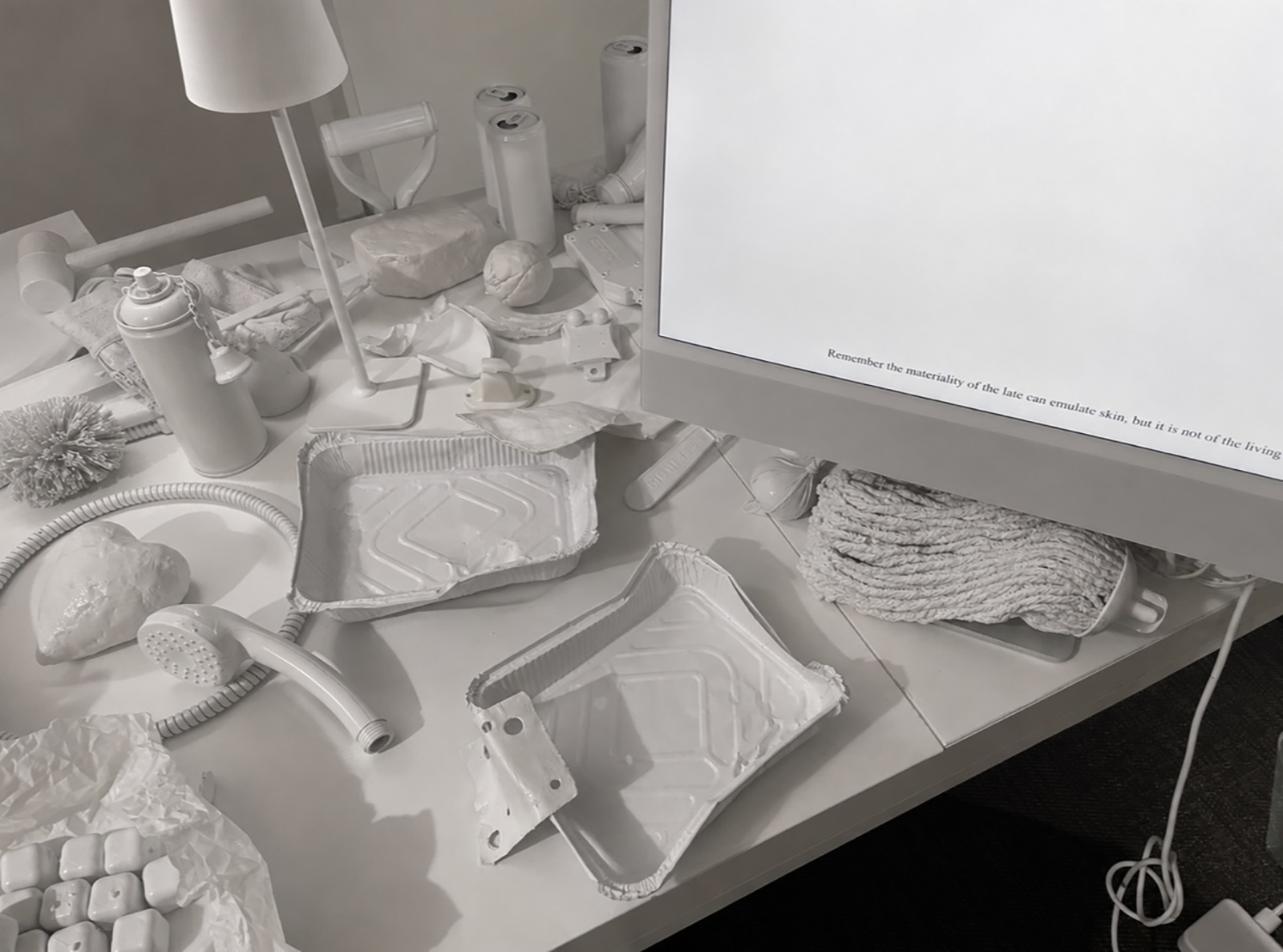
Anja Stroka, Moby Dick, 2026
Teacher’s Room
Multimedia installation: sculptures and found objects covered in a white sheen resting on a table; three monitors, 1.5 x 2.5 m
The installation Moby Dick emerges from a body of writing centred around domestic spaces, inhabited within memory and dream, and the intermediate levels of the conscious, approached as psychological and almost sentient environments.
Fragments of text appear across monitors of varying scales and timings, preventing the work from ever being encountered in the same way twice.
The objects occupying the space emerge directly from the writing itself, appearing blank, altered, and stripped of function, as though waiting to acquire agency and textural quality through the nuances of the text. Sprayed in a single industrial white, they swell into a pale, silent mass, and the title, borrowed from Melville, completes the image.
ATELIER: SECOND FLOOR
Fashion Design Department
Room 202-203
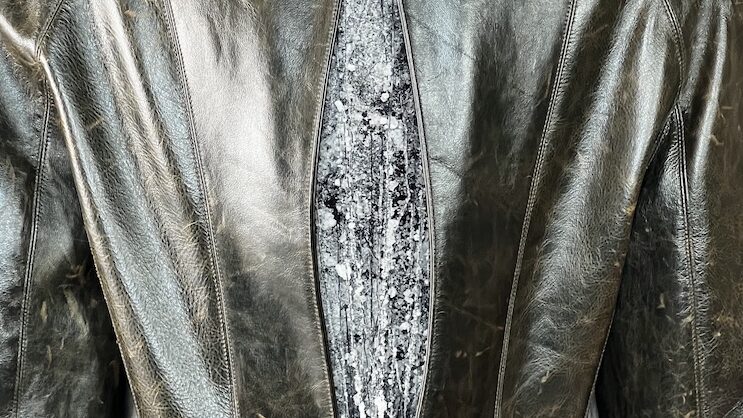
On the last floor visitors will visit a fashion Atelier, to encounter the projects of the Fashion Design department. The idea is to bring into the space the dimension of making and of the creative process. The focus is not only on the final output, the last moment of the creative journey, but on an alternative dimension that brings visitors closer to everything that happens along the way: how a project develops in a Fashion Design collection.
A selection of garments from MĪRĀBĬLIS, the Fashion Show, will be exhibited in the very rooms where they were created, bringing the collections back to the spaces in which they first took shape.
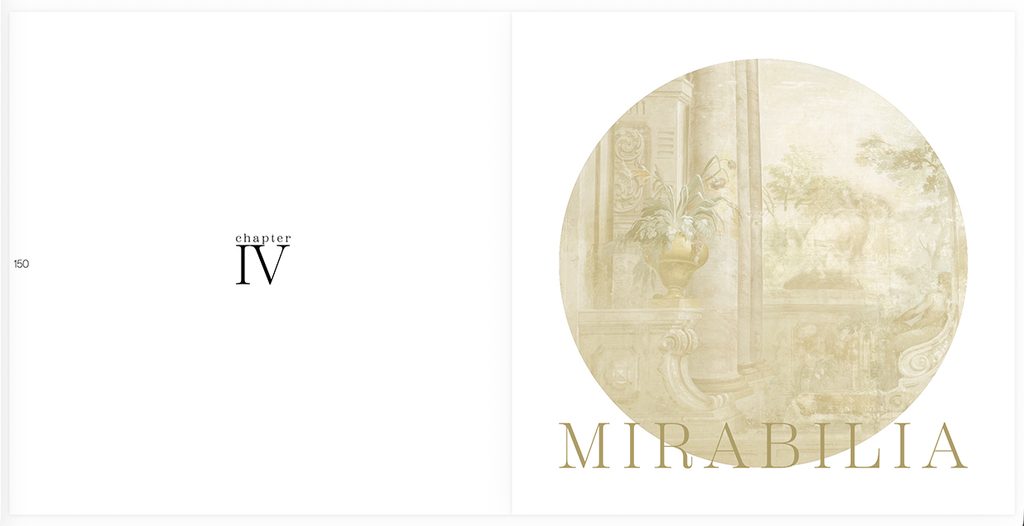
Next to them, MĪRĀBĬLIS is an editorial project that emerges from the collective experience of Istituto Marangoni Firenze’s 2026 fashion show, extending its exploration of “Il sensibile” through the language of publishing. The fashion show and the book are two expressions of the same project, sharing a philosophical foundation while developing different forms of expression. The former brings bodies, garments, materials and spaces into relation through a temporary experience; the latter gathers the processes, interpretations and traces of that experience, establishing new relationships through images and words. The book therefore seeks to make perceptible the process that made the event possible, preserving what took place while leaving it open to future interpretations.
Finally, a sound installation by tutor Emiliano Zelada brings the school’s creative life into the corridors of the second floor. The audio experience gives voice to the sounds of the Atelier at work. Through this interplay of sounds and voices, the installation transforms the corridors into an immersive listening experience, offering an insight into the everyday life, creative processes and shared experiences that shape the school’s identity.
Fashion Design & Accessories 3: Monica Beduzzi, Matilde Bonechi, Matilde Gori
MĪRĀBĬLIS, editorial project by Rebecca Sclavo & Martina Lucchesi
RESEARCH: SECOND FLOOR
Fashion Business Department
Room 201
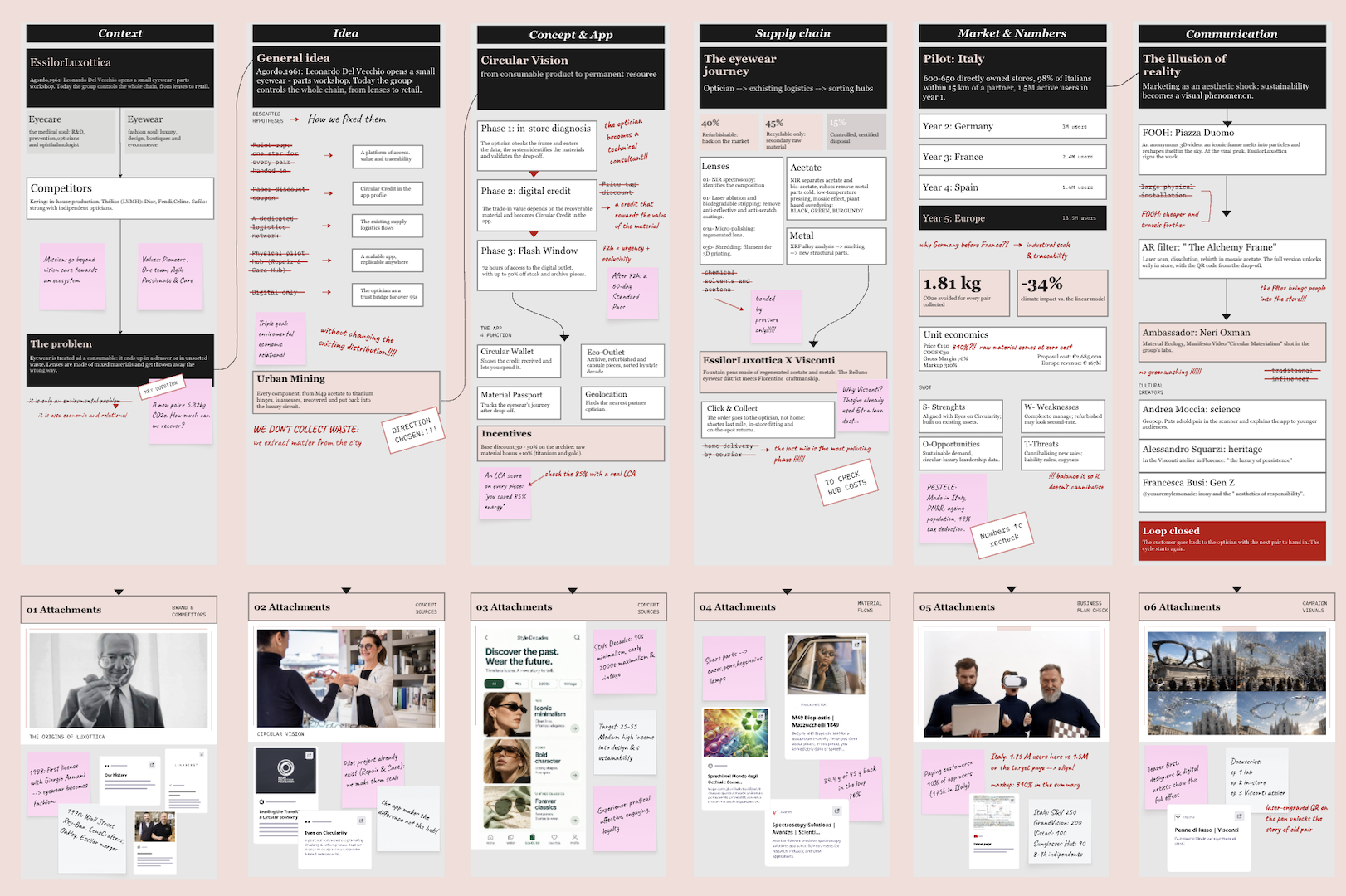
The Fashion Business department is proud to present the work of the newly founded, student-led Istituto Marangoni Firenze Research Group. The projects on display focus on the development of sustainable apps, starting from existing brands or current consumer needs, and exploring the different aspects of sustainability: environmental, economic and social. Each project has its own objective, target audience and market, carefully studied and researched.
The exhibition presents a work in progress, showing how research develops through the study of the entire supply chain, from resources and production to distribution and the final consumer. Research is an ongoing process: students continuously collect data and study the local territory, consumers and changing consumption habits to develop new products and, above all, services that make brands more sustainable and optimize resources.
From the reuse of textile waste from Prato and cashmere scraps to new sustainable brands and alternative clothing rental models, the projects reflect the work of a group of young researchers with a strong interest in the local territory, Made in Italy and sustainability.
Fashion Management & Brand Strategies 3 students: Rusnė Brazauskaitė, Olimpia Ginanneschi, Alberto Frusteri, Aurora Leggiero, Sofia Mancini, Emanuela Matteocci, Lucrezia Milani, Caterina Minuti, Sanjana Mundhwa, Rebecca Mongelli, Simone Rescigno, Kalia Nalbandian, Rufael De Natale, Martina Trentin, Mattia Virdò
Fashion Product 3 students: Klara Elvira Maria Hjalt
ALUMNI: SECOND FLOOR
Room 206
Alongside the projects of the Fashion Design and Fashion Business departments, for the 10th Anniversary, Istituto Marangoni Firenze is proud to present the voices of its Alumni of the School, collected with a sound installation and videos, to present the image of this institution through the memory of the people who inhabited it over the last decade. What is your memory of this place? What did you bring with you into your professional world? Where are you now? These and other questions aim to present the perception of the School from the point of view of its active participants, the students that lived many experiences in this building, now back in audio format to fill the corridors again with their voices.
CREDITS
MĪRĀBĬLIS · The Exhibition
Istituto Marangoni Firenze
School Director: Lorenzo Tellini
Director of Education: Francesca Giulia Tavanti
Fashion Communication & Image Department
Programme leader: Odile Orsi
Tutors: Jacopo Battisti, Martina Lucchesi, Francesco Migliorini
Students: Maria Emilia Alvarado Balcazar, Tanishka Awla, Asia Banchelli, Adelaide Bongini, Hanlu Chen, Allegra Cortopassi, Clara Ekroth, Stefania Gardini, Ericka Miranda Garza Corpus, Martina Giorgieri, Aditya Kamotra, Colette Le Manach, Amanda Sofia Esmeralda Levinsson, Maria Vittoria Mischiatti, Chiara Maria Pacini, Giada Pacini, Estella Pasqualis, Agnese Augusta Patriarca Bertoli, Viola Angela Pirrone, Pamela Estefania Robalino Monsalve, Matilda Scollo Abeti, Sara Senesi, Bianca Signorini, Mia Steinhart.
Art Department
Programme leader: Davide Daninos
Tutors: Carolina Gestri, Roberto Fassone, Giacomo Raffaelli, Gabriele Tosi, Enrico Visani, Emiliano Zelada, Diego Zuelli
Students: Bo Bernard, Mikhael Grinblat, Rosy Ramírez, Armando Aureliano Sauzullo, Anja Stroka, Kristine Urban
Fashion Design
Programme leader: Miguel García Abad
Tutors: Nora Bagdasaroglu, Jacopo Battisti, Brenda Cecchi, Bianca Hodselle, Valeria Lasalvia, Marco Puccini, Stefano Peloso
Students: Monica Beduzzi, Matilde Bonechi, Matilde Gori, Rebecca Sclavo
Fashion Business Department
Programme leader: Valentina Grigoletto
Tutor: Jacopo Battisti
Students: Rusnė Brazauskaitė, Olimpia Ginanneschi, Alberto Frusteri, Klara Elvira Maria Hjalt, Aurora Leggiero, Sofia Mancini, Emanuela Matteocci, Lucrezia Milani, Caterina Minuti, Sanjana Mundhwa, Rebecca Mongelli, Simone Rescigno, Kalia Nalbandian, Rufael De Natale, Martina Trentin, Mattia Virdò
Production
Carolina Gestri
Communication PMO
Stefania Facciorusso – Communication Manager
Communication, PR & Event Organization
Lucrezia Mangani – Digital, Social Media & Events Strategist
Writing
Rebecca Ceccatelli
Graphic Design
Francesco Migliorini with Jacopo Battisti
Sound Design
Emiliano Zelada
Video Editing
Giacomo Raffaelli
Technical Equipment
Avuelle
Catering
Amblé


