By Gherardo Ulivi. Cover image: photo by Elena Rocco. Production by Lorenzo Parenti
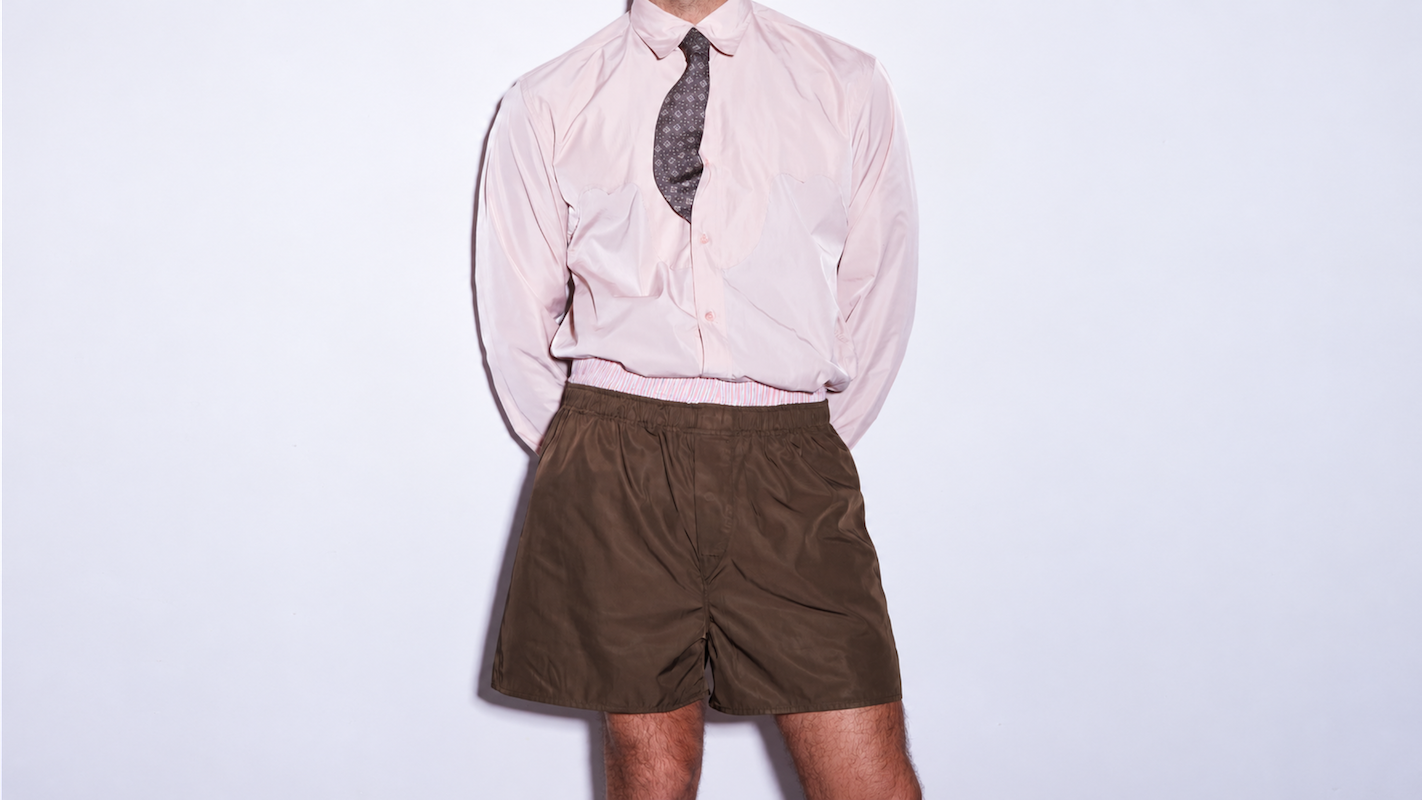
Can a shirt be designed like a building? For Giacomo Bacci, the answer begins with fabric, proportions and the way a garment moves with the body. The Florence-based designer has been rethinking the classic shirt since launching his label in 2014, drawing on his architectural background and the tailoring skills he first learned from his grandmother. Today, his Florence studio, opened in 2020, brings together bespoke clothing, ready-to-wear collections and collaborations with the city’s creative community. From the Patchwork SS26 capsule to the Summer Essentials collection, Bacci continues to explore new possibilities beyond traditional shirtmaking. We spoke to him about his creative process, why personalisation matters and how a wardrobe staple can continue to evolve.
The Shirt as a Starting Point
You founded your label in 2014 with the idea of reinterpreting the shirt. Why did you choose this particular garment, and what continues to fascinate you about it?
I’ve always been fascinated by the shirt’s apparent simplicity. It’s a garment we’re all familiar with, with a very specific structure and function, yet it offers endless possibilities for interpretation. I’m interested in working with something familiar, changing its proportions, shifting a detail, experimenting with fabrics and seeing how even a small adjustment can completely transform the way a garment is perceived. Ultimately, that’s what continues to fascinate me: the possibility of starting with the same object every time and arriving at completely different results.
Learning the Craft
Your grandmother taught you how to make your first garments. What did that experience teach you, and how much of that approach is still part of your work today?
I think the most important thing was learning to understand clothes by actually making them. Before I even started thinking about design, I began to understand how a garment takes shape, how fabric behaves and how much work goes into something we often take for granted. That experience gave me a very practical, hands-on approach, which is still central to the way I work today. Having a workshop within the studio allows me to maintain that daily connection with the making process. I like the fact that ideas don’t remain drawings on paper but can be tested, adjusted and developed directly through hands-on work.
Where Architecture Meets Tailoring
You studied architecture and pay particular attention to materials. How has that background influenced the way you design a shirt, from its proportions to the choice of fabric?
I think architecture has mainly influenced the way I observe and construct things. When I design a shirt, I’m interested in the relationship between shape, proportions, materials and the body. Much like in architecture, every element contributes to the overall balance, even those that might seem secondary. Fabric, in particular, is often my starting point. Different materials can completely transform the same design, changing its volume, movement and the way it falls on the body. I like to think of a shirt as a small piece of wearable architecture, where construction and material are constantly in dialogue.
The Meaning of Bespoke
Your work includes both bespoke and ready-to-wear pieces. What distinguishes these two approaches, and how important is it to know the person who will wear the garment?
They’re two different approaches, but for me both begin with understanding how someone lives in and interprets what they wear. With bespoke clothing, getting to know the person is essential. Many of my clients have been coming to the studio for a long time, so I’ve seen them wearing different styles and have become familiar with their proportions, tastes and, above all, the cuts and fits that suit them and make them feel comfortable. This allows me to guide them through their choices, even when it means experimenting with something new. People commissioning a garment can’t always fully imagine the final result, especially when we’re working with unusual fabrics, volumes or details. But my experience and knowledge of materials and construction allow me to anticipate how a particular fabric will behave in a certain design and how it will work on the person wearing it. That’s the part I enjoy most: being able to suggest ideas, encourage people and sometimes push them a little beyond their usual choices, because I can already imagine a result that will feel right for their style and personality. For me, bespoke clothing is also about that relationship of trust, where the client puts their confidence in my vision and together we arrive at something they might never have considered choosing in the first place.
The Freedom to Experiment
With your Patchwork SS26 capsule collection, you explored new colour combinations and opportunities for personalisation. How much room do you leave for experimentation and for the creativity of the people who wear your designs?
Experimentation is a fundamental part of my work, especially because it allows me to avoid seeing any design as something permanently finished. With patchwork, I wanted to explore the relationship between different fabrics, combine colours and patterns, and see how these combinations could give familiar shapes a new identity. I also like leaving room for interpretation by the people who choose our garments. I think clothing becomes truly interesting when it meets the personality of the person wearing it. In this sense, personalisation goes beyond choosing a fabric or a detail. It’s also a way of taking part in the creative process.
Florence as a Creative Space
You opened your studio in 2020, creating a space where artists, architects and designers can meet. How do these exchanges influence your work, and what role does Florence play in your creative research?
When I opened the studio, I wanted to create a place that would be more than just a shop, a space where design, production and interaction could coexist. Having the workshop and the public-facing space in the same environment allows people to experience the way we work, while also giving us the opportunity to engage with different people and perspectives. Encounters with artists, designers and other creatives often allow me to see things differently and imagine projects that go beyond clothing. They definitely refresh my perspective, bringing new influences into the creative process and pushing me to do things I might never have considered without meeting a particular artist or designer. Florence is naturally a city with a strong connection to traditional craftsmanship, but I think there’s already plenty of space dedicated to that heritage. What interests me is creating room for something different, something that can speak to more underground or niche creative communities.
A New Definition of Elegance
From your Daily Shirts to bespoke pieces, you design clothes for everyday life. Who are your clients today, including younger customers, and what are they looking for in a shirt made to last?
The people who come to us are very different in terms of age, profession and personal style. What often connects them is the desire to find something that isn’t completely standardised, along with a one-to-one relationship that’s sometimes missing from more traditional shops and even more so from major fast-fashion brands. I think there’s growing interest, even among younger people, in garments that have their own identity and can be worn in different ways without necessarily being tied to a particular occasion. For me, elegance has less and less to do with following a set of rules and more to do with how naturally someone feels comfortable in what they’re wearing.
Beyond the Shirt
With Summer Essentials, you’ve introduced shorts, tops and matching sets. Was this a natural evolution of your work, or do you see the brand’s wardrobe expanding even further?
It was a fairly natural evolution. The shirt remains the starting point of my research, but over time I’ve felt the desire to explore other garments while maintaining the same approach to construction, materials and proportions. Often, a new idea comes directly from working on a shirt and then develops in other directions. It might become a pair of trousers, shorts, a jacket or a coordinated outfit that completes a particular aesthetic or mood. Maintaining a consistent brand language across different types of garments is complex, but it’s necessary to keep a brand evolving, and it’s often a response to what our community is asking for.
What’s Next for the Shirt?
How do you imagine the future of the shirt, between traditional tailoring and contemporary experimentation? What needs to evolve, and what would you like to preserve?
I believe the future of the shirt lies in the possibility of bringing tradition and experimentation together, seeing them as part of the same spectrum rather than opposing directions. There are skills related to construction, materials and craftsmanship that I think are essential to preserve. They represent an important part of our artisanal culture and provide the foundation for further experimentation. As with any garment, shirtmaking is constantly seeing the return of certain styles, fabrics, colours and proportions. Some are rediscovered and reinterpreted, while others temporarily disappear before returning years later. I think part of a designer’s job is to observe these changes, understand what people are looking for and how tastes evolve, while staying true to their own identity. As long as we remain curious and continue to observe both what interests us and what’s happening around us, I believe the shirt still has a very long story to tell.


