by Riccardo Cecchini. Cover image: Ben Blennerhassett on unsplash.
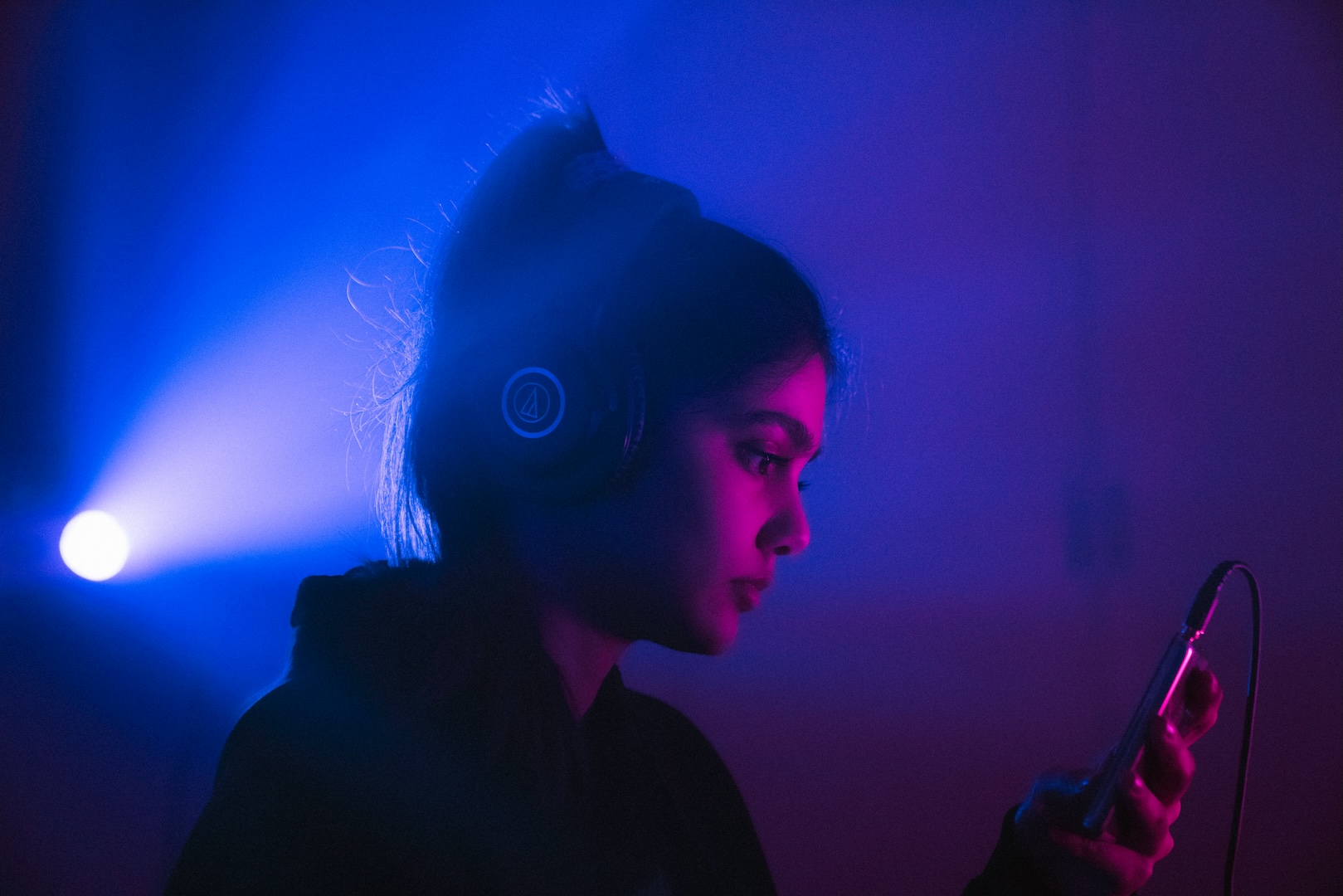
Music is almost always there. We put it on while studying, walking home or getting ready to go out, and streaming has made an almost unimaginable amount of it instantly available. IFPI’s latest global study of listening habits found that people spend an average of 20.7 hours a week with music, while Spotify says that more than 100,000 new songs are released every day. We have never had this much to hear, which creates a strange paradox: music occupies more of our lives while complete attention to it can feel increasingly unusual. The original idea behind this article starts from exactly that contradiction. We hear music constantly, yet how often do we stop everything else and really listen?
Too much music, too little time
More than 100,000 new tracks entering the world every day means staying “up to date” is physically impossible. For a young artist, the competition includes each day’s new releases alongside decades of recorded music sitting on the same platforms. Spotify itself describes breaking through that volume as an unprecedented challenge for emerging musicians. For listeners, abundance changes the experience too: there is always another recommendation waiting, another release we have saved for later and another track we can reach in a second. The temptation to move on quickly is built into the way we now discover music.The original text also points to the pressure this environment can place on younger musicians, who need to remain visible inside platforms constantly demanding something new. That pressure helps explain why singles have such a strong role in contemporary release strategies, even as albums continue to matter culturally. A new song can immediately enter playlists or social feeds, while a larger project asks listeners to give an artist something much harder to obtain today: time.
When did music become something we use?
Open a streaming app and music is often organised around what you are doing. We have playlists for working and playlists for concentrating; music accompanies commuting or time online. IFPI’s research shows just how deeply listening is woven into other activities, particularly for younger audiences.That habit is central to the idea of passive listening in the original article. A playlist can stay on for hours while our real attention belongs somewhere else. We may know the chorus of a track after hearing it repeatedly and still have barely noticed what happens around it. Music gradually becomes part of the environment, almost like the sound of the room we happen to be in. There is nothing unusual about letting music accompany another activity. Humans have done that for a very long time. What has changed is the possibility of making that accompaniment almost permanent. Silence has become optional, and the moments when music itself is the only activity have become easier to lose.
How Has TikTok Changed Music Discovery?
Short-form video has complicated the relationship even further. In IFPI’s 2023 research, music was central to 54% of the time people spent watching videos on short-form apps, while 82% of 16-to-24-year-olds engaged with music through short-form video every day. This does not mean contemporary songs are universally written for fifteen-second clips. It does mean that many listeners now encounter a fragment before they encounter the song itself. A hook can circulate through thousands of videos until it becomes familiar without anyone deliberately choosing to hear the full track. That changes discovery in an interesting way. A line of melody might already live in our head before we know the artist’s name, and recognition can arrive before attention. The original article identifies this tension clearly when it describes songs becoming entangled with the logic of Reels and algorithms. The deeper question is what happens to the rest of a composition once one small piece of it becomes the part designed to travel.
Is Our Attention Span Really Only 47 Seconds?
You may have seen the claim that our attention span has fallen to 47 seconds. The research behind that number is more precise. Professor Gloria Mark at the University of California, Irvine, has studied how long people remain focused on a single screen before switching elsewhere. Her team found an average of roughly two and a half minutes in 2004, around 75 seconds in 2012 and approximately 47 seconds in more recent studies. So 47 seconds is not a biological limit on our ability to concentrate. It tells us something important about digital behaviour: switching attention has become extremely frequent. Mark’s research also finds a relationship between faster attention switching and higher stress. Put a song inside that environment and the connection becomes obvious. The track may still be playing, while we answer a message or open another screen. Technically we are listening. Our attention has already left the room.
The album is still fighting for our attention
There is another side to this story, and it prevents the conversation from becoming a nostalgic argument about how people supposedly listened better in the past. Some of the biggest contemporary artists are actively asking audiences to slow down. When Billie Eilish released HIT ME HARD AND SOFT in 2024, the album arrived with a specific request: hear it from beginning to end and in the intended order. There was no lead single before release, and listening events encouraged fans to experience the record as one complete work. Spotify later highlighted the album as a significant example of the continuing cultural importance of full-length projects in the streaming era. Physical listening is growing too. According to IFPI’s Global Music Report 2026, global vinyl revenues increased by 13.7% in 2025, marking the format’s nineteenth consecutive year of growth. Buying a record does not automatically make someone a more attentive listener, of course. Its continued appeal does suggest that convenience has not erased the desire for a physical relationship with music or for an album to feel like something larger than a sequence of interchangeable tracks.
Deep listening might be the real luxury
Perhaps that is why listening to an album with no other activity happening alongside it now feels almost luxurious. You have to decide to give up forty minutes and allow somebody else to control the pace. There is no need to search for what comes next because the artist has already made that decision. This is where the strongest idea in the original text deserves to return. It asks us to take an hour, sit down and hear the work that musicians have actually put inside a record. Listening closely can reveal a bass line you had never noticed or the way two tracks have been designed to speak to each other. A song that had spent months functioning as background suddenly becomes unfamiliar again.
The point is not to stop listening to music while we study or travel. Those uses are part of the pleasure of having music constantly available. The interesting challenge is remembering that another mode still exists: one where we choose the record first and let everything else wait.
Try one album with nothing else open
The experiment is ridiculously simple. Choose an album you already love, or one you have kept meaning to hear properly. Put the phone somewhere you cannot reach it automatically and let the record play in sequence. Give it the same attention you would give a film. You may discover that forty uninterrupted minutes now feel much longer than expected. That sensation is probably part of the answer. In a culture built around permanent availability and instant switching, listening deeply requires us to do something increasingly unusual: stay.


