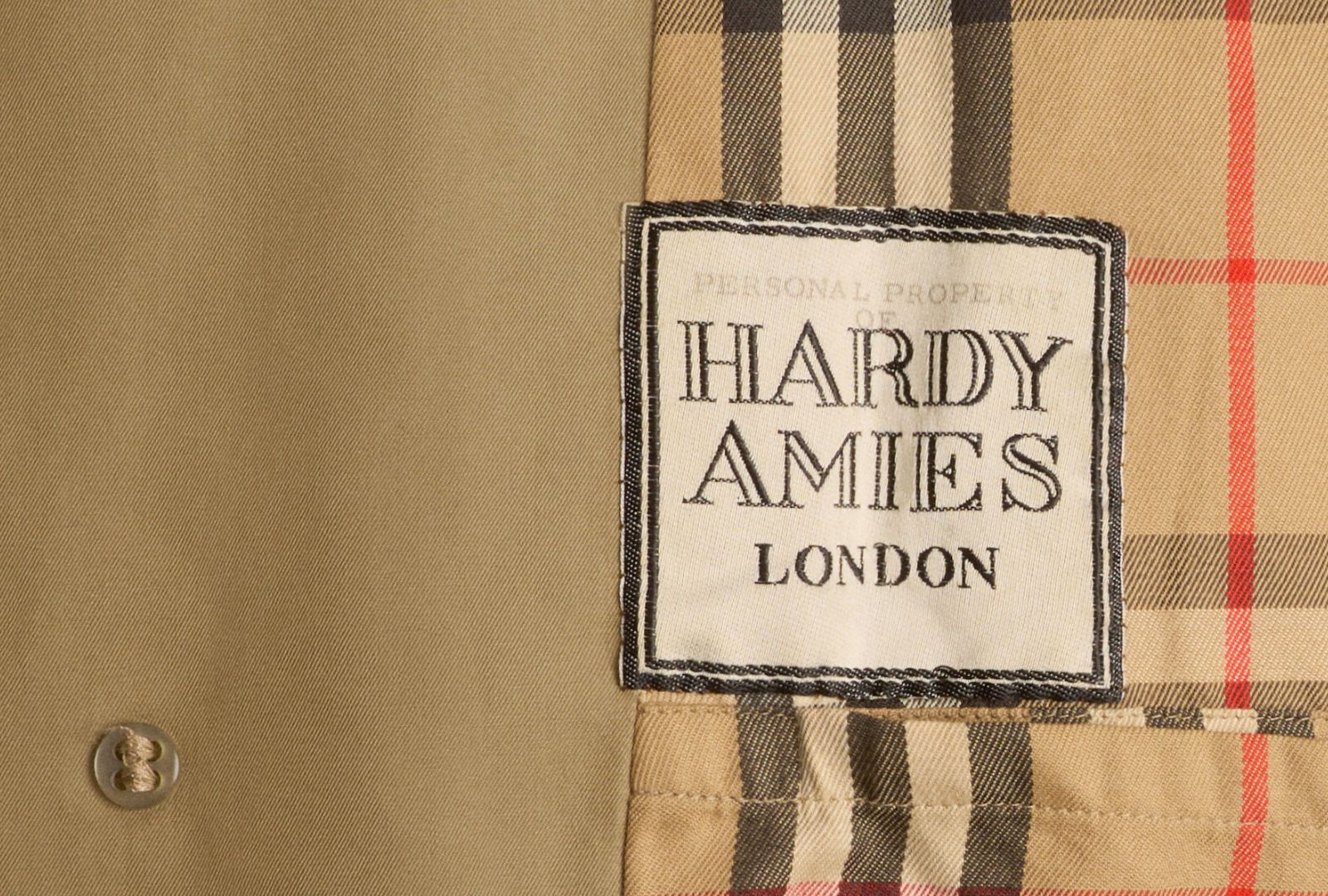
By Azzurra Rinaldi. Cover image detail of the personalised label in British fashion designer Hardy Amies’s Burberry car coat, 1979, V&A courtesy
Even if you’ve never worn a Burberry trench coat, you’ve probably seen one, in films, on catwalks, in street style photography, or in celebrities’ wardrobes. Some garments transcend fashion and become cultural icons. The trench coat is one of them.
The exhibition The Burberry Trench: Crafting an Icon, hosted by the Victoria and Albert Museum in London from 21 September 2026 to 3 January 2027, explores how a garment originally designed to withstand harsh weather became one of fashion’s most recognisable symbols.
The Burberry Trench Started With a Practical Purpose
Before becoming an icon, the trench coat was a practical solution.

Designed to protect the wearer from rain and challenging weather conditions, it emerged from military and functional needs. Waterproofing, durability, and freedom of movement were its priorities. Elements such as the belt, epaulettes, storm flaps, and structured silhouette were not aesthetic choices, but practical features intended to serve a purpose. In short, necessity came before fashion.
How the Trench Coat Turned Function Into Style
Over time, however, the trench coat moved beyond its original context.
What had been designed for protection became something to be displayed. Functional details gradually evolved into recognisable design elements, and the garment began to communicate not only its purpose but also something about the person wearing it.

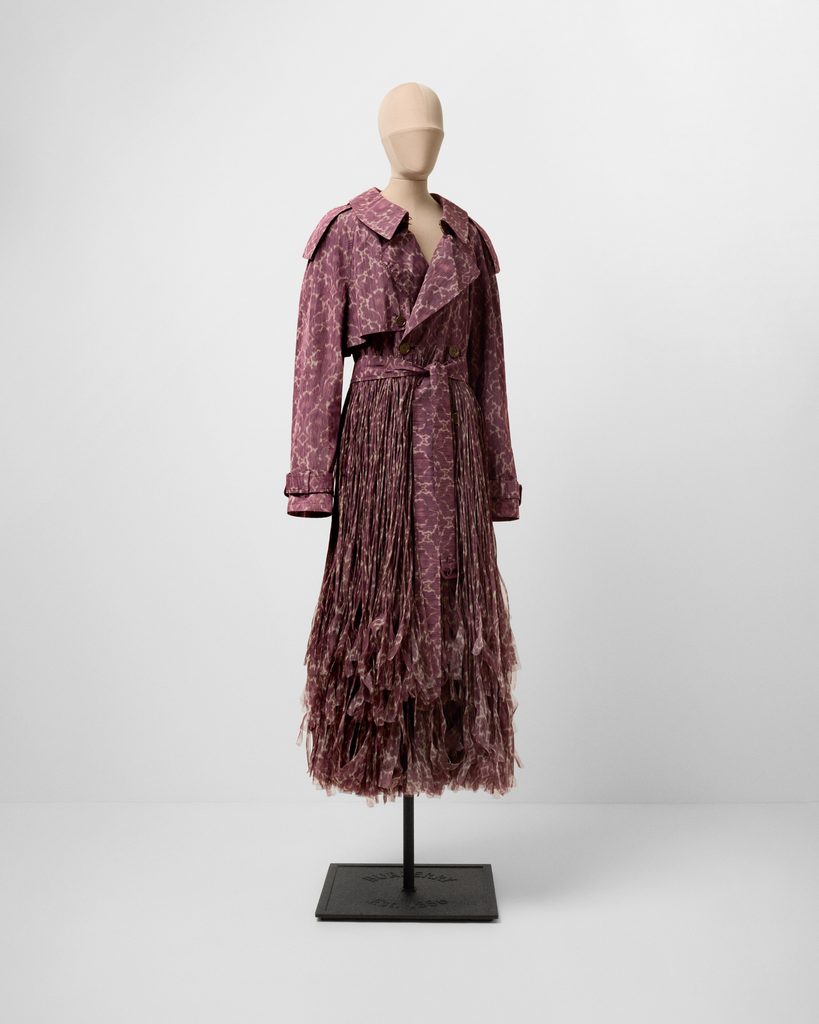
The colour palette expanded as well. Classic khaki gave way to new interpretations in red, pink, gold, and purple. The trench coat remained instantly recognisable while continuously reinventing itself.
Why the Trench Became a Symbol of British Style
Although Burberry has produced many iconic designs, the trench coat remains at the heart of the brand’s identity.
Throughout the twentieth century, it became associated with Britishness, craftsmanship, and timeless design. The famous Burberry Check contributed to its recognisability, but often the silhouette alone is enough to identify it. It is no longer simply a raincoat. It is an icon.
Inside The Burberry Trench: Crafting an Icon at the V&A
The V&A exhibition explores this remarkable transformation through a selection of historical and contemporary pieces from the house’s archives.
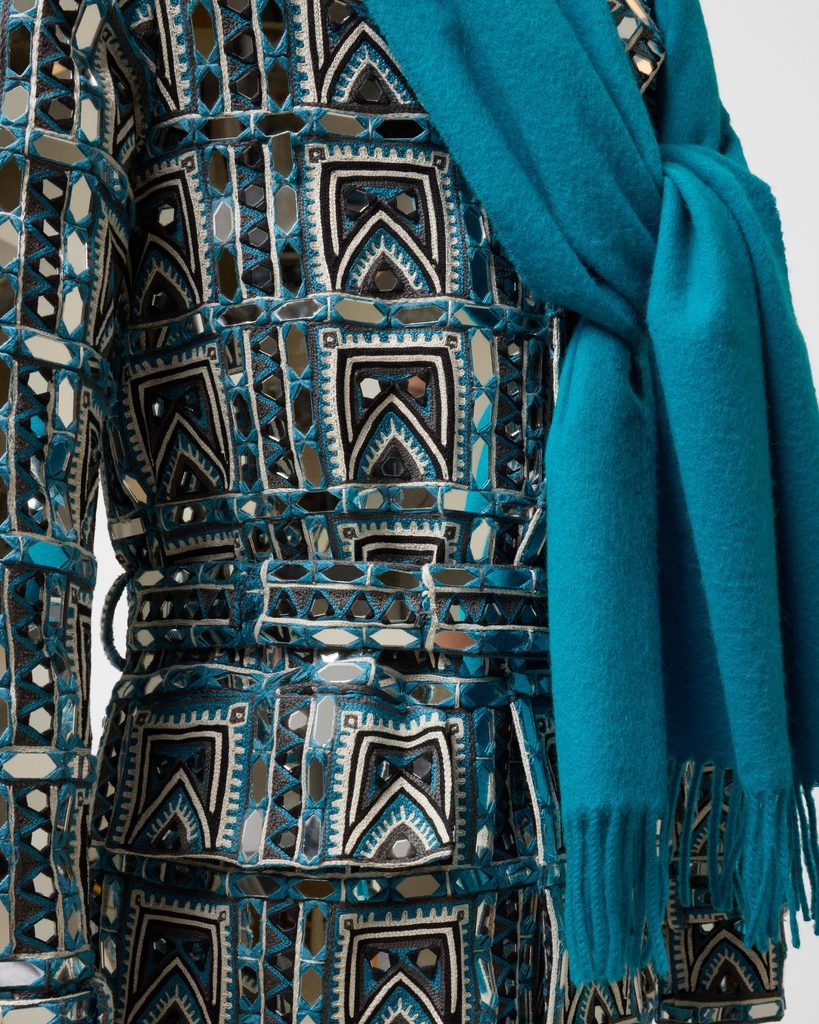
Among the works on display are the car coat owned by Hardy Amies in 1979, a metallic pink trench coat from 2013, a mirror-embroidered design, and a dramatic purple fringed trench coat from 2025. Looking at these garments raises an intriguing question: how many times can an object change without ceasing to be recognisable?
What Makes the Burberry Trench an Icon?
For more than a century, the trench coat has evolved through changes in materials, proportions, colours, embellishments, and cultural meanings. And yet it has remained unmistakably itself.
Perhaps this is the definition of an icon: something that continues to transform without losing its identity. Part of the trench coat’s enduring appeal lies in the fact that it has never lost sight of where it came from. Its practical roots are still written into the way we see and wear it today.
What’s Next for Burberry and the V&A
The exhibition is not simply a retrospective. Burberry and the Victoria and Albert Museum have announced a broader collaboration that will lead to the reopening of fashion-focused spaces, including The Burberry Gallery, in 2028.
The Burberry Trench: Crafting an Icon therefore does more than tell the story of a celebrated garment. It also suggests new ways of understanding the relationship between fashion, cultural heritage, and the museum.
Not all of us own a Burberry, but most of us have a piece of clothing that remains in our wardrobe year after year. An item that changes with us without losing what makes it familiar. Perhaps this is the true strength of the trench coat. More than a century after its creation, it continues to evolve while remaining recognisable, proving that innovation does not always require abandoning one’s origins.


