By Ginevra Barbetti. Cover image Studio Duccio Caponi workshop, ph Paolo Abate
Inside Florence’s Historic Family Workshops
This is a guide to a lesser-known Florence that unfolds behind historic doors and inside family-run workshops. Here, antique dealers, artisans and designers preserve centuries-old skills while giving them a new life. Follow this itinerary through places where craftsmanship, creativity and memory continue to shape the city’s identity.
Gallori Turchi: Florence’s Antique Gallery Preserving Centuries of History
The route begins in Via Maggio, at the historic premises of Gallori Turchi Antichità, founded in 1942 by Giorgio Turchi and Nicolina Gallori. The founder’s passion passed to his son Bruno, who worked alongside his wife Daniela Naldoni, and then to Gherardo Turchi, who now represents the third generation at the galleries at 12-14 and 18-20 red Via Maggio.
The gallery offers furniture, paintings, sculptures, maiolica and works of art dating from the thirteenth to the late eighteenth century. Its defining specialism has always been antique arms. “We are the only company in Italy to focus so specifically on this field, and it is through this expertise that we take part in the leading events devoted to art and collecting.” This research has also led the gallery to work with major museums, European associations and Italian and international fashion houses.
For Gherardo, preserving these pieces means accepting responsibility for the past they carry. “Works of art are entrusted to us by time: our task is to preserve them and pass them on.” This commitment is recognised above all by an international clientele, particularly from the United States and Arab countries, drawn to pieces that safeguard the memory of earlier centuries while continuing to move through the present.
Ugo Poggi: 100 Years of Florentine Porcelain, Crystal and Tableware
From antique collecting, the journey moves to the art of the table with Ugo Poggi, founded in Florence in 1922. That year, Ugo Poggi Senior opened a store at 26/r Via degli Strozzi devoted to tableware, lighting and interiors, combining pieces from leading European manufacturers with his own production. Together with his wife, Marchioness Guglielmina Lisier Crosera Poggi, he created porcelain, silverware, Florentine crystal and Murano glass for collectors, aristocrats and royal households.
In 1961, the company passed to Ugo Poggi Junior and Grazia Lombardi Poggi. Today, the third generation is represented by Niccolò Ugo Poggi, who, together with Daniela Cheli, is bringing this heritage into dialogue with three-dimensional design, artificial intelligence and complete interior projects.
Hand-decorated Florentine porcelain, crystal, silver and Murano glass are transformed into table services, candlesticks, centrepieces and monumental chandeliers, bringing together historic techniques and contemporary design. “Personalisation extends to one-off pieces and complete interiors, where tradition and innovation coexist in balance.”
For Niccolò, protecting these skills means preserving part of Italy’s identity. “Know-how is not merely a part of the economy: our cities, homes and tables tell the story of centuries of manufacturing culture. Safeguarding it is a cultural responsibility, especially in an age marked by standardisation and the loss of artisanal skills.” Its value is recognised by an increasingly international and discerning clientele, drawn to the history and authenticity of Made in Italy, as well as by Italian customers connected to the aesthetic sensibility that has made the country a global reference for taste. “Today, people are looking for objects that are not simply beautiful, but expressions of culture.”
How Campolmi Filati Transformed a Family Shop into a Global Yarn Brand
The path continues among the fibres of Campolmi Filati, whose story began in the 1930s in Cerbaia, in the Val di Pesa, where Emilio and Ida Campolmi opened a haberdashery. In 1954, their twenty-three-year-old son Giampaolo moved the business to Florence and turned it into a company specialising in yarn production and sales. After the 1966 flood, the shop relocated to 19/21 red Via Folco Portinari, where it remains today.
Under Roberto and Carla, the children of Giampaolo and Vanna, the brand expanded in Italy and abroad. The fourth generation is now represented by Tommaso and Simone Campolmi and their cousin Rocco Visibelli.
The yarns are made entirely in Italy using carefully selected animal and plant fibres sourced internationally. Every stage, from spinning and dyeing to packaging, takes place in Tuscan facilities. “We produce yarns in pure wool, cotton, blends and fine fibres such as mohair, alpaca and cashmere, in a wide range of weights, compositions and colours.” They are intended for knitwear, weaving and hand knitting, with customised quantities and processes for brands, manufacturers, craftspeople and private clients.
Despite its international reach, Campolmi remains closely connected to Florence through its historic shop and showroom in Via Pratese, where visitors can discover materials, colours and production methods at first hand. Its audience has also evolved. “More and more international tourists visit the shop, often accompanied by guides, while our partnerships with fashion schools allow us to support students with their projects.” Preserving manufacturing therefore also means passing these skills on to younger generations and a wider public.
Inside Legatoria Cozzi, Florence’s Historic Handmade Book Workshop
The itinerary then reaches Legatoria Cozzi, where the craft has been passed down since 1908, when Alberto Cozzi, foreman at the historic Salani publishing house, took over a small bookbindery with his wife Nella. Still based in its original premises, the company has grown into a workshop open to the public. “Today, the three of us are the fourth generation, and we are preparing the fifth to inherit and preserve this ancient knowledge.”
Bookbinding and restoration remain at the heart of the workshop, serving libraries, notary firms, private clients and collectors. Volumes are finished with gold tooling and stamping, while the same skills are used to create handmade objects. “We use locally sourced materials such as leather and paper, together with Amalfi cotton paper and cotton fabrics. Our signature product is marbled paper.” These materials become diaries, photo albums, frames, writing paper and bespoke pieces developed with clients.
Their value lies in their uniqueness. “A handmade object contains study, knowledge, ingenuity and experience. The human hand creates something distinctive, whereas industrial production loses that individuality.” This difference becomes clear to those who enter the workshop. Alongside the fast-moving tourism that risks weakening both the city and the experience of visiting it, there are still people willing to stop and look more closely. “Visitors rediscover forgotten emotions: they bring an object to their nose, take in its scent and are drawn to its colours.” The work therefore also involves explaining the materials, techniques and stages behind each creation. “Our role is to share the culture of craftsmanship through authentic places and by telling the story of what we do.”
Duccio Conti Caponi Studio: Florence’s Antique-Inspired Interior Design Studio
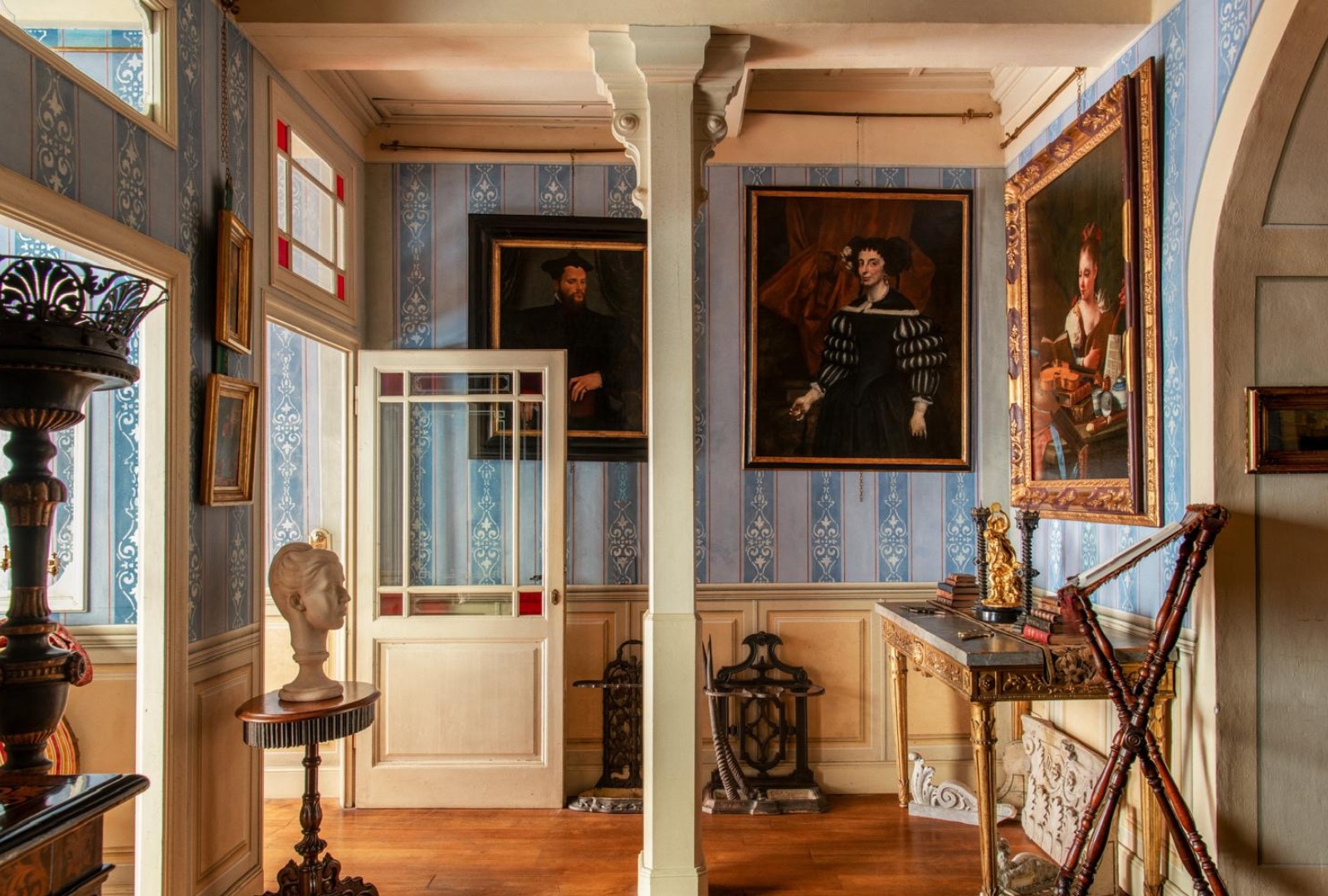
A few streets away, at 5 red Via San Giovanni, two businesses share the premises acquired by the family in the early 1990s: Duccio Conti Caponi Studio, devoted to interior architecture and decoration, and Conti | Caponi, an antique gallery and exhibition space for the company’s collections. Renato Conti and Lucia Caponi moved Casa Wolf here from Via del Parione, where it had specialised in antiques, furniture and decorative pieces. Their son Duccio began working with them while studying architecture, later trained in interior design in Brighton and, on returning to Florence, founded first the studio and then Conti | Caponi.
The company creates lamps, bathroom accessories, curtains, furniture and decorative objects in brass, wood and other materials, either from its catalogue or made to order. “We often take inspiration from antique or reclaimed Italian and European objects, reproducing them while reinterpreting their forms and functions.” Bronze workers develop prototypes and small series in the in-house workshop, while larger production runs are entrusted to selected craftspeople. Numbered-edition collections are also presented at fairs and events.
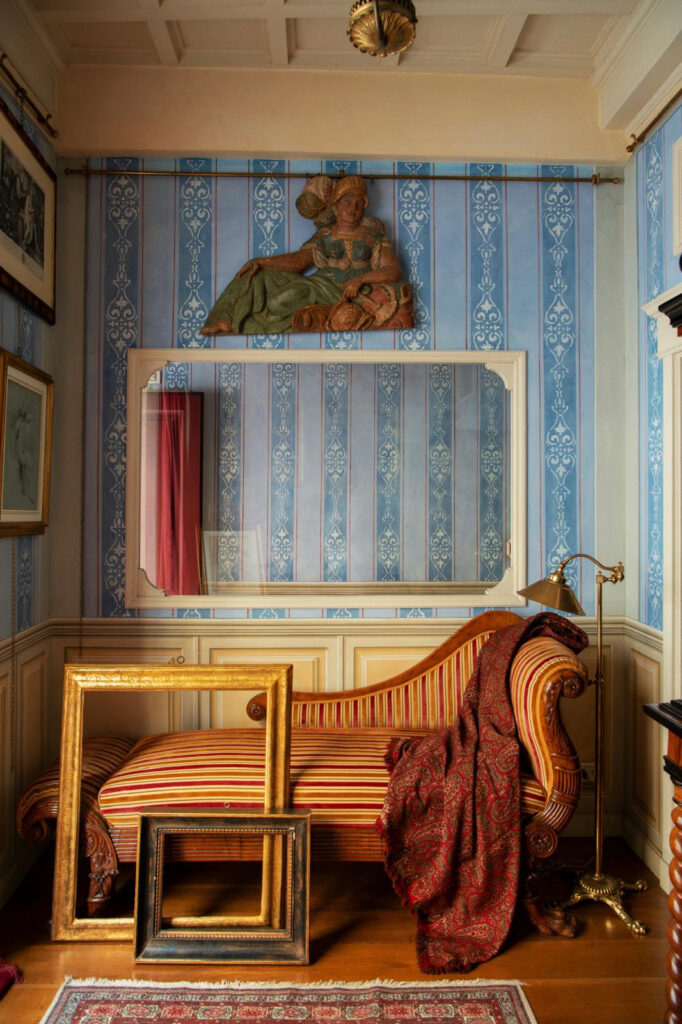
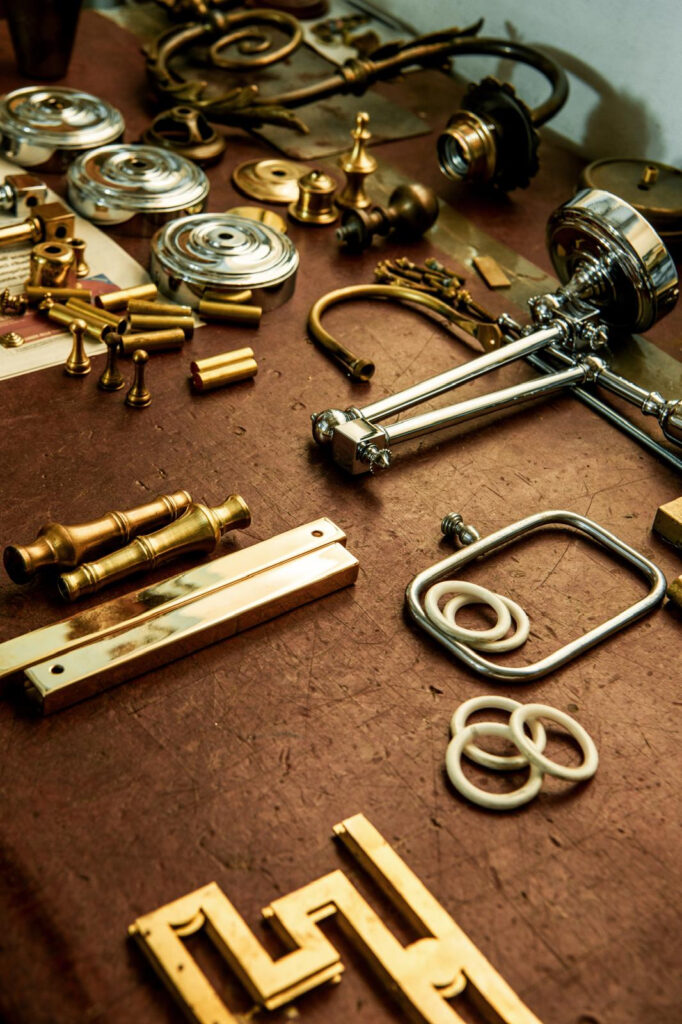
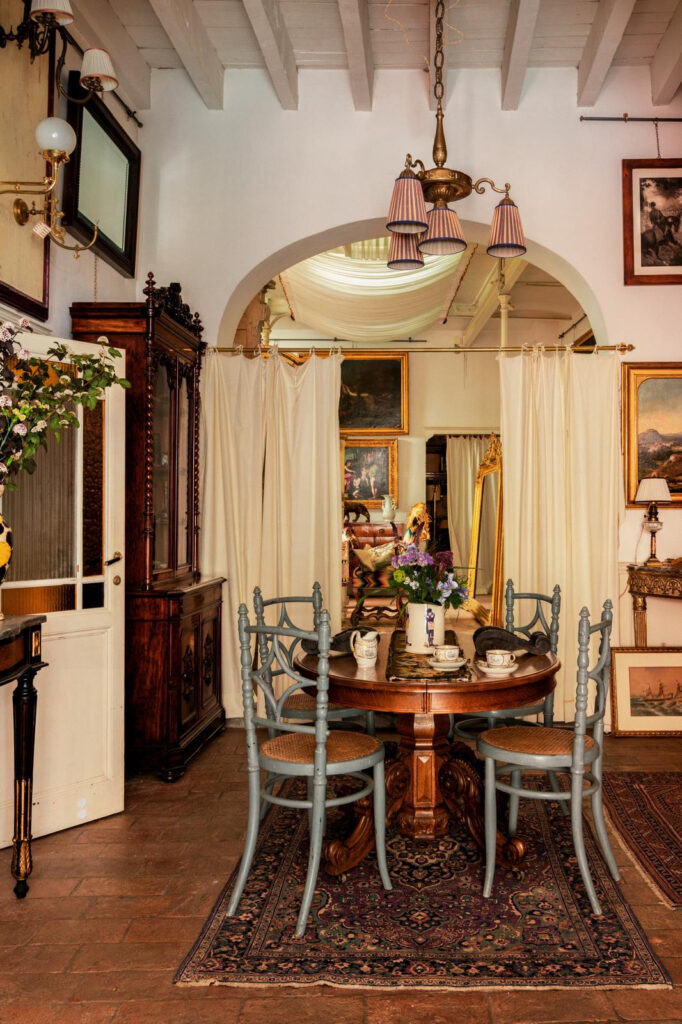
For Duccio, the greatest risk is the disappearance of crafts such as carving, gilding, cabinetmaking and bronze working, once central to Florentine tradition. “We need an education that helps people understand the value of process, time and waiting in a society increasingly driven by immediate consumption.” His future aim is to turn the space into an active centre for the revival of these skills.
While the antiques attract mainly international buyers, the company’s products and interior projects are also commissioned by Italian and European clients for homes, hotels and restaurants. “We always try to combine antique pieces, our own designs and objects selected elsewhere, creating interiors with depth and a story to tell.”
Riccardo Barthel: Restoring Italian Interiors Through Vintage Craftsmanship
The journey ends with Riccardo Barthel, founded in 1976 by Riccardo and his wife Daniela in Via dei Fossi out of a shared passion for restoration and objects marked by time. Today, Riccardo works with his son Francesco, who has been alongside him for forty years, at the company’s premises at 234 red Via dei Serragli. Covering more than two thousand square metres, the site brings together a showroom, design studio and artisan workshops.
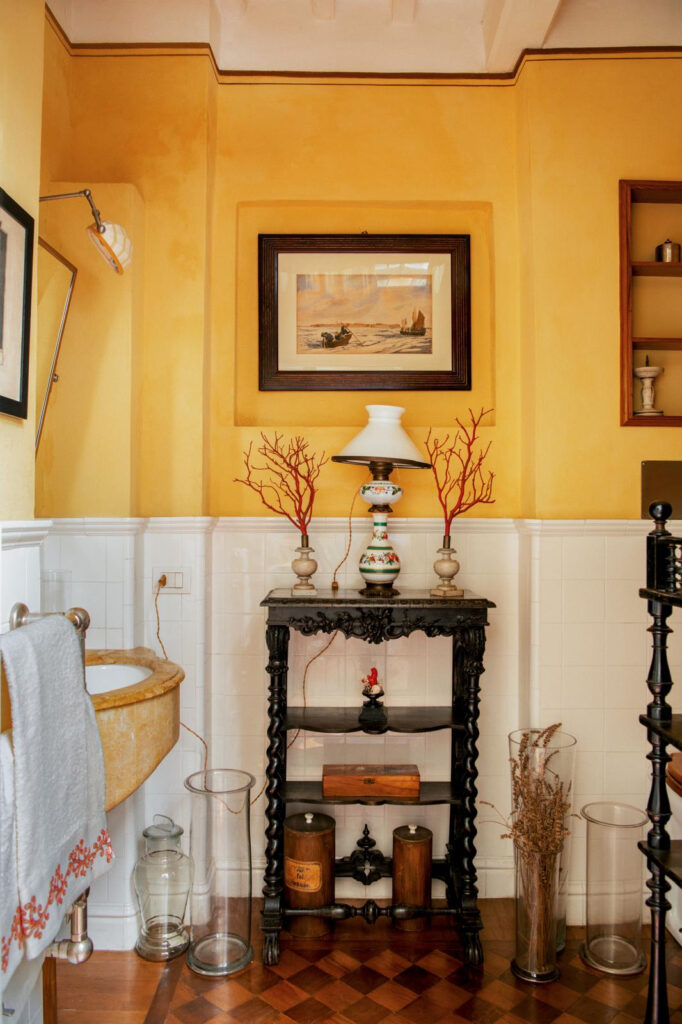
Every project begins with an antique object found in an Italian or European market, then restored, transformed or reproduced using traditional techniques. “Each piece is chosen for the story it carries and may retain its original function or take on a new one.” Alongside furnishings and turnkey projects for homes, hotels, restaurants and shops, the workshops produce bathroom and kitchen accessories, handles, lamps and ceramics, as well as pieces in fabric, glass and wood.
Clients come from around the world and are united more by sensibility than wealth. “They are often cultured people, not necessarily extremely affluent, who like to surround themselves with objects and furnishings that are beautiful and able to tell a story.” This search for individuality keeps craftsmanship alive, giving new purpose to forms and materials from the past.


