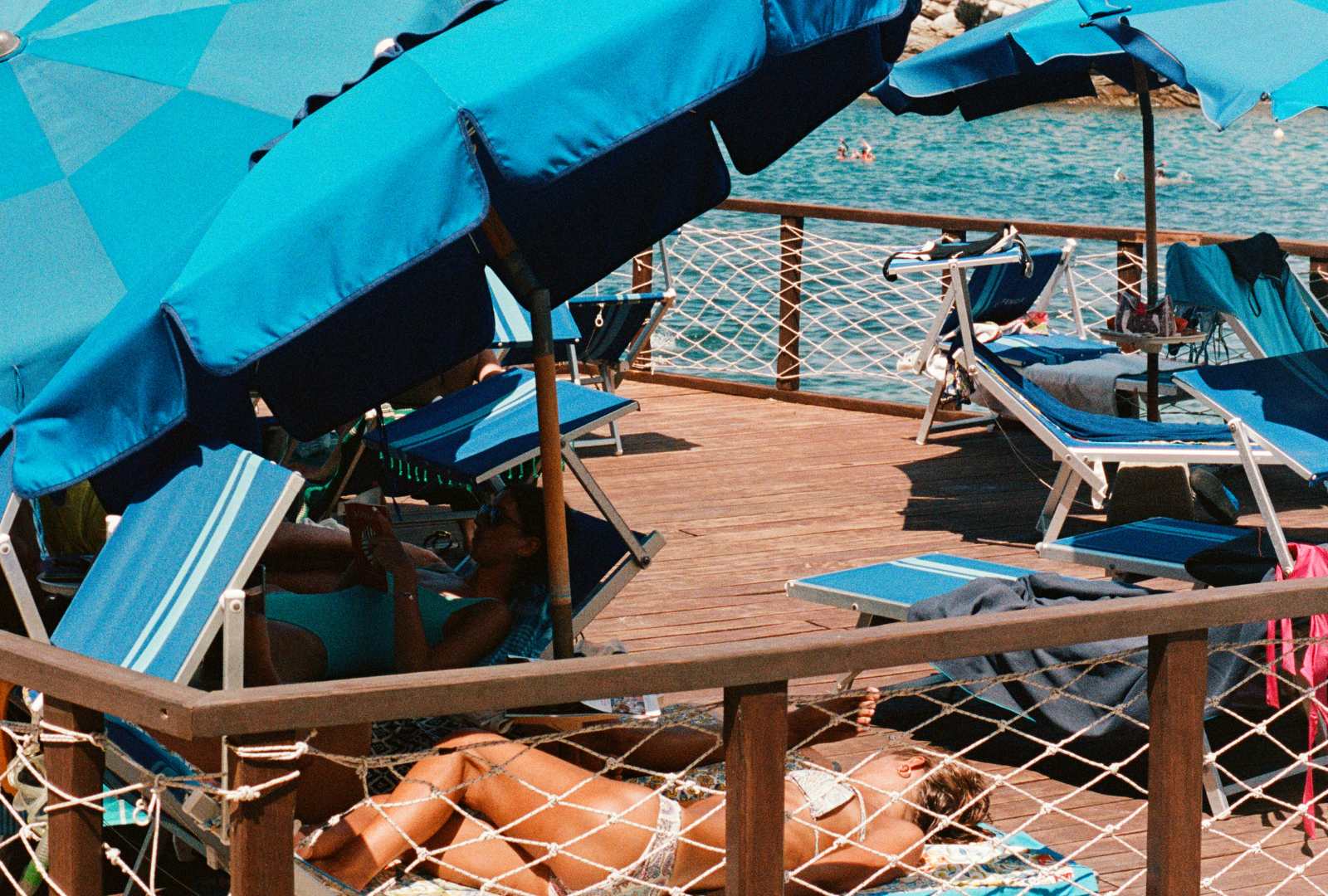
By Ginevra Barbetti. Cover image Gioconda Rafanelli e August Kaciuruba for Italy Segreta How Italy Feels‘s book.
Tuscany is one of the most photographed places in the world. Yet Gioconda Rafanelli and August Kaciuruba, the duo behind G&A, chose to look beyond its postcard views. For How Italy Feels, an editorial photography project and photo book published by Italy Segreta, the duo turned their lens toward a quieter Tuscany, one of pauses, secondary roads, seaside rituals and landscapes that reveal themselves slowly. The volume brings together 20 local photographers to explore Italy region by region through sensory storytelling rather than traditional travel guide formats. Fashion, architecture and cinema converge in their images, transforming place from backdrop into narrative. «It didn’t need to be told in full, it simply had to be made palpable», says Marina Serena Cacciapuoti, curator of the project, which frames Italy through sensations and the bittersweet feeling the book calls appucundria. We spoke with G&A about photographing beyond cliché, finding beauty in the in-between, and capturing a Tuscany that is felt before it is seen.
Photographing Tuscany Beyond the Postcard
How deliberate was the choice to move away from Tuscany’s codified image?
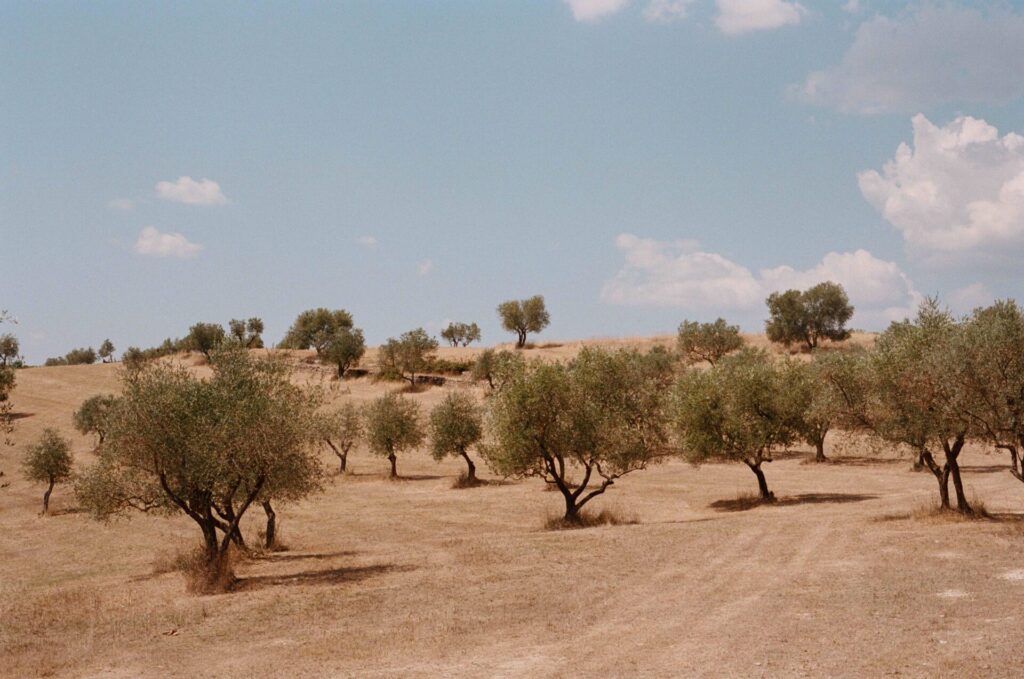
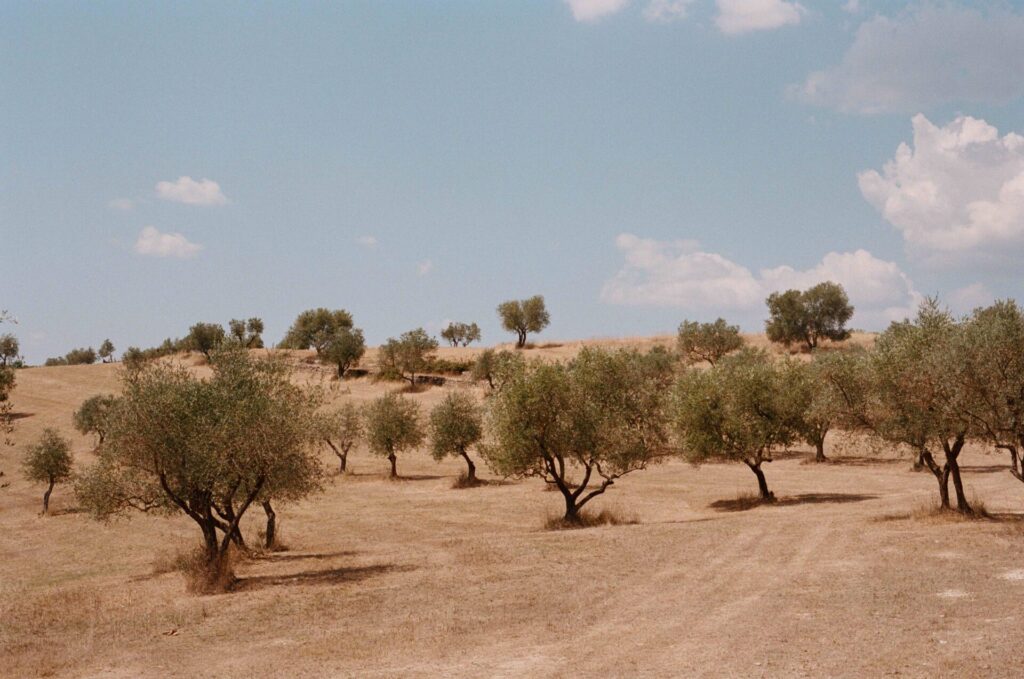
Very deliberate. Photographing Tuscany means inevitably confronting what we think of as beautiful clichés. But the question was never how to reject them — because many clichés are rooted in real beauty — rather how to move through them without remaining trapped on the surface. We were interested in what we sometimes think of as an off-duty Tuscany: not the region performing for the visitor, but the one that exists between iconic moments. The Tuscany of pauses, secondary roads, bathing establishments, animals at the edge of a field, an empty piazza at noon. Often those are the places where a landscape stops functioning as symbol and begins returning as lived reality. For us that was crucial.
When did you begin working together, and how did your shared gaze take shape?
We began working together very soon after we met, though in a way the collaboration started before we named it as such. There was first a period of looking together walking, observing, discovering places, which probably mattered as much as any formal beginning. After about a year, August gradually left architecture, and we started photographing collections by some of Gioconda’s former classmates in a large lemon house in the Florentine hills we turned into a studio. What is difficult to explain is that our gaze never really had to become shared. It was shared from the beginning. We have always had a similar instinct, almost a common visual grammar. There was never a negotiation of taste. Perhaps that has to do with the way memory and composition met very naturally: one of us carrying a deep familiarity with place, the other arriving from outside and seeing structure, rhythm, distance. Those things did not oppose one another; they fused. Looking back, even those early photographs already carried something we still pursue: the desire to move beyond what a place signifies culturally and return it to lived experience.
Where Fashion and Architecture Meet in G&A’s Visual Language
Do fashion and architecture still dialogue within your photography?
We have never thought of those influences as separate disciplines entering the work from outside, but they are certainly there. Architecture probably shaped our attention to spatial relationships, thresholds, framing, proportion. Fashion perhaps sharpened a sensitivity to atmosphere, gesture, surface, how presence sits within an environment. But above all we feel the need to place subjects in a world. We rarely think of location as setting; it behaves more like a silent protagonist. A road, a room, a pine grove, a coastline — these are not backdrops but emotional structures.
In Tuscany this feels especially charged, because the landscape itself is already layered with centuries of dialogue between human ambition and natural form. That depth enters the image almost by necessity.
How would you define your visual research today?
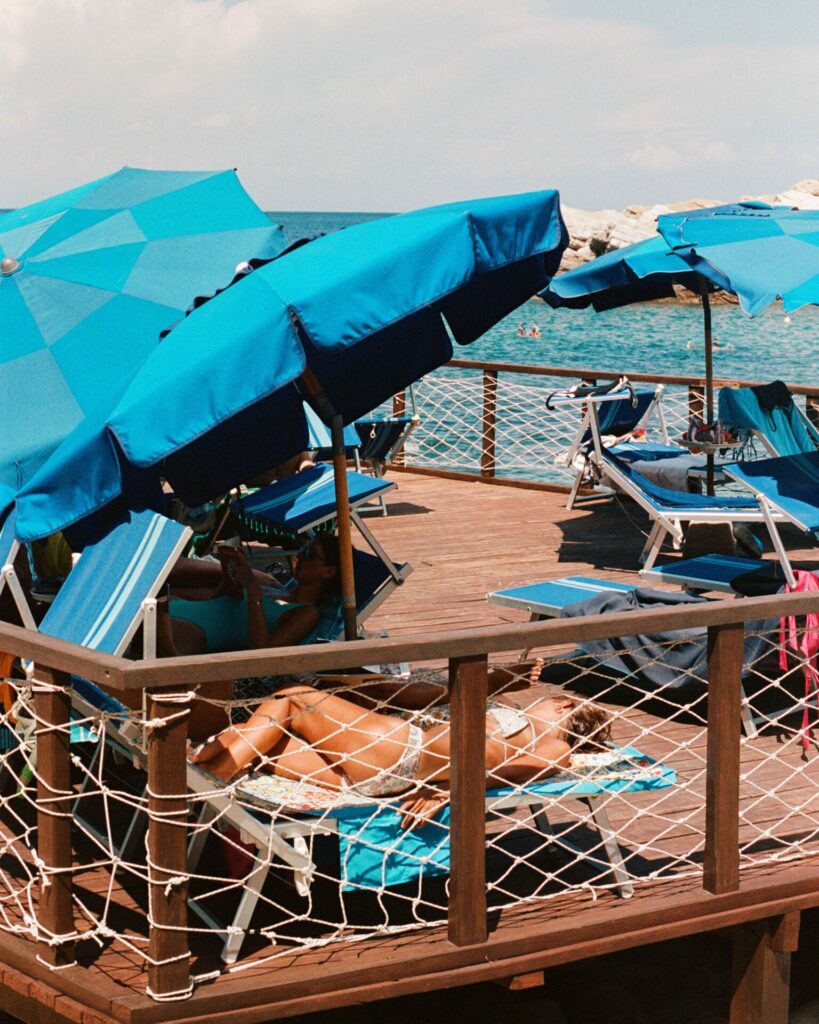
Cinema remains a profound source of inspiration, not simply aesthetically but structurally. We often think in sequences. A photograph may begin as the fragment of a story that remains unwritten. We like the image to hold a before and an after. But we are equally interested in quiet revelations: an empty piazza at midday, hay bales beside a road, turquoise umbrellas by the sea. Sometimes narrative begins there. There is perhaps a classical sensibility in the way we seek balance, but what interests us is the tension between order and suspension.
How Milan and Tuscany Influence G&A’s Photography
How do Milan and Tuscany shape the way you look?
Living in Milan has sharpened precision and tempo. But Tuscany remains almost a measure through which we perceive other places. It carries a sensory memory that returns constantly. What we miss when we are away is never abstract beauty, but specific sensations: the warm pink luminosity of early evening, light filtering through pine trees, the illusion that time stands still while years pass almost unnoticed. Milan gives rhythm and pressure; Tuscany gives duration.
What happens to your gaze when you return to Tuscany?
There is always peace in returning to familiar places, but it is never simply nostalgic. Returning also reveals change in landscape, in memory, in ourselves. That is where melancholy enters, though not as loss. More as awareness. We often say Tuscany feels like an old friend who has nothing to prove. It remains what it is, while we keep arriving differently. That is why it never stops surprising us.
Maremma, Elba and the Hidden Side of Tuscany
What memories tie you to Maremma and Elba, and what Tuscany were you looking for there?
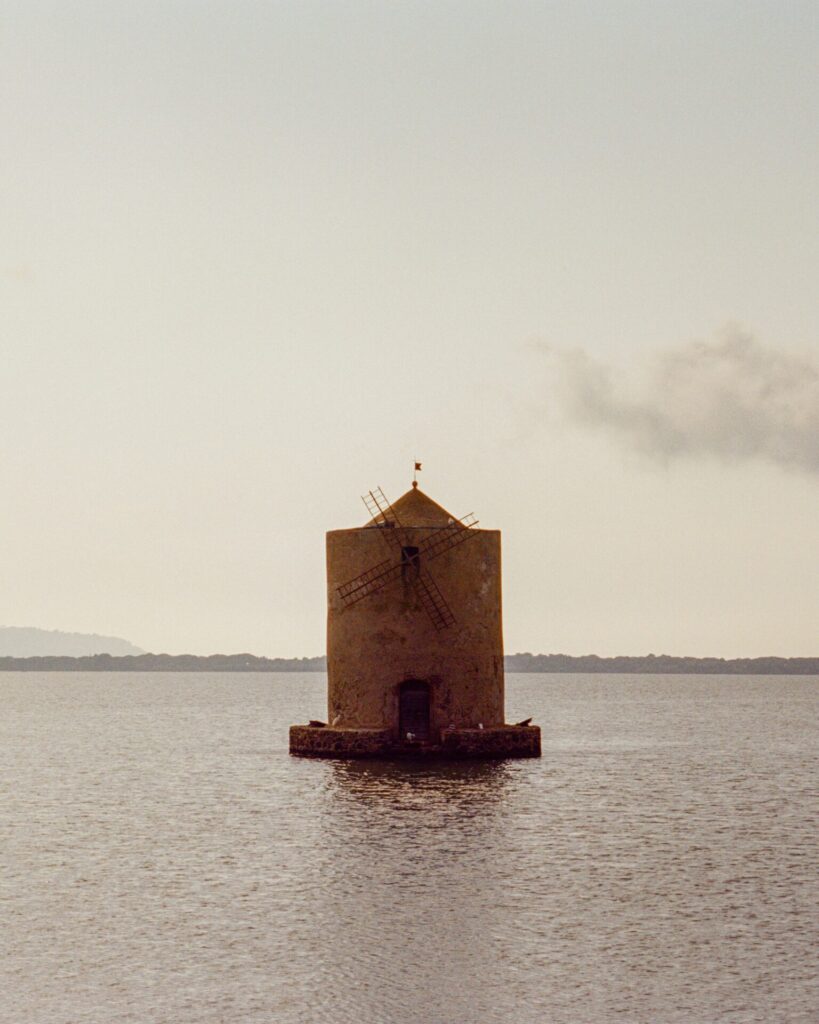
For us, Maremma is tied to early memories of wind, salt and wide open landscapes. Gioconda spent her childhood summers in Ansedonia, and it was also the first place she brought August, so it became part of our shared story. Elba came later, but quickly turned into a ritual. We were drawn to a Tuscany that feels less monumental and more elemental: the butteri, the Orbetello lagoon, hidden coves, village traditions and landscapes that still belong to everyday life rather than tourism. These places also change the way we photograph. In Maremma the gaze widens, following long horizons and slower rhythms. In Elba it becomes more intimate, moving through hidden beaches, granite paths and sudden openings onto the sea. We rarely arrive with a fixed idea; we stay until the landscape begins to reveal itself naturally.
Why Light Is the Most Powerful Storytelling Tool
How much are light and timing narrative decisions?
Completely. Light is never simply descriptive. It shapes the emotional meaning of an image. We are drawn to thresholds: early morning, late afternoon, those suspended moments when familiar places seem almost unfamiliar again. A road photographed at noon tells a completely different story than the same road in fading pink light. They carry different emotional truths.
Where does the hesitation to represent beauty openly, without falling into cliché, come from?
Perhaps from mistrust of beauty when it becomes rhetoric. Tuscany is so over-imaged that one risks repeating symbols rather than encountering a place. There can be a fear that beauty, when too easily declared, becomes decorative or sentimental. And yet we do not distrust beauty itself, only formulas of beauty. What interests us is when beauty retains resistance, when it does not offer itself too quickly. In that sense Tuscany has a remarkable autonomy. Its strength lies precisely in remaining true to itself, without seeking approval. That is a kind of beauty we trust.
Appucundria: Photographing Emotion Instead of Places
How do appucundria and the shift from seeing to feeling enter your idea of image-making?
In our work there is often the desire to evoke memory while idealizing it slightly, fixing it in the instant before it fractures into melancholy. Perhaps appucundria lies exactly in that threshold where beauty and loss remain together, where something feels complete precisely because one senses its passing. That ambiguity interests us because it turns the image into something closer to inner experience than representation. It is not simply about mood. It is about allowing an image to carry emotional afterlife, to stay with someone as a sensation, not only as something seen.
Advice for Young Photographers
What would you recommend to a young emerging photographer?
Believe in your vision and protect it. Learning to say no is just as important as learning to say yes. Choose the people you work with carefully because the atmosphere on set shapes the final image as much as technical skill. Today we’re surrounded by images, which makes personal research even more valuable. Find your own voice and stay faithful to it. We’d also recommend reading Helmut Newton’s autobiography.


