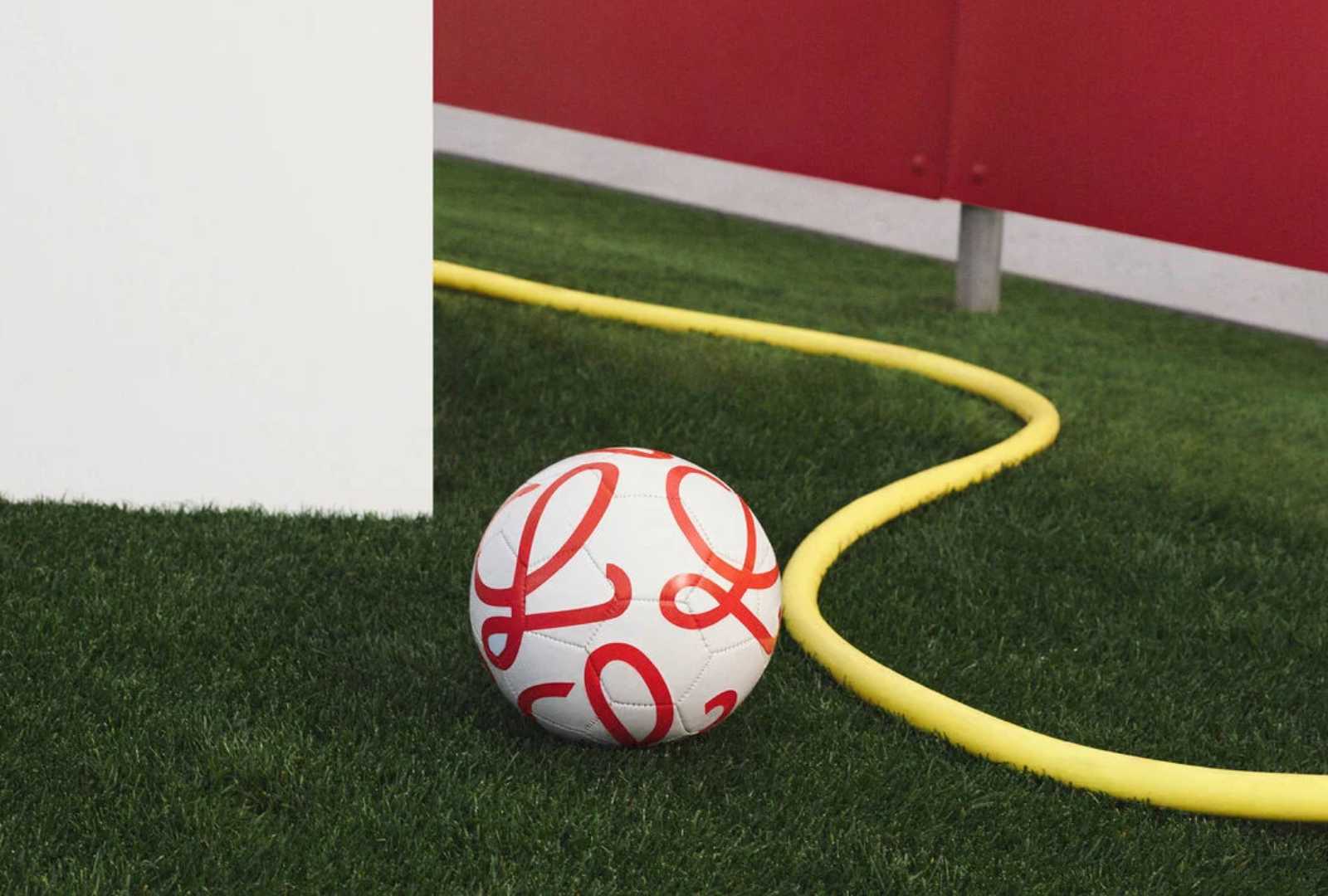
By Kashvi Bhandari. Cover image courtesy Loewe.
What Makes the FIFA World Cup 2026 Different?
It’s hard to miss it: the FIFA World Cup 2026 is officially underway. Whether you’re the kind of person who insists that it is called football or the kind who swears that soccer is the only correct term, there’s one thing that we can all agree on: we love this game and we love watching it.
This year, the Football World Cup has definitely set new goals. For the first time, the tournament is being hosted by three countries, with Canada, Mexico, and the USA sharing hosting duties. The 2026 edition will also feature more teams than ever before, with 48 nations contending for the trophy. Which means one thing for fans: a mega-sized chips bowl and non-stop football taking over their TVs. Considering that the game is already the most streamed sport on Earth, this 39-day marathon is going to absolutely shatter every existing record.
Why the FIFA World Cup 2026 Is Becoming a Fashion Stage
But while the world focuses on what’s happening on the pitch, there is another competition that unfolds off the pitch. This competition is in the stands, on social media feeds, and across the streets. The FIFA World Cup 2026 has become far more than just a sporting event: it is a cultural extravaganza, and fashion happens to play a supporting role.
How Luxury Brands Entered Football Culture in 2026
Football and fashion are becoming more and more intertwined. And no one understands the power of that intersection better than luxury brands. For them, the 2026 World Cup is a rare opportunity to place themselves at the centre of a global conversation. With billions expected to tune in and millions more engaging through social media, the tournament offers a level of exposure that even the most expensive advertising campaigns struggle to match. Every arrival at the stadium, every post-match interview and every viral celebration has the potential to become a marketing moment.
How Louis Vuitton Linked Football to Luxury Branding
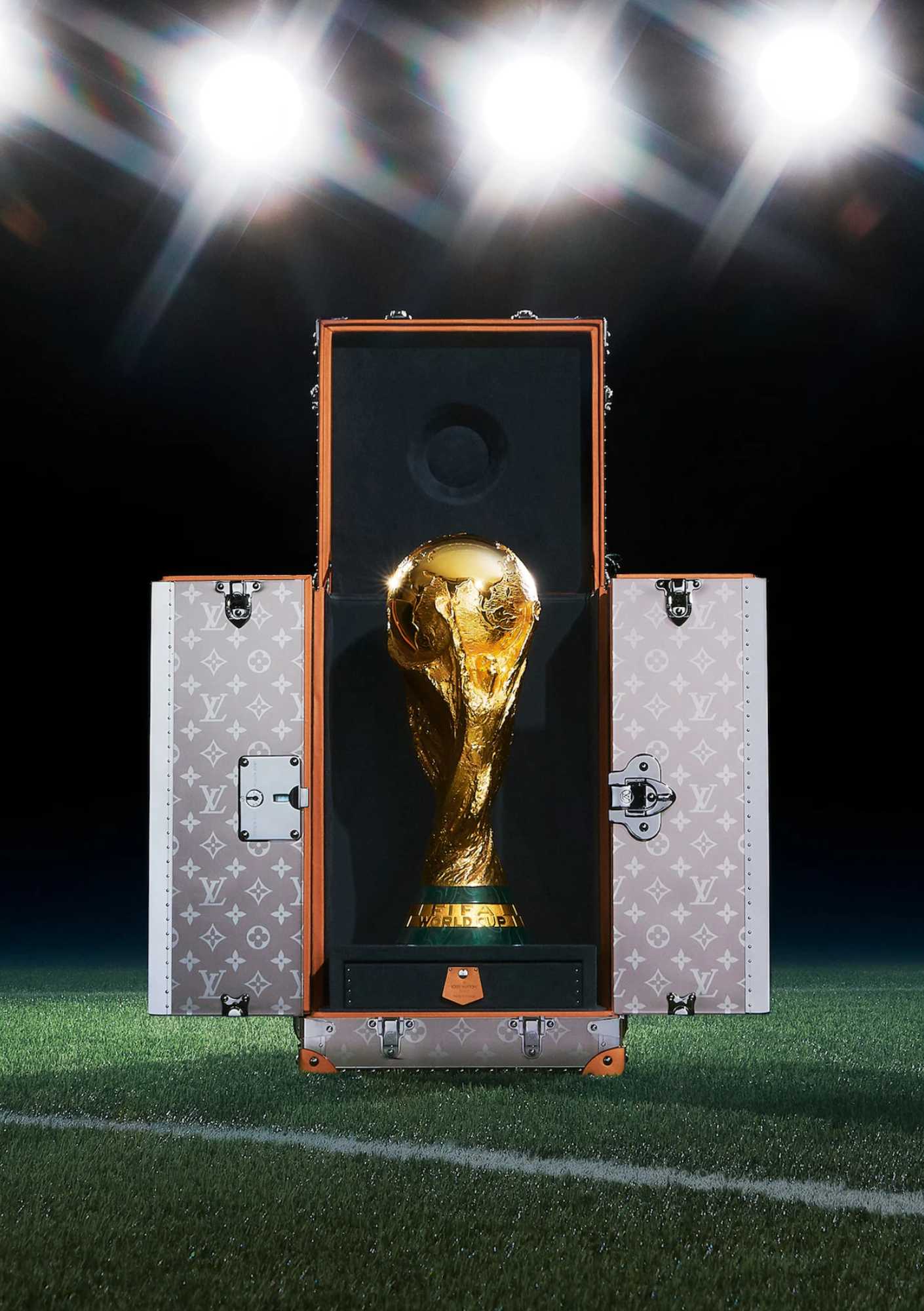
It is no surprise, then, that luxury fashion houses have been eager to secure their place in football’s ecosystem. Louis Vuitton, which in 2025 became the official fashion partner for Real Madrid to provide exclusive travel and formal wear, continues to strengthen its ties to the sport through its long-standing partnership with FIFA, including crafting the iconic World Cup trophy case. The strategy is simple: attach your luxury branding to the global icons and high-stakes moments everyone is already watching, a shift underscored by individual player endorsements like Jude Bellingham modeling for Louis Vuitton.
Jacquemus x France: The Nike Collaboration for World Cup 2026
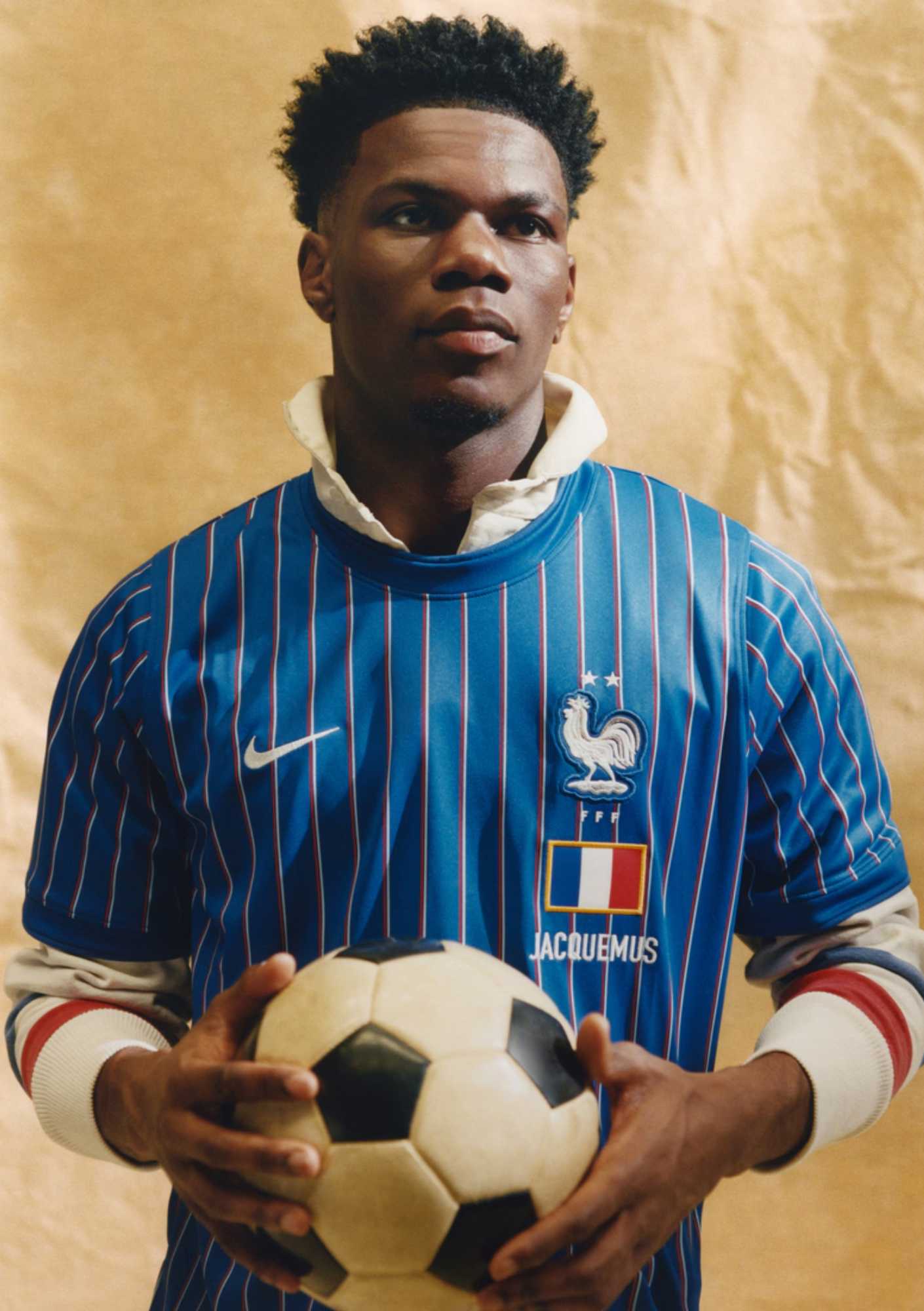
Jacquemus, for example, has stepped directly into the World Cup conversation through a high-profile collaboration with Nike and the French Football Federation (FFF). The brand has created a full lifestyle identity for France’s national team. The pre-match jersey arrives in deep royal blue, detailed with red and white pinstripes and a reworked FFF x Jacquemus crest. Alongside it, a seven-piece capsule collection extends the look into footwear and off-pitch styling. This release is part of a broader global Nike initiative, which includes unique lifestyle brand pairings for other countries, deliberately timed for June 2026, right as World Cup attention peaks.
Loewe and Spain: Quiet Luxury in Football Uniforms
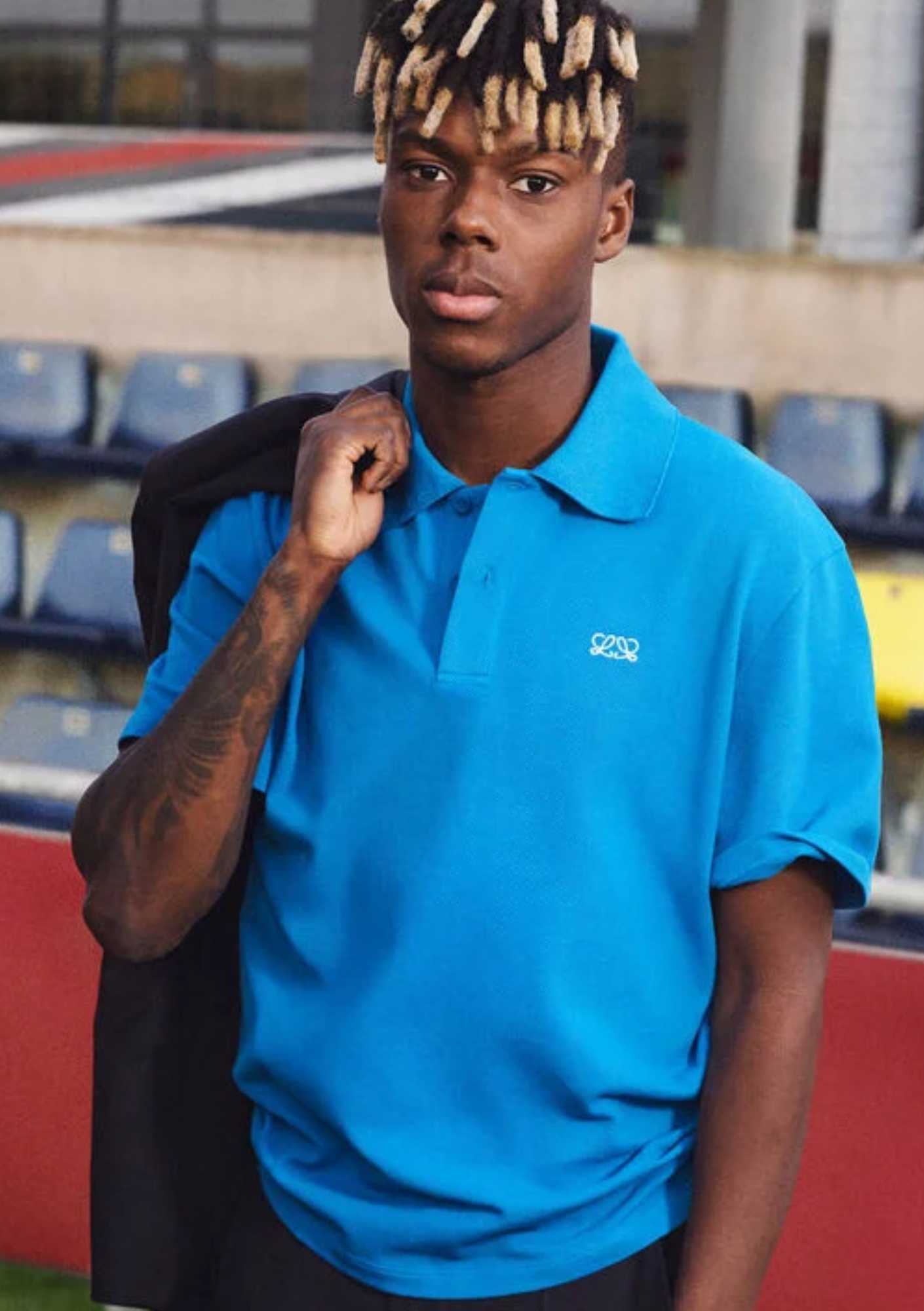
Loewe takes a different approach with Spain. Rather than focusing on the pitch, the brand has designed the national team’s off-field wardrobe in partnership with the Royal Spanish Football Federation (RFEF), spanning both the men’s and women’s squads. Tailored suits, refined polo shirts, and structured blazers redefine how a football team presents itself outside the stadium. Even the smallest detail, such as the hidden Loewe Anagram placed inside upturned cuffs, turns uniform dressing into quiet luxury branding. It is a four-year collaboration, meaning the World Cup becomes a foundational chapter in a longer visual identity rather than a temporary, one-off marketing moment.
How Streetwear Is Changing Football Kits at the World Cup
And this is not limited to just two nations. Across Europe and beyond, national teams are increasingly becoming fashion platforms. England’s collaboration with the London-based streetwear label Palace, the Netherlands working with the underground fashion label Patta, and the United States collaboration with the Virgil Abloh Archive, part of Nike’s X2 World Cup initiative, all point to the same shift: football kits and travel wardrobes are now cultural products as much as sporting ones.
Why the 2026 World Cup Is a Goldmine for Global Luxury Brands
What makes 2026 particularly attractive is where it is happening. The United States remains one of the world’s most influential luxury markets, and hosting the tournament alongside Canada and Mexico gives brands access to an enormous and diverse audience. Of course, these brands invest in football because attention has become one of the most valuable currencies in the world, and the World Cup is where it concentrates most intensely. For thirty-nine days, the World Cup will have more of it than anywhere else.
Personally, I think that’s exactly what makes this relationship so fascinating. The players may be competing for football’s biggest prize, but off the pitch, brands are competing for something equally valuable: relevance. In 2026, the trophy isn’t the only thing everyone wants to get their hands on.


