By Taline Raed Eid Nesheiwat. Cover image Taline Raed Eid Nesheiwat.
How Creative Pressure Becomes Overwhelming
In creative fields, stress often comes from heavy workloads and the pressure to create something original, which can quickly become overwhelming. However, this is far from an individual experience. Some of the world’s most successful athletes, artists and designers have faced the same pressure, from fashion studios to Olympic arenas. What differentiates them is the way they learn to respond to it.
By looking at figures such as figure skating Olympic champion Alysa Liu, visionary Italian fashion designer Miuccia Prada, artist Yayoi Kusama and archistar Zaha Hadid, stress starts to feel less like failure and more like part of the creative process itself.
Letting Go of Perfectionism Through Alysa Liu
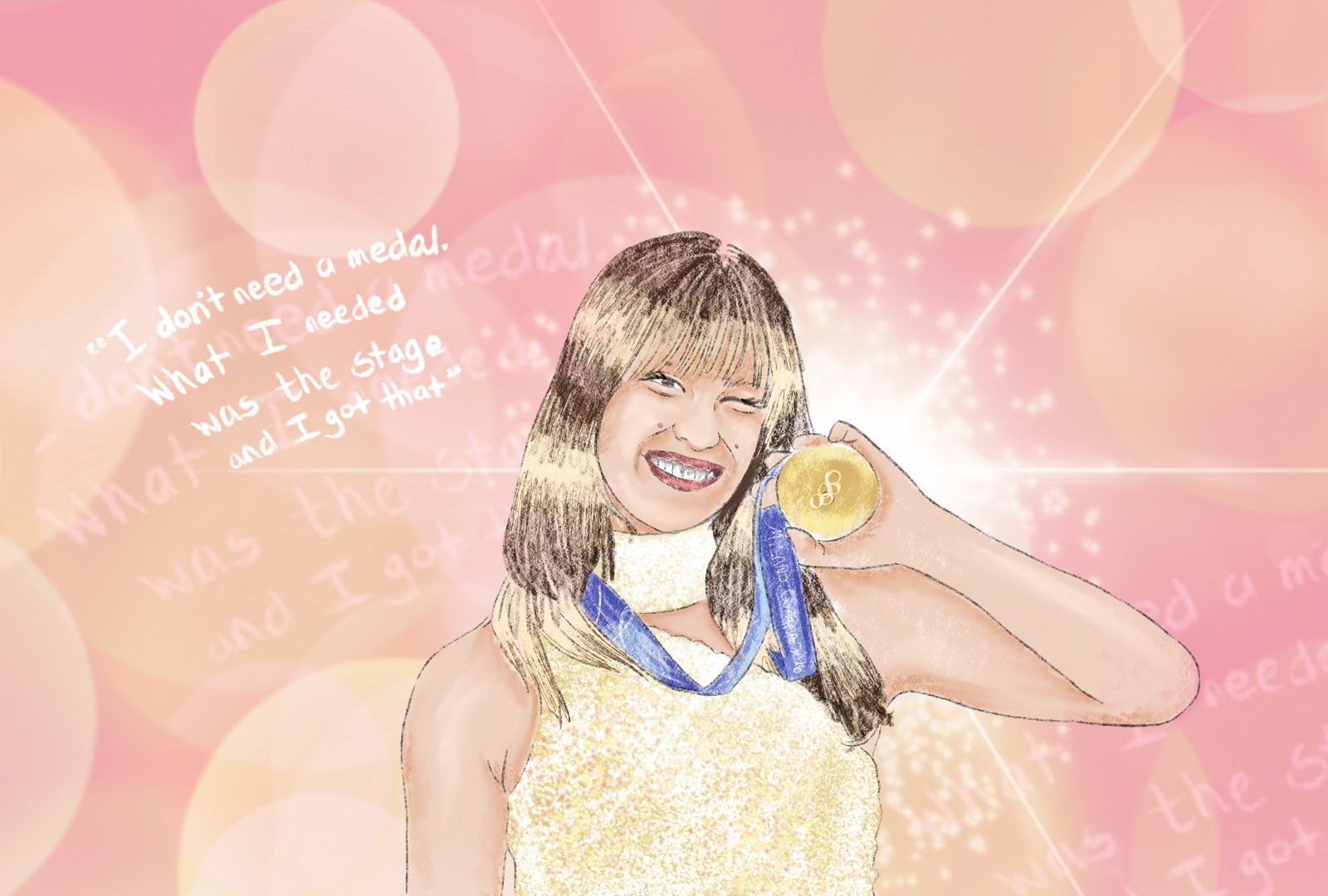
Figure skater Alysa Liu, who became the 2026 Winter Olympic Champion in both women’s singles and the team event, offers an important lesson about letting go of perfection.
Liu stepped away from competitive skating at the age of 16 after the pressure of the sport began taking away her joy. This year, she returned with a healthier mindset. Instead of skating to win, she skated to express herself: “I don’t need a medal. What I needed was the stage, and I got that.”
For creative students, perfectionism often becomes one of the biggest sources of stress. Every project starts feeling like it has to be flawless, original and immediately successful. Over time, that fear can limit creativity itself. Letting go of perfection means giving yourself space to experiment, make mistakes, try again and enjoy the creative process a little more.
Miuccia Prada and the Creative Power of Uncertainty
According to Miuccia Prada, uncertainty is not an obstacle to creativity but one of the conditions that allows it to grow.
Many students experience stress because they constantly search for clear answers: Is this good enough? Is this the right direction? Will this ever be successful? In creative work, those answers rarely arrive immediately. Learning to stay calm during moments of doubt is difficult, but necessary. Creating without clear answers transforms fear into exploration and allows stress to become part of the process rather than something that blocks it.
Creativity as Healing in Yayoi Kusama’s Work
For Yayoi Kusama, art has always been more than self-expression. It became a way of survival.
Her work, filled with repetitive patterns and immersive visual worlds, reflects her attempt to process and cope with her inner experiences. For students, her practice is a reminder that creativity does not always need to serve a goal or produce a result. Not every drawing, design or concept needs to be judged, shared or perfected. Sometimes creating is simply a way to release pressure and reconnect with yourself.
Returning to creativity without expectations can feel comforting during stressful periods. In some ways, it becomes a conversation with yourself.
Trusting the Process Like Zaha Hadid
Zaha Hadid became famous for her bold and unconventional designs, many of which were initially considered impossible to build. Early in her career, several of her ideas remained on paper for years, repeatedly rejected and criticised. Despite this, she continued developing her work and eventually transformed contemporary architecture.
Her career is an important reminder that recognition and success are not always immediate. Many students experience stress when their efforts do not seem to produce visible results straight away.
Hadid’s story shows that creative growth often happens beneath the surface. Even when projects fail or ideas are misunderstood, the process still matters.
Stress and Creativity Often Exist Together
Stress is often treated as something people should completely avoid. Yet for many creatives, it becomes something they learn to work with instead.
Each of these figures approaches pressure differently: Alysa Liu lets go of perfectionism, Miuccia Prada embraces uncertainty, Yayoi Kusama transforms creativity into healing, and Zaha Hadid trusts the process even when recognition takes time.
For students, the message is simple: stress does not always mean failure. More often, it reflects the challenge of trying to create something meaningful. The goal is not to eliminate stress completely, but to understand it, manage it and continue creating through it.


