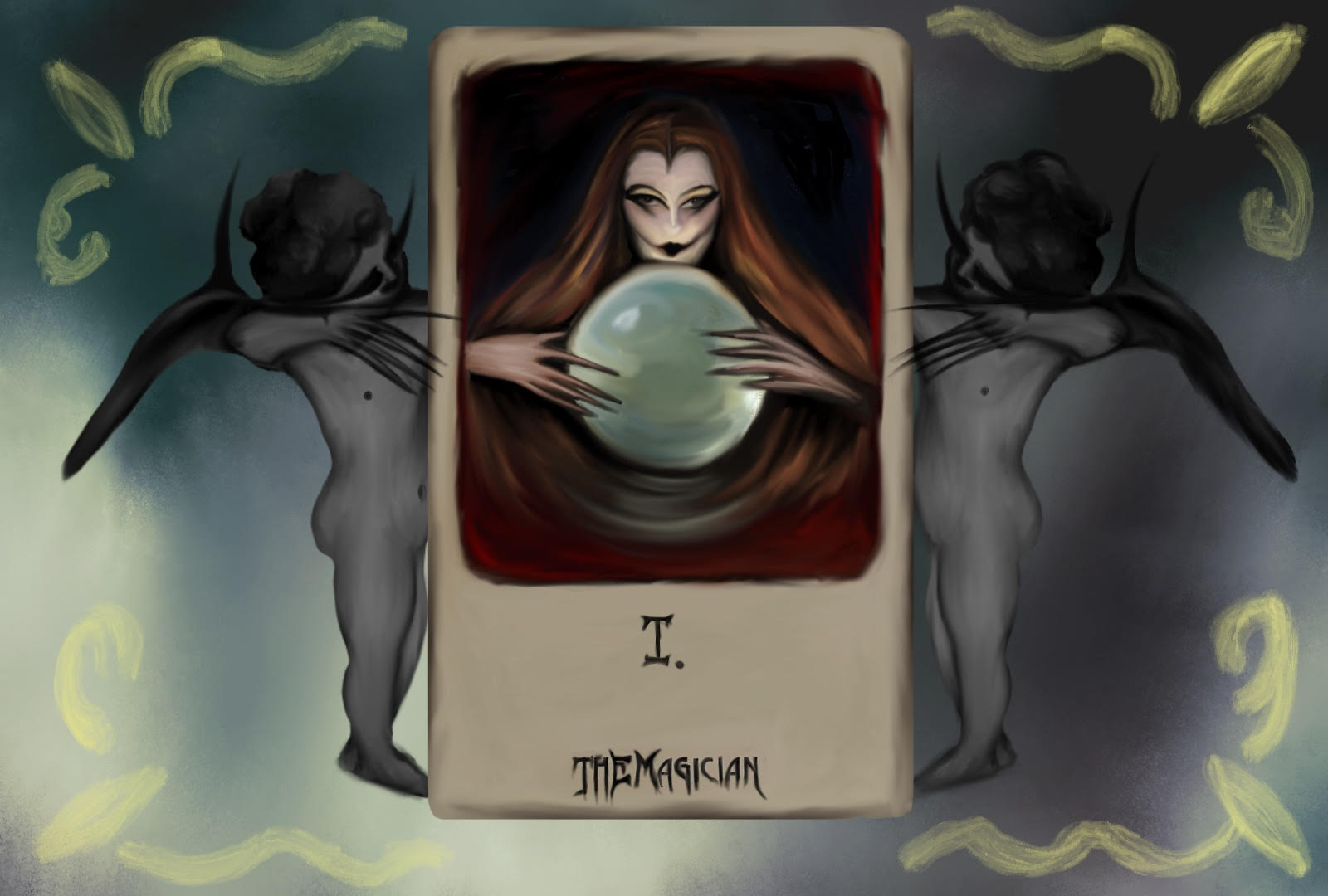
By Azzurra Rinaldi. Cover image Giovan Battista Dell’Arno.
From the earliest Renaissance tarot decks commissioned by the Visconti-Sforza family to tattoo-inspired and ink illustrations, moving through the surreal art of Dalí, the interiors of Giorgio Armani and even the superstitions surrounding Dior, tarot cards continue to fascinate through their symbolic and mystical aura.
Today, tarot exists in countless forms, each with its own style. Yet tarot cards are no longer used solely for divination: their visual symbolism has expanded far beyond fortune-telling, finding a place in luxury, fashion and contemporary design.
Visconti-Sforza Tarot: The Renaissance Origins of Tarot Cards
The Visconti-Sforza tarot decks are among the oldest surviving tarot cards. Commissioned by the powerful Visconti and Sforza families, who ruled Milan between the 13th and 16th centuries, these decks survive in three different versions, each richly decorated with gold backgrounds and exquisite craftsmanship. Printed editions are now widely available and remain visually striking in their own right.
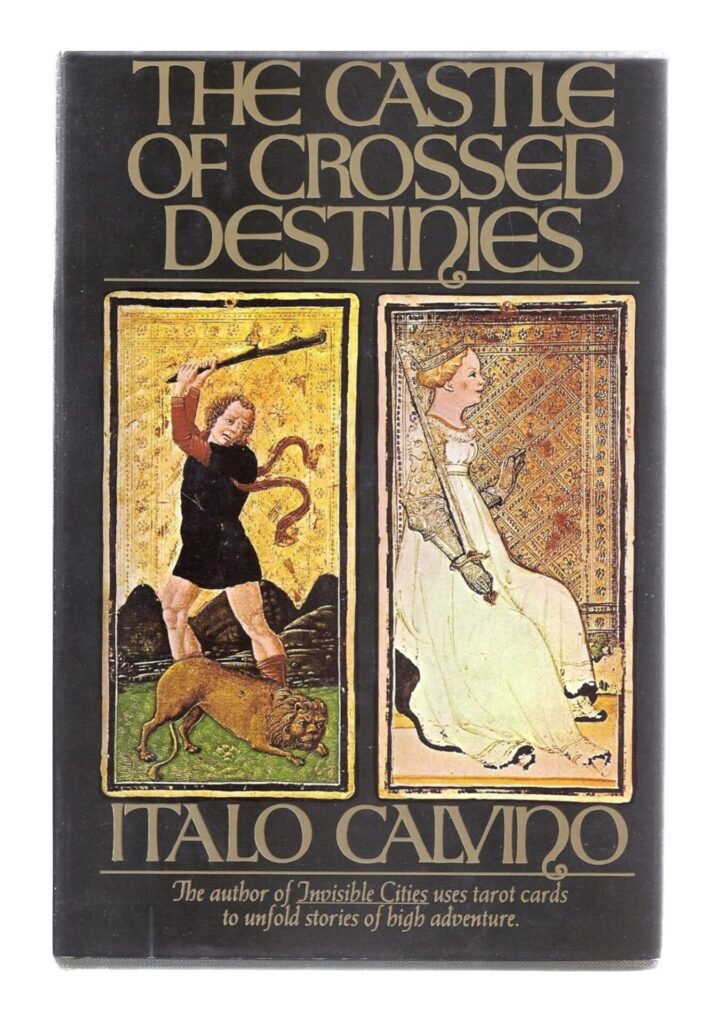
At first glance, the symbols appear very simple, with just a central figure to indicate the arcana, over time these images became associated with storytelling, interpretation and divination. The writer Italo Calvino, for example, used tarot imagery to compose his book The Castle of Crossed Destinies, constructing narratives through the arrangement of Visconti-Sforza cards and allowing readers to follow not only the written story but also its visual composition.
These cards are also important because they preserve visual traces of the clothing of their time.
Salvador Dalí’s Tarot Deck: When Surrealism Meets the Occult
How would a surrealist artist reinterpret tarot cards? In a fantastic, crazy, and magnificent way! Created in 1984, Dalí’s tarot deck transforms the cards into a surreal universe filled with artistic references and symbolic self-portraits. Dalí depicts himself as The Magician, while his wife Gala appears as The Empress. Elsewhere, the Ten of Swords evokes the death of Julius Caesar. And the Emperor? It’s Sean Connery in 007!
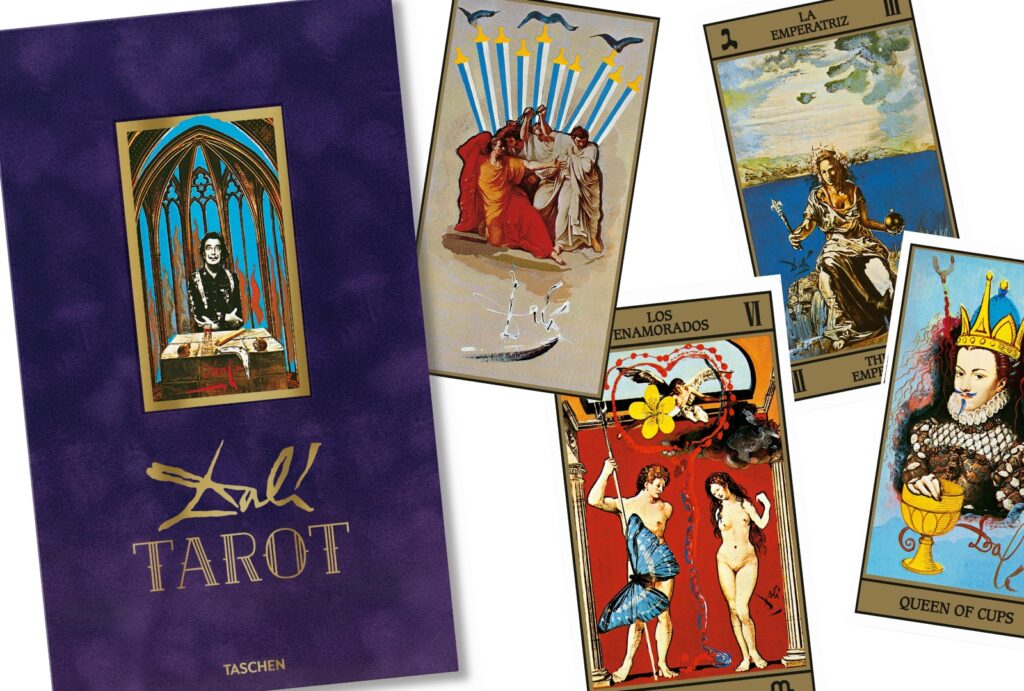
The deck moves freely across artistic languages, combining references from ancient Greek art to pop culture. Its symbolism is also strong because Dalí and his wife were deeply passionate about occultism. More than a simple divination tool, Dalí’s tarot cards feel like an immersive artistic project, capable of inspiring both interpretation and creativity. A deck to explore and observe, which can inspire not only divination but also creative work.
Dior’s Le Château du Tarot (2021): How Tarot Cards Inspired Fashion
When speaking about tarot in fashion, it is impossible not to mention Dior’s Le Château du Tarot, the Haute Couture Spring/Summer 2021 collection inspired by the symbolic universe of tarot cards.
Throughout the collection, references to the Major Arcana, particularly those of the Visconti-Sforza tarot, appear through richly embroidered gowns, mystical imagery and theatrical silhouettes. History becomes fashion, and we admire it as something new and never seen before, when in reality it is a reinterpretation of the past. Tarot’s influence on fashion goes far beyond Dior. If you want to discover how Jonathan Anderson also explored tarot symbolism through fashion and visual culture, read here.
Tarots become fashionable without losing their symbolic depth. Dior knew this very well: he was so superstitious that before each fashion show he used to have his tarot cards read by Madame Delahaye. You can find the dresses online or watch the documentary by Matteo Garrone, Le Château du Tarot.
Armani / Casa’s Tale Tarot (2023): Luxury Interior Design Meets Tarot Cards
Models and furniture by Armani are remixed to create an amazing and original tarot deck made of 78 cards from the luxury brand. The deck can function as a normal tarot set — to read, to play — but also as a catalogue of King Giorgio’s brand, which is quite original!
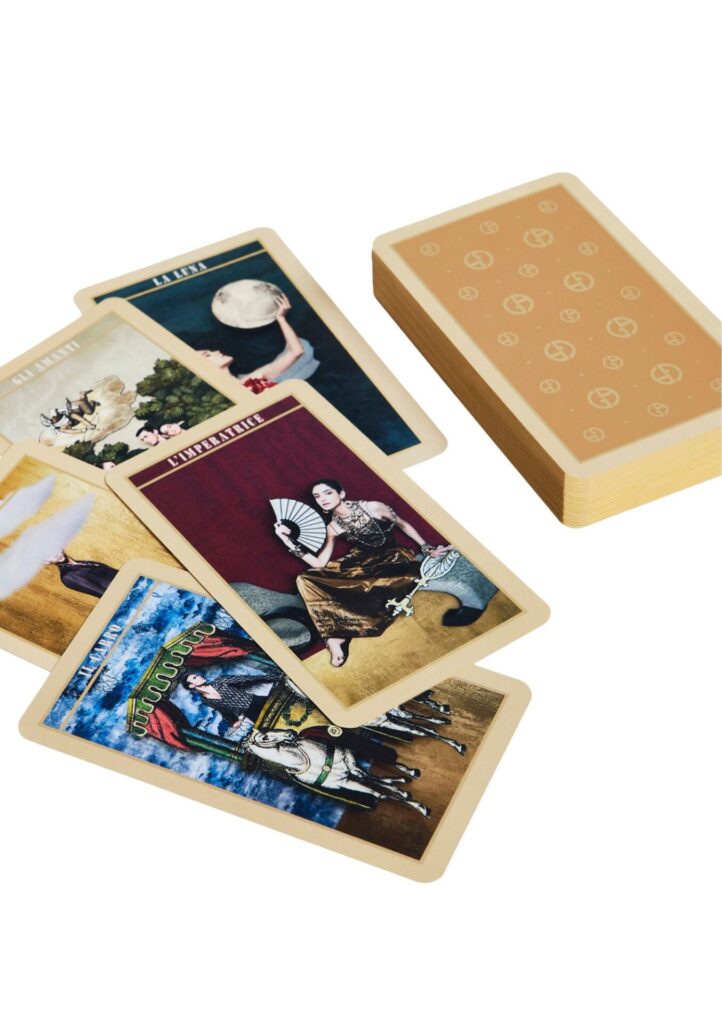
This proves once again that tarot cards go beyond what you expect, because of their glamour (and I mean their ability to captivate through something magical). They are rich and versatile, if you have the right idea to make them work!
Tattoo Tarot Cards and the Rise of Pop Culture Tarot
Today, tarot cards exist in countless versions, shaped around every possible aesthetic and cultural reference. There are dark and gothic decks, gold-embellished editions, animal-inspired cards, cinematic interpretations, literary adaptations and artistic reproductions. Some decks even transform the works of famous painters into tarot imagery (I personally own one inspired by Alphonse Mucha’s masterpieces).
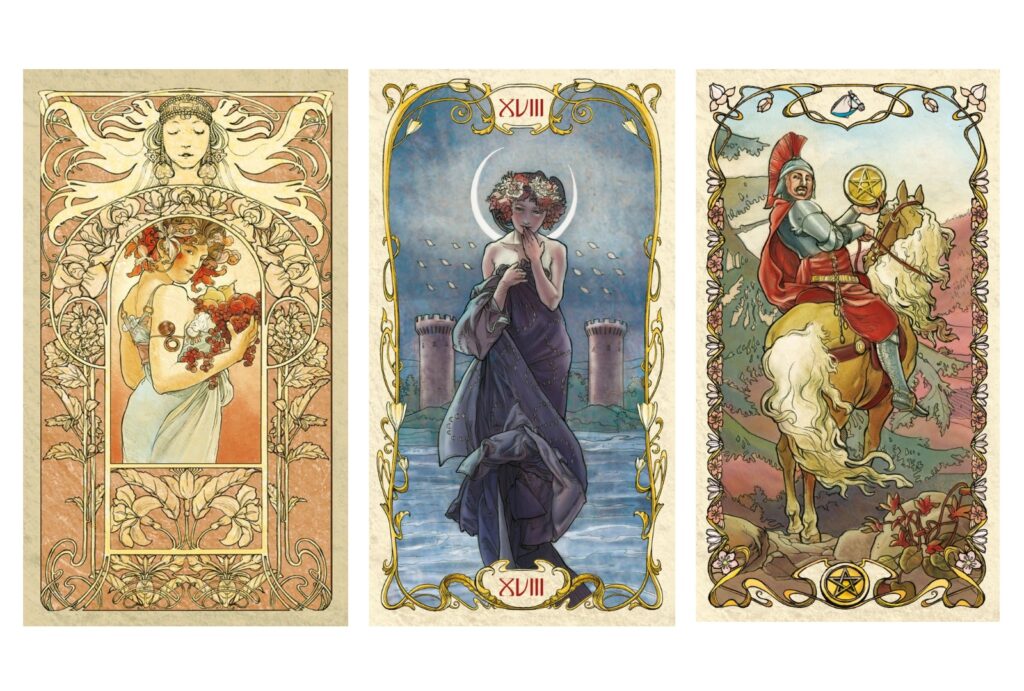
Divination is for everyone and it attracts everyone.
But I want to focus on one deck that, in my opinion, brings different art forms full circle: tattoo tarot cards. The symbolism remains classic and easy to recognize, while the illustrations draw inspiration from old-school tattoo aesthetics, giving the deck a bold and original visual identity.
Want a tattoo that reflects your story, your experiences or simply brings you luck? Tarot might be the perfect source of inspiration.
The Best Tarot Art Book for Tarot Symbolism and Illustration
As a librarian, I can’t leave you without a book recommendation to continue exploring the world of tarot.
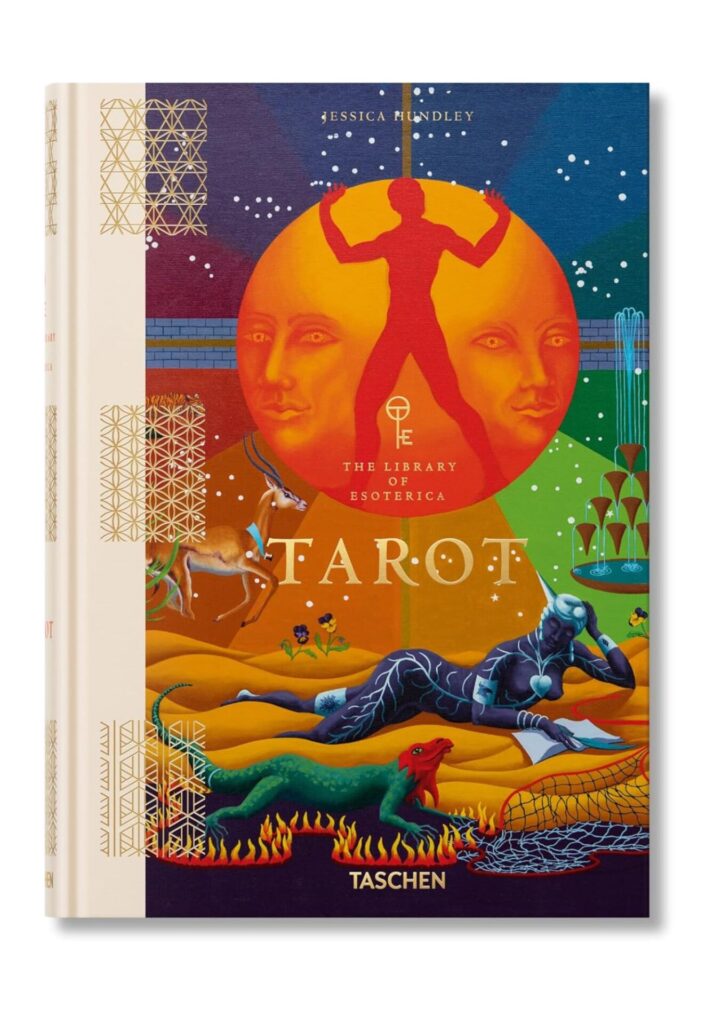
If you are fascinated by tarot imagery and symbolism, Tarot by Taschen, part of The Library of Esoterica collection, is an essential choice. The volume gathers hundreds of full-color illustrations by artists from different periods and styles, tracing the visual evolution of tarot across art, mysticism and popular culture.
As these decks show, tarot cards are only partially linked to divination. They are also visual narratives made of symbols, stories and interpretations. Tarot continues to evolve as a creative language, constantly reshaped through fashion, art and design and perhaps that ability to endlessly reinvent itself is what keeps its fascination alive.
If you want to explore how divination has also become a contemporary profession and creative practice, read our take on it here.


