By Kashvi Bhandari. Cover image H&M
Once upon a time, luxury fashion and fast fashion were polar opposites, as different as day and night, like two sides of a coin, that had no justification for being on the same page.
The year is 2026, and that coin has now turned into a ball and it seems that day and night have now met at dawn. The two once-repelling poles have now attracted one another and are, at times, almost indistinguishable –and sometimes even celebrated, if they are done right.
Why H&M Keeps Winning the Collaboration Game
Founded in 1947, H&M is a global Swedish fast-fashion retailer that has long been one of the biggest players in designer collaborations. Its first major designer partnership with Karl Lagerfeld in 2004 made waves because, at the time, it was still a risk for designers of that caliber to work with fast fashion.

The collection, initially met with skepticism and hushed tones, would eventually break established norms in the fashion industry, being one of the first collaborations to popularize the “high-low” trend. And since then, big fashion players have been invited to the H&M playground to revamp the brand with their distinct haute codes.
Why Stella McCartney x H&M Feels Different
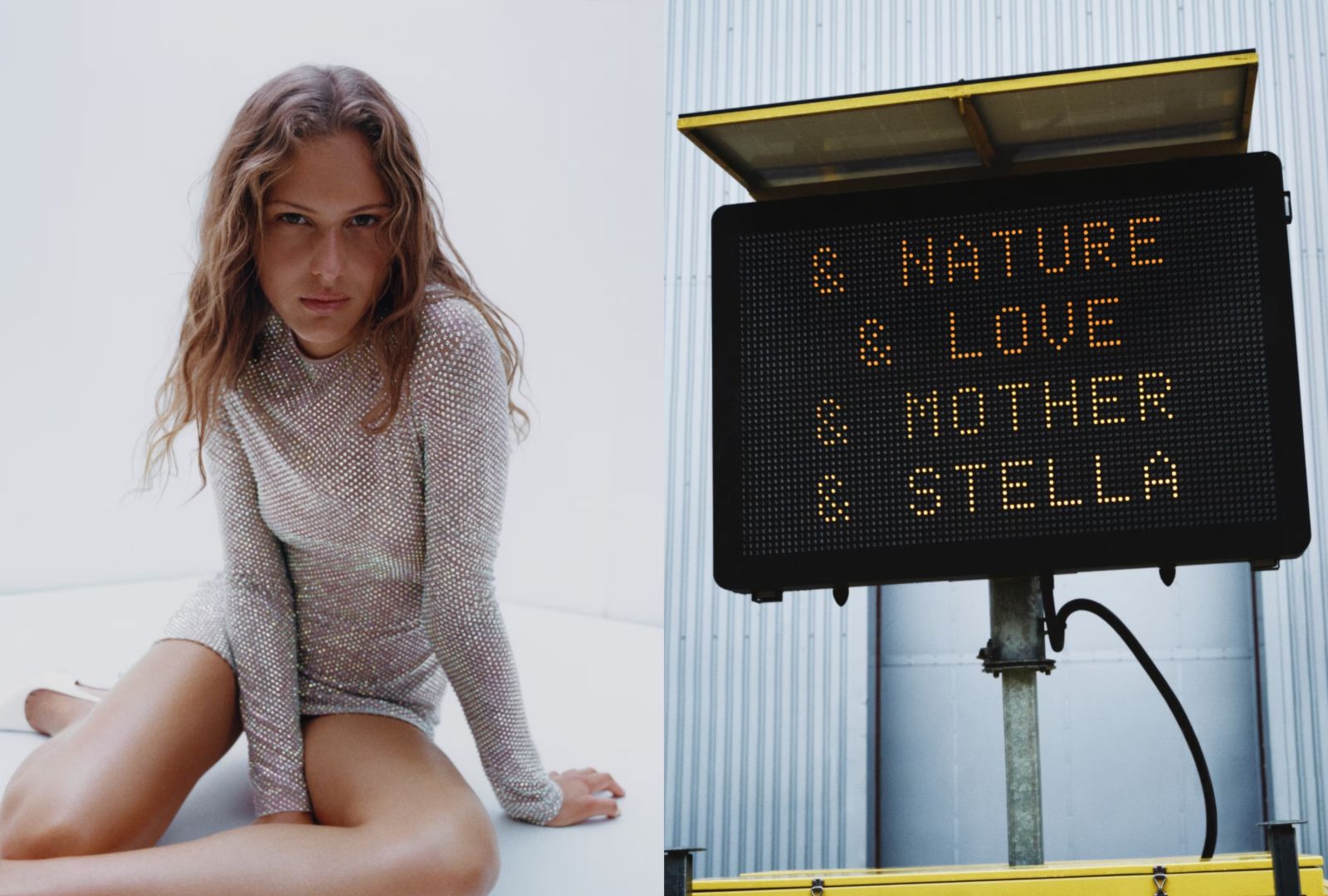
This year, the playground was given to British designer Stella McCartney for the second time 21 years after her first collaboration with H&M. And, as expected, the reaction was huge: queues outside stores at 6am, strong buzz and a collection almost completely sold out within 2 hours.
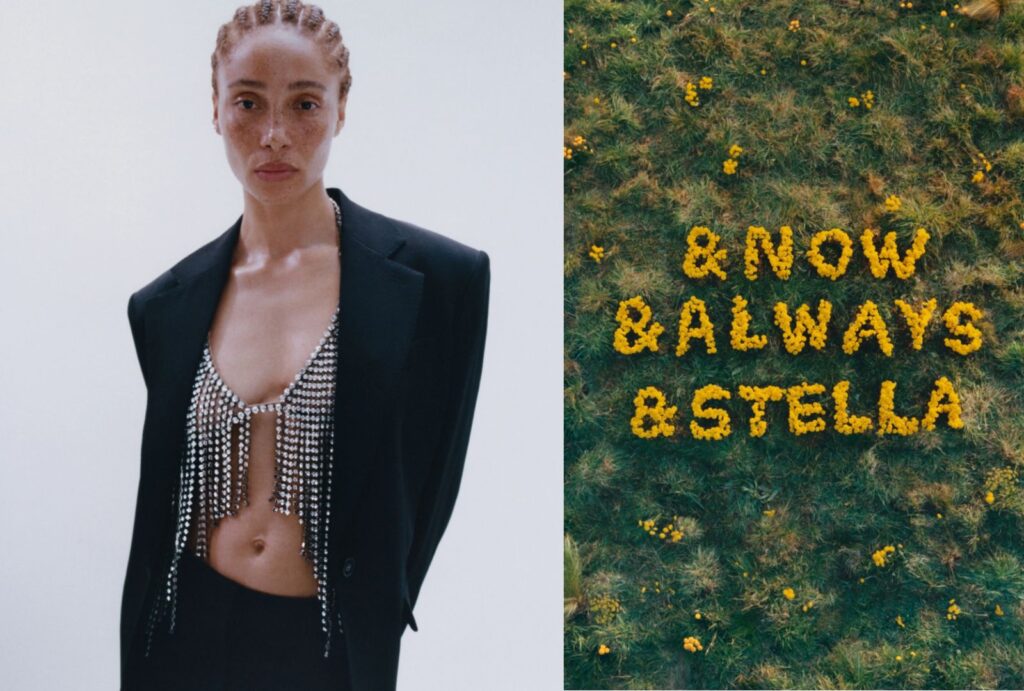
But why is this collection so different? What happens when a house known for sustainability, innovation and ethical design partners with a fast-fashion giant? It definitely leaves people wondering, why has the ethically responsible house chosen H&M to celebrate its 25th anniversary? The collaboration is almost paradoxical. Stella McCartney knew it 25 years ago when sustainability was overlooked and she proves that she still knows it now when we see a multitude of brands ripping-off consumers with their greenwashing “sustainable” acts. Because as the public grows more and more aware of environmental problems, the issue of sustainability in the fashion industry is no longer just an ethical issue, but an economic one too.
Inside the Materials: What Stella McCartney x H&M is Made of
When the “sustainability queen” enters a partnership with a fast fashion brand she makes sure to let everyone know that she has done it the McCartney way. Most of the materials used in this collection are organic cotton and wool with certifications including GOTS-certified, Responsible wool standard (RWS) and Regenerative Organic Certified (ROC). Some synthetics used are recycled, usually made from fishing nets or industrial waste. To achieve a glossy coating, materials used are made from industrial corn and recycled vegetable oil (providing an animal-free alternative to leather). Even Stella’s trademark Falabella chains are made from recycled aluminum, brass and zinc.
Why the Pricing Actually Matters
As a result, the price range for the collection sits at the higher end of the market than normal fast fashion with prices from around €85 for a shirt to €299 for a grey pinstripe blazer. Stella sees that this is a fine opportunity to educate consumer society about what materials they’re wearing. “This is not the cheapest of the cheap because there is a price that comes with doing anything good,” McCartney says. “But it’s an access area for more people”. And with this in mind she decided to include details about everything the pieces are made from.

What This Collaboration Says About Fashion Today
The efforts made by H&M leave you scratching your head in a field of question marks, raises more questions than it answers. Because if this limited-edition collection with a retailer such as H&M can manage to be animal-free, circular and completely transparent, what excuses do the other industry leaders have? More importantly, why can’t luxury brands do the same? What’s their justification? If anything, the partnership is not only a stepping stone for the industry but also a wake-up call for the average shopper as well as other labels.
And after going down the rabbit hole I’ve realized that this collection almost makes sense – making ethical fashion more accessible to the masses while sending a powerful message. Celebrating the 25th anniversary of a house renowned for sustainability not just for people not just to admire and move past but for people to appreciate and flaunt.
To explore how H&M is reshaping its identity through sustainability, Scandinavian design and technology, read our feature on the brand’s new concept store in Florence.


