By Agnese Augusta Patriarca Bertoli. Cover image Frank Perrin.
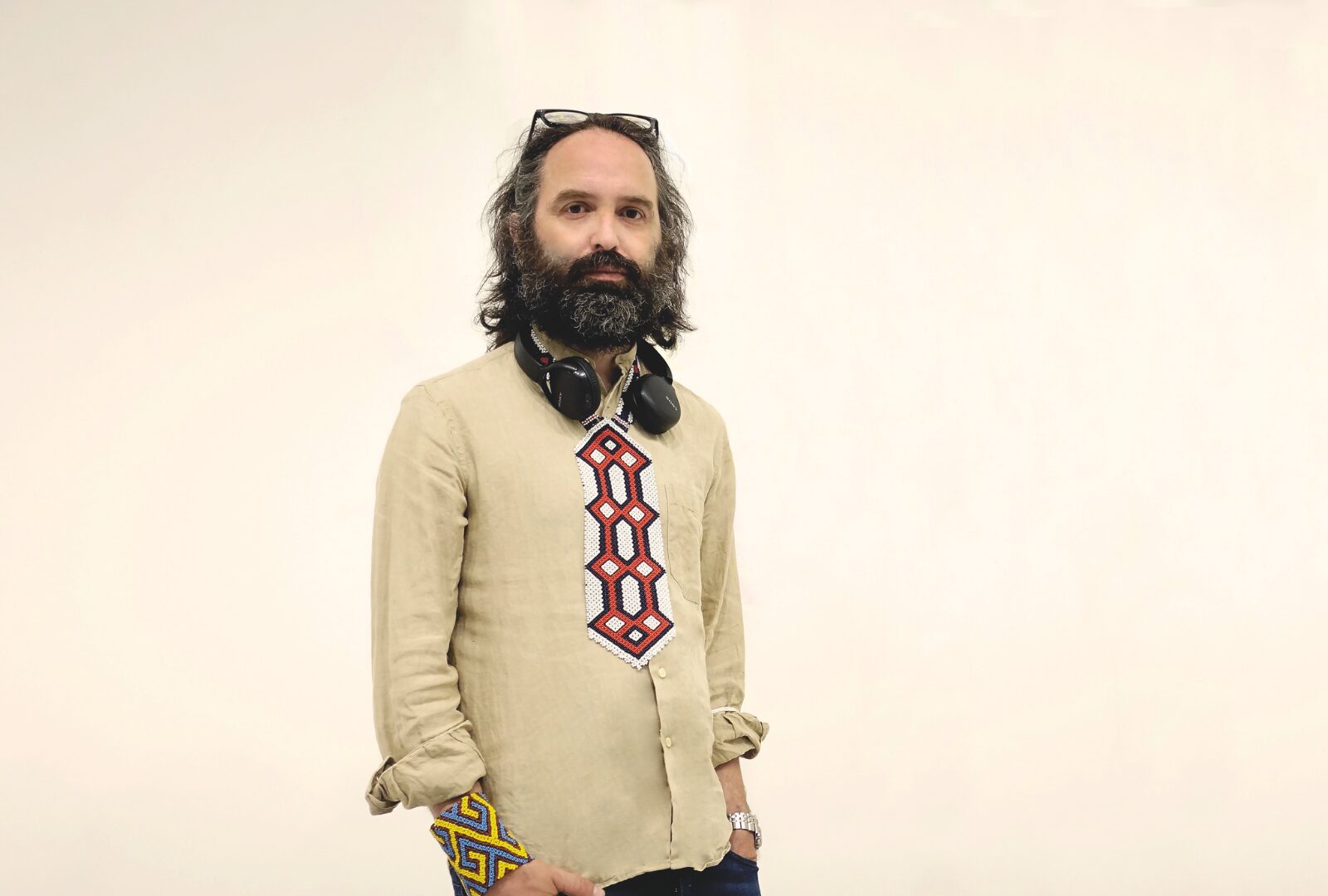
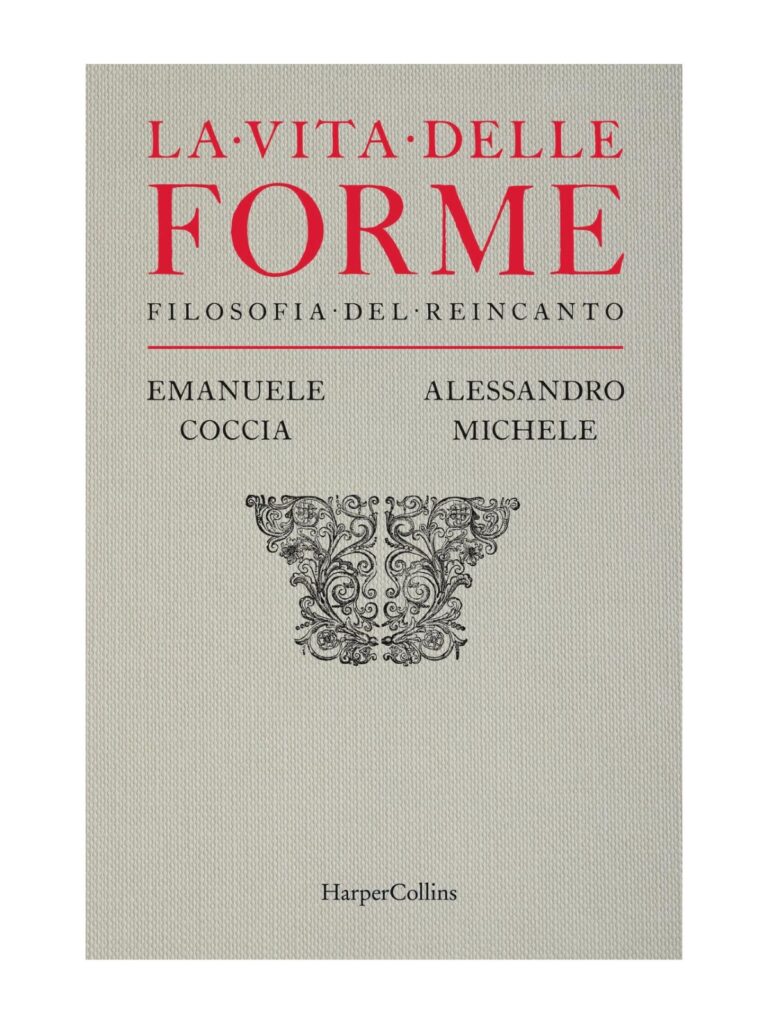
He’s not a butterfly, but wearing a shirt with one on it makes Emanuele Coccia feel like one. The Italian philosopher and academic, known for his recent publication with Alessandro Michele, La Vita delle Forme, and his essays in Purple magazine, has a presence strongly felt inside the fashion industry. Students at Istituto Marangoni Firenze recently had the opportunity to attend a talk with him, and it began with a simple yet suffocating question: why should we study fashion?
Coccia’s philosophy gravitates around objects and the material world. To him, the way we live, the way we perceive and are perceived, the way we act and think, none of this exists in a separate or mystical sphere. It is all the result of our being in the material world, and of the material world being, at the same time, lived by us. Identity, in his view, is not an abstract matter opposed to a platonic world of ideas. The truth lies in the intertwining of objects and people, and fashion, he argues, is the most powerful expression of that relationship and the most direct path to freedom.
Fashion as the Art We Live Inside
The first topic was art, Renaissance art, and the evolution of Artes Liberales and Artes Mechanicae. Fashion as we know it today stems from this history: from the idea that art is not only about sublimity but about free expression, about the embodiment of human life through objects. Fashion is the art we are closest to, not made for contemplation, but meant to be lived in.
Too often dismissed as superficial or vain, fashion is, and should be considered, one of the most fascinating artistic acts. It is not only physically part of us, it actively shapes our self-perception and our presence in the world. While paintings hang, music lingers, films play, and architecture imposes itself, fashion only truly lives when attached to our skin. We are dressed within seconds of being born, and most of us die while wearing something. To wear is to live inside the art itself. Fashion could therefore be described as a Trojan horse, filled with symbols drawn from every artistic practice, carrying all aspects of life directly onto every human body.
Fashion Is Possible When Ordinary Life Is Central
Once we understand the centrality of fashion as an art form, a crucial distinction emerges between costume, folklore, and fashion. A significant part of the talk was dedicated to exactly this.
Fashion as we experience it today is the result, and a rather extraordinary one, of our evolution as a society. It came with modernity, when the need to declare one’s social class through dress began to dissolve, when ordinary life became pivotal and the novel emerged as a literary form. After the French Revolution, class separation was no longer primarily a matter of clothing. Identity was no longer about consciousness alone; objects and the material world became instruments of liberation. An accessory, a shirt, a well-chosen tie could say more about who you are than your bare body ever could. Today, the potential of a single garment is almost beyond imagination, especially in a reality saturated with images constantly circulating around us.
A garment becomes fashion, Coccia argues, when it rebels against some form of authority, when it has something to say. The ambiguity of fashion, its power to rearrange reality from within, is what ultimately makes it fashion. Its autonomy, its ability to say what cannot otherwise be said, the paradox of being hidden behind something so often reduced to a basic need, these are what make this field so endlessly fascinating.
Fashion Is a Way to Orient Yourself in the Present
Clothing was born as necessity, a shield, a second skin. As Genesis describes it, it was the first form of artificial manufacture ever presented to humankind. And yet, while every other form of human expression has, over the course of history, gained recognition as a legitimate art form, fashion is still unfairly treated as the daughter of vanity, devoid of deeper significance.
Roland Barthes was one of the first philosophers to take the subject seriously, and even he argued that fashion gained meaning only when described, only when an image was accompanied by words. Fashion had significance only if it was given one. But this, Coccia suggests, is far from the truth. Fashion evolves and shifts before we can even name what is happening. It operates on gut feeling and visual instinct, and needs no verbal justification to be real. Fashion is autonomous. It infiltrates where no other art form can. If mankind lives, fashion lives with it.
Fashion is philosophy, and Coccia’s words and passion managed not only to bring that back to our minds, but also to let the urge to know take over. In a world where glossy magazines and fleeting digital content compress our horizons, taking the time to listen and let your perspective shift is often the beginning of real creative renewal. Thank you to Istituto Marangoni Firenze for making this possible, and to Emanuele Coccia for refusing to let prejudice have the last word.


