By Luca LI. Cover image Prada FW 26/27 courtesy.
How Wear, Flaws, and the Past Are Shaping Luxury Today
Is imperfection the new luxury? Fashion is no longer chasing the illusion of flawlessness: it is learning to live with the traces of time. This shift has been unfolding for years, but in today’s climate of uncertainty, it feels more relevant than ever. Rather than only anchoring itself to heritage -built on visionary ideas and artisanal craftsmanship- fashion is also deconstructing, breaking apart, and reassembling its own codes, as if to reset and rebuild from zero.
From Milan to Paris, luxury houses are transforming creases, stains, frayed edges, and worn fabrics into a new visual language of prestige, one that signals a shift from technical perfection to emotional and historical authenticity.
Prada FW26: Imperfection as Emotional Language
What can we build, from what we have learnt?
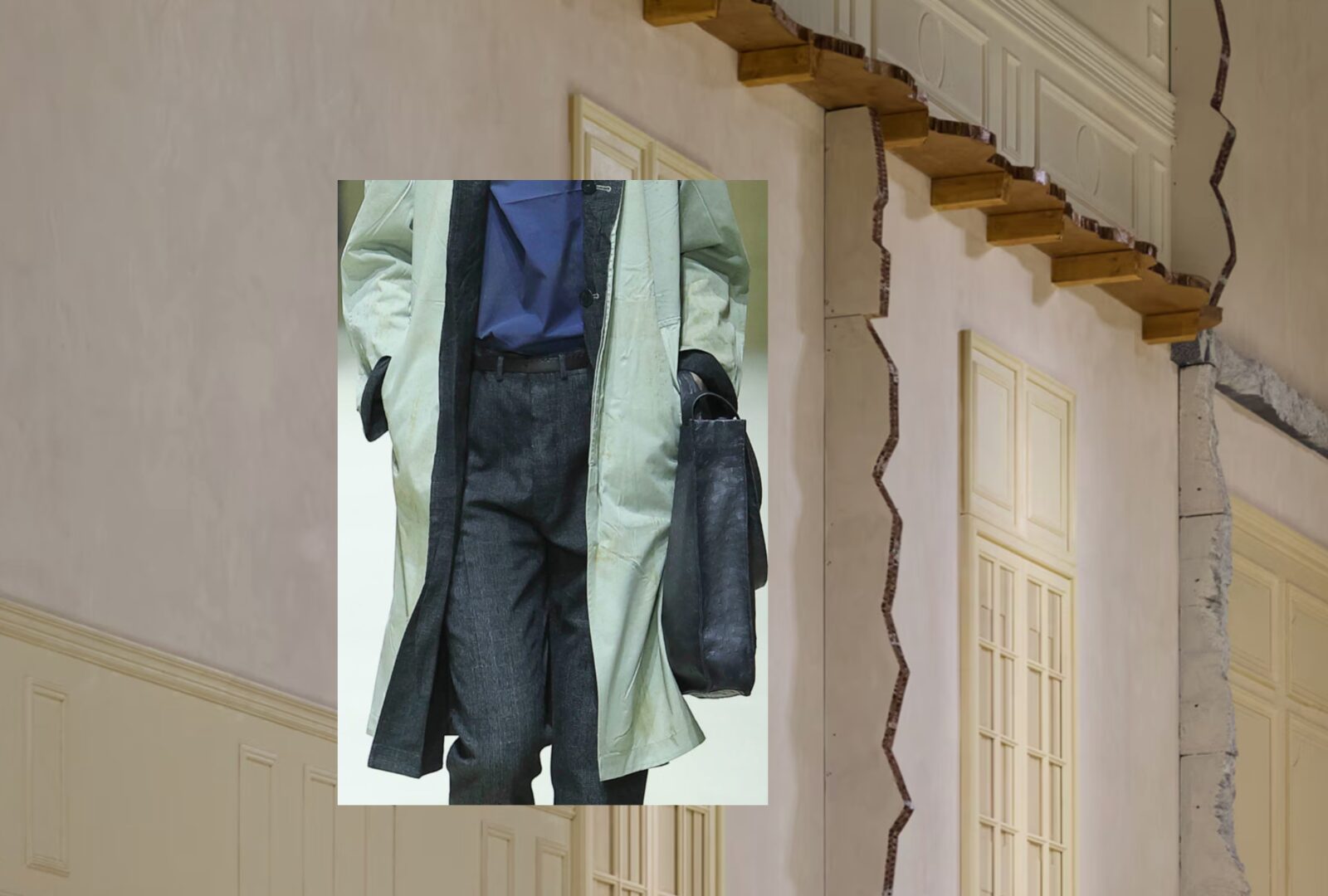
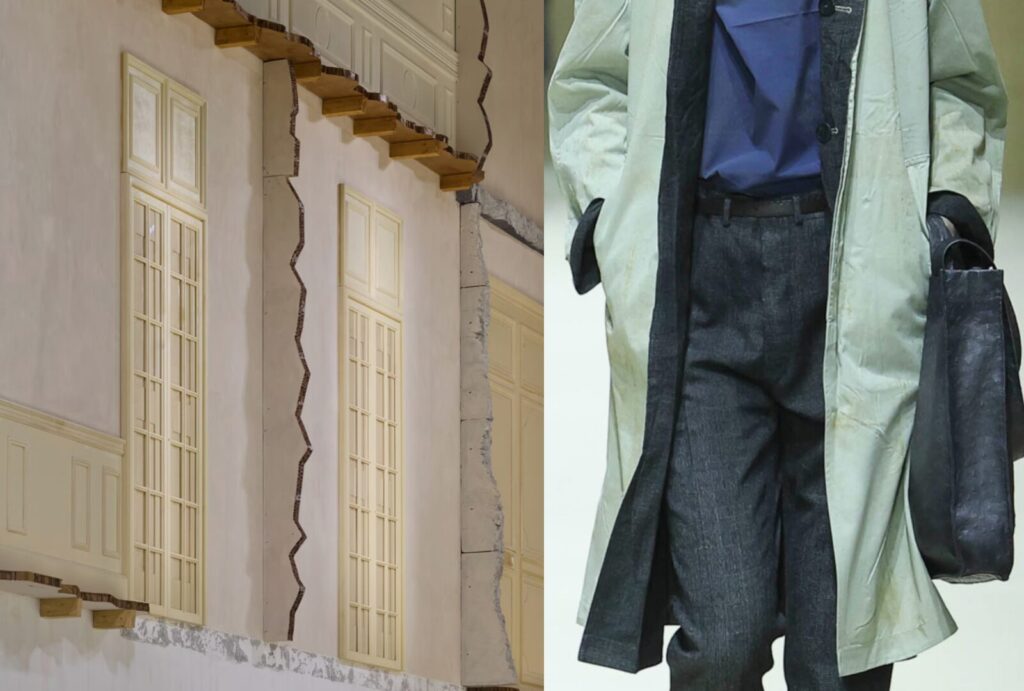
In Prada’s Autumn/Winter 2026 menswear collection, imperfection becomes a deliberate and central design language. Jackets, coats, and shirts appear creased, softened, and subtly irregular, as if shaped by time rather than freshly made. A white square-neck vest features uneven textures and faint discolorations reminiscent of smoke or everyday wear, while a brown leather jacket is marked by folds that suggest long-term use rather than pristine condition. Shirt cuffs carry subtle signs of wear, details that are not hidden, but elevated. Here, imperfection is intentional and narrative-driven. Miuccia Prada described the collection with one word: “uneasy”, capturing the tension of a present shaped by uncertainty and a persistent return to the past. “We know very little and cannot predict the future. Clothing therefore needs to convey clarity and precision. Even when exploring new ideas, we continue to look at the past”, she said. Raf Simons added: “How can we create something new with what we already know, learn, love, and respect?”
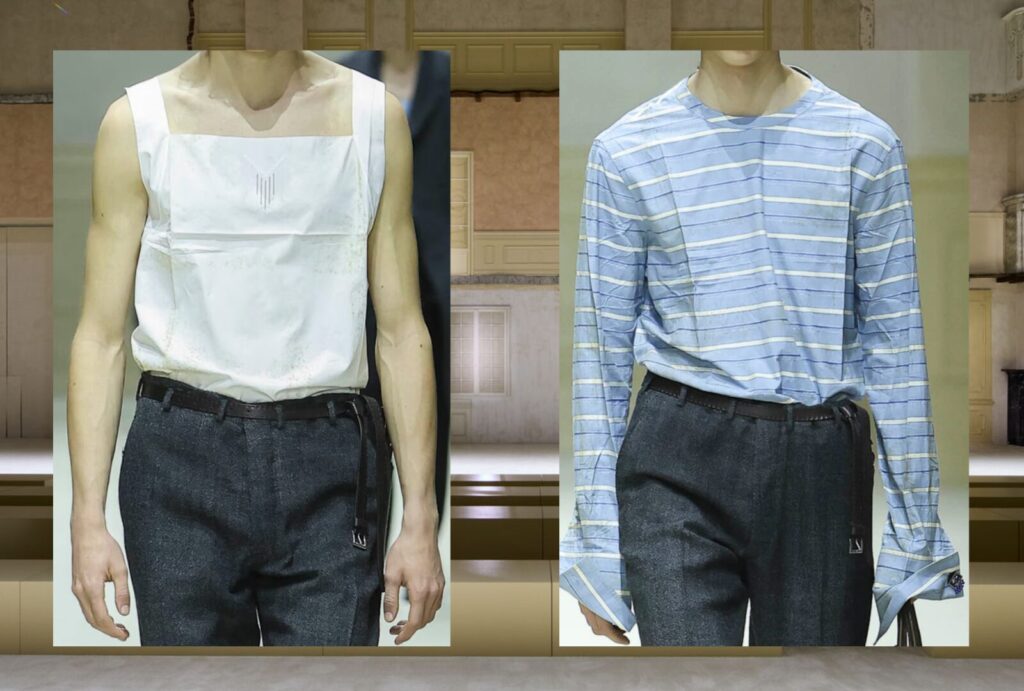
The collection reworks familiar elements, tailoring, uniforms, layering, through a lens of lived experience. Even the garments’ imperfections become carriers of memory and meaning. The show space reinforced this idea: it resembled a partially dismantled historical interior, with fragments of decoration -wood panels, marble fireplaces- left exposed, as if suspended between destruction and reconstruction. This sense of transition mirrors the collection itself: a reflection on what clothing can mean in a moment of instability.
Why Bottega Veneta Made Imperfection Its Signature Craft
This approach is not isolated. Long before it became a broader industry conversation, Bottega Veneta had already embedded imperfection into its idea of craft.
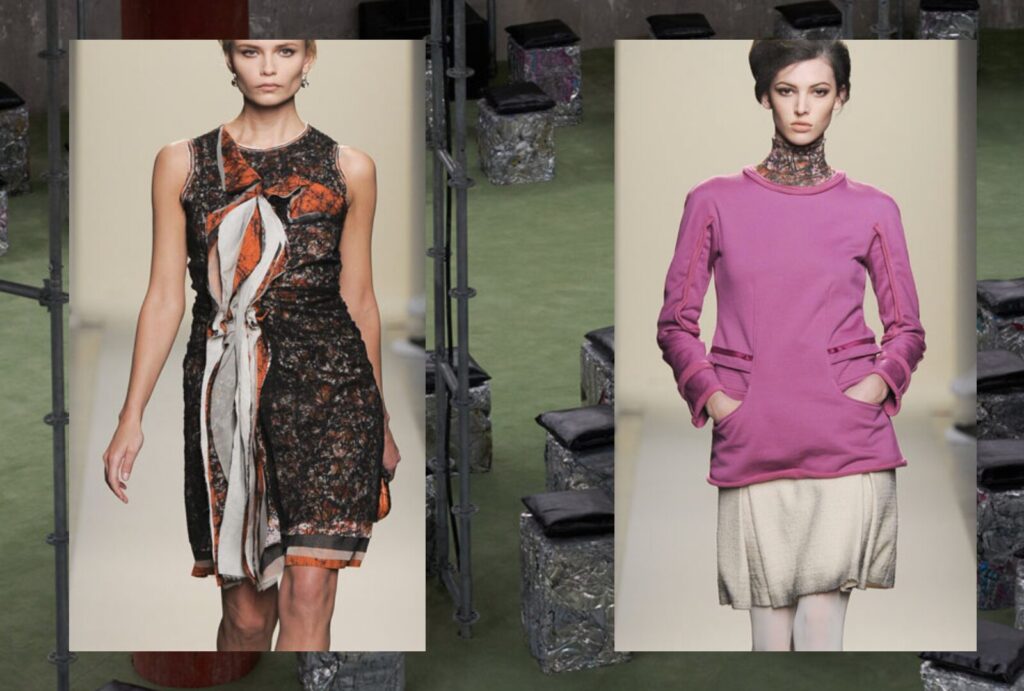
In the Autumn/Winter 2011 collection under Tomas Maier, luxurious fabrics were intentionally manipulated to appear rough, worn, or slightly undone. From a distance, materials resembled tweed or bouclé; up close, they revealed textures that felt pre-worn or imperfect, softening their refinement. Construction details traditionally hidden -such as overlocking or zigzag stitching -were brought to the surface as decorative elements, challenging conventional ideas of finish and polish.
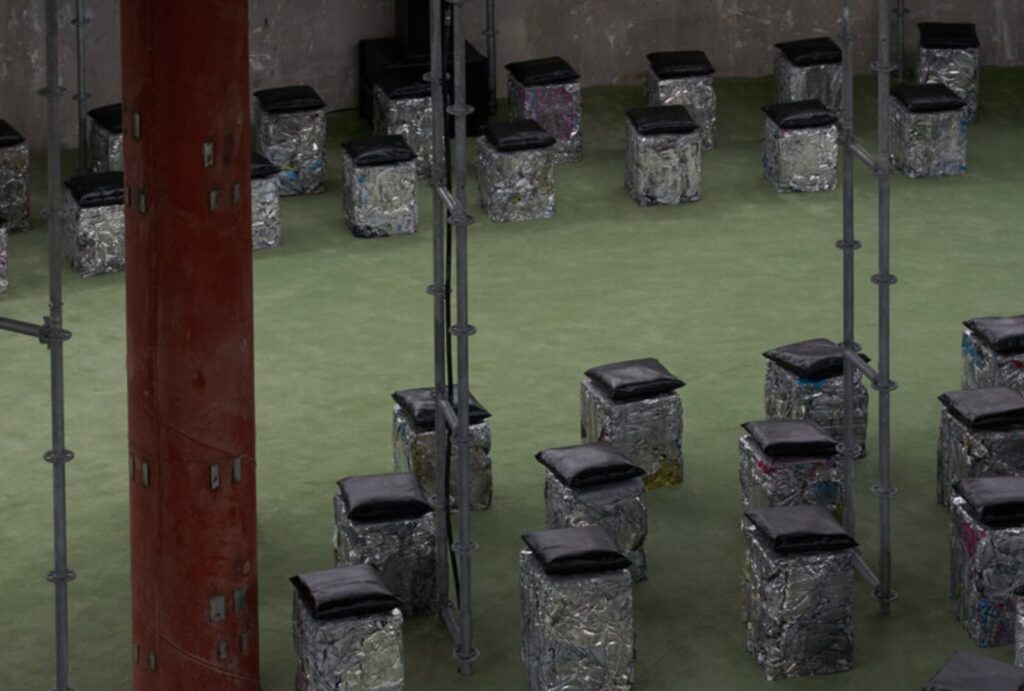
Today, this philosophy continues to evolve. Louise Trotter, who became creative director of the house at the end of 2024, replacing Matthieu Blazy who moved to Chanel, brings a renewed focus on the authenticity of materials and process. Craft is reframed not as something to perfect, but as something to preserve in its irregularity. Before her, Blazy’s work consistently highlighted the tension between tradition and experimentation, preserving the house’s artisanal identity while pushing it forward. His SS23 show, titled “Building on the Past,” perfectly encapsulated this approach: a raw, stripped-back space in Milan contrasted with the brand’s iconic green exterior, visually expressing the idea of construction through deconstruction. Across both visions, the message remains consistent: true luxury lies not in erasing imperfections, but in making them visible.
How Givenchy Used Raw Spaces and Imperfection to Redefine Luxury
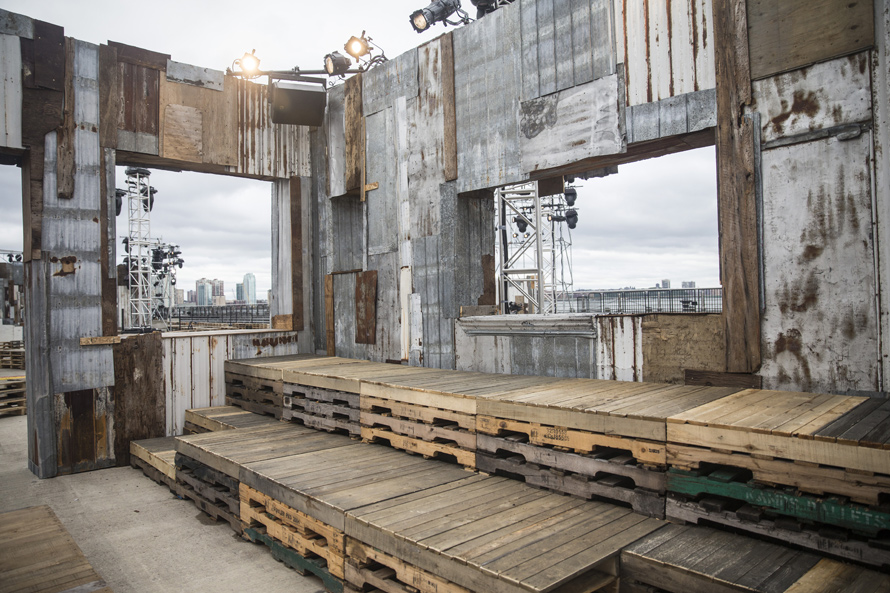
A similar dialogue between space, material, and meaning emerges in Givenchy’s 2016 New York show, connecting the language of imperfection to emotion and cultural memory. To mark the opening of its Madison Avenue store, the house, all at the time under Riccardo Tisci, broke with tradition by presenting its collection outside Paris, staging the show on Pier 26 overlooking the Hudson River.
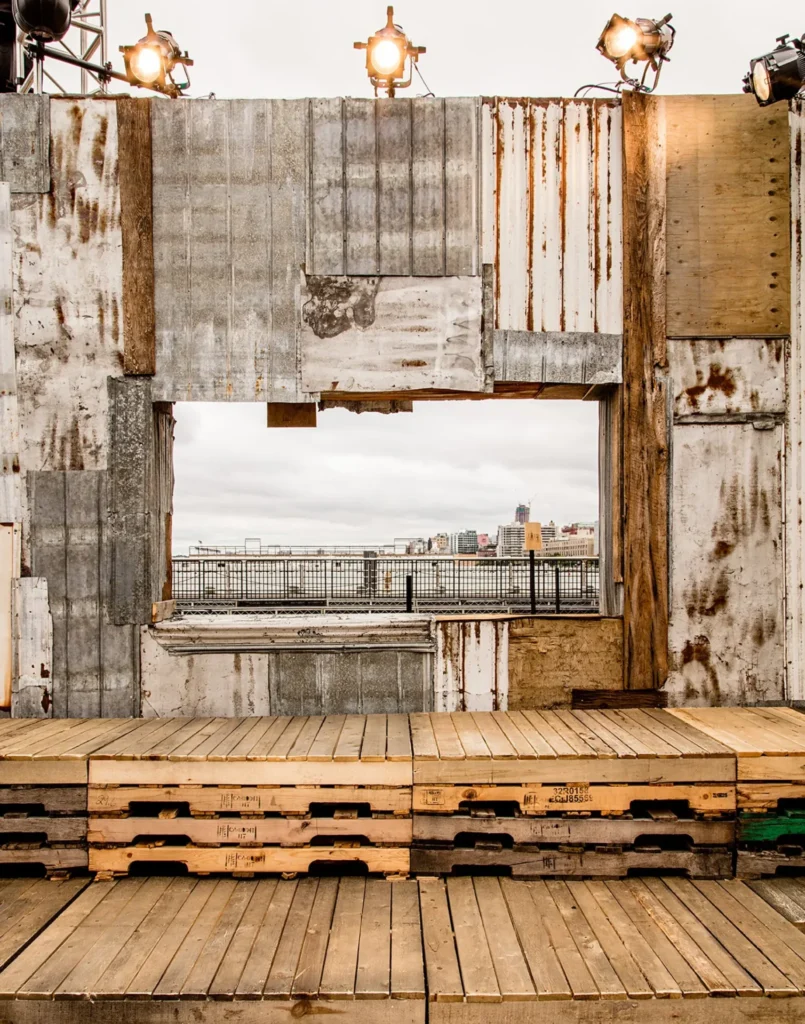
The set, created with Marina Abramović, rejected conventional runway luxury: seating was made from recycled materials such as pallets, plaster, and metal, emphasizing rawness and reuse. This stripped-back environment echoed the broader shift seen across fashion: a move away from polished perfection toward something more immediate, physical, and emotionally charged.
Why Imperfection Is the New Standard in Luxury
The idea that luxury must be flawless is increasingly outdated. Across decades, designers have repeatedly returned to themes of decay, damage, and transformation as creative tools. Exhibitions such as Dirty Looks: Desire and Decay in Fashion at the Barbican Centre, London (September 2025- January 2026) highlight how dirt, wear, and imperfection can become powerful aesthetic and conceptual devices.
In uncertain times, the familiarity of imperfection -of garments worn, marked, and real- can offer a new kind of reassurance. If there is truly nothing new under the sun, fashion’s power lies in how it reinterprets what already exists.


